How to Design a Garden with Four Seasons of Interest
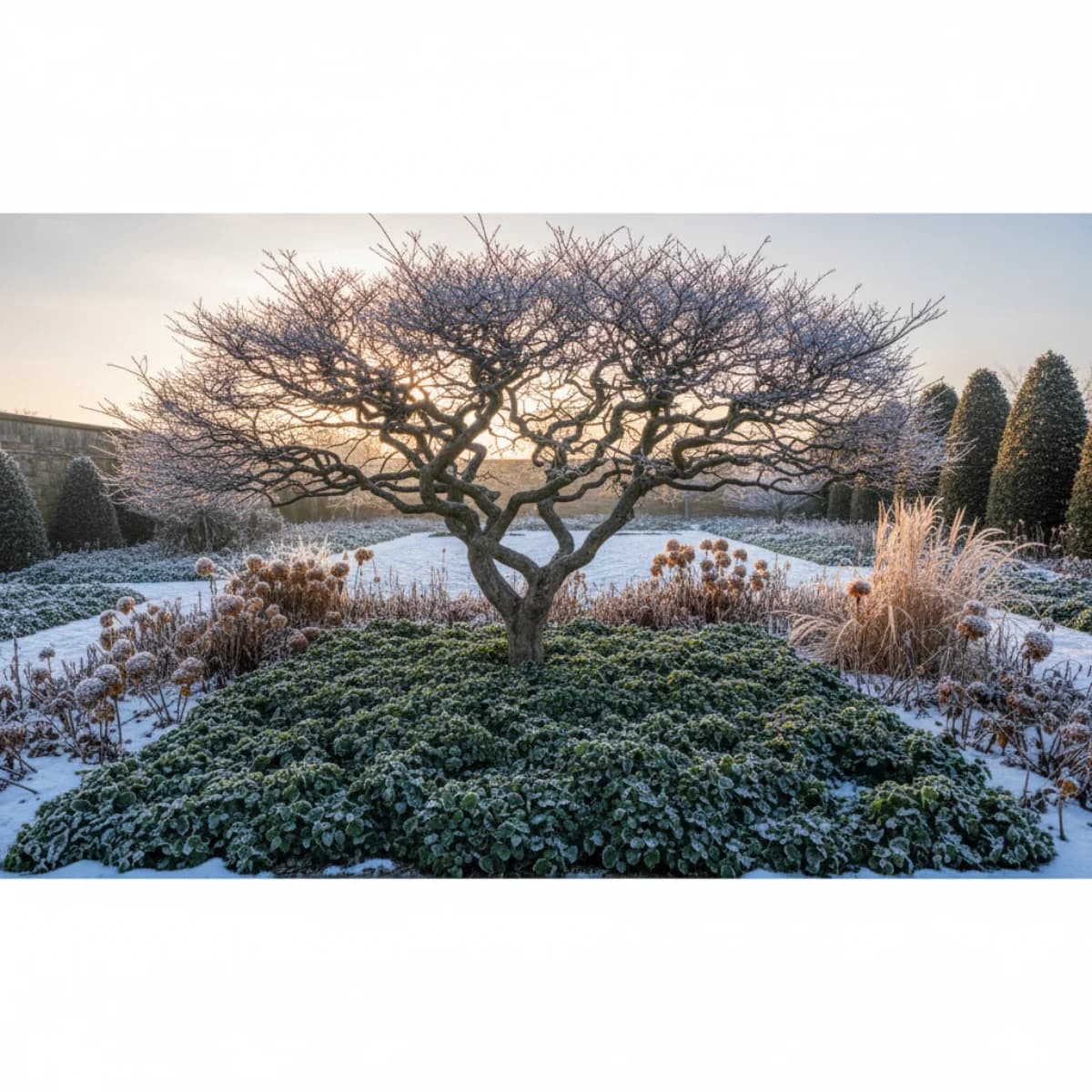
Most residential gardens are designed, whether intentionally or not, for summer. The borders peak in June, July, and August, and look excellent during those months. By September they’re beginning to fade; by November they’re largely gone; by January they’re a bare, muddy expanse with little to recommend them.
This happens because gardeners make plant selection decisions in summer, from summer catalogs and nurseries where everything is in bloom. Winter interest doesn’t sell itself the way summer flowers do.
A genuinely four-season garden requires intentional design choices—plants selected for bark, seed heads, structure, and winter color, and layered so that the garden always has something happening.
Why Winter Matters Most
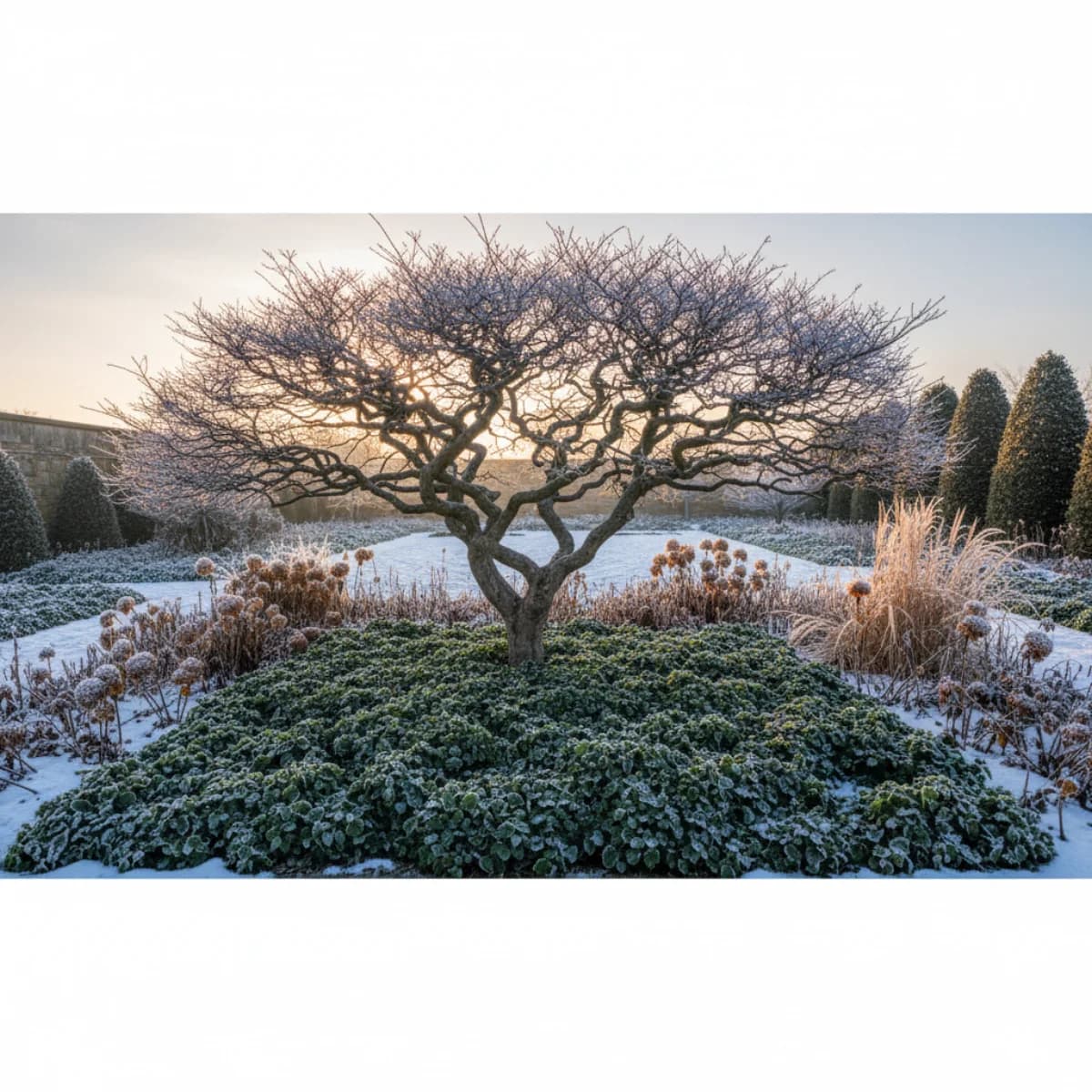
Counterintuitively, January is when your garden needs the most design thought, because it’s the most exposed. There’s nowhere to hide. Structural problems—poor layout, ugly features, empty gaps—are invisible in summer; in winter, they’re all you see.
A garden that looks good in January is a garden with good bones. It means you’ve made good decisions about structure, placement, and plant selection—and all of those decisions make the summer garden better too.
The Four Elements of Year-Round Interest
1. Structure
Structure is what your garden looks like when everything else is gone. It includes:
- The shapes of deciduous trees and large shrubs (their bare branching patterns become visible)
- Evergreen trees, shrubs, and ground covers
- Hard landscaping: paths, walls, pergolas, raised beds
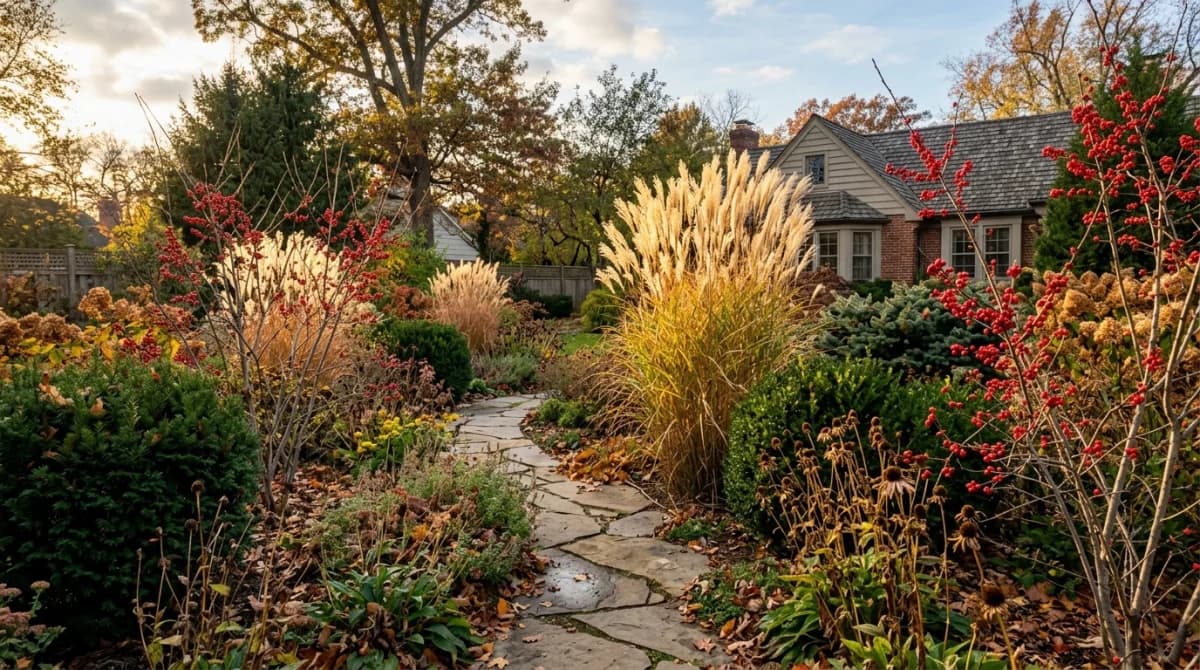
- Ornamental grasses left standing through winter
- The shapes of perennial crowns and persistent seed heads
Good structure means the garden has clear forms and defined spaces year-round, not just when leaves are present.
Design decisions that create good structure:
- Include several evergreen shrubs (not all the same species) to provide anchor points in every season
- Plant at least one or two trees or large shrubs specifically for winter bark interest
- Leave ornamental grasses and structural perennials standing through winter
- Use repetition—a repeated plant at regular intervals creates visual rhythm that reads clearly even in winter
2. Seasonal Peaks
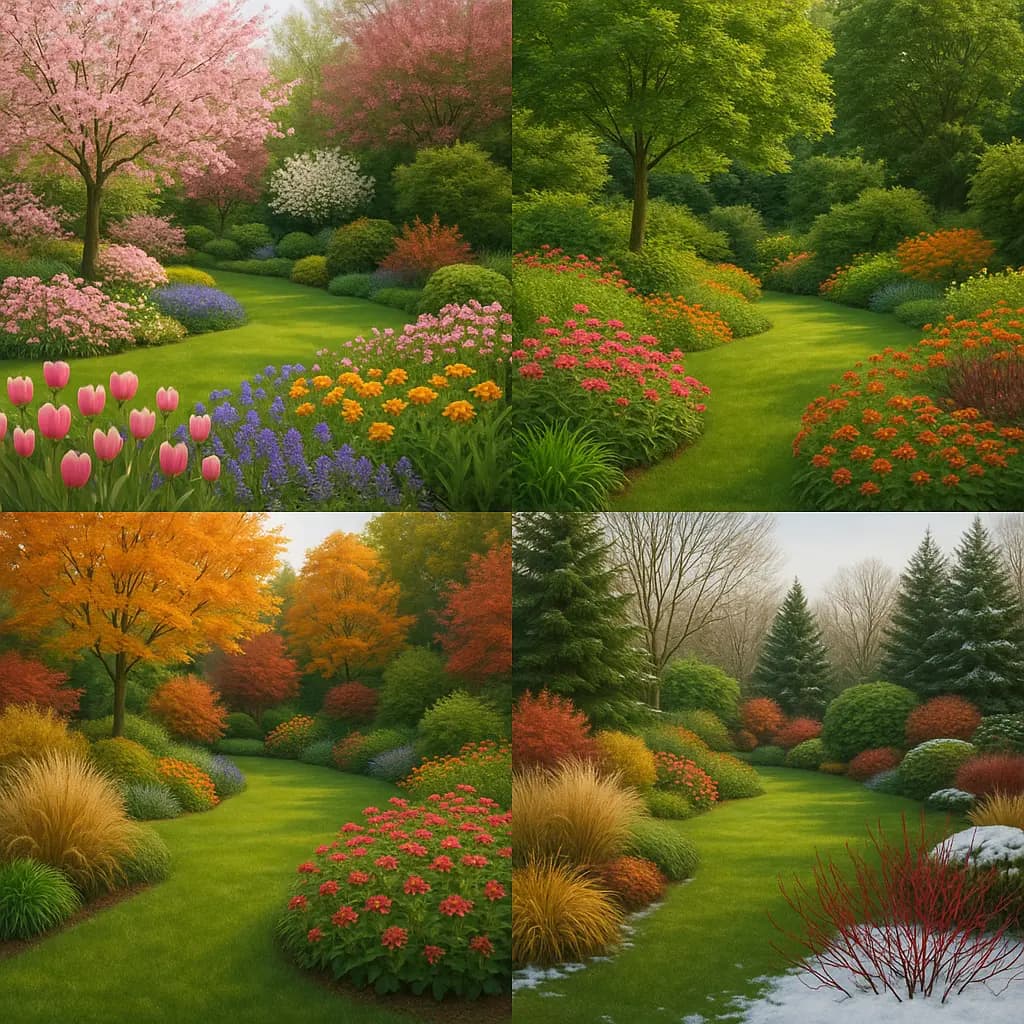
Rather than trying to have everything blooming at once, design for a sequence of distinct peaks that move through the year. Each season should have at least one “moment”—a plant or combination that’s at its best.
Early spring (February-March): Bulbs (snowdrops, crocuses, early daffodils, species tulips), Hellebores, early-flowering shrubs (witch hazel, Cornelian cherry, forsythia), catkins (alder, hazel, pussy willow)
Mid-spring (April-May): Late daffodils and tulips, cherry blossom and other ornamental trees, spring perennials (pulmonaria, brunnera, wood anemone), alliums, early roses
Early summer (May-June): Roses, peonies, Allium ‘Purple Sensation’, early perennials (salvia, veronicastrum, geraniums), foxgloves
Midsummer (July-August): Main perennial border peak, dahlias beginning, roses in second flush, echinacea, rudbeckia, phlox
Late summer/fall (September-October): Asters, dahlias at peak, ornamental grasses in plume, late-season perennials, berries and seed heads developing
Winter (November-February): Bark interest (birch, cornus, acer), winter-flowering shrubs (witch hazel, sarcococca, viburnum bodnantense), persistent berries (hollies, crabapples, pyracantha), evergreen structure, frosted seed heads
3. Winter-Specific Plants
Some plants exist specifically for winter interest and have no peer season equivalent. Include at least a few of these in any four-season garden:
For bark:
- Betula utilis var. jacquemontii (West Himalayan birch): the whitest birch bark of any species
- Acer palmatum ‘Sango-kaku’ (coral bark maple): vivid coral-red young stems
- Cornus sanguinea ‘Midwinter Fire’ and Cornus alba cultivars: orange, red, and yellow stems that glow in winter light. Cut these to the ground in late winter to encourage new, most-colorful young growth each year.
- Prunus serrula: polished mahogany-red bark that practically glows
For winter flowers:
- Hamamelis (witch hazel): spidery flowers in yellow, orange, or red from December to February; fragrant
- Chimonanthus praecox (wintersweet): yellow flowers, extraordinary fragrance in January
- Sarcococca (sweet box): small, inconspicuous white flowers with an astonishing sweet fragrance in late winter
- Viburnum x bodnantense ‘Dawn’: pale pink flower clusters on bare stems November through February, fragrant
For persistent fruit:
- Cotoneaster species: small red or orange berries often lasting into January
- American and English hollies
- Crabapples with persistent small fruits
- Pyracantha (firethorn): orange or red berries through winter
For winter-interest ground level:
- Hellebores: evergreen rosettes plus flowers January-April
- Snowdrops: February and March
- Cyclamen coum: February flowers, marbled foliage through winter
- Bergenia: evergreen leaves turn purple-red in cold
4. Evergreen Anchors
A garden needs a backbone of evergreens—not necessarily conifers (which can feel heavy and dark), but a mix of textures and forms that maintain structure year-round.
Good structural evergreens:
- Taxus (yew): dense, dark, clips cleanly, tolerates shade
- Ilex (holly): dark green, usually berrying, variable forms
- Viburnum tinus: medium shrub, glossy dark leaves, white flowers in winter-spring
- Lonicera nitida (box honeysuckle): faster-growing box substitute, clips well
- Fatsia japonica: bold, tropical-looking foliage, tough in sheltered spots
- Ornamental grasses: not evergreen, but provide year-round structure until cut down
Aim for evergreens to make up roughly 30-40% of your planting area by volume. This feels like a lot when everything is in summer leaf; in January, you’ll be grateful for every one.
Making the Plan
Working through four-season garden design is one of the most satisfying planning exercises. The process:
-
Map your existing plants and note their season of interest: Be honest—which plants contribute in winter? Which only look good in summer?
-
Identify the winter gaps: Where does the garden look empty or uninteresting from October through March?
-
Add winter anchor plants first: Place evergreens, winter-flowering shrubs, and bark-interest plants to address the gaps. These become your structural framework.
-
Layer the seasonal peaks: Add spring bulbs, summer perennials, and fall-interest plants knowing that the winter structure is in place.
-
Check the sequence: Walk mentally through each season. Is there always something interesting? Are there any months that have nothing at all?
Gardenly is particularly useful for this process when you’re trying to visualize structural changes—seeing how different placements of evergreen shrubs or winter-interest trees affect the overall garden composition.
A four-season garden takes a few years of intentional planting to reach its potential. Start making these design decisions now, in the season the garden needs most help.
Sources & Further Reading
- Plants Can Add Winter Interest to Your Landscape — University of Minnesota Extension
- Plants for Winter Interest — Royal Horticultural Society
- A Four-Season Garden: Secrets of Success — Penn State Extension