How to Read a Seed Catalog Without Getting Overwhelmed
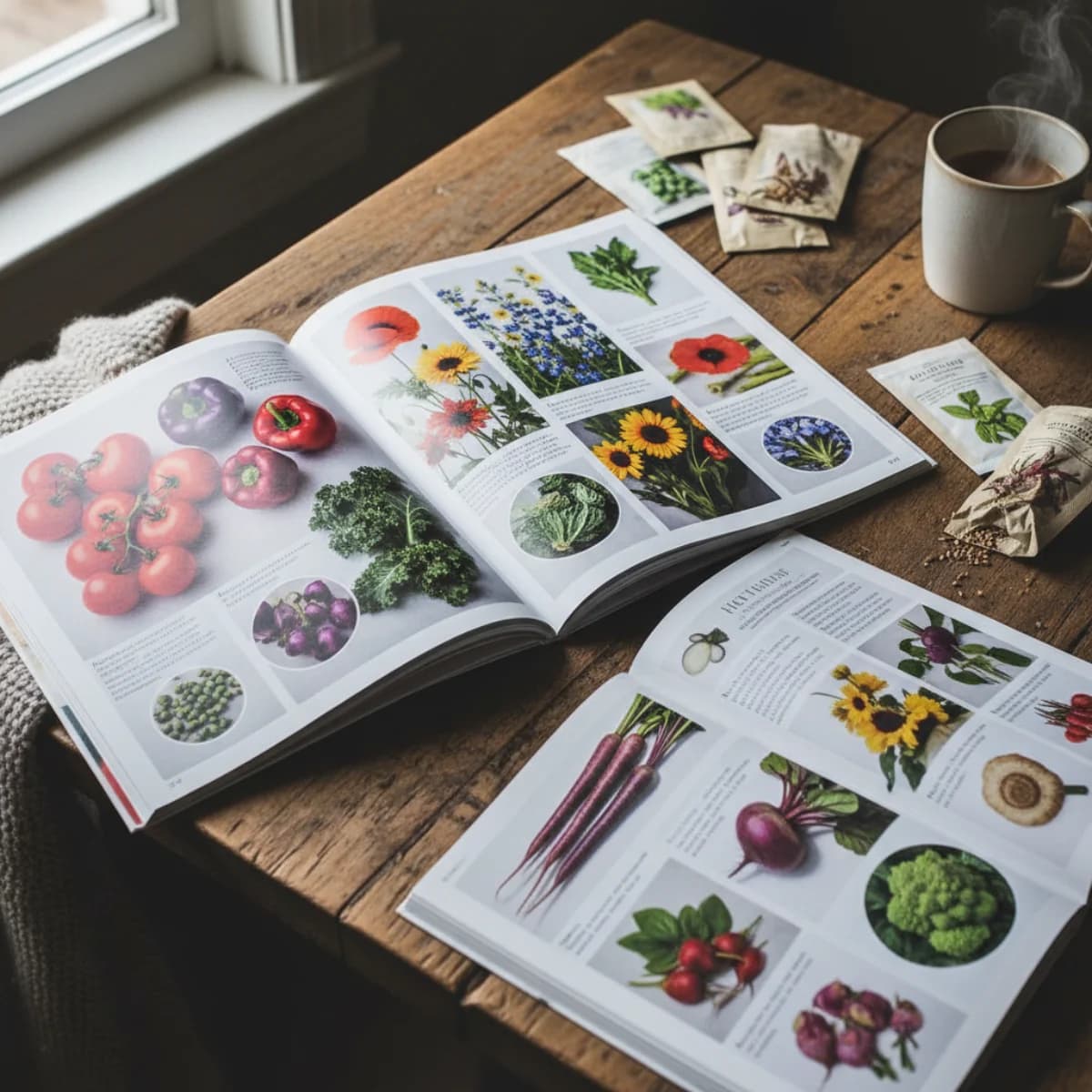
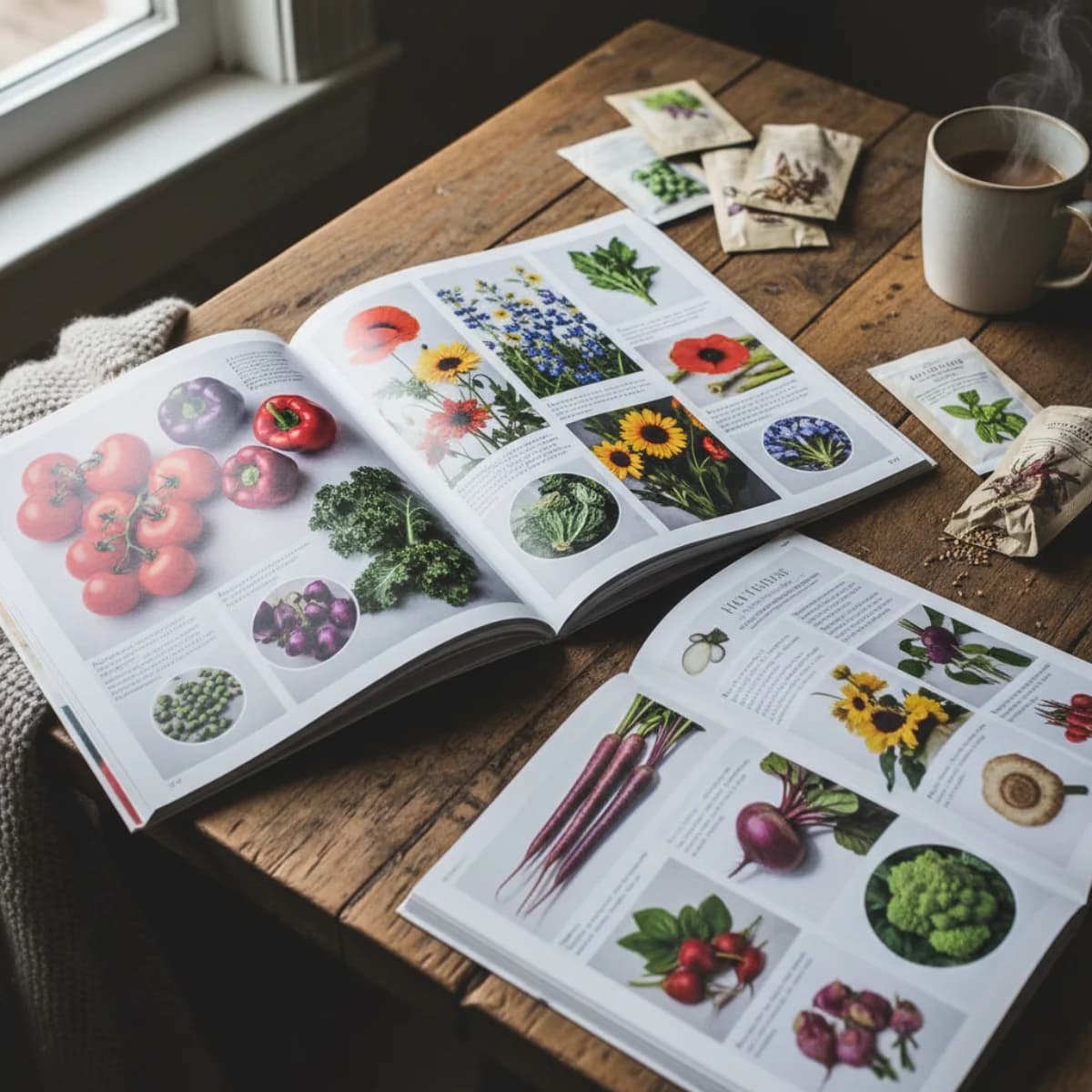
Seed catalogs arrive in January like a reminder that spring is coming. For gardeners who’ve been thumbing through them since December, the arrival of the physical catalog—or the first browse of an online shop—marks something. The season has turned. It’s time to plan.
But seed catalogs are also overwhelming. A single company might carry 40 varieties of tomatoes, each described in glowing terms that make every one sound essential. Add to that the technical vocabulary—days to maturity, disease resistance codes, F1 versus open-pollinated, determinate versus indeterminate—and it’s easy to end up ordering far too much or nothing at all.
Here’s how to read them with a clear head.
Know the Vocabulary
Days to Maturity
This number tells you how many days from transplant (for warm-season crops) or direct sow (for cool-season crops) until the plant begins producing. A tomato listed as 75 days will be ready to harvest about 75 days after you set it in the ground—not from seed.
This matters for your climate. If your growing season is 120 days, you can grow 90-day tomatoes. If it’s 90 days, you need 70-day or earlier varieties.
Open-Pollinated (OP) vs. Hybrid (F1)
Open-pollinated varieties breed true from seed. If you save seeds from your Cherokee Purple tomato this year, next year’s plants will also be Cherokee Purple. These are great for seed savers and anyone who wants to maintain a relationship with a variety over many years.
Hybrid (F1) varieties are bred crosses between two parent lines. They’re often more vigorous, more uniform, and more disease-resistant than open-pollinated varieties—but seeds saved from them won’t breed true. Buy fresh seed each year.
Neither is inherently better. F1 hybrids often outperform OPs in yield and disease resistance; OPs offer biodiversity, heritage, and the ability to save seed.
Heirloom
Heirloom refers to open-pollinated varieties that have been grown for at least 50 years, often far longer. Brandywine tomato, Moon and Stars watermelon, Dragon Tongue bean—these have histories. They’re worth growing for flavor and diversity, even if they don’t always match modern hybrids in yield or disease resistance.
Determinate vs. Indeterminate (Tomatoes)
Determinate tomatoes grow to a set height (usually 3-4 feet), set all their fruit at once, and stop. Good for canning—lots of ripe fruit at the same time. Less good for a continuous summer harvest.
Indeterminate tomatoes keep growing and producing until frost kills them. Most heritage tomatoes and many modern varieties are indeterminate. They need staking and take more space, but they produce all season.
Disease Resistance Codes
You’ll often see strings of letters after a tomato or pepper variety name: V, F, N, T, A, or TSWV. Each letter indicates resistance to a specific disease:
- V: Verticillium wilt
- F: Fusarium wilt (F1, F2, F3 indicate strains)
- N: Nematodes
- T: Tobacco mosaic virus
- A: Alternaria stem canker
If you’ve had disease problems in the past—or if your garden is in an area known for particular soil-borne diseases—look for varieties with the relevant resistance codes.
Choose for Your Situation, Not the Description
Every catalog entry sounds wonderful. The trick is filtering for your actual garden conditions.
Climate and Season Length
Days to maturity is your primary filter. Match it to your growing season with some margin—a 70-day tomato gives you more flexibility than a 90-day variety in a short-season garden.
Also consider heat and cold tolerance. Many pepper varieties love long hot summers but struggle in the Pacific Northwest’s cool summers. Certain tomato varieties (Stupice, Siletz, Legend) are specifically bred for cool, short seasons.
What You’ll Actually Eat
It sounds obvious but it’s frequently overlooked: only grow vegetables your household will actually eat and in quantities you’ll use. An enthusiastic gardening impulse in January becomes a crisis of surplus zucchini by August.
Think about:
- Fresh eating vs. preserving (choose accordingly—some varieties are better for canning, freezing, or fermenting)
- Quantities (most families need fewer tomato plants than they think)
- Novelty vs. reliability (one or two experimental varieties per year, with tried-and-true standbys for the bulk)
Space and Growing Method
A trailing cucurbit like ‘Lemon’ cucumber needs a trellis or a lot of ground space. Bush beans work well in containers. Giant pumpkins need 100 square feet per plant. Be honest about your space.
Compact and bush varieties exist for almost every vegetable—if you’re container gardening or have limited beds, look for descriptions that include “compact,” “bush,” or “container.”
How to Handle the Temptation
Catalogs are designed to make you want things. The photography is beautiful, the descriptions are enthusiastic, and there’s a novelty premium on anything rare or unusual.
A few strategies help:
Make a list first. Before you open the catalog, write down what you need to grow this year based on your garden plan. Use the catalog to find the best variety for each item on your list—not as a discovery tool for new wants.
Set a number limit. Decide in advance how many different vegetables or flowers you’ll grow this year, and don’t exceed that number. Fewer varieties, grown well, is almost always more satisfying than a chaotic collection of everything.
Grow one new thing. Give yourself one experimental variety per season. One unusual tomato, one new flower, one vegetable you’ve never tried. This scratches the novelty itch without overwhelming your garden.
Check inventory before ordering. Many seeds keep for 2-3 years. Tomato, pepper, and cucumber seeds often germinate well at year 3-4 if stored properly (cool, dark, dry). Test old seeds before buying replacements.
Recommended Starting Points
If you’re new to seed catalogs and want to build a basic list, here are reliable, widely available varieties worth trying:
Tomatoes: Sungold (F1 cherry, exceptional flavor), Black Krim (heirloom slicer), San Marzano (paste) Peppers: Shishito (snacking), Jimmy Nardello (frying), Ancho/Poblano (mild chili) Beans: Blue Lake Bush (reliable, prolific), Dragon Tongue (wax bean, striking appearance) Lettuce: Butterhead varieties like Buttercrunch, cut-and-come-again mixes for early spring Cucumbers: Spacemaster (compact, prolific), Marketmore 76 (classic slicer) Zucchini: Patio Star (container-sized), Costata Romanesco (Italian heirloom)
Good Seed Sources
Reputable sources with strong quality control and honest variety descriptions include:
- Johnny’s Selected Seeds: Extensive trialing, reliable germination rates, very good variety information
- Baker Creek Heirloom Seeds: Enormous heirloom selection, beautiful catalog
- Fedco Seeds: Worker-owned cooperative, excellent northern/cool-climate varieties, no GMOs
- High Mowing Organic Seeds: All certified organic, strong northeast and cool-season selection
- Territorial Seed: Pacific Northwest focus, very good for short-season climates
For UK gardeners: Real Seeds, Higgledy Garden, and Chiltern Seeds are all excellent.
The Order That Actually Happens
The best seed order is the one you’ll actually plant and use. A thoughtful, restrained order of 8-12 varieties will serve you better than 40 packets of things you were excited about in January.
Give yourself a morning with coffee, your garden plan in hand, and a catalog from one supplier. Make your list, place your order, and resist the urge to open a second browser tab from a different company until next year.
Your future summer-self will thank you for the restraint.
Sources & Further Reading
- Learn the Terms on Seed Packets to Make the Right Selection — Oregon State University Extension
- Many Questions to Consider When Choosing Garden Seeds — Oregon State University Extension
- Saving Vegetable Seeds — University of Minnesota Extension