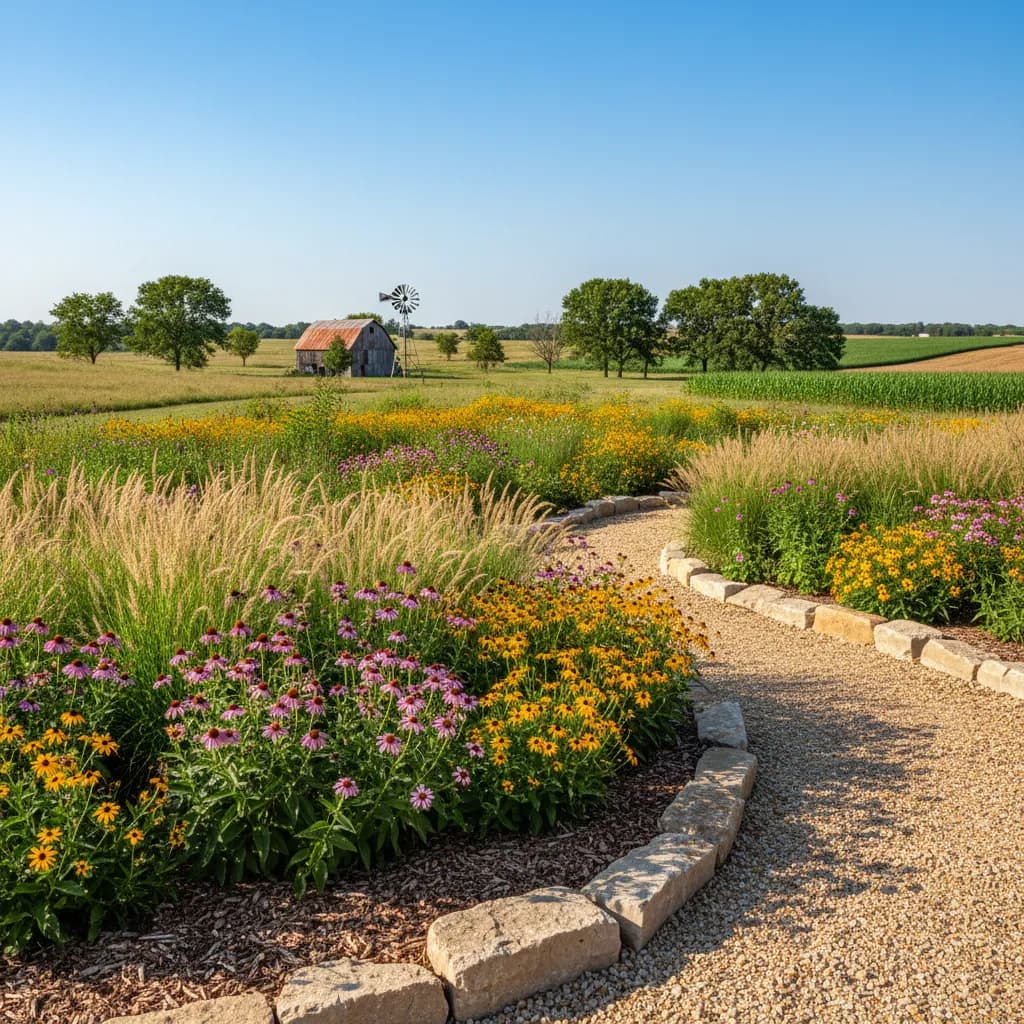
Kansas Climate Snapshot
Understanding your local climate is key to creating a thriving, low-maintenance garden
Hardiness Zones
5b, 6a, 6b, 7a
Annual Rainfall
15–40 inches annually (east to west gradient; Wichita ~32 inches, Dodge City ~21 inches)
Frost Window
Last frost: April 15–20 (north/west) to April 1–7 (south/east); first frost: October 10–20
Water Notes
Eastern Kansas has adequate rainfall for most ornamentals without irrigation; western Kansas requires drought-tolerant native plants or drip irrigation for anything beyond prairie natives. High-plains Ogallala Aquifer irrigation restrictions increasingly limit water use in western counties.
Popular Landscaping Styles
Discover design styles perfectly suited to Kansas's unique climate and landscape
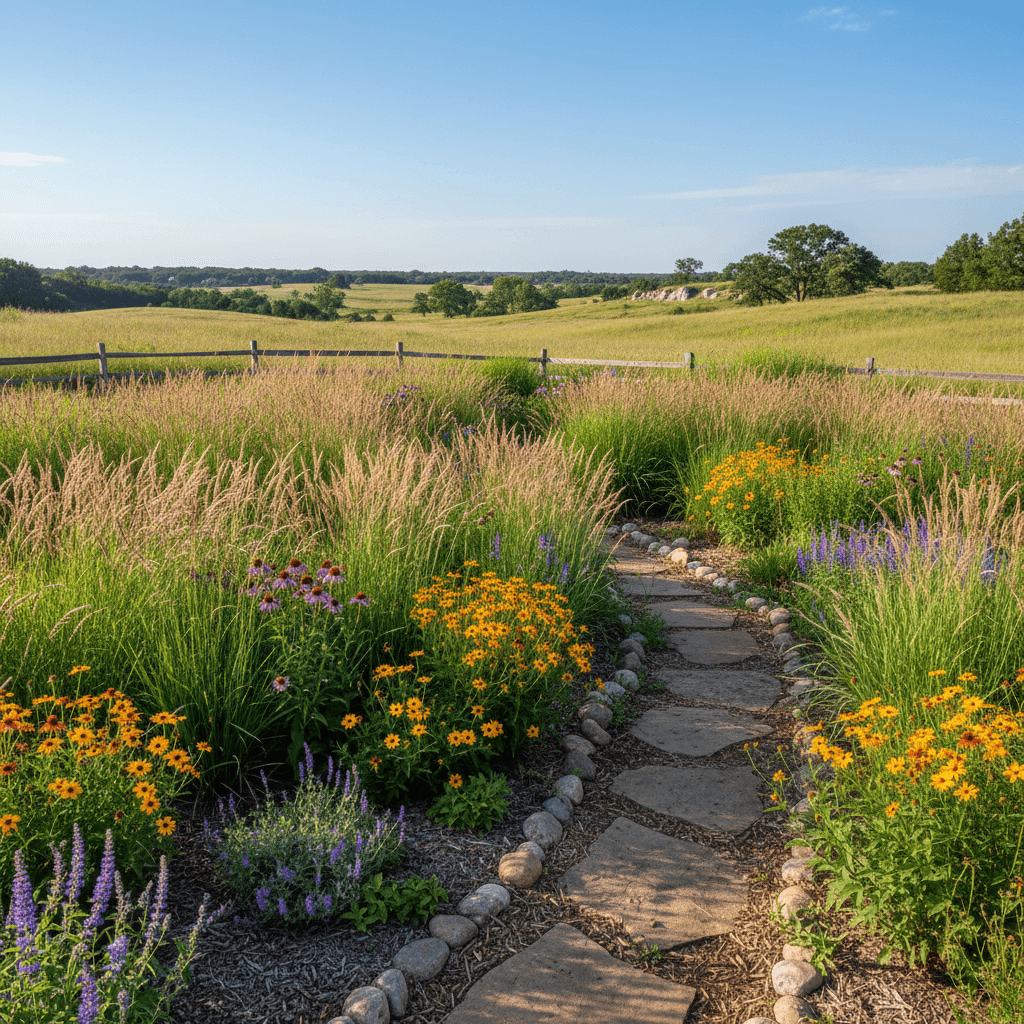
Authentic recreation of the Flint Hills ecosystem using the native grasses and wildflowers that once covered eastern Kansas — the most ecologically valuable and lowest-maintenance landscape possible
Key Features:
- •Big bluestem and indiangrass as the structural grass framework
- •Purple coneflower, prairie blazing star, and black-eyed Susan for seasonal color
- •Naturalistic drifts that move in the wind rather than fighting it
- •Annual burn or mowing every 2–3 years to control woody encroachment
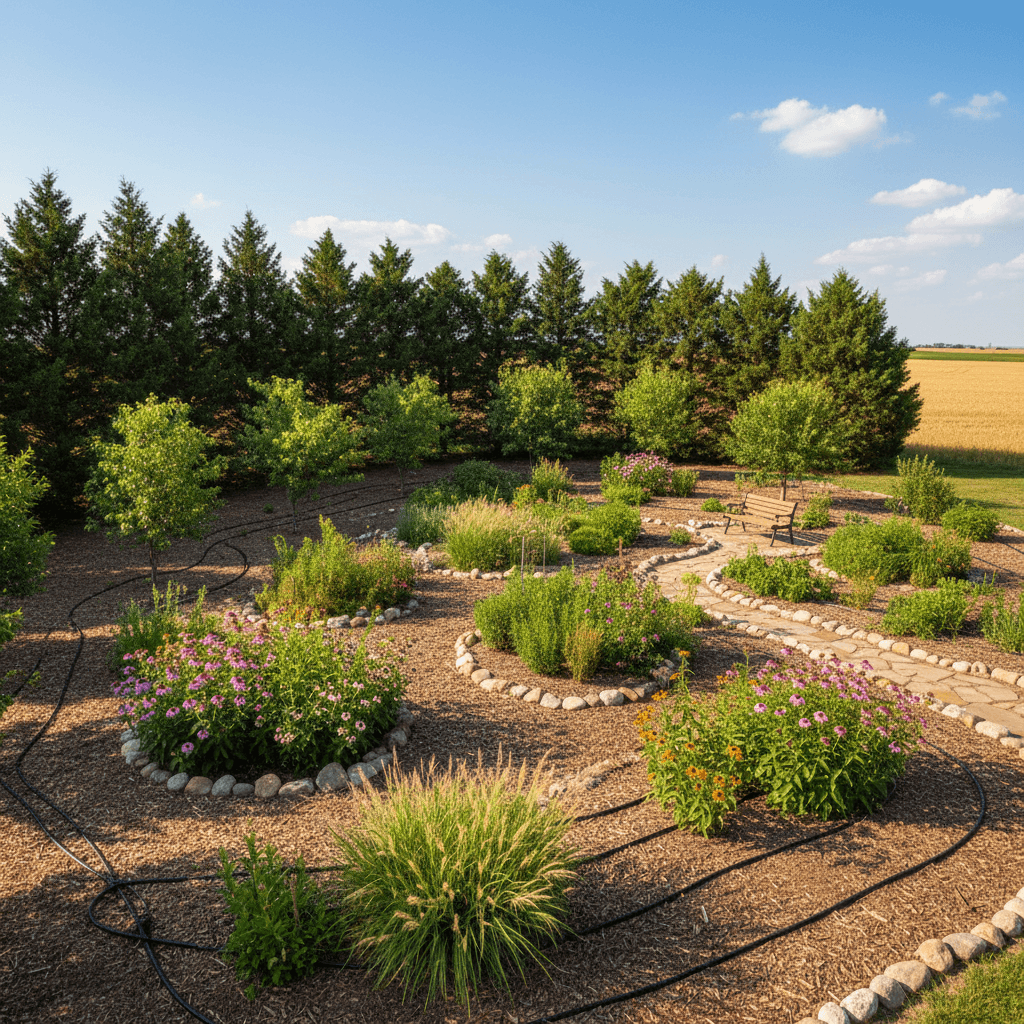
Functional multi-row windbreak using native and adapted trees to cut wind speeds, reduce heating/cooling costs, and create sheltered microclimates for more delicate plantings
Key Features:
- •Eastern red cedar or Austrian pine as dense evergreen outer row
- •Bur oak and hackberry as long-lived deciduous inner rows
- •Shrub layer of native plum (Prunus americana) or wild rose for wildlife
- •At least 3 rows minimum to achieve meaningful wind reduction
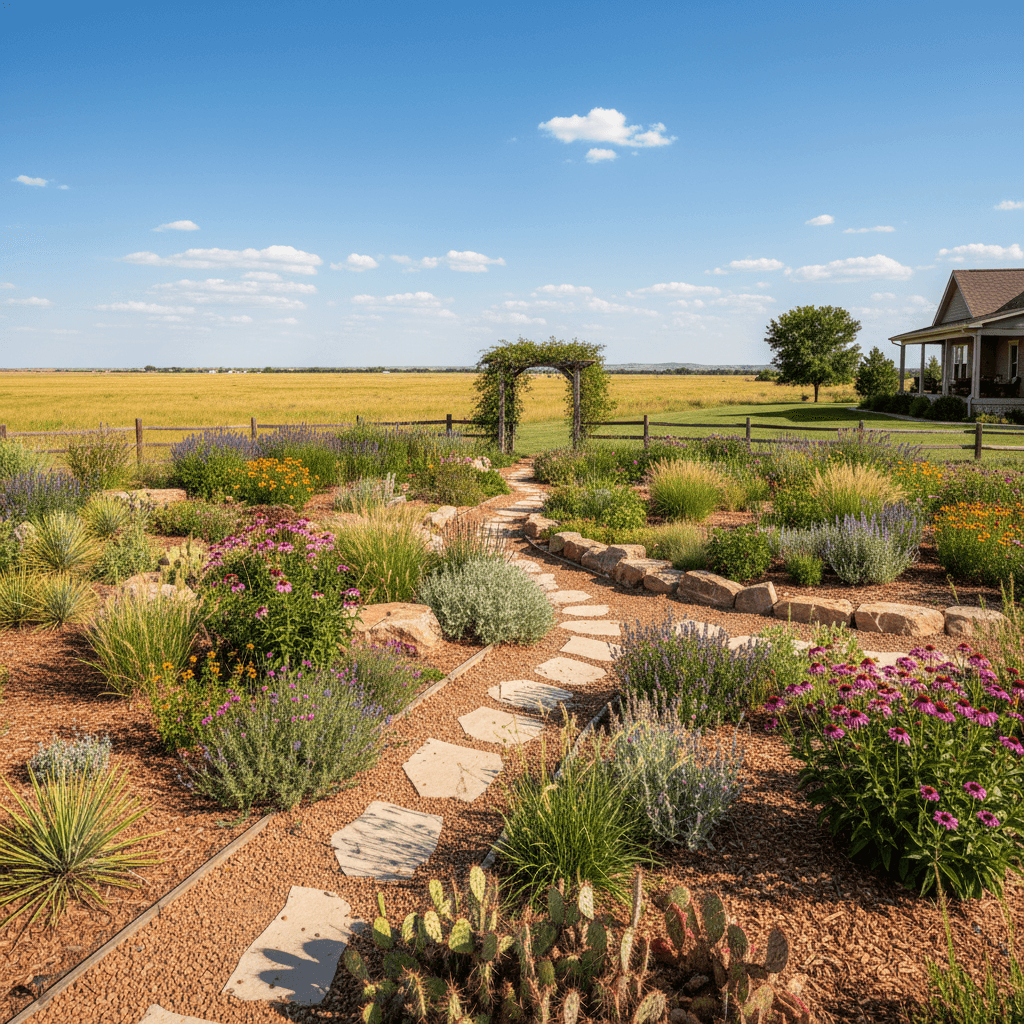
Water-wise design for western Kansas and high-plains communities — using drought-adapted prairie plants and hardscape to create beautiful, sustainable landscapes without irrigation
Key Features:
- •Buffalo grass (Bouteloua dactyloides) as no-mow, no-water lawn alternative
- •Russian sage, prairie dropseed, and blue grama grass for texture
- •Native yucca (Yucca glauca) and prickly pear (Opuntia polyacantha) as accent plants
- •Decomposed granite mulch to retain soil moisture and reduce weed pressure
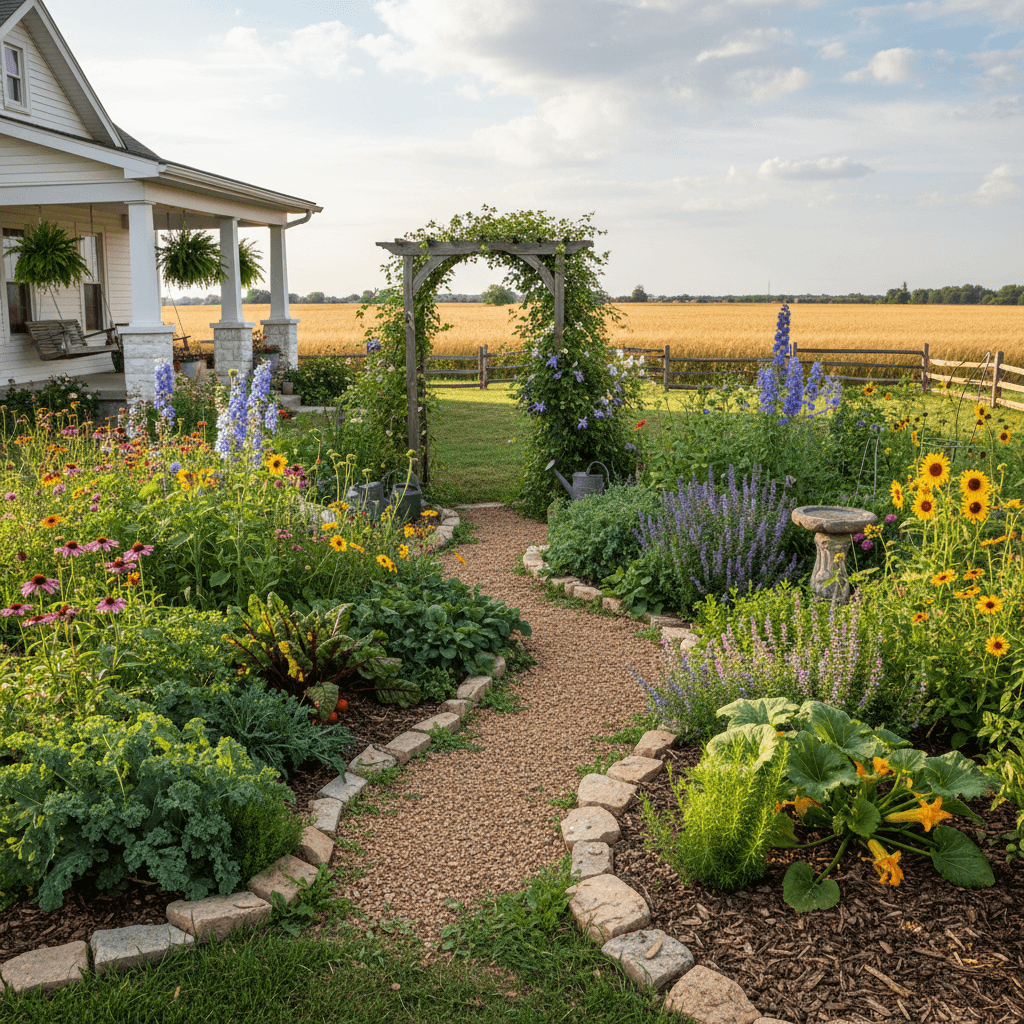
Informal, abundant style for eastern Kansas and urban Wichita, Topeka, and Kansas City yards — mixing native wildflowers with vegetables, herbs, and heirloom perennials
Key Features:
- •Sunflower and coneflower borders along fences and property lines
- •Raised vegetable beds in composted tallgrass prairie soil
- •Heirloom roses and peonies as traditional prairie farmstead elements
- •Climbing native trumpet vine (Campsis radicans) on arbors and trellises
Recommended Plant Palettes
Native and adapted plants that thrive in Kansas's climate
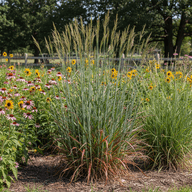
Big Bluestem
Andropogon gerardii
The dominant grass of the original Flint Hills tallgrass prairie; grows 5–7 ft tall with steel-blue summer color turning deep red-orange in fall — forms the backbone of any authentic Kansas prairie garden
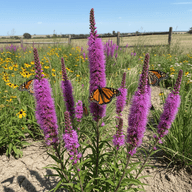
Prairie Blazing Star
Liatris pycnostachya
Magenta-purple flower spikes July–August are one of the most dramatic native wildflowers on the plains; monarch butterfly magnet and completely drought-tolerant once established in any Kansas soil
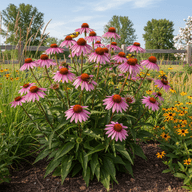
Purple Coneflower
Echinacea purpurea
Pink-purple daisy flowers June–September attract bees and goldfinches; seeds persist through winter providing bird food — native to eastern Kansas tallgrass prairies and tolerates clay, loam, and sandy soils
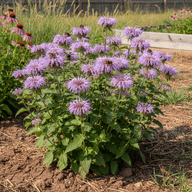
Wild Bergamot
Monarda fistulosa
Lavender flowers July–August are primary nectar source for many native bees; aromatic foliage deters deer — extremely drought-tolerant native that thrives without supplemental water across all Kansas zones
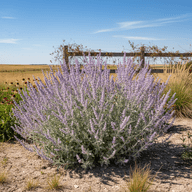
Russian Sage
Perovskia atriplicifolia
Silver-white stems with hazy lavender-blue flowers from July through September; exceptionally wind and drought tolerant and thrives in the alkaline soils common across central and western Kansas
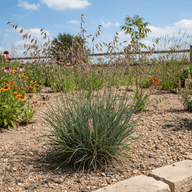
Sideoats Grama
Bouteloua curtipendula
State grass of Kansas; short, tough native grass with pendulous oat-like seed heads; thrives in full sun and dry soils across the entire state with zero irrigation once established
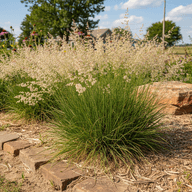
Prairie Dropseed
Sporobolus heterolepis
Fine-textured grass forming 2-ft mounds with fragrant coriander-scented flowers in late summer; thrives in lean, dry prairie soil and turns golden-orange in fall
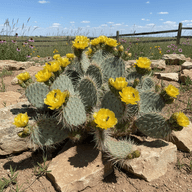
Plains Prickly Pear
Opuntia polyacantha
Native cactus producing bright yellow flowers in June; completely drought-proof and provides critical wildlife habitat — appropriate for rock gardens and xeric west Kansas landscapes
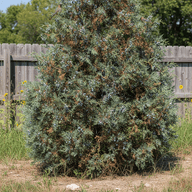
Eastern Red Cedar
Juniperus virginiana
Dense native evergreen that forms the backbone of Kansas windbreaks; extremely drought and wind tolerant, providing year-round wind protection and berry crops for cedar waxwings and other birds
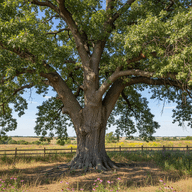
Bur Oak
Quercus macrocarpa
The quintessential Kansas plains tree — massive trunk, corky bark, and extremely deep roots make it the most drought-tolerant oak in North America; long-lived and supports hundreds of native insect species
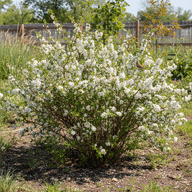
American Plum
Prunus americana
Native plum shrub forming dense thickets perfect for wildlife shelter and windbreak understory; white flowers in April, edible tart fruits in August, and wildlife value year-round
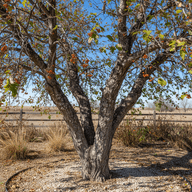
Hackberry
Celtis occidentalis
Tough native tree that thrives in alkaline Kansas soil, high winds, and periodic drought; warty bark, persistent orange-red berries eaten by 50+ bird species, and remarkable storm resistance
Seasonal Garden Checklist
Your year-round guide to maintaining a beautiful Kansas garden
Plant spring bulbs and divide perennial clumps
Mulch tender perennials; check windbreak trees for storm damage
Start tomato and pepper seeds indoors under grow lights
Plant cool-season vegetables: broccoli, cabbage, lettuce, peas
Plant warm-season crops and native perennials after last frost
Water deeply but infrequently; mulch to 3 inches against summer drought
Frequently Asked Questions
Get answers to common questions about landscaping in Kansas
Explore Garden Styles in Kansas
Browse detailed design guides with climate-adapted tips and plant lists for Kansas.
Free Planning Tools
Use our free tools to plan and build your Kansas garden.
Ready to Design Your Kansas Garden?
Upload a photo of your yard and get AI-powered garden designs tailored to Kansas's climate with native and adapted plants.
Design Your Garden