Composting for Beginners: Kitchen Scraps to Garden Gold
Composting is the most overcomplicating simple thing in gardening. You pile up organic material, it decomposes, and you get a dark, crumbly soil amendment that makes everything grow better. That’s all composting is: managed decomposition.
Yet the internet makes it sound like you need a chemistry degree. Carbon-to-nitrogen ratios. Thermophilic bacteria. Internal temperature monitoring. Moisture percentages. The complexity scares people off before they start.
Here is the simple version: throw organic stuff in a pile, keep it roughly balanced and vaguely moist, and wait. You will get compost. You can optimize the process with technique, but the baseline is shockingly forgiving.
Why Compost
Finished compost does several things that nothing else does as well:
Feeds the soil biology. Compost is alive with bacteria, fungi, protozoa, and other organisms that make nutrients available to plant roots. A handful of finished compost contains more microorganisms than there are people on Earth.
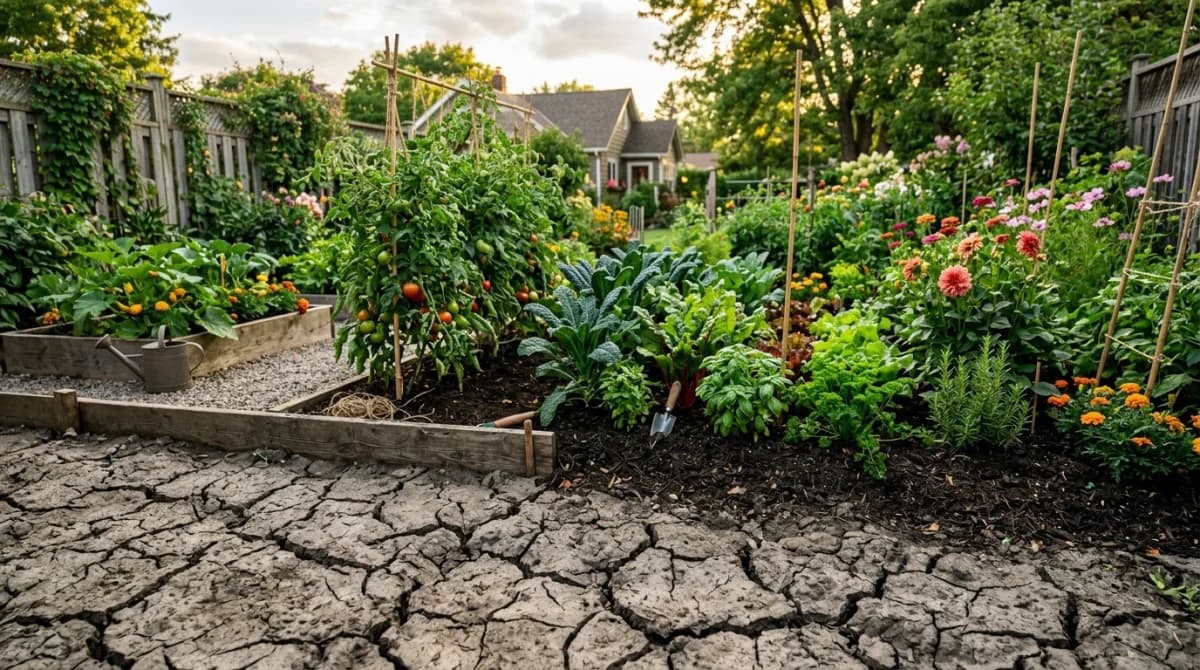
Improves any soil type. Added to clay soil, compost opens the structure and improves drainage. Added to sandy soil, compost increases water-holding capacity. This isn’t marketing. It’s physics. Organic matter creates pore spaces of various sizes that balance air and water retention.
Adds nutrients slowly. Compost releases nitrogen, phosphorus, potassium, and micronutrients gradually as organisms break it down further. This slow release feeds plants over weeks and months, not all at once like synthetic fertilizer.
Suppresses disease. Healthy soil biology from compost competes with pathogenic organisms. Gardens amended with compost consistently show lower rates of soil-borne disease.
Bin vs. Pile vs. Tumbler
You don’t need any container to compost. A pile on the ground works fine. But containment keeps things tidy and can speed the process.
Open Pile
The simplest option. Choose a spot on bare soil (not concrete or asphalt, since you want soil organisms to migrate up into the pile), at least 3 feet from structures, and start stacking. Minimum effective size is about 3 feet wide by 3 feet deep by 3 feet tall, as smaller piles don’t generate enough heat to decompose quickly.
Pros: Free, unlimited capacity, easy to turn with a pitchfork. Cons: Looks messy, may attract animals if food scraps are exposed, takes up ground space.
Bin (Enclosed)
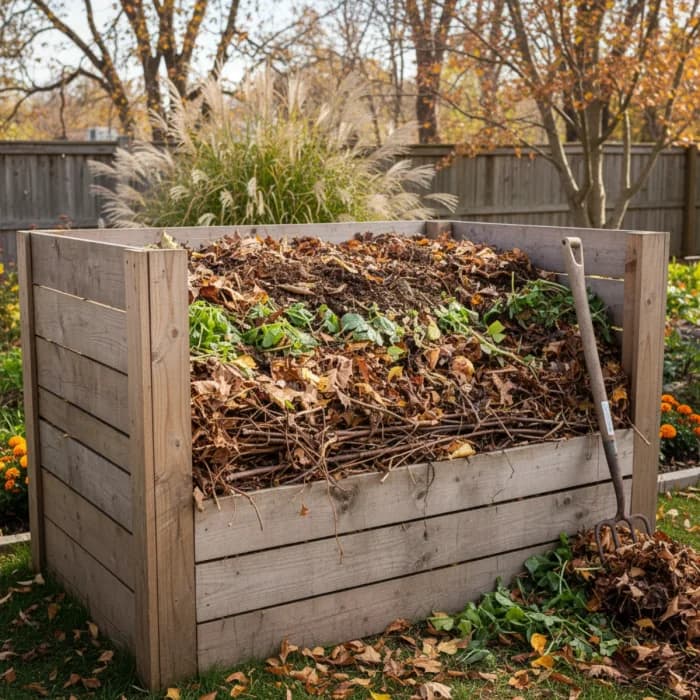
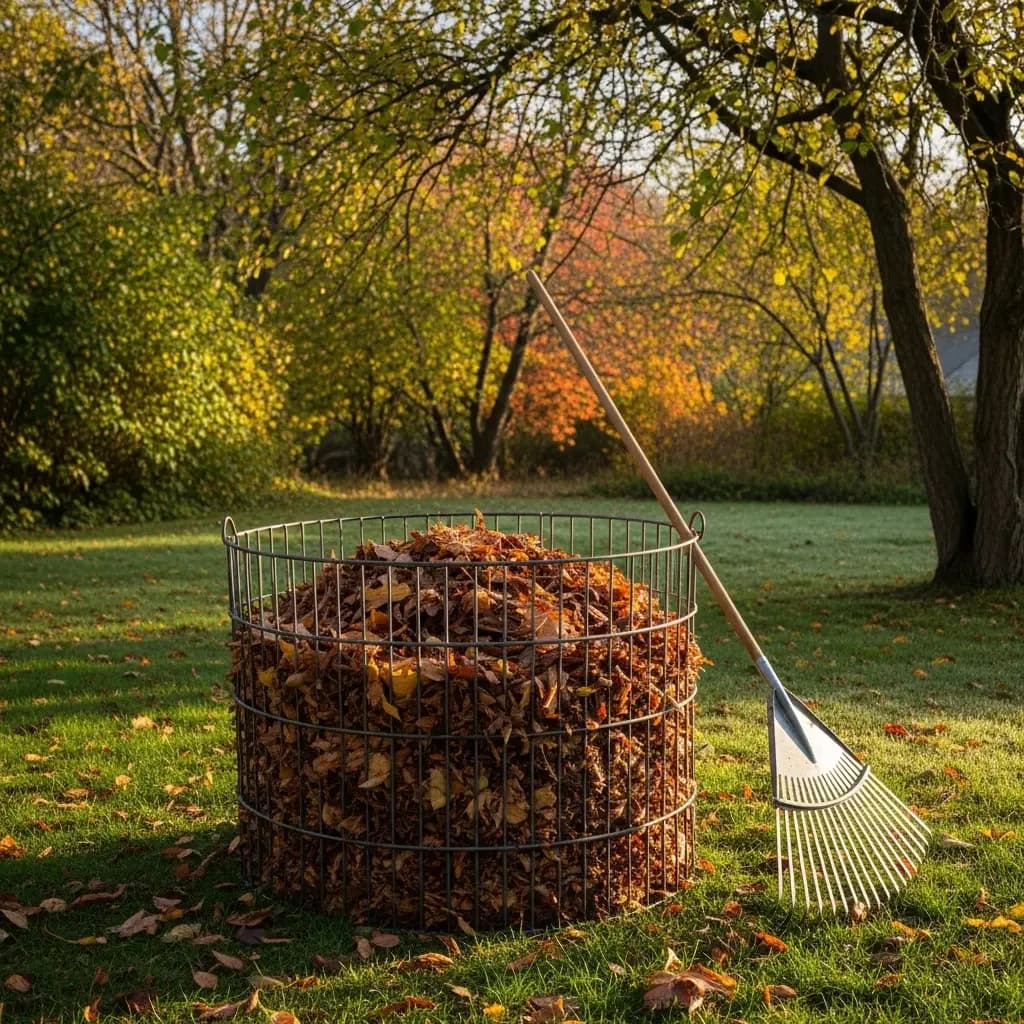
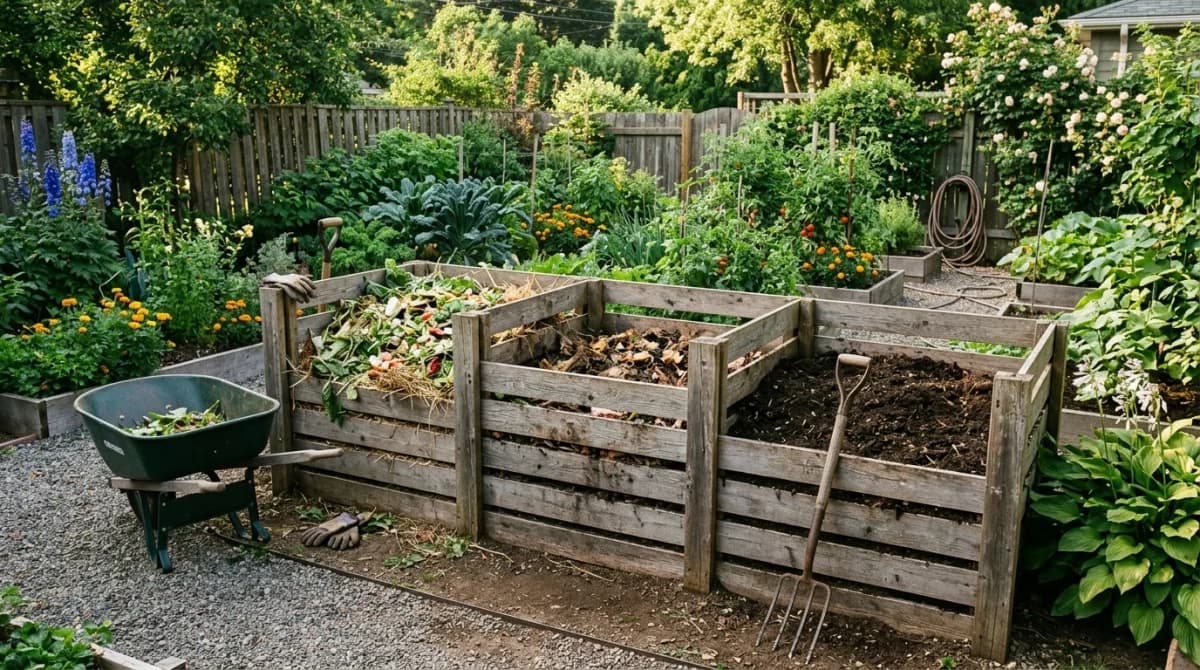
A wooden slatted bin, a wire mesh circle, or a purchased plastic bin. Bins keep the pile contained and looking tidy while providing the same conditions as an open pile. Three-bin systems are the gold standard for serious composters: one bin filling, one cooking, one ready to use.
Pros: Tidy, deters animals, easy to manage stages. Cons: Costs $30 to $150 depending on materials, fixed capacity.
Tumbler
A barrel or drum on a frame that you rotate to mix the contents. Tumblers promise fast composting through frequent turning.
Pros: Clean, compact, easy to turn, good for small spaces. Cons: Small capacity (most hold 5 to 10 cubic feet), can go anaerobic if overfilled, expensive ($80 to $250). They work best as supplement to a larger system, not the sole composting method.
The Green-Brown Balance
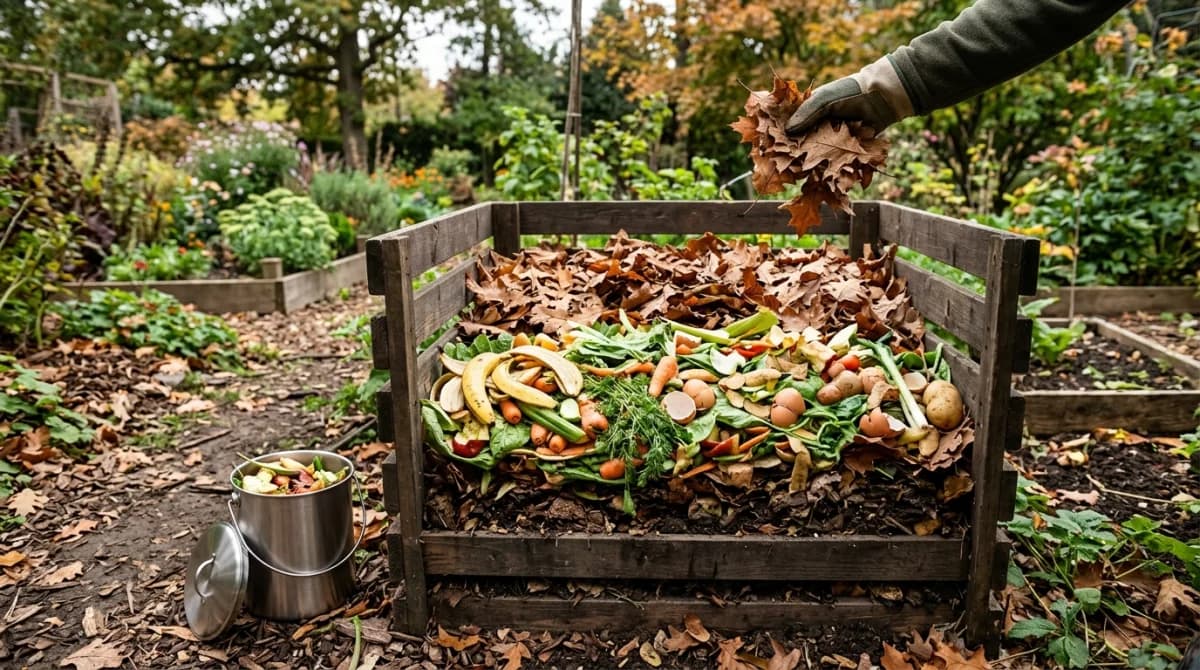
Everything you compost is either “green” (nitrogen-rich) or “brown” (carbon-rich). The ideal ratio is roughly 3 parts brown to 1 part green by volume.
Green Materials (Nitrogen)
- Fruit and vegetable scraps
- Coffee grounds and filters
- Fresh grass clippings
- Garden trimmings (green, fresh)
- Eggshells (technically neutral, but fine to add)
- Tea bags (remove staples)
Brown Materials (Carbon)
- Dried leaves (the best brown material; collect in fall and stockpile)
- Shredded cardboard and paper (no glossy or colored ink)
- Straw
- Wood chips and sawdust (in small amounts)
- Dried garden stems and stalks
- Pine needles
- Dryer lint (from natural fiber clothes only)
What NOT to Compost
- Meat, fish, dairy, bones: They decompose fine but attract rats, raccoons, and flies
- Cooking oil and grease: Coats materials and slows decomposition
- Dog or cat waste: Contains pathogens dangerous to humans
- Diseased plant material: Home compost doesn’t get hot enough to kill all pathogens
- Weeds that have gone to seed: Seeds may survive composting and sprout in your garden
- Treated wood or charcoal ash: Contains chemicals you don’t want in your soil
How to Build a Pile
Layer Method (Easy)
Start with a 6-inch layer of brown material on bare ground. Add a 2-inch layer of green material. Add another 6-inch layer of brown. Repeat. Water lightly as you build. The pile should feel like a wrung-out sponge, moist but not dripping.
Every time you add kitchen scraps (green), cover them with a layer of brown material. This prevents odors, deters flies, and maintains the balance.
All-at-Once Method (Fast)
If you have a large volume of material available at once (fall leaves plus fresh garden cleanup, for example), build the entire pile in one session. Alternate layers of green and brown, water thoroughly, and leave it. A pile built all at once generates heat faster and decomposes more quickly than one built gradually.
Troubleshooting
Too Wet (Smells Bad, Slimy)
Add brown material: shredded leaves, cardboard, or straw. Turn the pile to introduce air. A smelly pile is almost always too wet and too compacted, which creates anaerobic conditions where different (and smelly) organisms take over.
Too Dry (Nothing Happening)
Add water. A dry pile doesn’t decompose because the microorganisms need moisture to function. Water the pile until material throughout feels damp.
Not Heating Up
The pile may be too small (under 3 cubic feet), too dry, or lacking enough green material. Add nitrogen-rich greens and water. For a quick boost, add a few handfuls of fresh grass clippings or used coffee grounds, both nitrogen-rich and good for jump-starting microbial activity.
Attracting Pests
Always bury food scraps under a thick layer of brown material. If rodents are persistent, switch to a closed bin or tumbler, or stop adding food scraps and compost only garden waste and leaves.
Speed Composting: The Hot Pile
If you want finished compost in four to eight weeks instead of six to twelve months, use the hot composting method:
- Build the pile all at once to at least 3 × 3 × 3 feet
- Get the ratio right: roughly 3:1 brown to green by volume
- Chop materials: smaller pieces decompose faster. Run leaves through a mower, break up stems, shred cardboard
- Maintain moisture: aim for the wrung-out sponge standard
- Turn every 3 to 5 days to introduce oxygen and redistribute heat
A hot pile reaches 130 to 150°F internally within a few days. This temperature kills weed seeds and pathogens. When the pile no longer reheats after turning, it’s nearly done. Let it cure for two to four weeks, and you have finished compost.
Using Finished Compost
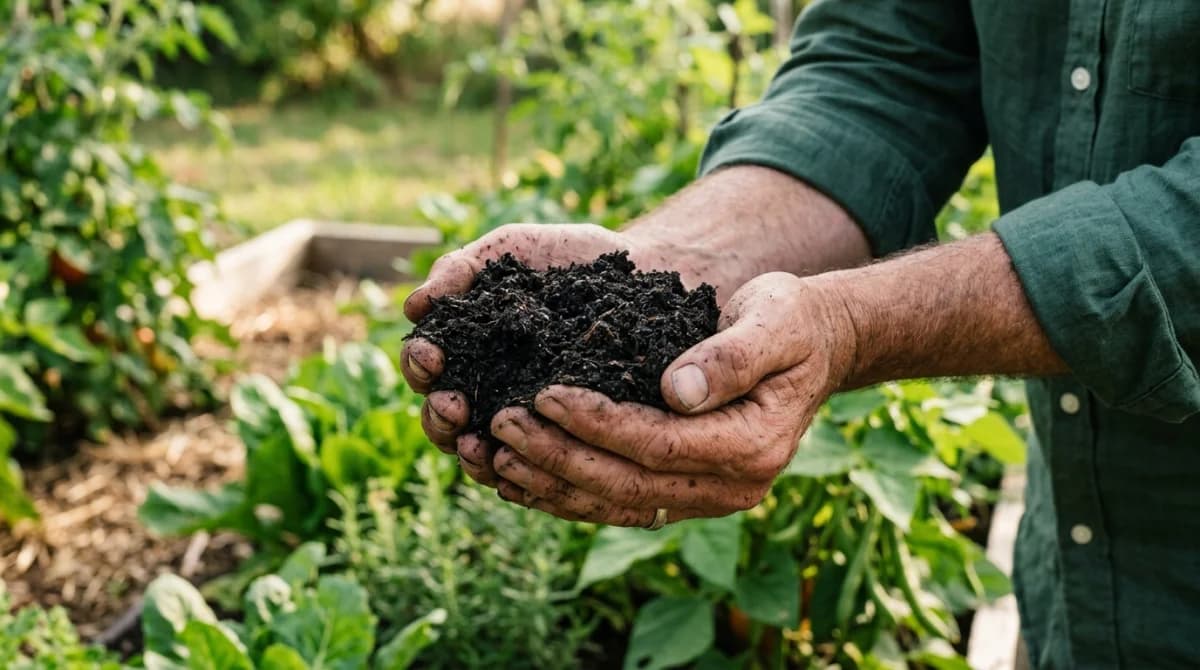
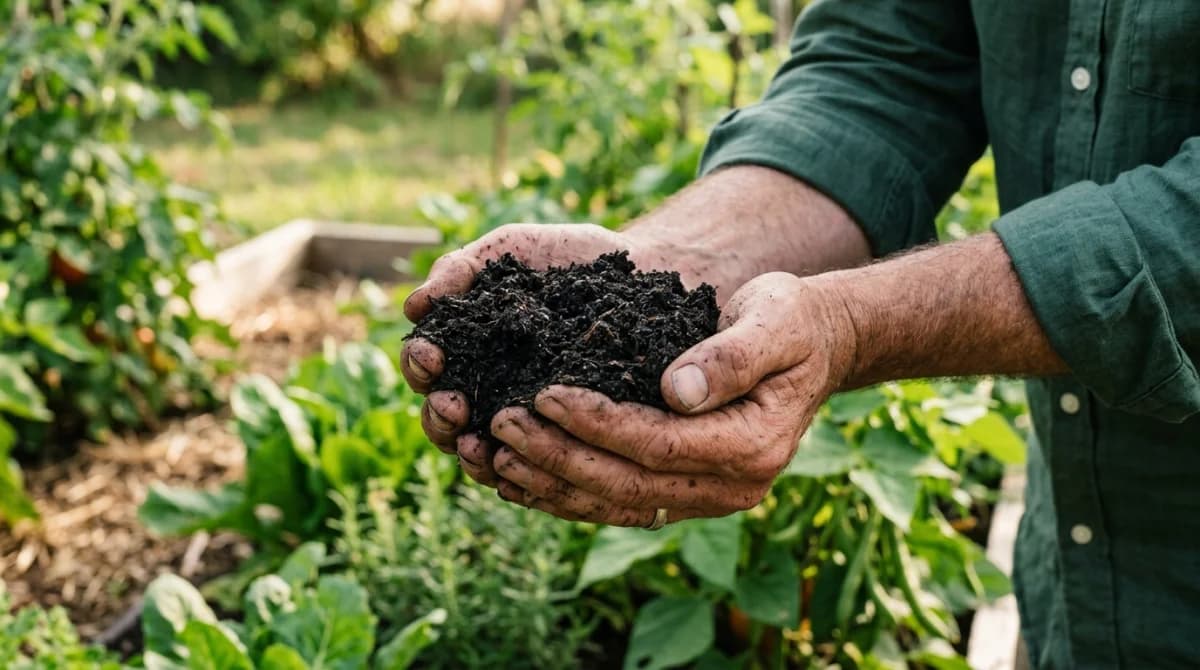
Finished compost looks like dark, crumbly soil. It smells earthy and pleasant. You shouldn’t be able to identify any of the original ingredients.
In garden beds: Spread 2 to 3 inches on the surface and work into the top few inches, or use as mulch. Apply in spring before planting.
In raised beds: Add 2 to 3 inches annually to replace decomposed organic matter.
As potting mix component: Mix one part compost with two parts potting mix for containers. Don’t use pure compost in pots, as it’s too dense and holds too much moisture.
As lawn top-dressing: Spread a quarter inch of sifted compost over lawn areas and rake it in. This feeds the soil biology and improves lawn health without synthetic fertilizer.
Composting is one of those practices that seems intimidating before you start and obvious afterward. You’re converting waste into the single best thing you can add to your garden, for free. Start a pile this weekend and by late summer, you’ll have your first batch of black gold.