Gardening in Clay Soil: Work With It, Not Against It
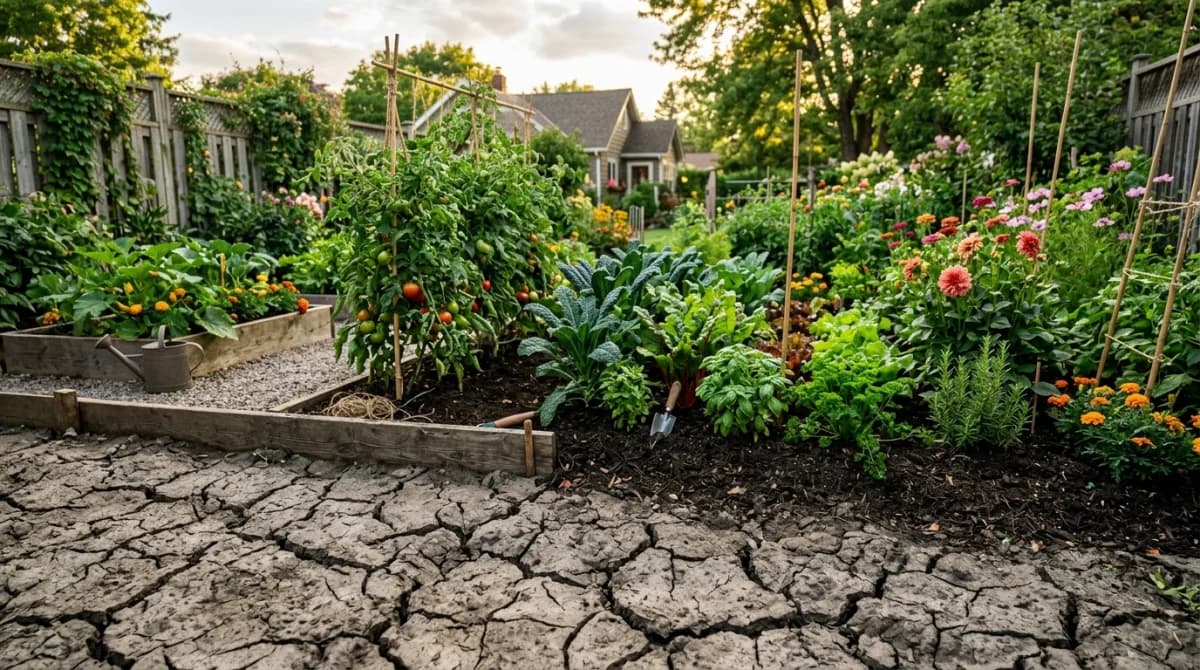
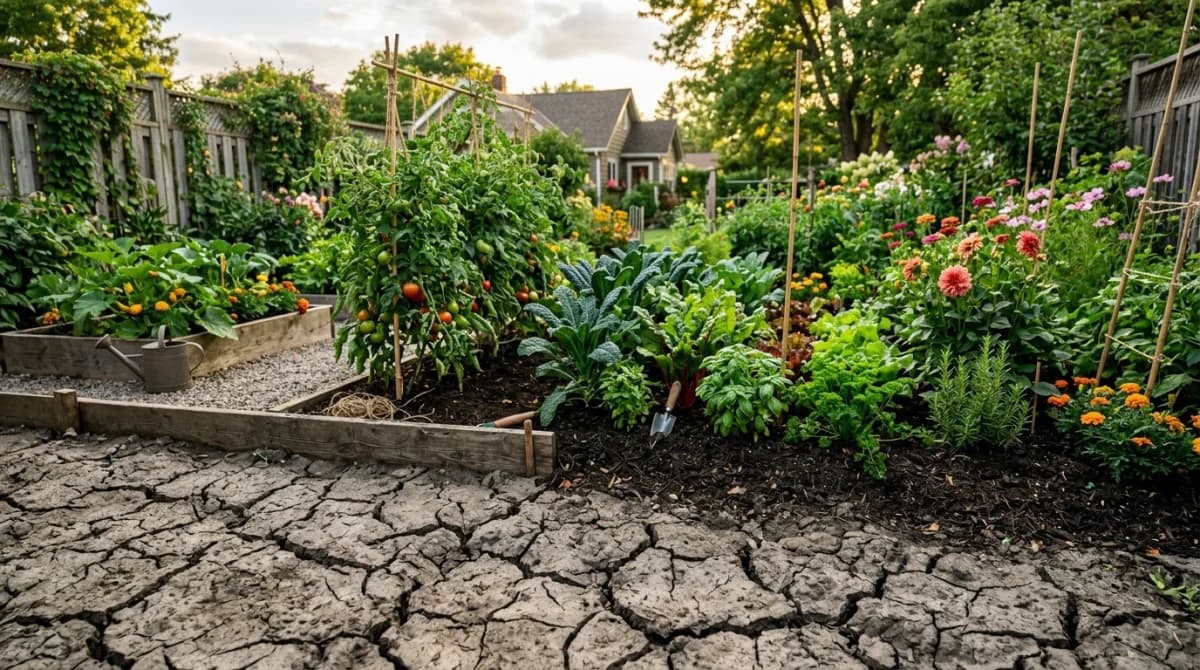
If you’ve ever pushed a shovel into wet clay, you know the feeling. It sticks to the blade like concrete, weighs twice what normal soil weighs, and refuses to crumble. When it dries out, it cracks into hard plates that reject water like a parking lot. When it’s wet, it turns into a slippery, airless mass that suffocates roots.
No wonder people hate clay soil. But hating it doesn’t make it go away, and most gardeners in the eastern half of North America, the UK, and much of Europe are stuck with it.
Here’s the part nobody mentions: clay soil is actually rich. Clay particles are tiny and have enormous surface area, which means they hold onto nutrients and water far better than sand or loam. A garden in clay, once properly amended, can be extraordinarily productive. The challenge is getting it there.
The Ribbon Test
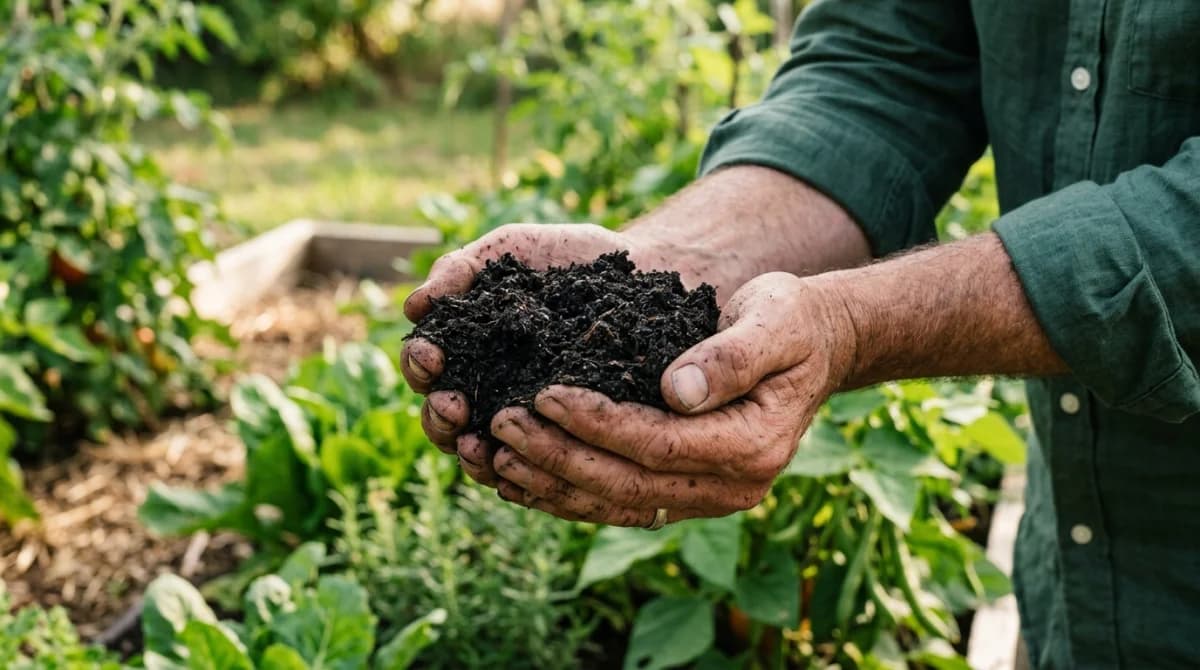
Before you do anything, confirm that you actually have clay. Grab a handful of moist soil and squeeze it in your fist. Open your hand. If it holds its shape in a tight, shiny ball, you probably have clay.
Now press that ball between your thumb and forefinger, pushing it out into a ribbon. If you can form a ribbon longer than 2 inches without it breaking, you have heavy clay. A ribbon of 1 to 2 inches indicates moderate clay content (clay loam). If it crumbles before forming a ribbon, you have loam or sand and a different set of challenges.
Clay soil also reveals itself by behavior:
- Puddles persist for hours after rain
- Soil sticks to shoes and tools in clumps
- Surface cracks appear during dry periods
- Digging feels like working concrete
What NOT to Do
Don’t Add Sand
This is the most persistent bad advice in gardening. The logic seems sound: clay is heavy and dense, sand is light and coarse, so mixing them should create a lighter, better-draining soil.
In reality, clay particles are so much smaller than sand particles that they fill the spaces between the sand grains, creating something with the characteristics of concrete or morite. You’d need to add sand at a ratio of about 80 percent sand to 20 percent clay to actually improve drainage, essentially replacing the soil entirely.
Don’t Work Wet Clay
Digging, tilling, or walking on wet clay soil destroys its structure. Clay particles smear together into dense, compacted layers that can persist for years. The old rule: pick up a handful of soil and squeeze it. If it forms a wet, sticky ball, it’s too wet to work. Wait until it crumbles when squeezed.
Don’t Till Repeatedly
Tilling clay soil when it’s too wet (see above) is disastrous. But even tilling dry clay creates a temporary improvement that actually worsens the problem over time. Tilling breaks up the surface but creates a compacted layer (hardpan) just below the tilling depth. Water and roots can’t penetrate this layer, and the surface pulverized by tilling seals into a crust after the first rain.
Organic Matter: The Only Real Fix
The permanent solution to clay soil is organic matter. Lots of it. Consistently. Over years.
Organic matter (compost, aged manure, shredded leaves, cover crop residue) does several things that nothing else can:
- Opens the structure. Organic matter creates aggregates (clumps of soil particles held together by biological glue). These aggregates create pore spaces that allow water and air to move through clay that was previously solid.
- Feeds biology. Earthworms, fungi, and bacteria that thrive on organic matter physically restructure soil through their movement and metabolic activity. Earthworm tunnels alone dramatically improve clay drainage.
- Buffers moisture. Organic matter absorbs water during wet periods and releases it during dry periods, moderating the clay’s extreme wet-dry swings.
How Much to Add
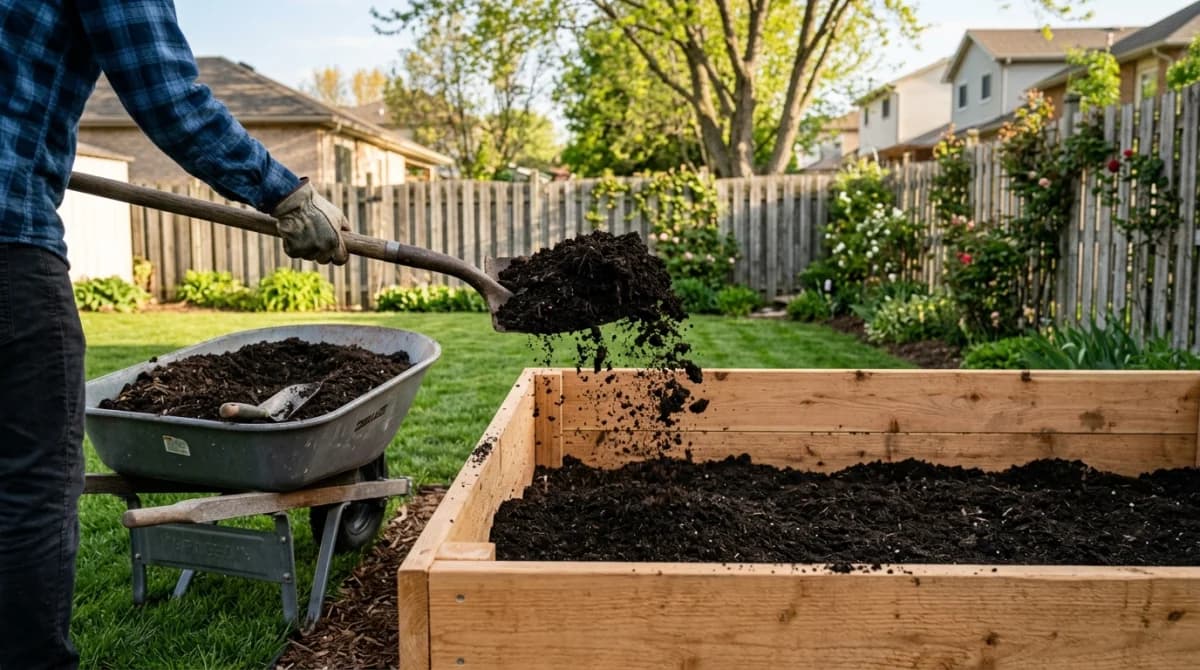
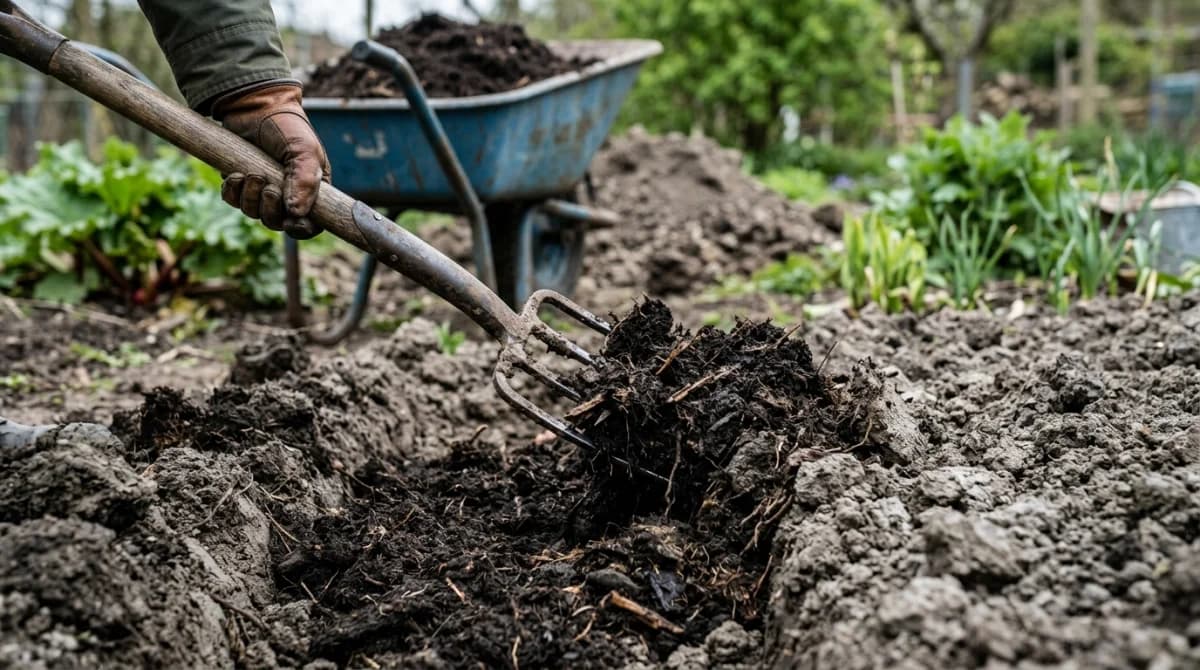
For new beds in heavy clay, spread 4 to 6 inches of finished compost on the surface and work it into the top 8 to 12 inches with a garden fork (not a tiller). This is heavy work, but it’s a one-time effort that transforms the bed.
For established beds, top-dress with 2 to 3 inches of compost annually. Let earthworms and biological activity incorporate it. Over three to five years, the top layer of your clay soil will become genuinely workable.
Cover Crops
Planting cover crops (clover, winter rye, daikon radish) in off-season beds accelerates clay improvement. Their roots penetrate and break up compacted layers. When cut down and turned in, they add organic matter directly where it’s needed most: in the root zone.
Daikon radish (also called tillage radish) is especially useful for clay. It sends a thick taproot 12 to 18 inches into the soil, physically punching through compacted layers. When the radish dies over winter, the root channel remains, creating a pathway for water infiltration and future root growth.
Raised Beds as a Shortcut
If your clay is severe and you want to grow vegetables this season, raised beds bypass the problem entirely. Build beds on top of the clay, fill them with good soil mix, and grow in that.
Over time, the organic matter in the raised bed will migrate downward and begin improving the clay below. Earthworms will move between the raised bed soil and the clay, creating tunnels and mixing material. Within a few years, the clay directly beneath raised beds shows noticeable improvement.
For raised beds on clay, make sure the beds are open-bottomed (sitting directly on the ground, not lined). The clay surface provides drainage, even if it’s slow.
Plants That Thrive in Clay
While you’re improving your clay over the long term, these plants grow well in unimproved or lightly amended clay soil:
Perennials
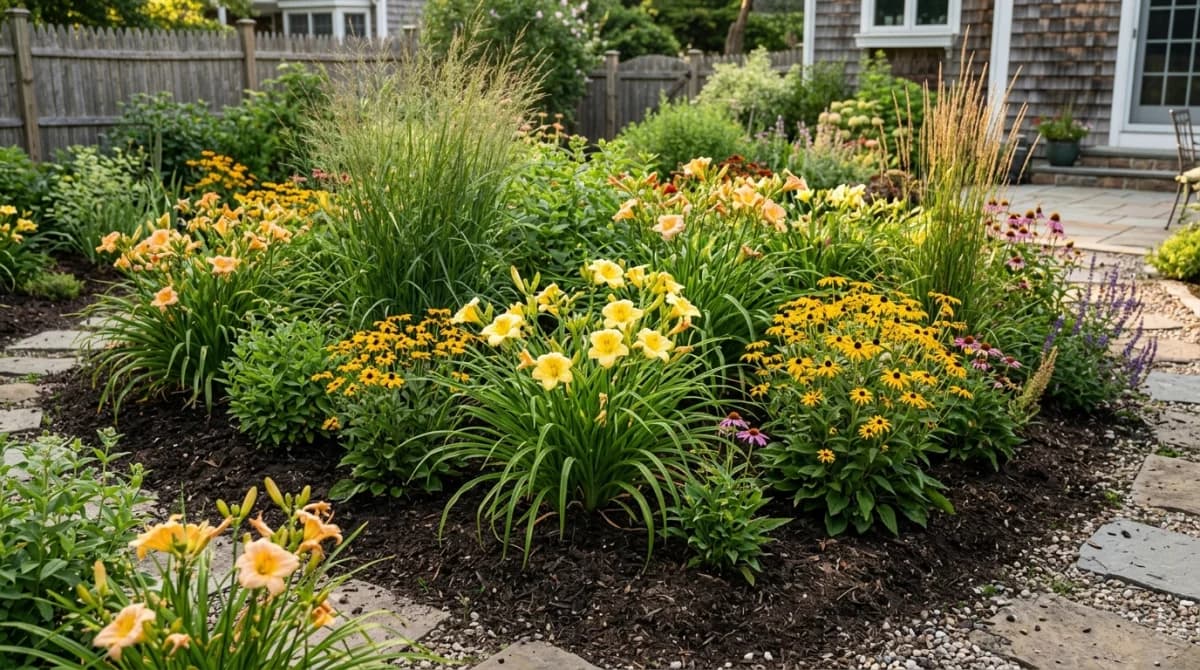
- Daylilies (Hemerocallis): virtually indestructible in clay
- Hosta: clay-adapted as long as drainage isn’t terrible
- Black-eyed Susan (Rudbeckia): prairie native accustomed to heavy soil
- Aster: fall-blooming native, clay-tolerant
- Bee balm (Monarda): thrives in moist clay, attracts pollinators
- Switchgrass (Panicum virgatum): native grass that handles wet clay beautifully
- Coneflower (Echinacea): adaptable but needs reasonable drainage
Shrubs
- Winterberry holly (Ilex verticillata): loves wet clay
- Arrowwood viburnum (Viburnum dentatum): native, clay-adapted, bird-friendly
- Red twig dogwood (Cornus sericea): tolerates wet clay, brilliant winter stems
- Ninebark (Physocarpus): native, tough, beautiful bark
Trees
- Red maple (Acer rubrum): one of the best trees for clay
- River birch (Betula nigra): tolerates wet and clay soils
- Bald cypress (Taxodium distichum): swamp-native, thrives in clay
The Three-Year Plan
Clay soil improvement is a multi-year project. Here’s a realistic timeline:
Year 1
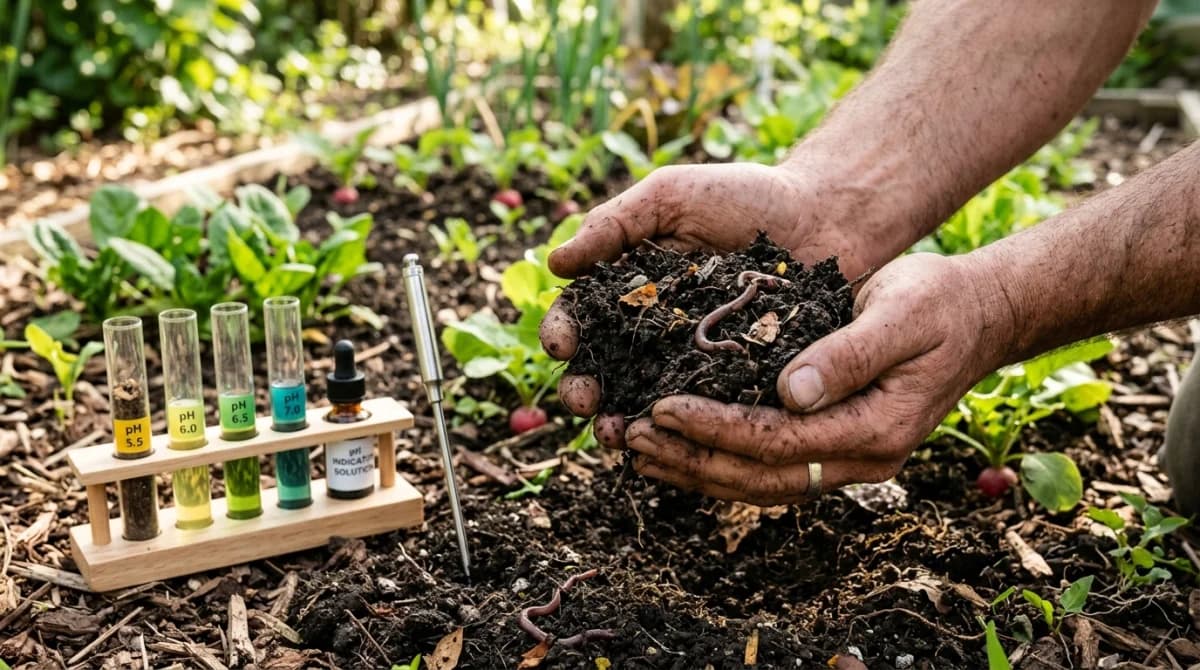
- Test soil pH and nutrients
- Build raised beds for immediate vegetable growing
- Add 4 to 6 inches of compost to the worst areas
- Plant cover crops in unused areas
- Choose clay-tolerant plants for perennial beds
Year 2
- Top-dress all beds with 2 to 3 inches of compost
- Observe improvement: soil should be easier to dig and draining better
- Continue cover cropping
- Expand planting palette as soil improves
- Notice more earthworm activity
Year 3 and Beyond
- Annual compost top-dressing
- Soil tests show improved organic matter percentage
- Structure has visibly improved, clumps break apart more easily
- Wider range of plants now thriving
- Continue the program indefinitely, as clay always benefits from organic matter
Clay soil is a long game. But the reward is soil that holds nutrients and moisture better than any other type, supports vigorous plant growth, and once improved, requires less supplemental watering and feeding than lighter soils.
Stop fighting your clay. Start feeding it. The organic matter does the heavy lifting while you do the gardening.