Container Gardening for Small Spaces: Grow More With Less
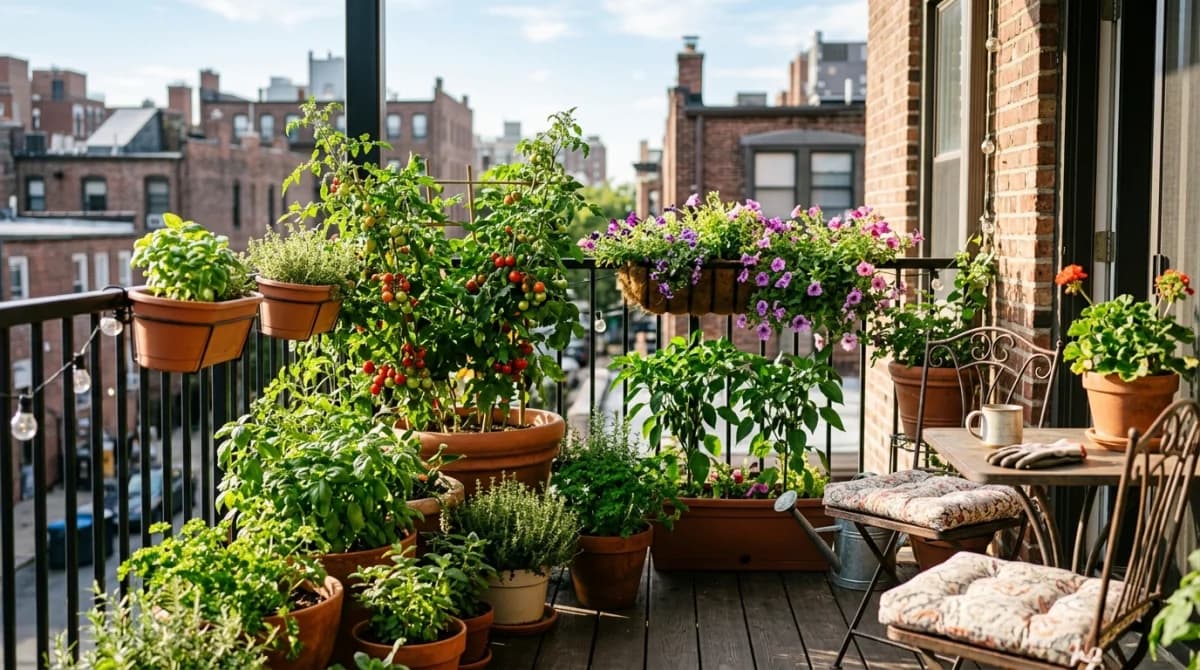
Not everyone has a backyard. Millions of people garden on balconies, patios, fire escapes, rooftops, and front stoops. Some of the most productive gardens you’ll ever see are grown entirely in containers, and they often outperform in-ground gardens because the grower controls everything: soil, drainage, placement, and microclimate.
Container gardening isn’t a compromise. It’s a different approach with its own advantages: no soil-borne diseases to worry about, no ground-dwelling pests, perfect drainage when done right, and the ability to move plants to chase sunlight or escape a storm. The tradeoffs are smaller root zones, faster drying, and higher feeding requirements, all manageable once you understand them.
Here is how to set up a container garden that actually performs.
Choosing the Right Containers
The container itself matters more than most people realize. Size, material, and drainage all affect plant health directly.
Size Rules
The most common container gardening mistake is pots that are too small. Small pots dry out fast, heat up fast, and restrict root growth. As a general rule:
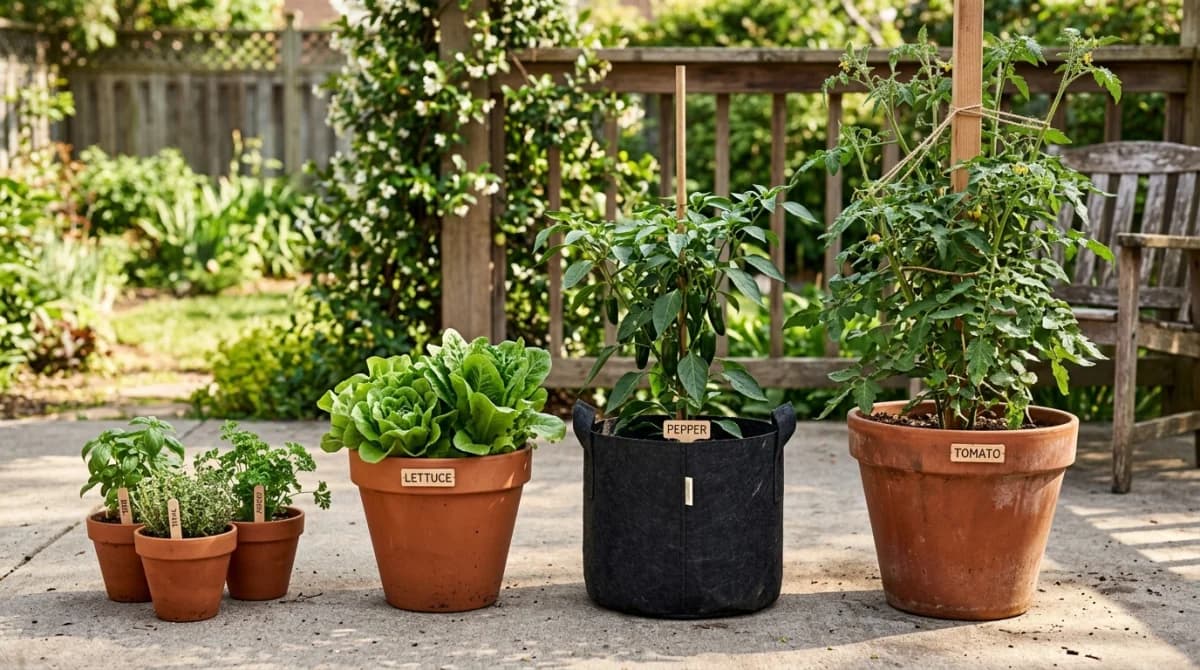
- Herbs and lettuce: Minimum 8 inches wide, 8 inches deep
- Peppers and compact tomatoes: Minimum 14 inches wide, 14 inches deep (5-gallon equivalent)
- Full-size tomatoes, squash, cucumbers: Minimum 18 inches wide, 18 inches deep (15 to 20 gallons)
- Root vegetables (carrots, potatoes): Minimum 12 inches deep, width varies
Bigger is always better with containers. A larger soil volume buffers temperature swings, holds moisture longer, and gives roots room to grow.
Material Comparison
Plastic: Lightweight, inexpensive, retains moisture well. Thin plastic heats up in direct sun, so choose thick-walled pots or light-colored ones. Fabric grow bags offer the benefits of plastic with better aeration and root pruning.
Terracotta: Classic look, heavy, excellent for herbs that prefer drier conditions. Terracotta is porous and loses moisture through the walls, so you’ll water more often. It also cracks in freezing temperatures if left outdoors over winter.
Glazed ceramic: Retains moisture like plastic but with a more finished appearance. Heavy. Check that drainage holes exist, as some decorative pots don’t have them.
Wood: Good insulation, looks natural, and lasts several years. Cedar and redwood resist rot. Avoid pressure-treated lumber for food crops.
Drainage Is Non-Negotiable
Every container needs drainage holes. Water sitting at the bottom of a pot creates anaerobic conditions that rot roots. If you love a pot that doesn’t have drainage, use it as a cachepot: set a slightly smaller pot with drainage inside it, and lift it out periodically to empty accumulated water.
Skip the old advice about putting gravel or broken pottery in the bottom of pots. It doesn’t improve drainage. It actually creates a perched water table that keeps the soil above it wetter for longer. Fill the entire pot with potting mix.
The Right Potting Mix
Never use garden soil in containers. Garden soil compacts in pots, drains poorly, and can harbor diseases and weed seeds. Container growing requires a potting mix designed for the job.
What to Look For
A good potting mix is lightweight, well-draining, and moisture-retentive, all at once. Most quality mixes contain peat moss or coconut coir (moisture retention), perlite or vermiculite (drainage and aeration), and sometimes compost (nutrients and biology).
Avoid the cheapest bags at the hardware store. They’re often heavy, poorly aerated, and break down quickly into a dense, waterlogged mass. Spend a few extra dollars on a reputable mix and your plants will thank you all season.
Amending for Vegetables
Most potting mixes contain enough fertilizer for the first four to six weeks. After that, container vegetables need regular feeding because nutrients leach out with every watering. Mix slow-release organic granular fertilizer into the potting mix at planting time, and supplement with liquid fertilizer every two weeks once plants are actively growing.
Best Vegetables for Containers
Almost any vegetable can grow in a container if the pot is big enough. But some are dramatically better suited to container life than others.
Top Performers
- Cherry and patio tomatoes: Varieties like ‘Tumbling Tom,’ ‘Tiny Tim,’ and ‘Patio Princess’ are bred for containers. Full-size determinate types work in 15-to-20-gallon pots.
- Peppers: All types thrive in containers. Hot peppers especially, as they stay compact and produce heavily in 5-gallon pots.
- Lettuce and salad greens: Perfect for shallow, wide containers. Harvest outer leaves and the plant keeps producing for weeks.
- Bush beans: Compact varieties produce well in 12-inch pots. No staking needed.
- Radishes: Fast and shallow-rooted. Grow them in any container with at least 6 inches of depth.
- Herbs: Basil, cilantro, parsley, mint, thyme, and rosemary are all excellent in pots. Keep mint in its own container because it takes over everything it touches.
Worth Trying
- Cucumbers: Bush varieties like ‘Spacemaster’ work in 5-gallon pots with a small trellis.
- Eggplant: Does well in 5-gallon containers. ‘Fairy Tale’ and ‘Hansel’ are compact varieties.
- Potatoes: Grow bags or tall containers work well. Plant seed potatoes at the bottom and add soil as the stems grow.
Best Flowers for Containers
Flowers in containers do double duty: they look beautiful and attract pollinators to your vegetable containers nearby.
Petunias: Non-stop bloomers that cascade beautifully from hanging baskets and window boxes. Heat-tolerant and fragrant.
Geraniums: Classic container flowers that tolerate drought and heat. Deadhead spent blooms for continuous flowering.
Nasturtiums: Edible flowers that trail from pots. Grow them in lean potting mix for more flowers and fewer leaves.
Calibrachoa (Million Bells): Petunia-like flowers in a trailing habit. Incredible in hanging baskets with minimal care.
Marigolds: Compact French marigolds edge containers beautifully. Bulletproof in heat and sun.
Watering and Feeding
Container plants live in a limited world. Their roots can’t reach deeper soil for moisture or spread wide for nutrients. You are their entire ecosystem.
Watering
Check containers daily in summer. Small pots and terracotta may need twice-daily watering in hot weather. Stick your finger an inch into the soil; if it’s dry, water thoroughly until water flows from the drainage holes. Don’t just wet the surface.
Self-watering containers are worth the investment if you travel or tend to forget. They have a built-in reservoir that wicks water up to the root zone. Plants grow measurably better in self-watering pots because moisture levels stay consistent.
Drip irrigation on a timer eliminates the daily chore entirely. A simple kit with a battery timer, mainline tubing, and drip emitters costs under $30 and connects to a standard spigot.
Feeding
Start liquid fertilizer applications two to three weeks after planting (or when the slow-release charge fades). Use a balanced organic liquid fertilizer (fish emulsion, seaweed extract, or a blended liquid feed) diluted to half strength, applied every ten to fourteen days.
Fruiting crops like tomatoes and peppers benefit from switching to a higher-potassium fertilizer once they start flowering. This supports fruit development over vegetative growth.
Vertical Options for Tight Spaces
When floor space is limited, grow up.
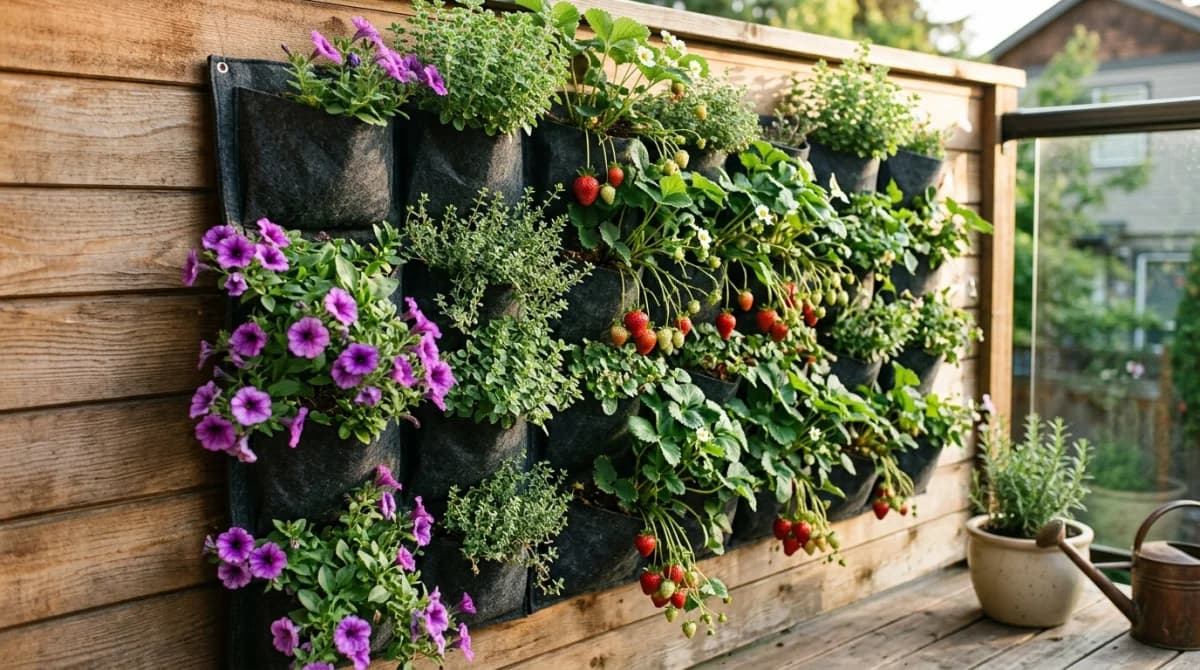
Wall-mounted pocket planters: Fabric or felt pockets attached to a wall or fence. Best for herbs, strawberries, and trailing flowers.
Tiered plant stands: Stack multiple pots vertically without taking more floor space. Place sun-lovers on top, shade-tolerant plants on lower tiers.
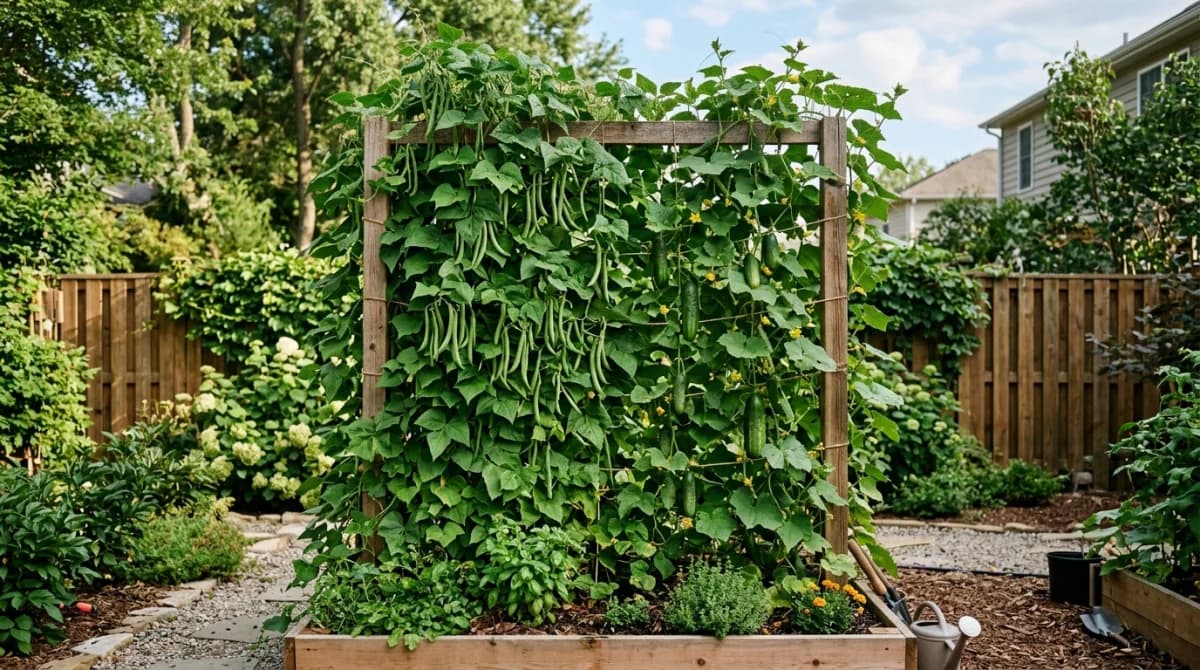
Trellised containers: A large pot with a trellis attached to the back. Perfect for climbing beans, cucumbers, and small-fruited squash.
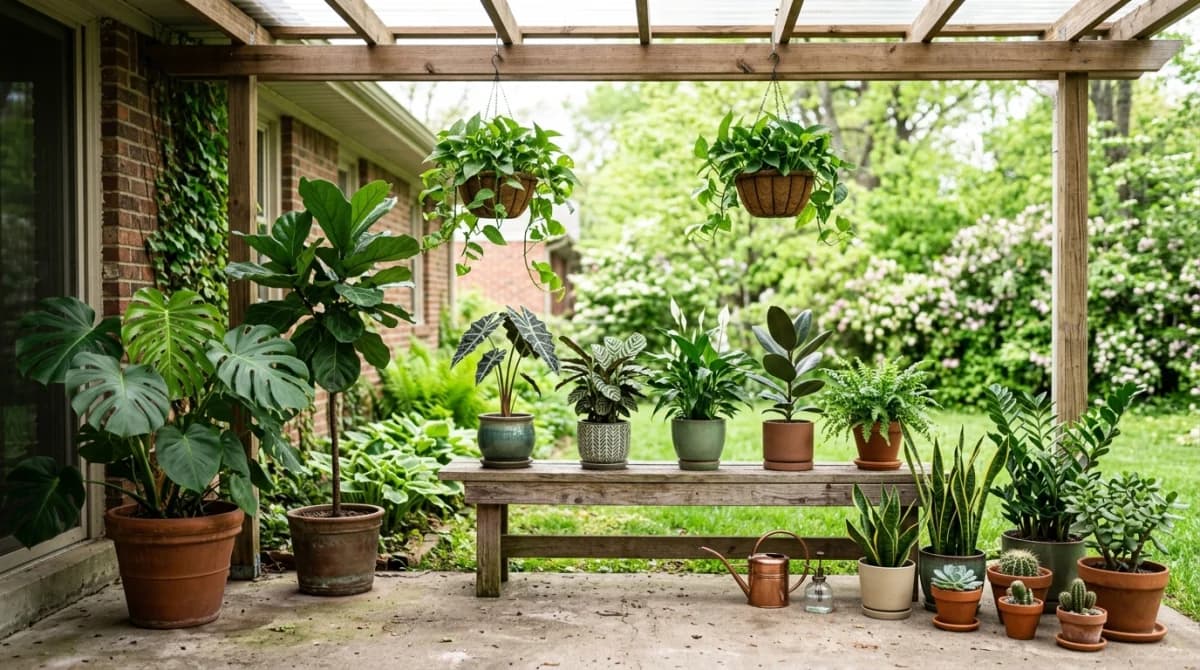
Hanging baskets: Suspend pots from ceiling hooks, railings, or wall brackets. Tomatoes, strawberries, herbs, and trailing flowers all work.
Window boxes: Mount on railings, windowsills, or fence tops. Ideal for herbs, compact lettuce, and trailing flowers.
Arranging Your Container Garden
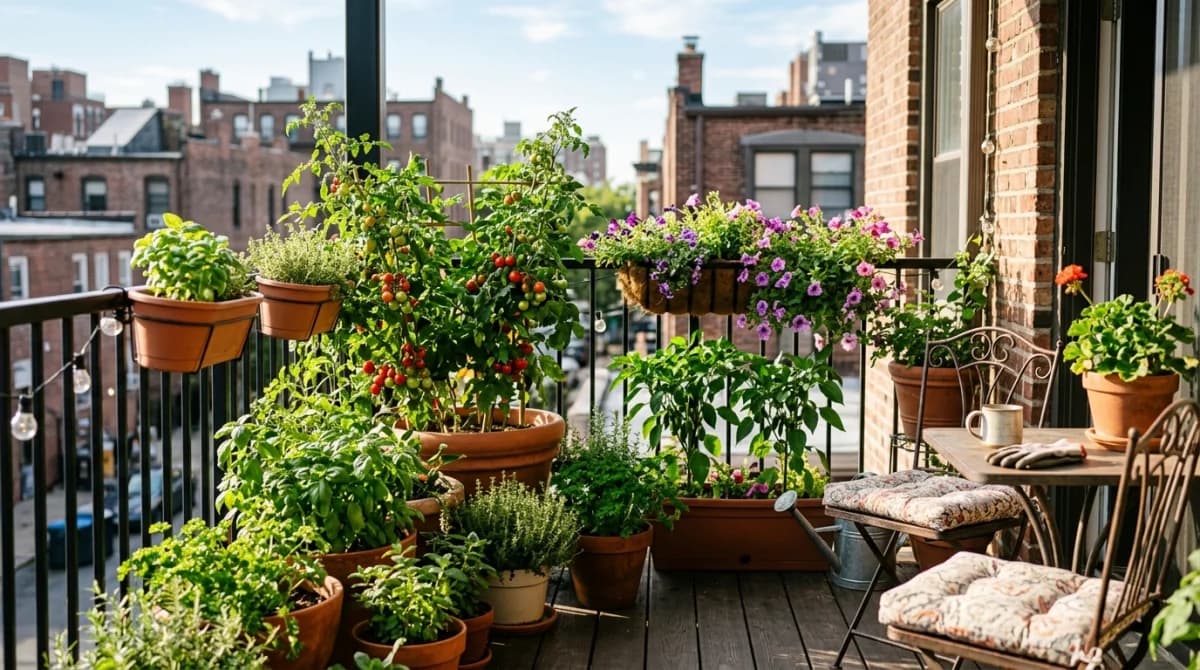
Treat your container arrangement like a garden design in miniature. Group pots in clusters of three to five rather than spacing them evenly. Vary heights using pot stands, inverted pots, or different container sizes. Place tall plants at the back and trailing plants at the edges.
If you’re working with a balcony or patio, consider using Gardenly to experiment with different arrangements before you buy pots or plants. Seeing the layout in advance helps you figure out what fits, what gets enough sun, and where your focal points will be.
A well-planned container garden on a small balcony can produce more food and more beauty per square foot than many in-ground gardens. The key is right-sized pots, good soil, consistent watering, and choosing plants that thrive in confined spaces. Start with a few containers this spring, learn what works in your specific conditions, and expand from there.