Vertical Gardening: How to Grow Up When You Can’t Grow Out
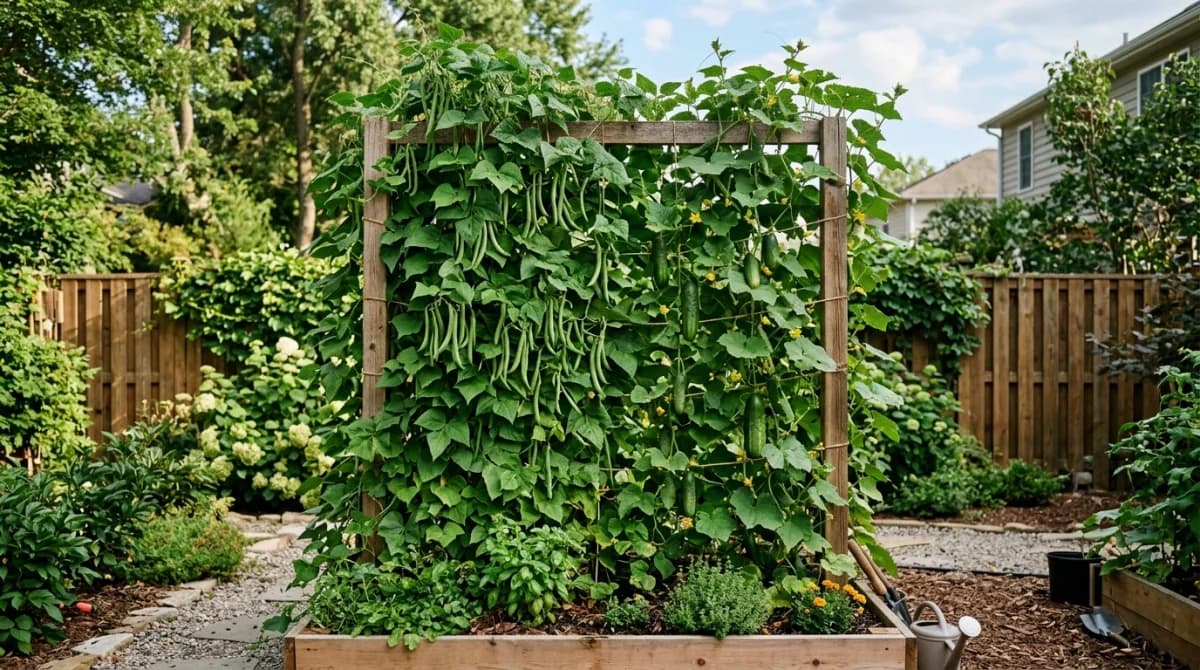
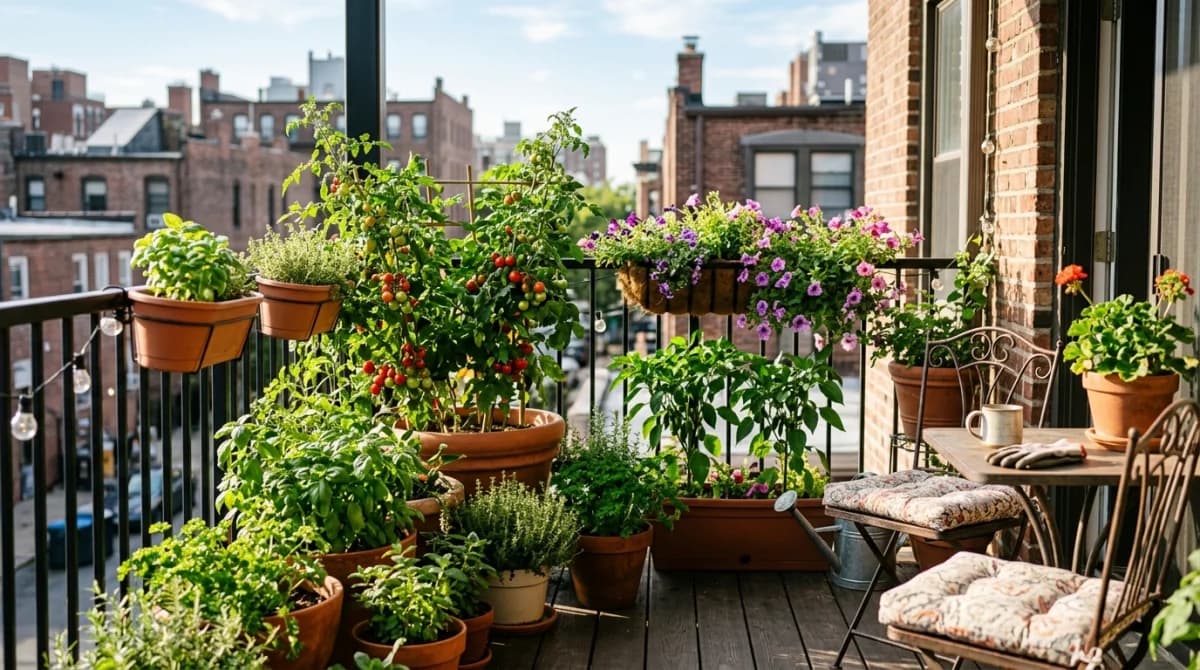
Every garden has more vertical space than horizontal space. The fence behind your raised bed is 6 feet of unused growing area. The wall next to the patio could hold a dozen pots of herbs. The air above your garden beds is wasted potential.
Vertical gardening isn’t a compromise for people who don’t have enough room. It’s a strategy that produces more food and more beauty per square foot than horizontal planting alone. Climbing plants get better air circulation (which means fewer diseases), receive more sunlight (which means more fruit), and keep produce off the ground (which means less rot and fewer pests).
Whether you’re working with a 4-foot balcony or a full-size backyard, growing up multiplies what you can produce.
Vegetables That Climb
Not every vegetable can grow vertically, but the ones that can are some of the most productive crops in the garden.
Pole Beans
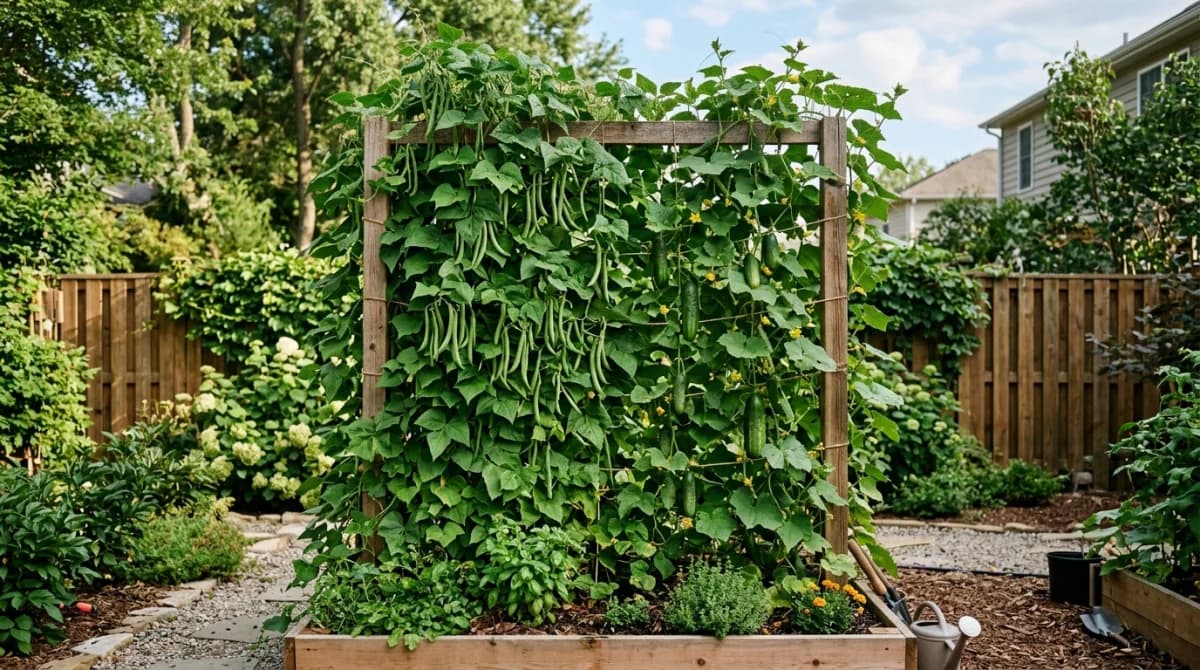
The original vertical crop. Pole beans climb 8 to 10 feet on strings, poles, or netting and produce three to four times the yield of bush beans in the same ground space. They climb by twining their stems around a support, so they need something thin to grab: string, wire, or thin poles.
Plant seeds at the base of your trellis after the last frost and they’ll climb on their own. ‘Kentucky Wonder,’ ‘Rattlesnake,’ and ‘Blue Lake Pole’ are reliable varieties.
Cucumbers
Most cucumber varieties are natural climbers with tendrils that grip any support. Growing cucumbers vertically produces straighter fruit, better air circulation (reducing powdery mildew), and easier harvesting because the fruit hangs at eye level instead of hiding under leaves on the ground.
A simple 5-foot trellis or a section of cattle panel is all you need. Train the main vine upward and the tendrils will do the rest.
Small-Fruited Squash
Compact winter squash varieties like ‘Delicata,’ ‘Acorn,’ and small butternut types can grow on sturdy trellises. The fruit is small enough that the vine supports it without slings. Full-size squash (pumpkins, Hubbard) are too heavy for trellising unless you create fabric slings for each fruit, which is more trouble than it’s worth.
Peas
Snap peas and snow peas are natural climbers that grow 4 to 6 feet tall on a simple trellis of string or netting. They’re one of the first crops to plant in spring and they’re productive for weeks.
Tomatoes (Indeterminate)
While not true climbers, indeterminate tomatoes can be trained up tall stakes, strings, or trellis panels. The “lower and lean” system used in greenhouses runs tomato vines along overhead strings, allowing plants to grow 15 feet or more over the season in the same ground space.
Small Melons
Varieties like ‘Minnesota Midget’ cantaloupe and ‘Sugar Baby’ watermelon can be grown on strong trellises with fabric slings supporting the developing fruit. It’s unconventional but works surprisingly well and saves significant ground space.
Trellis Types and Materials
String Trellis
The simplest and cheapest option. Drive two stakes or posts into the ground and run horizontal strings or wires between them at 6-inch intervals. Or hang vertical strings from a horizontal bar. Cost: under $10. Best for beans, peas, and light cucumbers.
Cattle Panel Arch
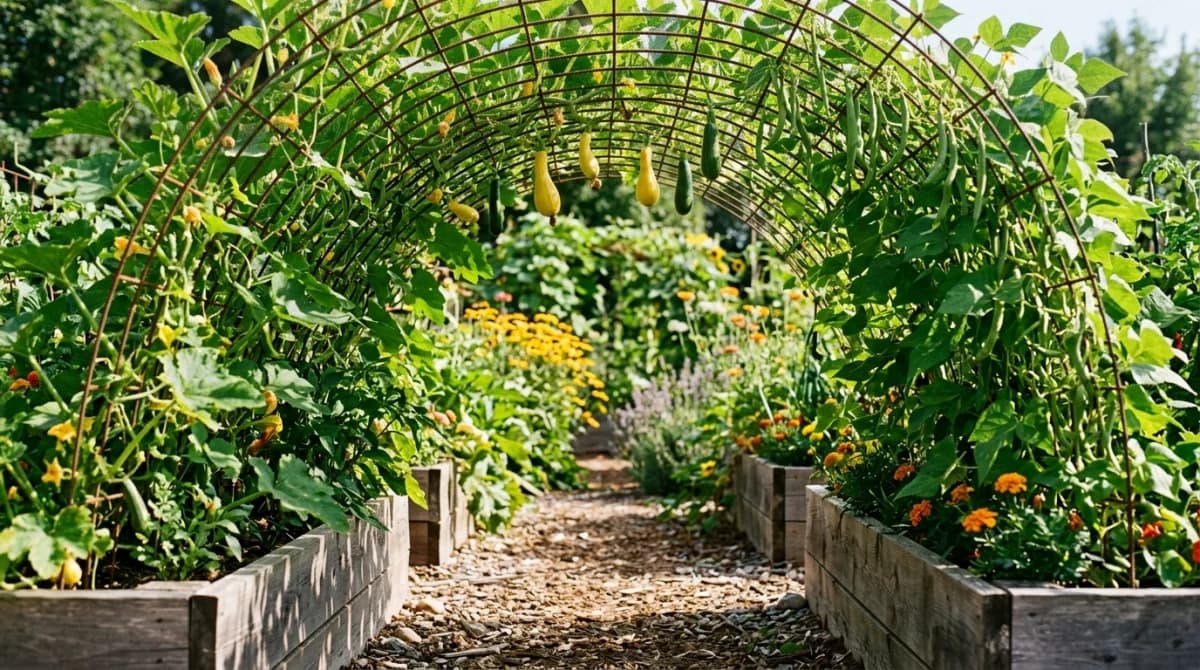
A 16-foot cattle panel (heavy-gauge welded wire, available at farm supply stores) bent into an arch between two raised beds creates a beautiful tunnel that produces food on every surface. Cost: $25 to $30 per panel. Best for squash, cucumbers, beans, and small melons. Strong enough to support heavy fruit.
This is one of the best vertical garden structures you can build: it looks spectacular, lasts for years, and creates a shaded walkway underneath that’s perfect for heat-sensitive crops like lettuce.
A-Frame Trellis
Two wooden frames hinged at the top, opened like a tent. You can grow climbing crops on both sides and plant shade-loving crops underneath. Easy to build, foldable for winter storage.
Obelisks and Tepees
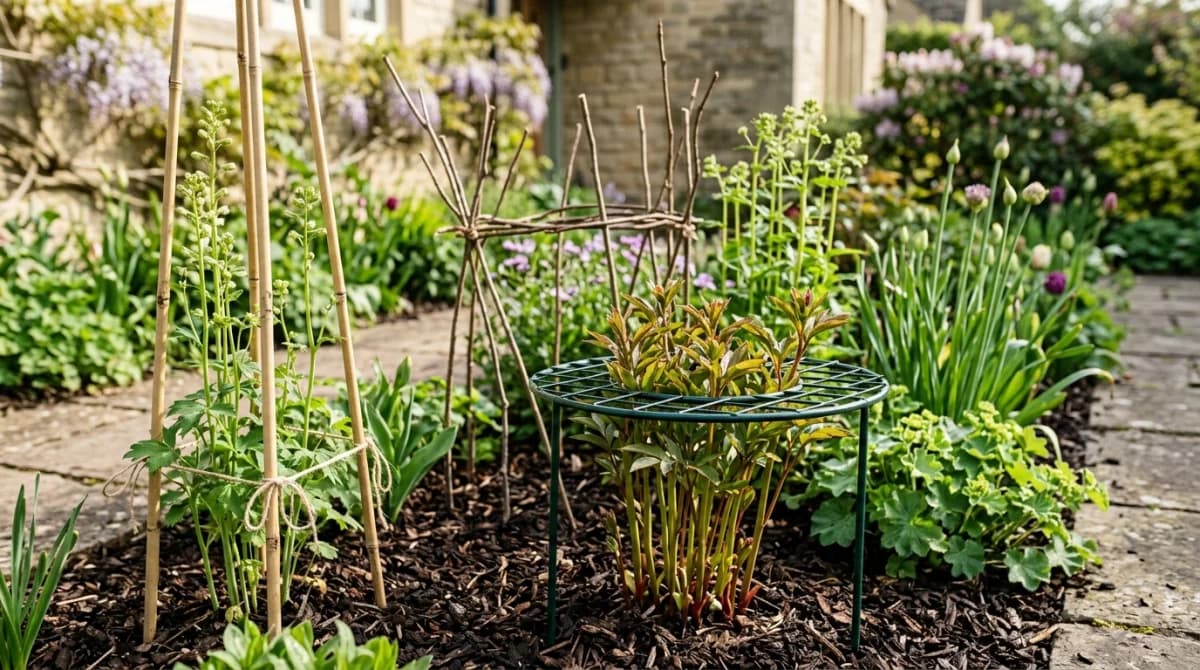
Three to four bamboo poles or wooden stakes tied together at the top create a cone that beans, peas, and morning glories love to climb. Decorative and functional. Place one in the center of a round bed for a focal point.
Wall-Mounted Systems
Grid trellises, wire panels, or lattice mounted on a wall or fence. Use for climbing flowers (clematis, jasmine, climbing roses) or lightweight edibles (peas, beans). Leave 2 to 3 inches of space between the trellis and the wall for air circulation and so the plant can weave around the support.
Wall Planters and Pocket Systems
For true vertical growing without ground space, wall-mounted planters bring the garden onto any vertical surface.
Felt Pocket Planters
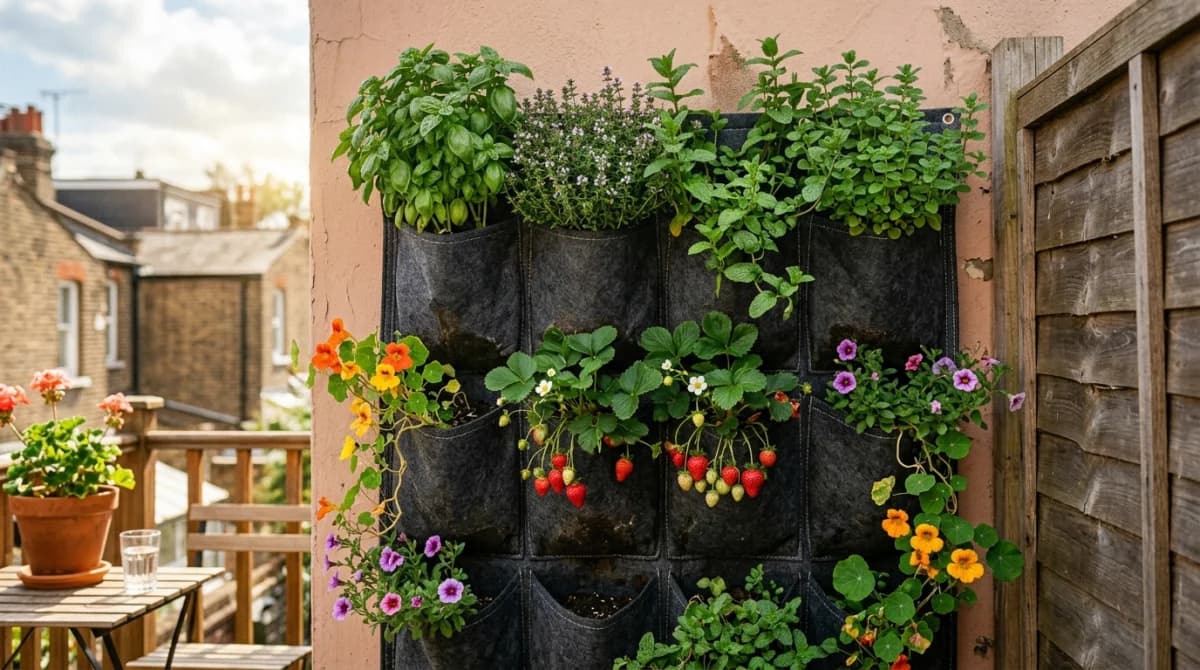
Rows of fabric pockets mounted on a backing material. Fill with potting mix and plant herbs, strawberries, lettuce, or trailing flowers. Best for small-rooted plants because individual pocket volume is limited.
Best for: Herbs, strawberries, succulents, small lettuce, and trailing flowers.
Modular Planter Systems
Stackable plastic or wooden modules that mount to walls or stand freestanding. Each module holds its own soil and often includes an integrated watering system. More expensive but more productive than pocket systems.
Window Boxes and Railing Planters
Mount on windowsills, fence tops, deck railings, or balcony edges. They use space that would otherwise grow nothing. Plant trailing varieties that cascade over the edge for maximum visual impact.
Vertical Flowers
Climbing flowers are some of the most spectacular plants in the garden.
Clematis: The queen of climbing flowers. Hundreds of varieties from small-flowered species to dinner-plate-sized hybrids. Most need a slim support to twine around: string, wire, or a narrow trellis.
Morning glory: Fast-growing annual that covers a trellis or fence in weeks. Prolific trumpet-shaped flowers in blue, purple, pink, and white. Seeds are cheap and germination is almost guaranteed.
Sweet peas: Fragrant climbing annuals for cool weather. Plant in early spring for weeks of scented cut flowers. They need a trellis or netting to climb.
Climbing roses: Not true climbers (they don’t grip on their own), so they need to be tied to a support. But trained along a fence, pergola, or wall, they’re unmatched for romance.
Jasmine: Star jasmine (Trachelospermum) is an evergreen climber with intensely fragrant white flowers. Zones 8–10. Common jasmine (Jasminum officinale) is hardier (zones 6–10) and equally fragrant.
Trumpet vine: Native, aggressive, and hummingbird-magnetic. Give it a strong support and plenty of room because it grows fast and spreads.
Structural Considerations
Weight
Vertical gardens carry significant weight, especially when watered. A wall planter full of wet soil weighs substantially more than you’d expect. Make sure your mounting surface and hardware can handle the load. Use structural screws into studs for wall-mounted systems.
Watering
Vertical gardens dry out faster than ground-level beds because of increased air exposure. Drip irrigation is especially valuable for vertical systems; a single line run along the top of a wall planter waters everything by gravity.
Sun Orientation
South and west-facing walls get the most sun and heat. This is great for heat-loving crops but means faster drying. North and east-facing walls are better for shade-tolerant plants and keep soil cooler.
Getting Started
Start with one trellis in an existing bed. A simple string trellis for pole beans costs almost nothing and demonstrates the concept immediately. Once you see a 6-foot wall of green beans producing handfuls of food every day from a 2-foot-wide strip of garden, you’ll want to trellis everything.
If you’re designing a garden from scratch, plan vertical elements from the start. Tools like Gardenly can help you visualize how trellises, arches, and vertical structures will look in your space before you build them.
Every fence, wall, railing, and post in your garden is unused growing space. Look up. The room is already there.