Cover Crops: The Winter Soil Fix Most Gardeners Are Missing
Most vegetable beds sit bare through winter. The harvest is done, the plants are pulled, and the soil surface is naked until spring planting. This is an opportunity wasted.
Bare soil is eroded by winter rain and wind, loses organic matter to oxidation, grows weeds when temperatures rise, and provides no food or shelter for the soil life that makes your garden productive. Covered soil does none of these things.
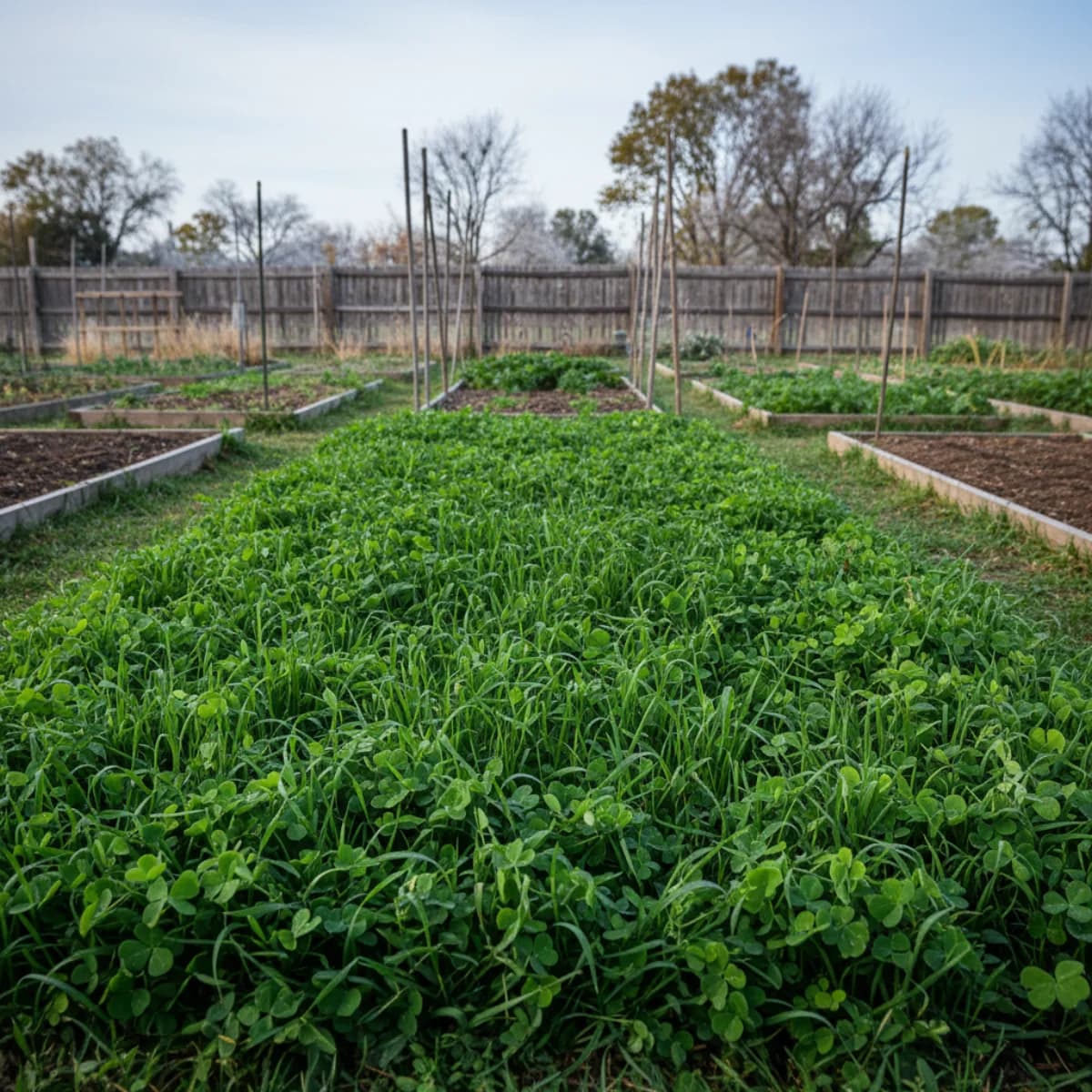
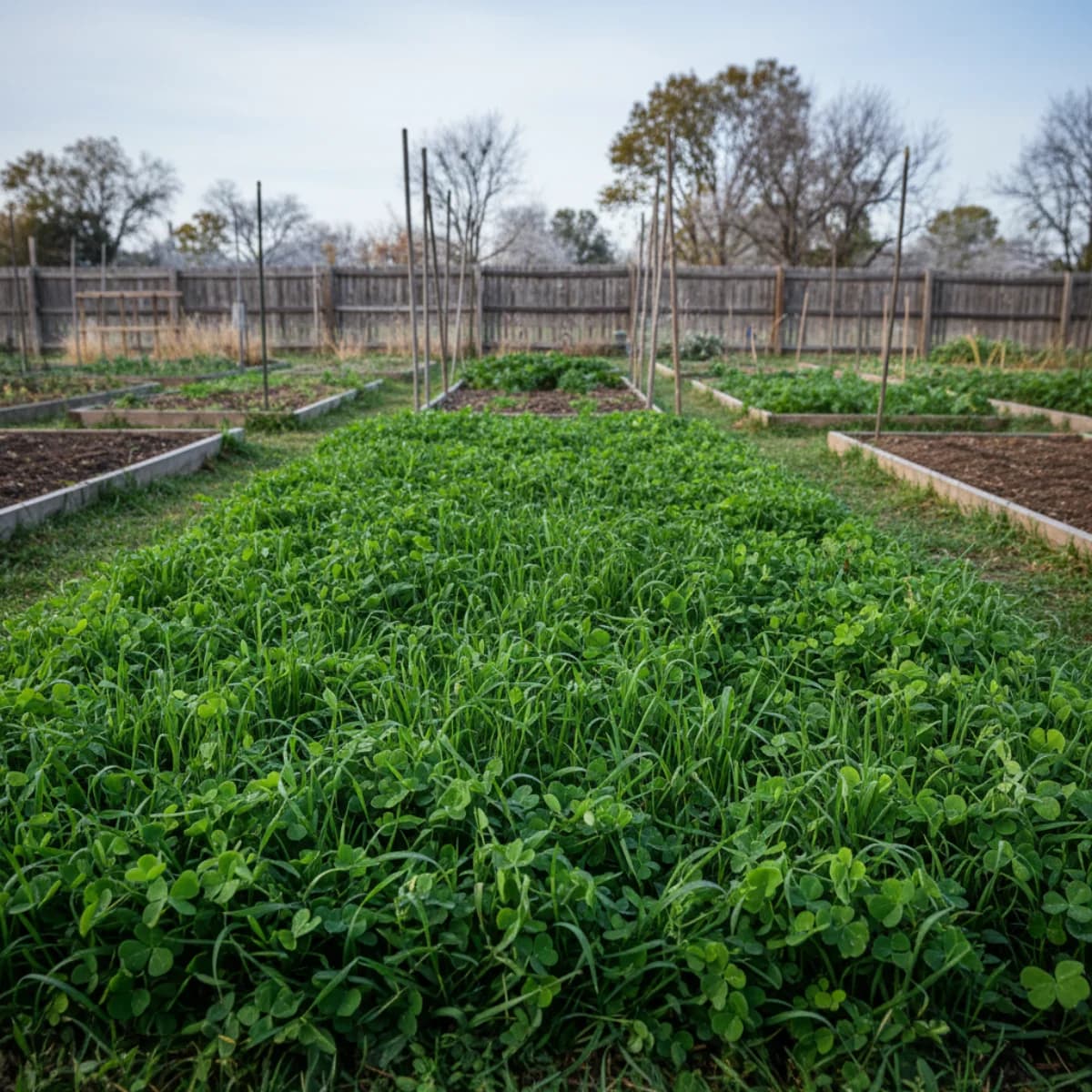
Cover crops—plants grown specifically to protect and improve the soil rather than for harvest—address all of these problems simultaneously. They’re among the most powerful and cheapest tools in a gardener’s toolkit, and they’re underused in home gardens because most gardening advice focuses on what to grow, not on the soil it grows in.
What Cover Crops Do
Protect soil from erosion: A cover crop’s roots hold soil in place through winter rain and snowmelt. The leaf canopy breaks the impact of raindrops on bare soil (which causes compaction and surface sealing).
Add organic matter: Cover crops are incorporated into the soil in spring (as “green manures”), where they decompose and add organic matter. Organic matter improves soil structure, water-holding capacity, and fertility.
Fix nitrogen: Legume cover crops (clover, vetch, field peas, winter peas) form a symbiotic relationship with Rhizobium bacteria in the soil, converting atmospheric nitrogen into ammonia that plants can use. This nitrogen remains in the soil when the cover crop is incorporated—free fertilizer, produced in place.
Suppress weeds: A dense cover crop shades out winter annual weeds. This is significant: fewer weed seeds germinating in beds means less weeding work in spring.
Support soil biology: Living roots support soil microbial communities by releasing exudates (sugars and compounds) that feed bacteria and fungi. Bare soil over winter loses some of this biological activity.
Break up compaction: Some cover crops (tillage radishes/daikon radishes, in particular) have thick, deep roots that penetrate compacted soil layers, creating channels that improve drainage and aeration even after the root decomposes.
Types of Cover Crops for Home Gardens
Grasses and Grains
Winter rye (Secale cereale): The most cold-hardy and versatile cover crop for northern gardens. Germinates in cold soil (as low as 34°F), grows vigorously through autumn and early spring, and produces significant biomass. Can be seeded through October in most of the US.
The challenge with winter rye is management: it grows vigorously and must be killed (by tilling, cutting, or smothering) 2-4 weeks before you want to plant. If you don’t manage the timing, it can set seed and become a weed.
Oats: Winter-kill in most Zone 5 and colder gardens (which can be an advantage—they break down quickly in spring without management). Good biomass producer.
Buckwheat: A summer cover crop excellent for filling gaps between vegetable crops mid-season. Not winter-hardy; use in summer.
Legumes (Nitrogen Fixers)
Hairy vetch: Hardy legume that fixes significant nitrogen (80-200 lbs per acre, or scaled equivalents in garden beds). Vining habit; often mixed with winter rye to support the vetch stems. Very winter-hardy.
Crimson clover: Less cold-hardy than hairy vetch; good for Zone 6 and warmer. Produces beautiful red flower heads in spring if allowed to bloom before incorporation.
Field peas and Austrian winter peas: Good nitrogen fixers, decent cold-hardiness. Often mixed with oats or winter rye.
White clover (Dutch clover): Perennial; used as a long-term understory plant or in paths between beds rather than as a temporary cover crop.
Specialty Brassicas
Tillage radish / daikon radish: Large taproot penetrates compacted soil, then winter-kills in Zone 5 and colder, leaving channels in the soil. Effective at breaking compaction and scavenging nutrients that would otherwise leach over winter. Smells sulfurous as it decomposes, but decomposes quickly in early spring.
Field mustard: Winter-killed in cold climates; good for suppressing some soil-borne diseases through the glucosinolates it releases when incorporated.
Timing for Next Season
If your beds are bare now (January), the window for fall cover crop seeding has passed for most northern climates. However, you can:
Plan for next fall: Add cover crop seeding to your garden calendar for September-October. As vegetable beds are harvested and cleared in late summer and fall, seed cover crops immediately rather than leaving beds bare.
Overseed into existing crops: Some cover crops can be undersown into standing vegetables before harvest—winter rye can be overseeded into corn in August, for example, or clover can be undersown into vegetables once they’re established and large enough to not be outcompeted.
Spring-seeding options: In late winter or early spring, buckwheat (for summer), spring oats, and field peas can be seeded to provide short-term cover between early spring soil prep and main crop planting.
Incorporating Cover Crops in Spring
Most cover crops are incorporated 2-4 weeks before you want to plant (the decomposition time depends on soil temperature and the size of the biomass).
For small gardens: Cut cover crop at soil level or below with a hoe or weed whacker, let the tops wilt and dry for a few days, then turn the mass under with a fork or spade. Water well to accelerate decomposition.
For larger beds: Use a rotary tiller to incorporate the material in one pass. Let it rest 2-4 weeks, then till lightly again if needed before planting.
For no-dig approaches: Kill the cover crop with heavy cardboard or black plastic sheeting (leaving in place for 3-4 weeks), then plant transplants directly through the decomposing mat. No incorporation required.
Seed Sources and Rates
Cover crop seeds are sold by the pound, not in the small packets of vegetable seeds. They’re inexpensive:
- Winter rye: $2-4 per pound; seeding rate 2-3 lbs per 1000 sq ft
- Hairy vetch: $3-6 per pound; 1-2 lbs per 1000 sq ft
- Crimson clover: $3-5 per pound; 1 lb per 1000 sq ft
- Mixes (often rye + vetch or oats + peas): $3-6 per pound
Good sources: Johnny’s Selected Seeds, High Mowing Organic Seeds, and most farm supply stores carry a selection.
January is the time to order for fall use—though prices don’t fluctuate much, having seeds on hand means you’re ready when the window opens after fall harvests.
Gardenly is useful for planning the rotation of cover crops alongside food crops—knowing which beds will be ready for cover crop seeding in September helps you plan the year’s plantings more thoughtfully.
Soil that’s been protected and fed by cover crops through winter is noticeably better to work in spring: crumbly, full of life, and ready to grow.
Sources & Further Reading
- Cover Crops and Green Manures in Home Gardens — University of Minnesota Extension
- The Function and Selection of Cover Crops — Oregon State University Extension
- Growing Cover Crops for Nitrogen on Vegetable Farms — Penn State Extension