Companion Planting Myths vs. Facts: What Actually Works
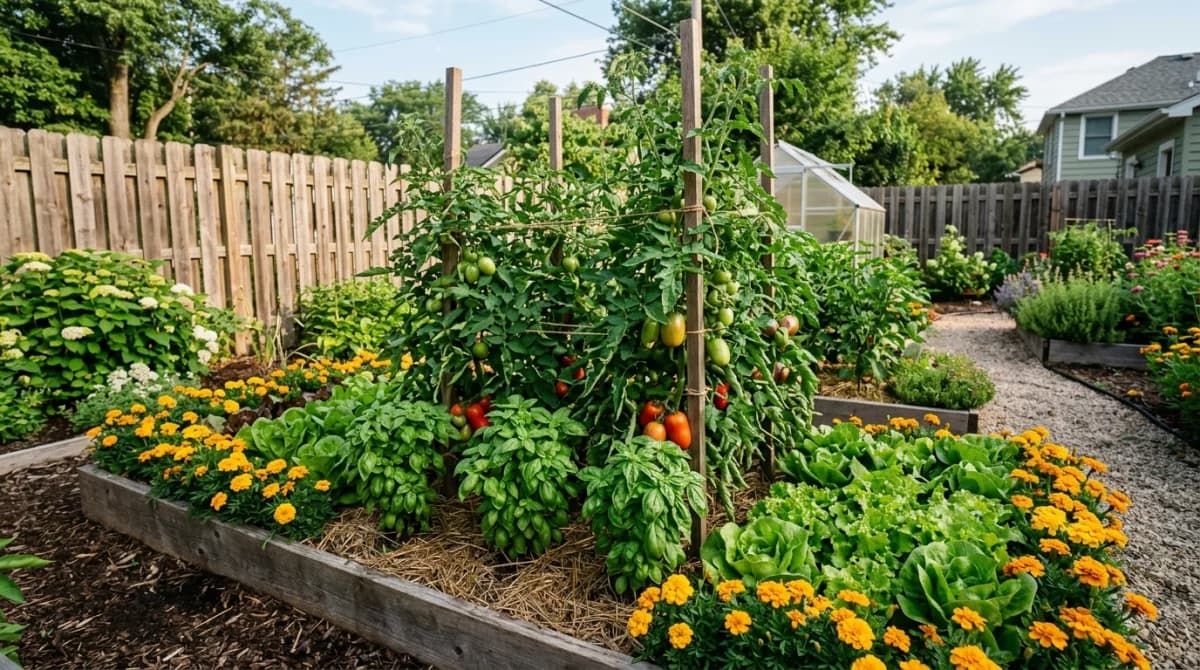
Open any gardening book or website and you’ll find a companion planting chart listing dozens of plant pairings: tomatoes love basil, carrots love onions, beans hate fennel, marigolds repel everything bad. These charts get passed around endlessly, shared on Pinterest, printed and taped to garden sheds.
The problem is that most of them are folklore. Not harmful folklore, necessarily, but unsupported claims that lead gardeners to make planting decisions based on mythology instead of observation. Some companion planting principles are backed by solid research. Others have been repeated so many times that people assume they must be true, even though controlled studies have found no measurable effect.
Here is what the science actually says, what genuinely works, and how to apply companion planting in a way that helps your garden rather than just sounding nice.
The Myth Problem
Most companion planting claims fall into three categories:
“Plant A Repels Pest X”
The idea that specific plants repel specific pests through scent or chemical exudation sounds logical. In practice, most “repellent” effects found in lab settings don’t translate to the garden. A concentrated extract of marigold root chemicals can suppress nematodes in a petri dish. A few marigolds scattered through your tomato bed don’t produce enough of those chemicals to affect the nematode population in your soil.
”Plant A Helps Plant B Grow”
Some companion planting charts claim that certain plants actively improve the growth of their neighbors through root exudates or beneficial chemistry. With a few notable exceptions (legumes fixing nitrogen, for example), most of these claims have no supporting evidence. “Tomatoes grow better near basil” is repeated everywhere, but controlled studies have not consistently demonstrated a growth benefit.
”Plant A and Plant B Are Enemies”
Many charts list “bad companions,” plants that supposedly stunt each other’s growth. Some of these have a kernel of truth (allelopathic plants like black walnut genuinely inhibit nearby plants). Most are based on anecdotes or misunderstandings. “Tomatoes and brassicas don’t get along” appears on every chart, but there’s no research showing they harm each other when properly spaced and fed.
What Science Actually Supports
Not all companion planting is folklore. Several principles have strong research behind them.
Trap Cropping
Trap cropping is the most evidence-backed companion planting strategy. You plant something that a pest prefers more than your crop, drawing the pest away from the crop you want to protect.
Proven examples:
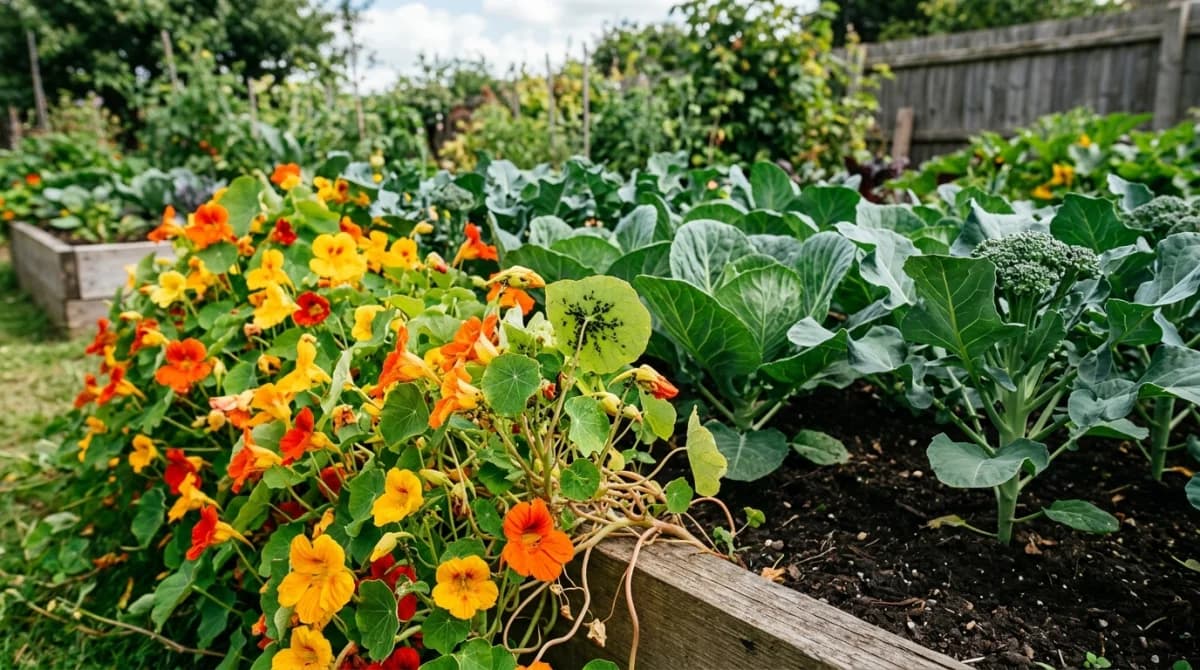
- Nasturtiums near brassicas: Aphids strongly prefer nasturtiums. A border of nasturtiums around your cabbage patch concentrates aphids on the nasturtiums rather than the cabbage. You can then remove or treat the nasturtiums.
- Blue Hubbard squash near summer squash: Squash vine borers and squash bugs strongly prefer Blue Hubbard. Planting it as a perimeter trap crop around your zucchini and summer squash significantly reduces pest pressure on the main crop.
- Radishes near cucumbers: Flea beetles prefer radish foliage over cucumber leaves.
The key is that trap crops must be more attractive than the main crop, and you need to manage the pests on the trap crop (by removal, treatment, or sacrificing the trap plant) before they overflow back to the main planting.
Nitrogen Fixation (Legume Benefits)
Legumes (beans, peas, clover) host Rhizobium bacteria in root nodules that convert atmospheric nitrogen into a form plants can use. This is real, well-documented, and significant.
However, the nitrogen benefit is not immediate. Most of the fixed nitrogen becomes available to neighboring plants only after the legume dies and its root nodules decompose. Growing beans next to tomatoes doesn’t feed the tomatoes this season. But turning under a clover cover crop or leaving bean roots in the soil after harvest enriches the soil for the next planting.
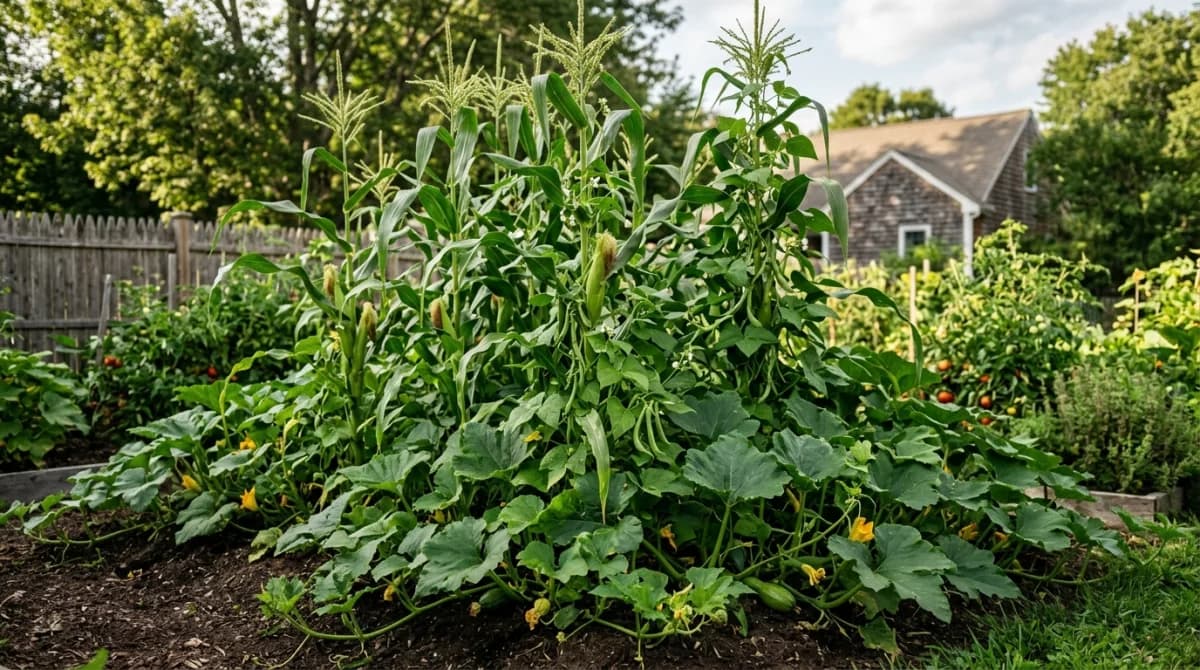
The Three Sisters (corn, beans, and squash) is the most famous companion planting system and one of the few that genuinely works as described. The corn provides a structure for beans to climb. The beans fix nitrogen that feeds the heavy-feeding corn. The squash provides ground cover that shades out weeds and retains soil moisture. It’s a mutually beneficial system developed over thousands of years.
Habitat for Beneficial Insects
Planting flowers among vegetables attracts predatory and parasitic insects that control pests. This is not folklore; it’s a well-documented principle called conservation biological control.
What works:
- Alyssum planted between vegetable rows attracts hoverflies, whose larvae eat aphids
- Dill, fennel, and cilantro (allowed to flower) attract parasitic wasps that prey on caterpillars and aphids
- Yarrow and Queen Anne’s lace provide nectar for tiny parasitoid wasps
- Sunflowers attract predatory insects and provide habitat for beneficial birds
The key is having flowers blooming among your vegetables throughout the growing season, providing continuous nectar and pollen for beneficial insects.
Physical Benefits
Some companion planting benefits are purely mechanical, and they work every time:
- Tall plants shade cool-season crops. Corn or sunflowers on the south side of a lettuce bed provide afternoon shade that extends the lettuce harvest by weeks in warm climates.
- Dense plantings suppress weeds. Squash, sweet potatoes, and other spreading plants shade the soil, reducing weed germination. This is simple competition for light, not chemistry.
- Trellised crops share space efficiently. Growing climbing beans up corn stalks or peas up sunflower stems is practical space management.
Bad Pairings That Do Matter
While most “enemy” pairings are folklore, a few genuinely cause problems:
Black walnut near anything: Black walnut trees produce juglone, a chemical that inhibits many plants. Tomatoes, peppers, eggplant, and azaleas are especially sensitive. The toxic zone extends to the drip line of the tree and beyond, and juglone persists in soil for years after the tree is removed.
Fennel near most vegetables: Garden fennel is mildly allelopathic and most gardeners report poor growth in nearby plants. Give it its own space.
Alliums near legumes: There’s some evidence that onions, garlic, and chives can inhibit the growth of beans and peas. The effect isn’t dramatic, but it’s been replicated enough to be worth noting.
A Practical Companion Planting Plan
Instead of following a complicated chart, focus on these evidence-based strategies:
Interplant Flowers With Vegetables
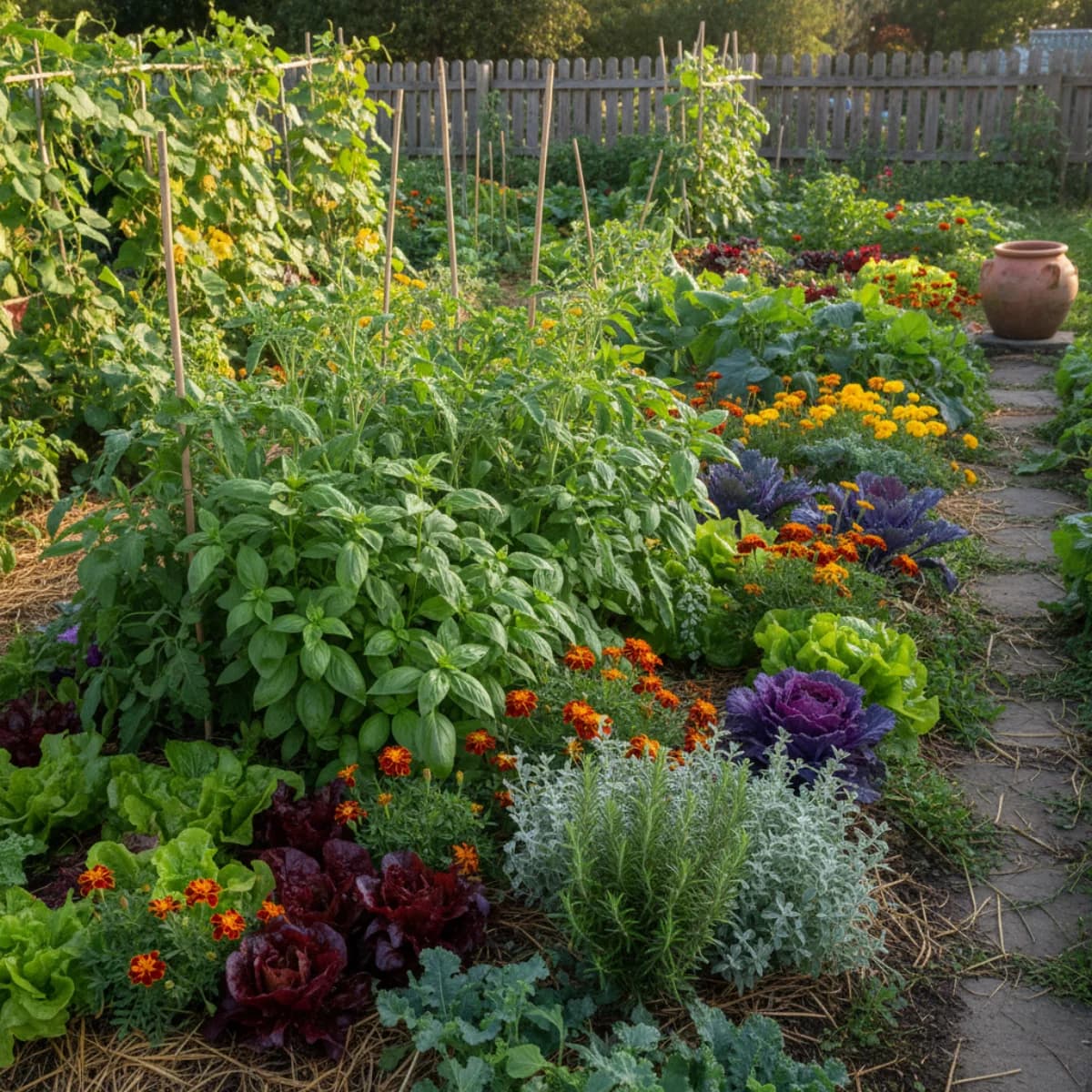
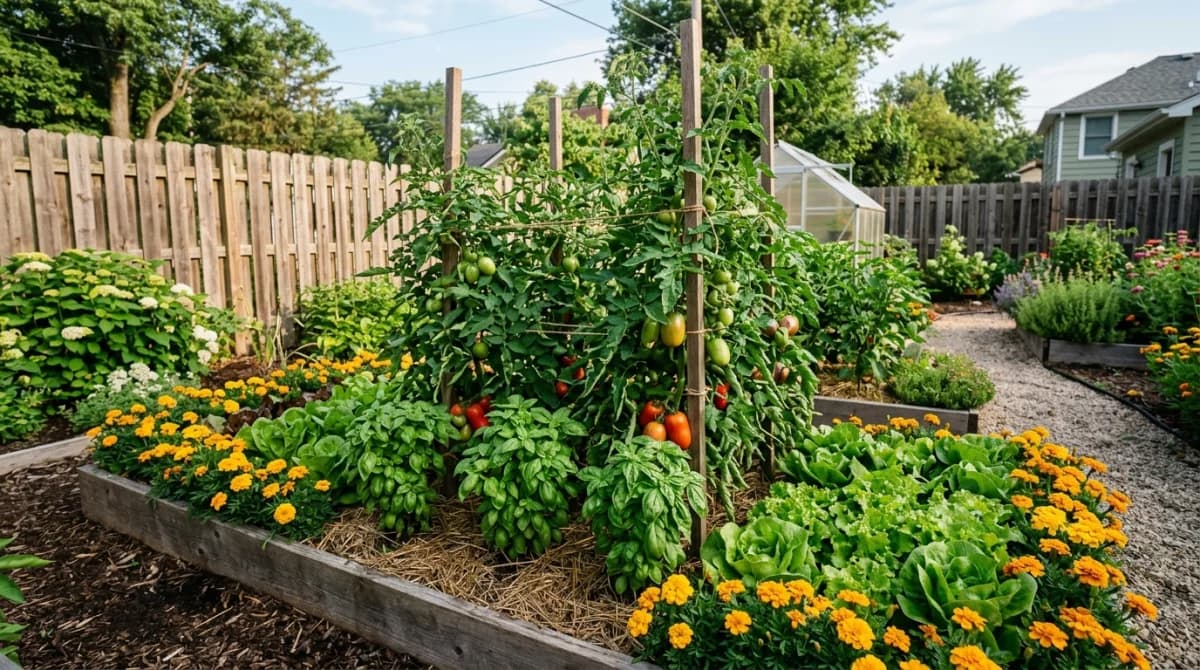
Devote 10 to 15 percent of your vegetable garden space to flowering plants. Scatter alyssum, marigolds, nasturtiums, zinnias, and herbs allowed to flower throughout your beds. This creates a habitat matrix that supports beneficial insects all season.
Use Trap Crops Intentionally
If you have a known pest problem (aphids on brassicas, flea beetles on eggplant, squash bugs), plant a trap crop before the main crop goes in, positioned on the upwind side of the garden.
Rotate Crops Annually
Crop rotation isn’t companion planting, but it’s the most effective planting-based pest and disease management strategy. Don’t plant the same family in the same spot two years in a row. This breaks pest and disease cycles far more reliably than any companion planting pairing.
Grow Cover Crops Between Seasons
Plant clover, vetch, or field peas after your main crops are harvested. The nitrogen they fix and the organic matter they add do more for next year’s garden than any in-season companion planting arrangement.
Use Space Efficiently
The real genius of interplanting is growing more food in less space. Plant quick crops (radishes, lettuce) between slow crops (tomatoes, peppers) that won’t need the space for weeks. Grow vining crops on trellises to free up ground space. Underplant tall crops with shade-tolerant greens.
What to Actually Do
Forget the charts with thirty pairings you’ll never remember. Focus on four things:
- Plant flowers among your vegetables for beneficial insect habitat
- Use trap crops if you have specific, recurring pest problems
- Rotate crop families annually to break pest and disease cycles
- Interplant for space efficiency: fast crops with slow ones, tall with short, climbers with ground huggers
This is companion planting stripped of mythology and grounded in what actually makes your garden healthier and more productive. It’s less romantic than the folklore, but it works.