Romantic Garden Design Ideas for Valentine’s Day and Beyond
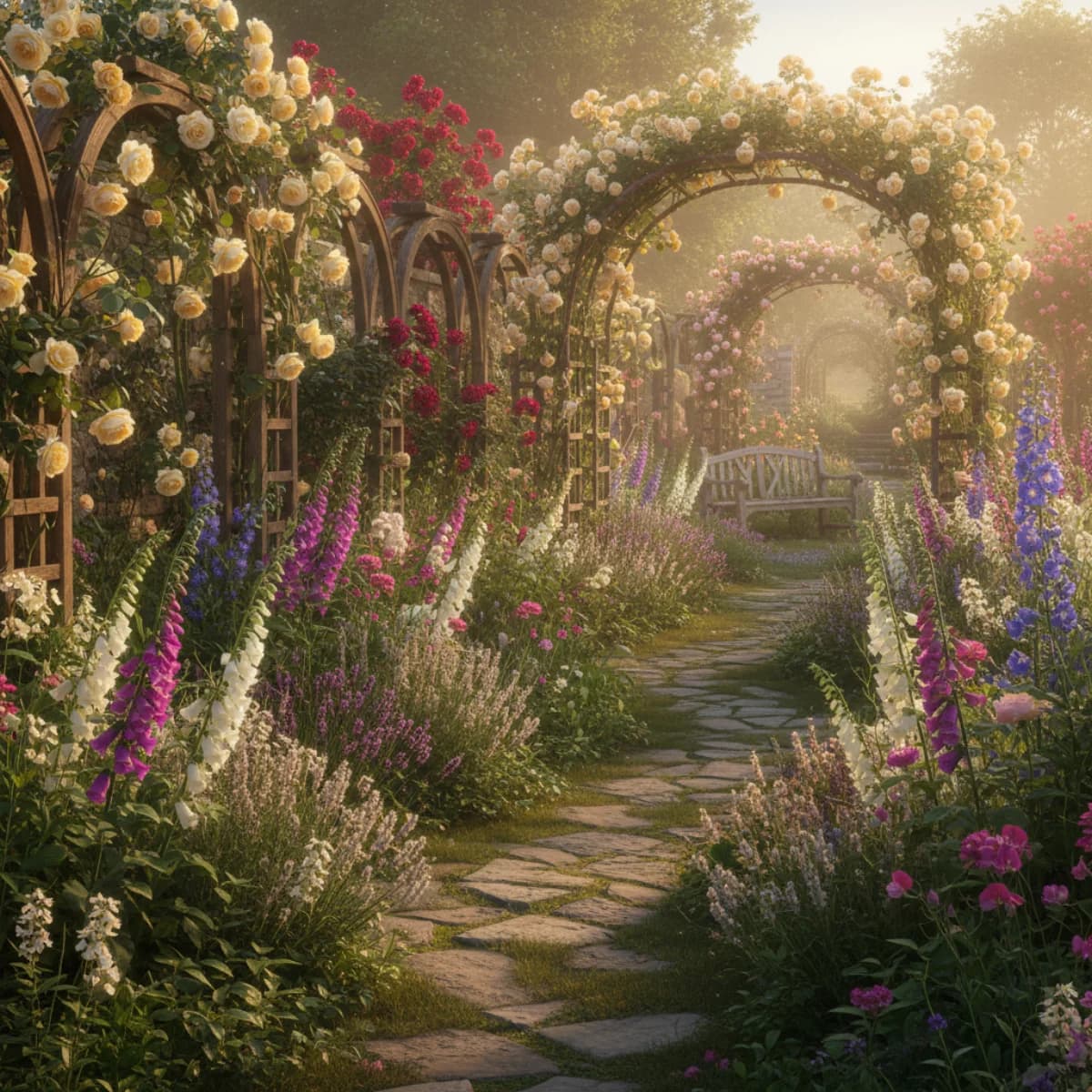
Romance in a garden isn’t about the obvious clichés—though roses absolutely belong here, and there’s nothing wrong with them. It’s about a specific quality of atmosphere: beauty that feels lush and abundant, spaces that feel private and enveloping, sensory richness in scent and texture and sound, and that particular quality of light that makes outdoor spaces feel magical in the evening.
These qualities can be created intentionally through design. Here’s how.
Enclose the Space
Intimacy begins with enclosure. Open, exposed spaces feel exposed—there’s nowhere to land emotionally or visually. Romantic gardens typically have at least partial enclosure through walls, hedges, fences, or dense planting that creates a sense of a room outdoors.
This doesn’t mean completely walled. It means considering how the space is bounded and what the experience feels like inside it.
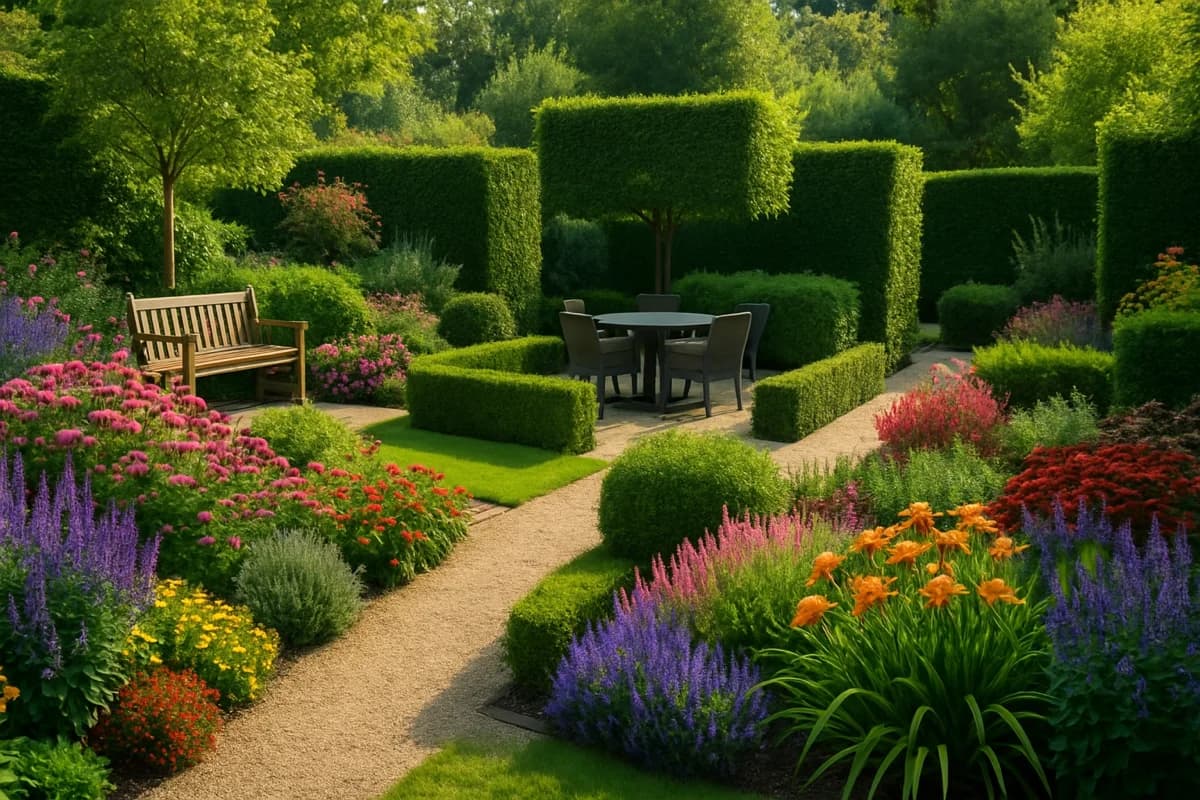
Hedges make the softest enclosure—yew, hornbeam, beech, and boxwood can be shaped into living walls that have depth and texture that hard walls lack. They’re slow to establish but beautiful once mature.
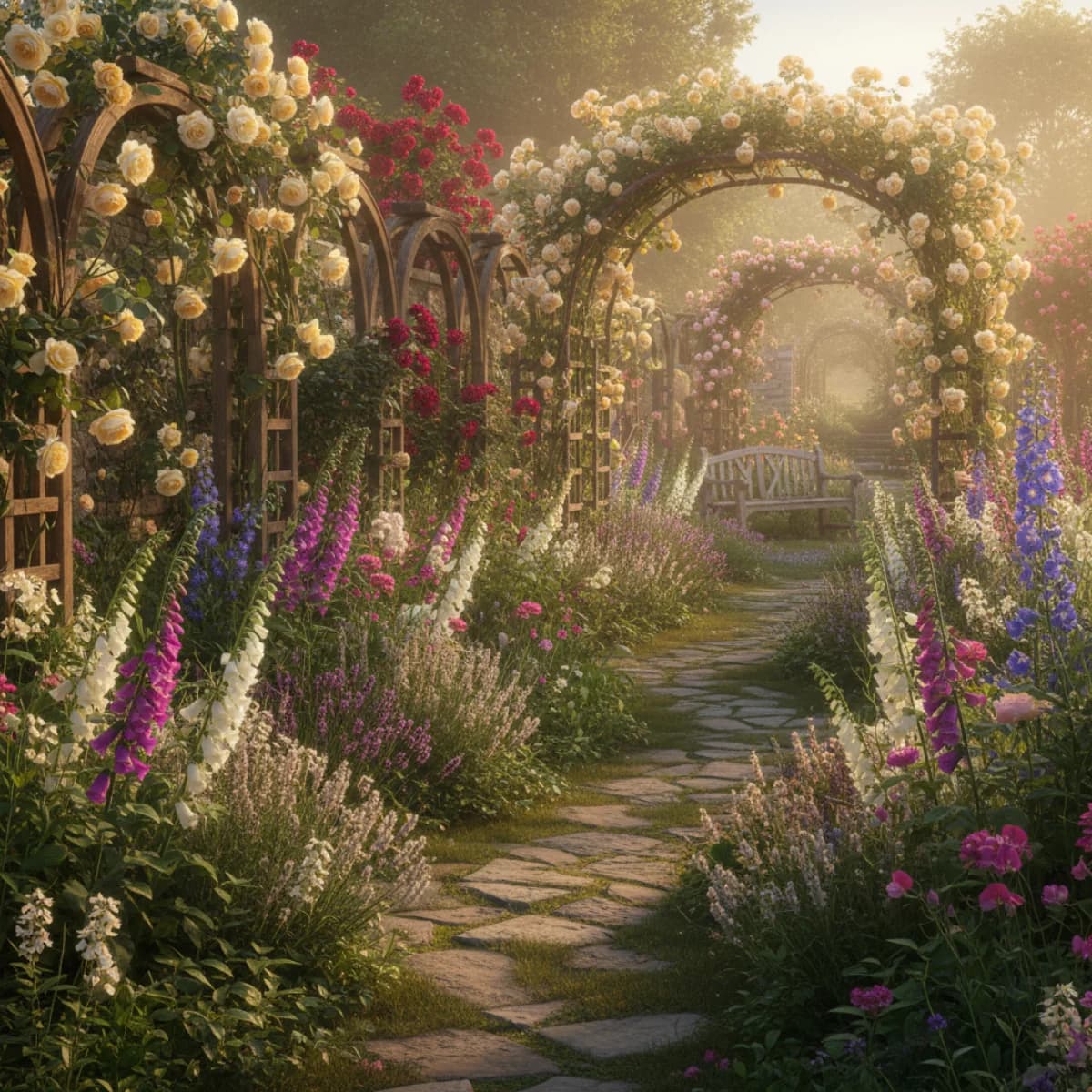
Trellises with climbing plants provide faster enclosure and allow views through to hint at what’s beyond. A painted wood trellis with climbing roses or clematis creates a screen that’s beautiful in itself.
Dense shrub plantings on boundaries, rather than a maintained hedge, give a more informal, cottage-garden feel—the sense of being nestled in the garden rather than enclosed by it.
Create a Destination
Every romantic garden needs a place to be. A bench, a bistro table and chairs, a pergola with seating below—somewhere that draws you in and offers a reason to settle.
The placement matters enormously. The best garden seating is:
- Not in the middle of the garden (too exposed)
- Slightly elevated, or nestled against a wall or hedge (feels more secure)
- Positioned to look toward the best view in the garden
- Near something aromatic—a rose you brush against walking in, a container of herbs nearby
A simple wooden bench at the end of a path, backed by a hedge, with roses on each side, is as romantic a garden element as you can create. No pergola required.
The Scent Dimension
Nothing is more powerfully evocative than fragrance. The romantic garden is particularly rich in scented plants, especially those that release scent in the evening, when gardens are most likely to be enjoyed for pure pleasure.
Evening-fragrant plants for the romantic garden:
- Roses: Many antique and David Austin varieties have intense fragrance; hybrid teas and many modern roses have had fragrance bred out in favor of disease resistance. Seek out fragrant varieties specifically.
- Nicotiana (flowering tobacco): The old-fashioned species Nicotiana sylvestris releases extraordinary fragrance at dusk. Annual.
- Moonflower (Ipomoea alba): White, dinner-plate flowers open only in the evening with a heady sweet scent. Vine.
- Stocks (Matthiola): A cool-season annual with clove-like fragrance strongest in the evening.
- Four o’clocks (Mirabilis jalapa): Opens in late afternoon with sweet scent; multiple colors.
- Jasmine: Night-blooming jasmine (Cestrum nocturnum) has almost overwhelming fragrance. Tender perennial or houseplant in cold climates.
- Honeysuckle: Many varieties are intensely fragrant, especially in evening.
Daytime fragrant plants:
- Lavender (brush against it for instant impact)
- Sweet William
- Lilac (briefly, in spring)
- Viburnum carlesii (snowball viburnum)—spring-blooming, extraordinary fragrance
The Palette: Soft and Rich
Color in romantic gardens tends toward a few consistent palettes. None of them involve bright orange.
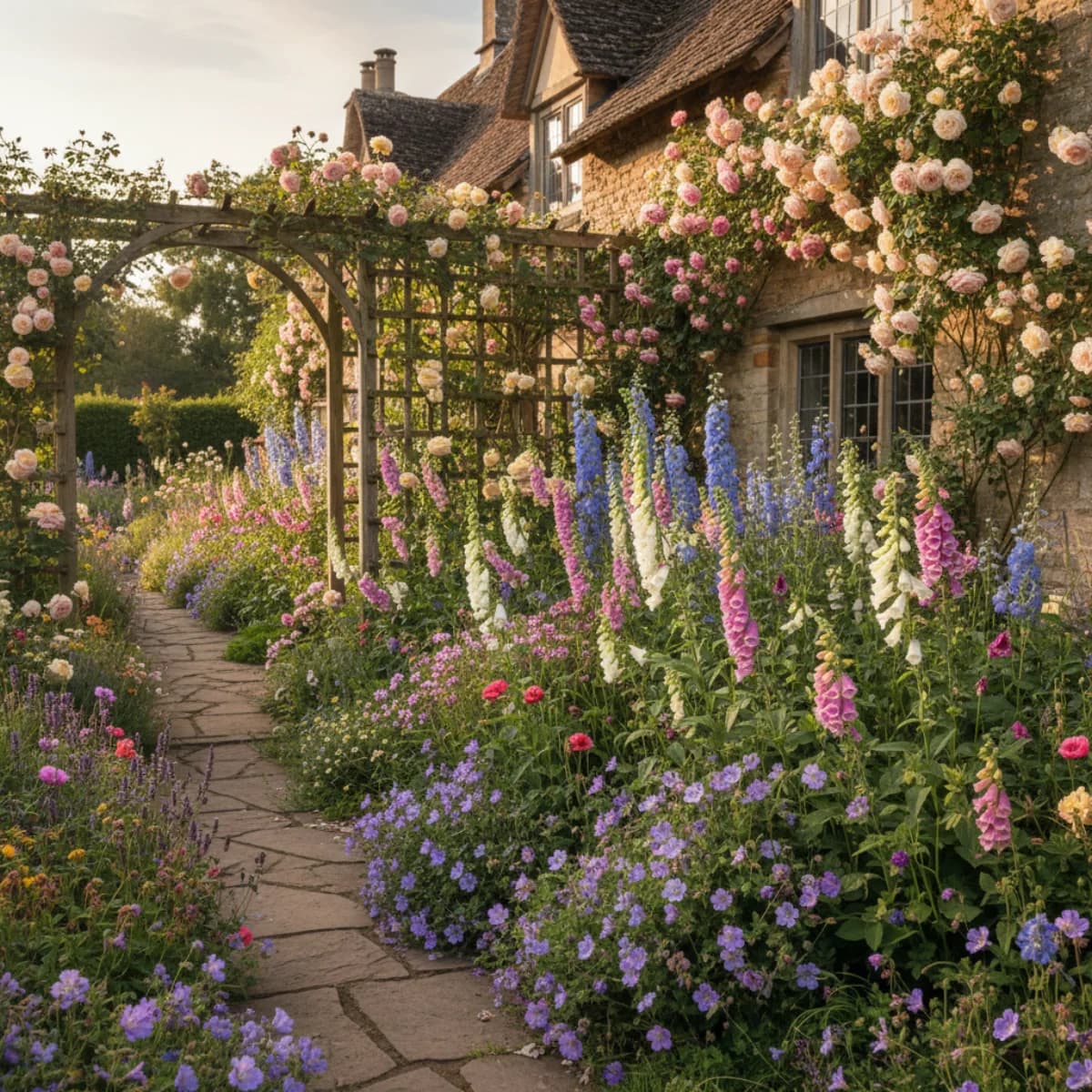
The Pink and Cream Palette: Soft pinks from rose to blush, warm whites, cream, touches of mauve or soft lavender. Lush and feminine without being saccharine. The essential rose garden palette.
The Deep Jewel Palette: Deep burgundy, rich crimson, dark purple, midnight blue. Sophisticated, mysterious, dramatic. Works particularly well with dark green foliage.
The Soft Lavender and White Palette: Lavender, violet, pale blue, silver-gray foliage, white. Cooling and serene; works particularly well in warm climates where cooler colors feel refreshing.
All of these palettes share one quality: restraint. Romantic gardens are not riot-of-color cottage gardens. They have a consistent, cohesive palette with depth and variety within that palette, not a competition of unrelated bright colors.
Plant Choices for Romance
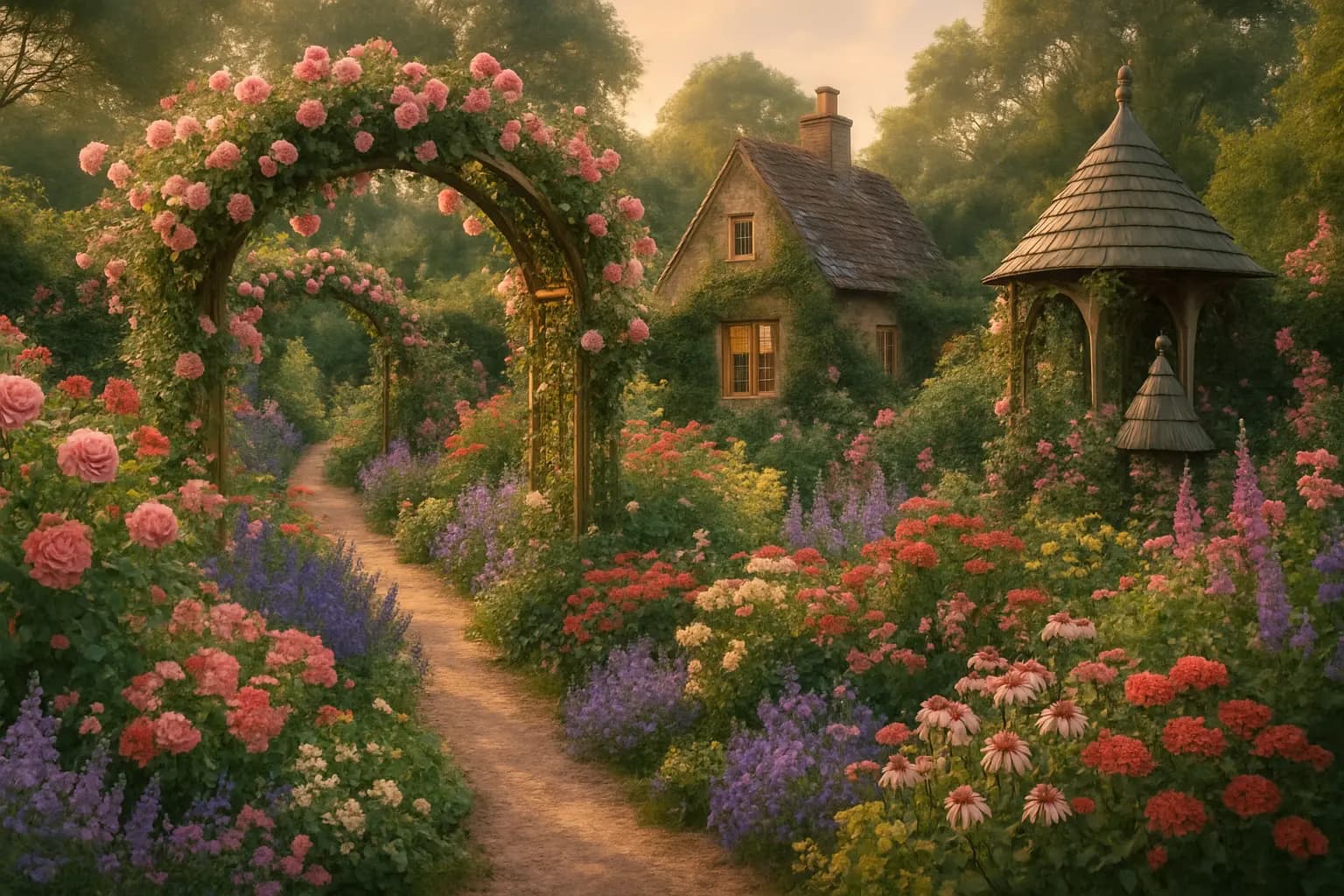
Climbing roses: The quintessential romantic garden plant. ‘New Dawn’, ‘Blaze’, ‘Eden’, ‘Climbing Iceberg’, ‘Don Juan’—climbing roses on an arch, pergola, or fence create instant romance. They require annual pruning and training but produce extraordinary results.
English/David Austin roses: These shrub roses combine Old Rose fragrance with modern reblooming, compact habit, and disease resistance. ‘Olivia Rose’, ‘Lady of Shalott’, ‘Darcey Bussell’—the catalog is genuinely overwhelming and worth exploring.
Foxgloves (Digitalis): Tall spires of tubular flowers in pink, white, lavender, and cream—foxgloves add vertical height and a cottage-garden wildness that feels romantic and slightly wild.
Hellebores: For the front edge of beds and shaded spots, hellebores produce subtle, downward-facing blooms in rose, white, maroon, and spotted combinations. They bloom in late winter through early spring when little else is flowering.
Sweet peas: Annual climbing vines with intense fragrance and ruffled flowers in pink, lavender, red, white, and bicolors. Start seeds in February or March for early summer bloom.
Peonies: Lush, full, fragrant blooms in late spring. Slow to establish but long-lived and spectacular. Few plants feel more romantic in full bloom.
Wisteria: Dramatic and evocative, with cascading lavender or white flower clusters in spring. Heavy fragrance. Needs a strong structure and annual pruning to be kept in check, but nothing else creates the same effect on a pergola or stone wall.
Lighting for Evening
The right lighting transforms a garden from daytime pretty to evening magical.
Avoid pathway runway lights: The standard low-voltage path lights installed in a line create a runway effect—functional but not atmospheric.
Use uplighting sparingly: A light placed at the base of a tree or large shrub, angled upward into the canopy, creates beautiful shadow patterns without illuminating the space aggressively.
String lights work: Simple warm-white string lights in trees, on a pergola, or woven through a hedge fence create instant atmosphere. Avoid the bright cool-white variety—warm (2700K or lower) is the right choice.
Candles and lanterns: For actual occasions, nothing beats actual flame. A cluster of pillar candles on an outdoor table, or lanterns placed along a path, creates a quality of light no electrical fixture matches.
Planning Your Romantic Garden
The romantic garden is as much about intention as plant selection. A space designed with atmosphere in mind—scent, enclosure, a destination, soft evening light, lush planting—doesn’t require any one specific plant or style to feel romantic.
If you’re redesigning or planning from scratch, Gardenly can help you visualize how different design approaches will actually look in your space before you commit to any changes. Sometimes seeing how an enclosed cottage-garden layout transforms your backyard in a realistic rendering makes the design direction click in a way that sketches don’t.
Happy Valentine’s Day. Go plan something beautiful.
Sources & Further Reading
- Cottage Garden Plants — Royal Horticultural Society
- Wild and Romantic Garden Inspiration — Royal Horticultural Society
- Landscaping with Roses — Oregon State University Extension