How to Plan a Cottage Garden: Controlled Abundance and Romantic Charm
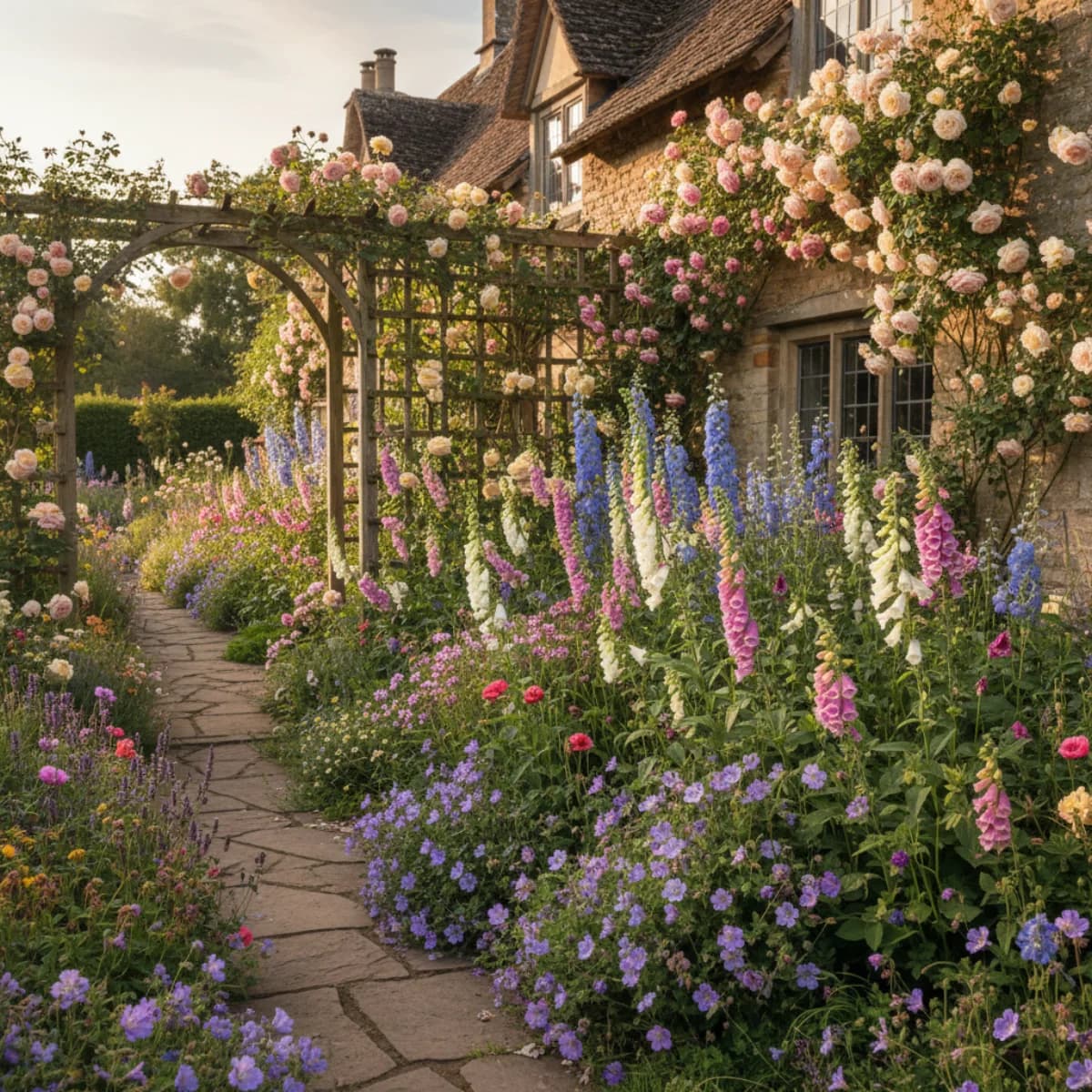
The cottage garden is one of the most enduringly beloved garden styles. Its appeal is easy to name: lushness, informality, a sense that plants are growing together in happy abundance rather than being arranged. It looks natural and a little wild, in the best possible way.
What’s less obvious is that cottage gardens require real design skill. The “natural” look is the product of careful plant selection, thoughtful placement, and ongoing management. An unplanned cottage garden becomes a weedy mess by midsummer. A well-planned one delivers weeks of extraordinary bloom with manageable maintenance.
January is the time to plan yours—with patience and good plant selection, a cottage garden can be established in a single season.
What Makes a Cottage Garden
The cottage garden style has certain consistent qualities:
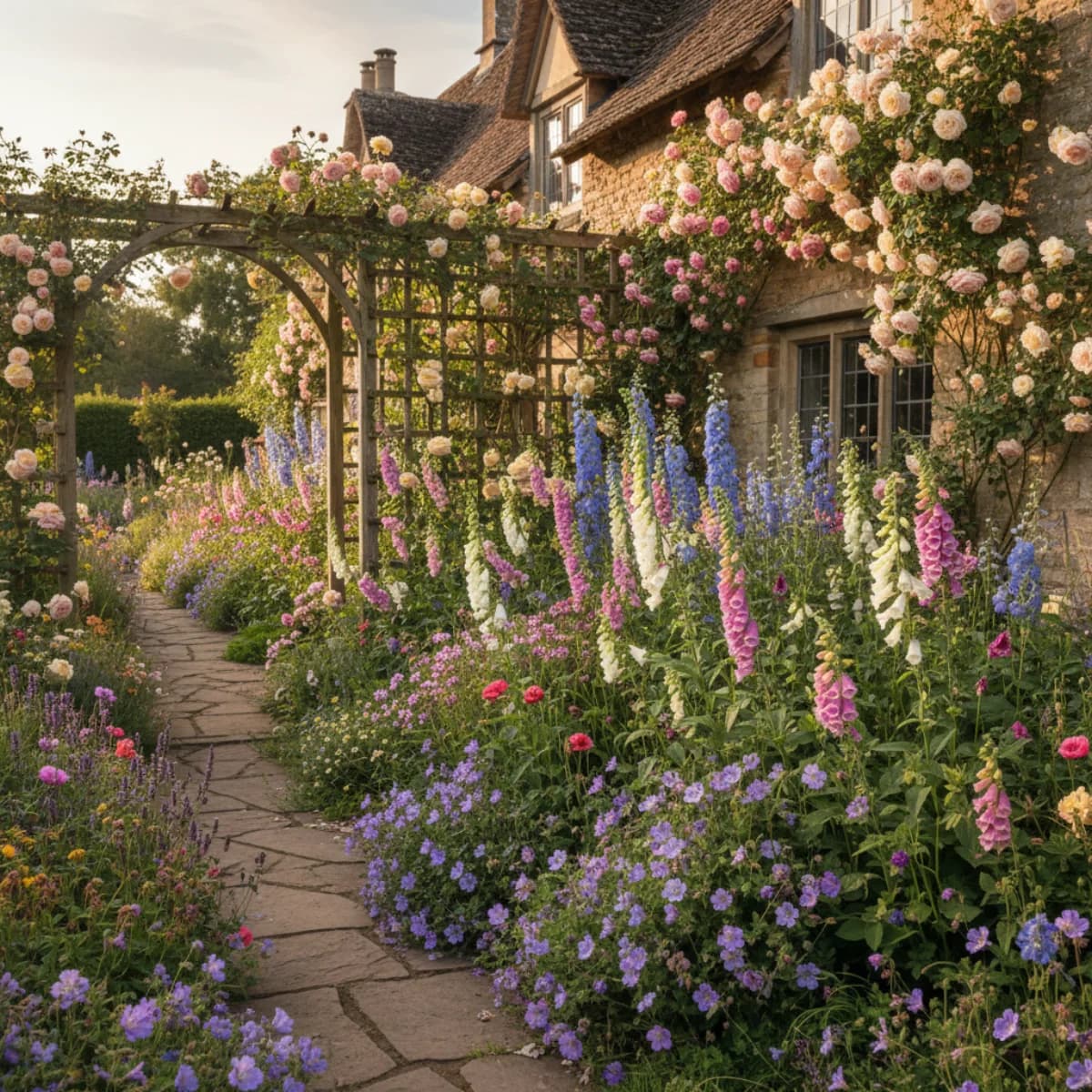
Abundance: Borders are densely planted. There are no bare patches. Plants lean on each other and spill onto paths. This density is partly aesthetic and partly practical—less soil exposed means fewer weeds.
Informality: Plants are not strictly arranged by height or regimented into masses. Taller plants may appear in the middle of a border; low plants may be at the back. The arrangement looks spontaneous even when it isn’t.
Mixed planting: Annuals, perennials, bulbs, and self-seeding plants intermingle. Roses may grow alongside hollyhocks and sweet peas. Vegetables and herbs are sometimes included.
Old varieties: Heritage and heirloom varieties are characteristic. Old-fashioned roses (like the Gallicas and Damasks, Albas, and old Hybrid Perpetuals), species and historical delphiniums, traditional flower-seed annuals—these feel more at home than ultramodern varieties.
Vertical interest: Climbing and tall plants are important. Roses on pillars, sweet peas on hazel wigwams, foxgloves and delphiniums providing vertical accents.
The Classic Cottage Garden Plant Palette
These plants form the backbone of most cottage gardens:
Roses
Roses are central. Not the modern exhibition roses bred for large single flowers and straight stems, but the full-petaled, fragrant, abundantly-flowering roses associated with the style:
- David Austin (English) roses: Modern breeding with old-rose aesthetics. ‘Gertrude Jekyll’ (deep pink, extremely fragrant), ‘William Morris’ (apricot pink), ‘Munstead Wood’ (velvet crimson), ‘The Generous Gardener’ (soft pink climber)
- Old garden roses: Gallica roses like ‘Rosa Mundi’, alba roses, damasks—these often bloom once, magnificently, in June
- Climbing roses: For walls, pillars, and arches—‘Mme Alfred Carrière’, ‘Zéphirine Drouhin’, ‘New Dawn’
Tall Perennials and Biennials
- Foxgloves (Digitalis): The quintessential cottage plant. Biennial—sow seeds one year for flowers the next. Allow to self-seed for perpetual presence.
- Delphiniums: Majestic blue, purple, and white spires. Excellent named varieties available; shorter varieties are more wind-resistant.
- Hollyhocks (Alcea rosea): Single or double, towering against walls. Short-lived perennial or biennial; seeds freely.
- Verbascum: Tall, woolly-leaved plants with small flowers in spires. Several species are architectural and self-seeding.
- Lupins: Colorful cone-shaped spikes in early summer. Relatively short-lived perennials; the classic Russell hybrids are as good as anything newer.
Mid-Height Perennials
- Peonies: Long-lived, spectacular June flowers, beautiful foliage. Plant dormant crowns in early spring or autumn; don’t disturb once established.
- Hardy geraniums (cranesbill): The cottage garden’s reliable filler. G. ‘Rozanne’, G. sylvaticum, G. phaeum—all produce long-flowering, weed-suppressing carpets.
- Catmint (Nepeta): Blue-purple billows of small flowers from June through August; beloved by bees. ‘Six Hills Giant’ is large and spectacular.
- Salvia nemorosa and relatives: Rich purple or blue spikes that bloom for months; excellent companions to roses.
- Achillea: Flat-topped flower heads in cream, yellow, and warm colors; structural and long-blooming.
- Astrantia: Cottage style hallmark—intricate star flowers above lacy collars in white, pink, and deep burgundy.
Annuals and Self-Seeders
Self-seeding plants are the secret to the cottage garden’s spontaneous look—they appear where they want to, which is rarely exactly where you’d put them:
- Sweet peas: Fragrant, essential. Grow on supports or through shrubs.
- Ammi majus and Queen Anne’s lace: Airy white umbellifers that look like floating clouds; excellent with roses.
- Nigella (love-in-a-mist): Blue, white, and pink flowers with feathery foliage; spectacular seed pods.
- Corn poppy (Papaver rhoeas): Scatters itself; the more you disturb the soil, the more it returns.
- Opium poppy (Papaver somniferum): Larger, more spectacular; self-seeds prolifically once established. Large single or frilly double forms available.
- Larkspur (Consolida): Annual delphinium; germinates with winter cold, blooms in early summer.
Bulbs
- Tulips: Plant in fall for spring color. Species tulips naturalize; modern hybrids are best replanted annually.
- Alliums: Spherical heads in late spring-early summer. ‘Purple Sensation’, ‘Gladiator’, and the later-blooming ‘Globemaster’ are excellent.
- Camassia: Less common, but beautiful blue spires in May-June; naturalizes in grass or borders.
Design Principles
Repetition Without Formality
Cottage gardens feel unified because certain plants reappear—but not mechanically. The same rose, geranium, or salvia appears 3-4 times through the border, each time slightly differently positioned or with different neighbors. This creates visual coherence without rigidity.
Allow Self-Seeding
The cottage garden’s self-perpetuating quality comes from allowing plants to seed around. Don’t be too tidy in early spring—many of the self-seeded seedlings you’d weed out are next year’s foxgloves or poppies. Learn to recognize them.
Dense Planting
Plant more densely than you think you should. A new cottage garden planting looks thin and unconvincing for the first year. By year 2, with gaps filled in and self-seeders establishing, it looks right. By year 3, it looks like it’s always been there.
Height Variation Within Beds
Ignore the convention that taller plants go at the back. In a cottage garden, a delphinium emerging from the middle of a border, or a tall rose threaded through a lower planting, is exactly right. The unexpected height placement creates the informal look.
January Planning Action
Map out your cottage garden planting area and order:
- Named rose varieties from specialist rose nurseries (bare root in January is ideal)
- Perennial seeds that benefit from early starting: delphiniums (sow in January for June bloom)
- Biennial seeds: foxgloves (sow February-March for next year’s bloom)
- Bulb orders: alliums for spring planting, or fall delivery if ordering ahead
Gardenly is useful for visualizing how a cottage-style border will look in your actual space—the AI rendering can show you whether the romantic, abundant look you’re imagining will work with your garden’s scale and architecture.
The cottage garden rewards patience and observation over precision planning. Make good initial choices, then let the garden evolve.
Sources & Further Reading
- Cottage garden plants — Royal Horticultural Society
- How to grow perennial delphiniums — Royal Horticultural Society
- Planning a Beautiful Garden Border — Royal Horticultural Society