Bare-Root Plants: Why Winter Is the Best Time to Plant Trees and Shrubs
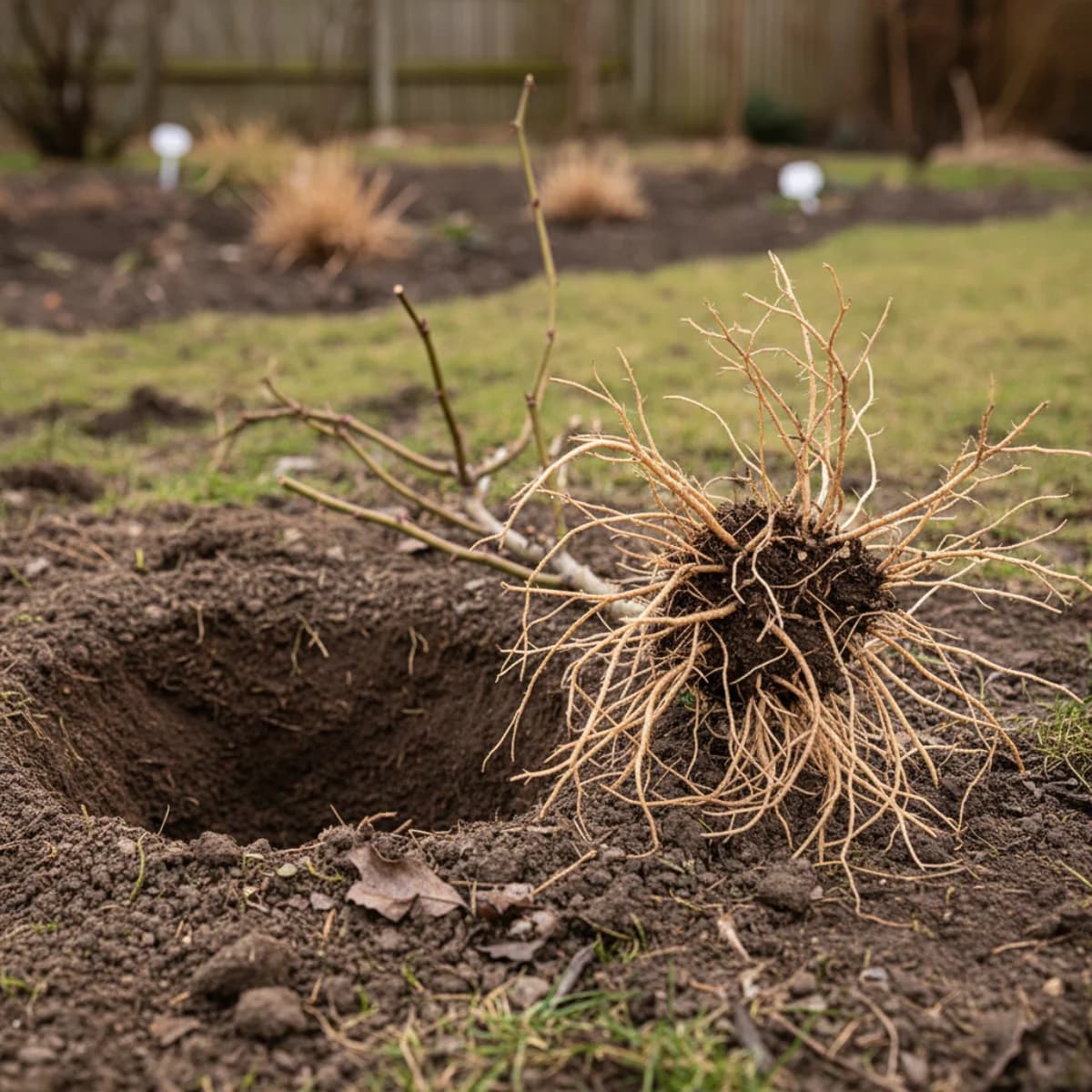
Most garden center trees and shrubs come in containers. This is convenient—you can buy them any time of year—but containers have limitations. Container prices are significantly higher than bare-root equivalents. Containerized plants can be root-bound, with roots circling the inside of the pot in a pattern that causes long-term structural problems. And the transition from potting mix to garden soil can be tricky.
Bare-root plants, available only during winter dormancy, sidestep most of these problems. They’re cheaper, often establish faster, and give you access to a vastly wider range of varieties than any local garden center carries in containers.
What Are Bare-Root Plants?
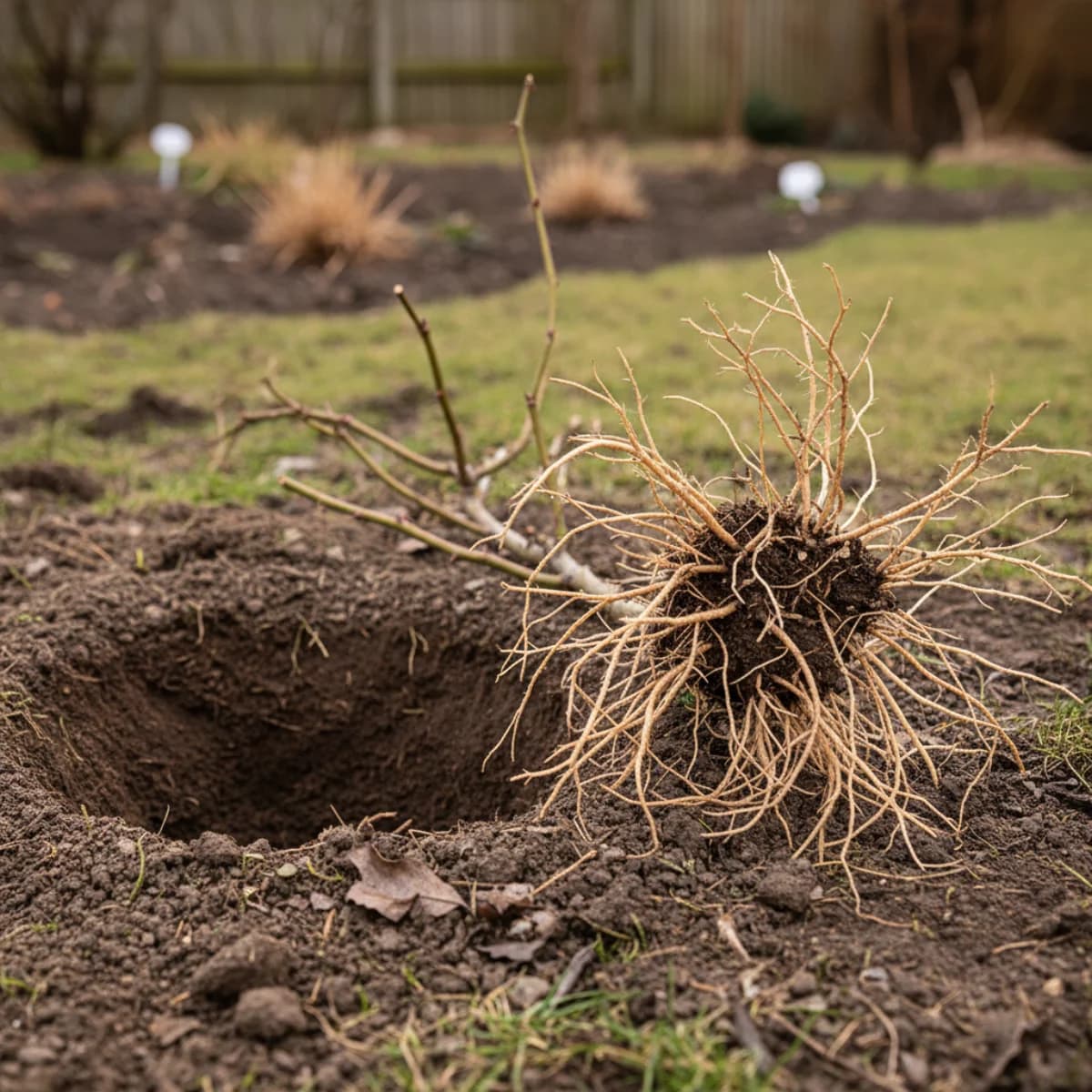
When deciduous trees, shrubs, and perennials are dormant in winter, they can be carefully dug from the field, shaken free of most of their soil, and shipped or stored until planting. The roots are exposed—hence “bare root”—but the plant is alive and dormant.
During dormancy, the plant’s water and nutrient needs are minimal. Its energy is stored in the roots and woody structure, not in active growth. This means it tolerates handling and temporary root exposure in a way that an actively growing plant cannot.
Bare-root availability is typically November through March, with the peak window in January-February for most of the northern hemisphere.
What’s Available Bare Root
Fruit trees: Apples, pears, plums, cherries, peaches, and other fruit trees are almost always cheaper bare root than containerized—often half the price or less. Available in a wide range of rootstocks (which determine ultimate tree size) and variety combinations.
Ornamental trees: Flowering cherries, ornamental plums, birches, rowans, magnolias (some species), and other deciduous ornamentals.
Shrub roses: The widest selection of shrub, climbing, rambling, and hybrid tea roses is available bare root from specialist rose nurseries. Container roses are available in summer but at higher prices and in narrower selection.
Soft fruit: Blackcurrants, redcurrants, gooseberries, raspberries, and blackberries are typically sold and planted bare root. So are asparagus crowns (technically perennial vegetables, but planted in the same season and the same way).
Hedging plants: Bare-root hedging—hawthorn, blackthorn, hornbeam, beech, privet—is sold by the bundle and is dramatically cheaper than containerized equivalents. A hedgerow that would cost hundreds of dollars in containers can be planted for a fraction of the price bare root.
Some perennials: Hostas, daylilies, peonies, and some other perennials are available bare root and are usually cheaper than potted versions.
Why Bare Root Often Establishes Better
A common misconception is that bare-root plants are inferior to containerized ones because they look less impressive at purchase—roots exposed rather than soil-covered, no foliage, no sign of life. In reality, bare-root trees and shrubs often establish more quickly:
No root spiraling: Container plants that have been in the same pot for too long develop circling roots that can strangle the trunk over decades. Bare-root plants don’t have this problem.
No potting mix interface: When containerized plants are placed in garden soil, the different structure between potting mix and soil can create a moisture management problem. Bare-root plants go directly into garden soil.
Immediate soil contact: Roots begin making contact with actual garden soil from day one, rather than needing to bridge the gap between potting medium and garden soil.
Established plants often catch up quickly: Bare-root plants typically establish their root system and then grow strongly from their second season onward.
How to Order and Receive Bare-Root Plants
Order early: Popular varieties sell out. Order in November-December for a January-February delivery window.
Choose reputable specialist suppliers: For fruit trees, look for suppliers who specify the rootstock, which determines tree size. For roses, look for specialist rose nurseries with named varieties and good descriptions.
When plants arrive: Unpack immediately and inspect. Roots should be firm and alive (bend a small root—it should be flexible, not brittle). Any that appear dried out should be soaked in water for a few hours before planting.
If you can’t plant immediately: Heel in temporarily. Dig a shallow trench, lay the plants at an angle with roots covered by loose soil, and keep moist. Plants can be held this way for several weeks.
Planting Technique
Timing: Plant as soon as possible after receiving. If the ground is frozen, heel in until it thaws. Don’t plant into waterlogged or frozen soil.
Soil preparation: Dig a hole that’s wider than the roots spread out—much wider is better than deeper. Add no compost or fertilizer to the backfill for trees and shrubs (this can discourage roots from growing outward into the native soil). For fruit trees and roses, bare-root planting mix (or simply native soil) is correct.
Planting depth: The most critical aspect. The graft union (the swollen junction between rootstock and scion, visible as a slight change in stem color or texture) should be above soil level—typically 2-4 inches above ground. Planting too deep is the most common mistake and causes graft failure or graft burial in grafted trees and roses.
For non-grafted trees and shrubs, plant at the same depth they were growing in the nursery (look for the soil line mark on the trunk).
Setting the plant: Spread roots evenly outward in the hole. Form a cone of soil in the center of the hole for the plant to sit on, with roots draped over it. Backfill with soil, firming gently to eliminate air pockets. Water thoroughly.
Staking: Fruit trees and large ornamental trees need a stake to prevent wind rock while establishing. For bare-root trees, stake before planting (so you don’t drive the stake through roots afterward). Use a short stake (knee height or lower) with a tie—not a tall stake. The trunk needs some movement to develop strength; only the rootball needs stabilizing.
First year care: Mulch around the base (keeping mulch away from the trunk) to conserve moisture and suppress weeds. Water during dry spells, especially in summer. Avoid fertilizing in the first year—you want roots to explore outward, not to push lush growth.
What to Buy This January
If you’ve been considering adding a fruit tree, a flowering tree, a rose hedge, or any significant woody plant to your garden, January is when to move. Look up bare-root specialists for your region, check what’s available, and order early.
The plants that are doing the most in mature gardens—the apple tree that produces abundantly, the climbing rose that covers the wall, the berry patch that produces summer fruit—started as bare-root purchases in winters past.
Sources & Further Reading
- How to Plant Bare Root Plants — Iowa State University Extension
- Planting Bare-Root Trees — Iowa State University Extension
- Bare Root — UC Marin Master Gardeners
- Planting and Transplanting Trees and Shrubs — University of Minnesota Extension