How to Prune Hydrangeas Without Killing This Year’s Blooms
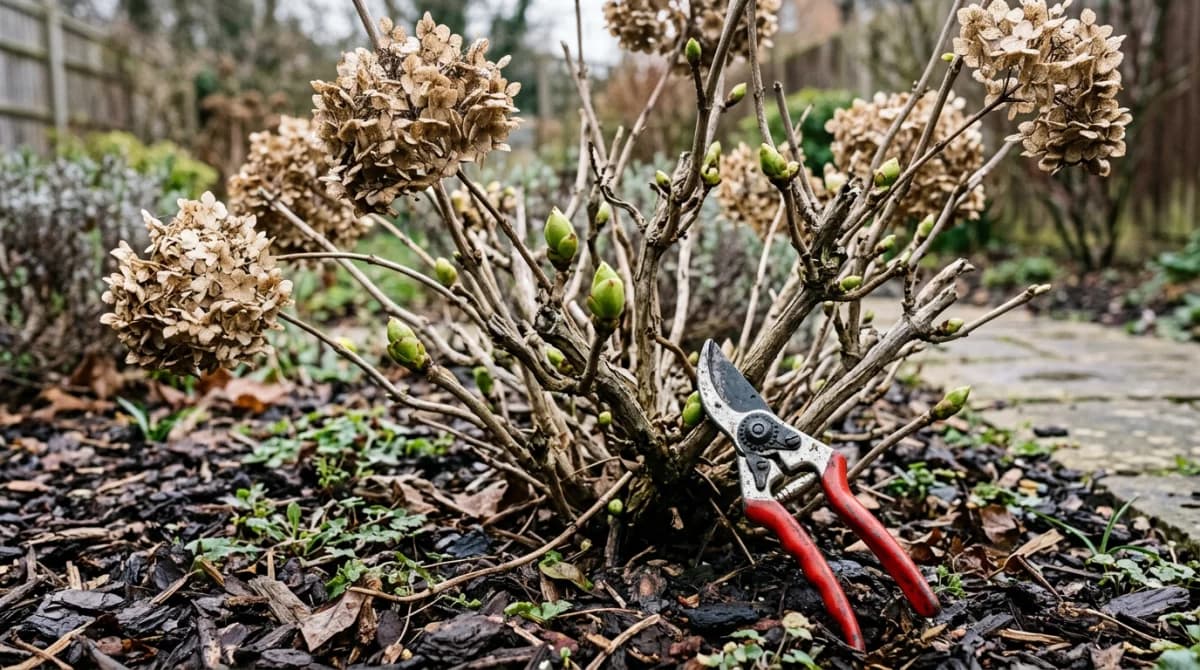
Every spring, well-meaning gardeners grab their pruners and hack back their hydrangeas, only to wonder months later why there are no flowers. The problem is almost never the plant. It is almost always the pruning.
Hydrangeas are one of the most commonly mispruned shrubs in the garden. The reason is simple: different species bloom on different types of wood, and pruning at the wrong time on the wrong type removes the buds that would have become this summer’s flowers. Once you understand which type you have, the right approach takes minutes.
Old Wood vs. New Wood: The Only Thing You Need to Know
Every hydrangea pruning decision comes down to one question: does your plant bloom on old wood or new wood?
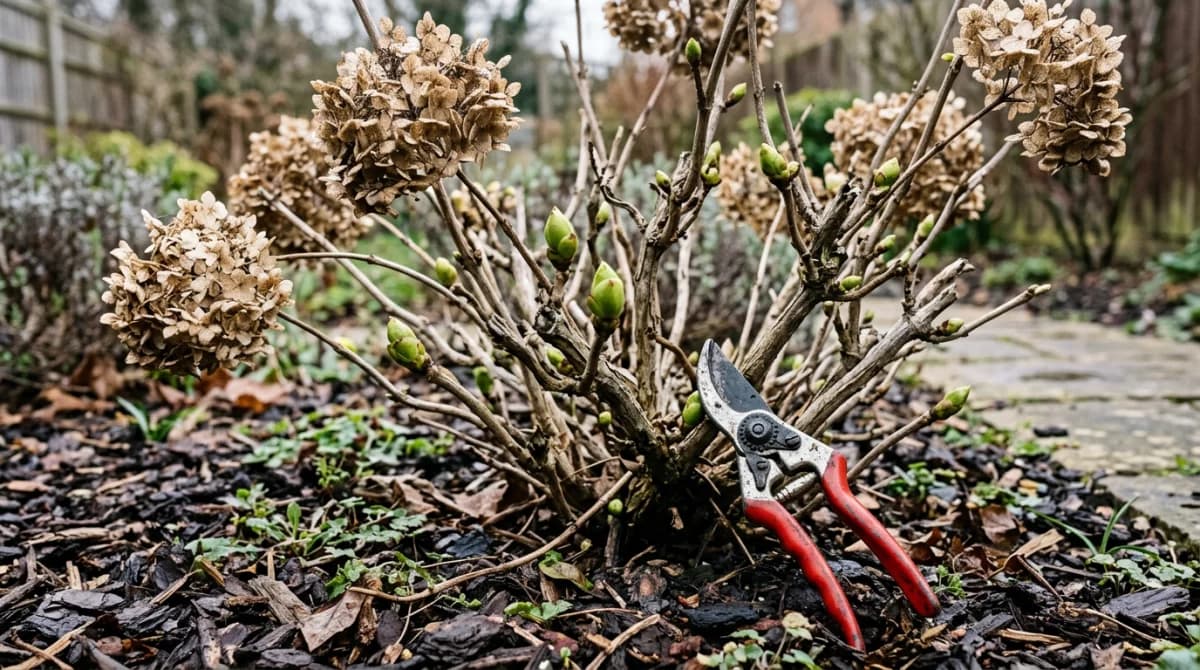
Old wood means the stems that grew last year. The flower buds formed in late summer and fall, and they have been sitting dormant inside those stems all winter. If you cut those stems off in March, the buds go with them.
New wood means the fresh stems that grow this spring. The plant will form buds on this new growth and bloom later in summer. You can cut these plants to the ground in early spring and they will still flower.
Old Wood Bloomers (Do NOT Prune Now)
- Bigleaf hydrangea (Hydrangea macrophylla) — the classic mophead and lacecap types with blue or pink flowers
- Oakleaf hydrangea (Hydrangea quercifolia) — cone-shaped white flowers, distinctive lobed leaves
- Climbing hydrangea (Hydrangea petiolaris) — a vining species that clings to walls and trees
- Mountain hydrangea (Hydrangea serrata) — delicate lacecap flowers, similar to bigleaf but smaller
New Wood Bloomers (Safe to Prune Now)
- Smooth hydrangea (Hydrangea arborescens) — includes the popular ‘Annabelle’ and ‘Incrediball’ cultivars with large white or green globes
- Panicle hydrangea (Hydrangea paniculata) — cone-shaped flowers that open white and age to pink, includes ‘Limelight’, ‘Little Lime’, and ‘Strawberry Sundae’
The Exception: Reblooming Varieties
Some newer bigleaf cultivars like the Endless Summer series, BloomStruck, and Twist-n-Shout bloom on both old and new wood. These are more forgiving of spring pruning, though leaving old stems intact will still give you earlier flowers.
How to Prune Old Wood Hydrangeas
The best time to prune bigleaf, oakleaf, and climbing hydrangeas is right after they finish flowering in summer, typically July or August. But that does not mean you should ignore them entirely in March.
What to do now in early spring:
- Remove only clearly dead wood. Look for stems that are brown, brittle, and snap easily. Live stems will show green when you scrape the bark with a fingernail.
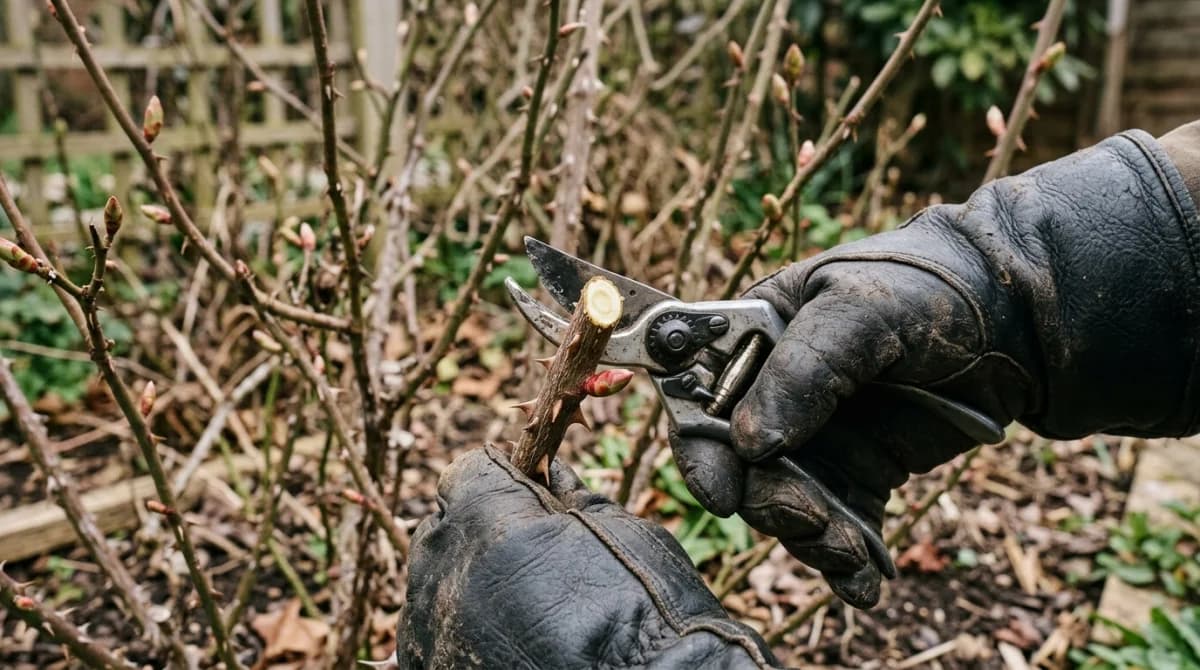
- Cut off spent flower heads. Trim just above the first pair of healthy buds below the old bloom. Those buds are your flowers.
- Remove any stems that are crossing, rubbing, or growing inward. This improves air circulation and shape without sacrificing blooms.
- Leave everything else. Those fat buds along the stems are the flowers. Resist the urge to tidy up further.
If your bigleaf hydrangea was damaged by a hard winter and most stems look dead, cut them back to live wood and accept that this may be a low-bloom year. The plant will recover and set buds for next season.
How to Prune New Wood Hydrangeas
Smooth and panicle hydrangeas are much more forgiving. Early March, before new growth starts, is the ideal time to prune them.
Smooth Hydrangea (Annabelle types)
Cut all stems back to 12-18 inches from the ground. This encourages strong new stems that can support those heavy flower heads without flopping. If you want a taller plant with more, smaller blooms, cut back to about two feet.
Panicle Hydrangea (Limelight types)
These can be pruned more like a small tree or left as a large shrub. Remove about one-third of each stem’s length, cutting just above an outward-facing bud. Remove any thin, weak stems entirely. For tree-form panicle hydrangeas, remove any shoots growing from the base or lower trunk.
Not Sure What You Have?
If you inherited hydrangeas with your house and have no idea what species they are, here is how to figure it out:
- Leaf shape: Oakleaf hydrangeas have deeply lobed leaves like oak trees. All others have simple oval leaves.
- Flower shape: Panicle hydrangeas have cone-shaped (pointed) flower clusters. Bigleaf types have round globes or flat lacecaps. Smooth hydrangeas have round clusters, usually white.
- Bark: Oakleaf hydrangeas have peeling, cinnamon-colored bark. Panicle hydrangeas often have peeling bark too.
- When it bloomed last year: If it bloomed in June-July, it is likely an old-wood type. If it bloomed from July into fall, it is probably a new-wood type.
When in doubt, do not prune hard. Remove only dead wood and spent flowers, then watch what happens. You will learn more about your plant in one season of observation than from any guide.
Common Pruning Mistakes to Avoid
Shearing into a ball. Hydrangeas are not boxwoods. Using hedge shears to shape them into a globe cuts off flower buds indiscriminately and produces a dense outer shell with hollow interior growth.
Pruning everything at the same time. If you have multiple hydrangea species, they need different treatment. Mark them with tags so you remember which is which.
Cutting to the ground every year. This works for smooth hydrangeas but kills blooms on bigleaf, oakleaf, and climbing types. It is the single most common hydrangea pruning mistake.
Pruning too late in fall. Late-season pruning can stimulate tender new growth that gets killed by frost, and on old-wood types it removes next year’s buds.
After Pruning: Spring Care
Once you have finished pruning, give your hydrangeas a head start on the season. Apply a two-inch layer of compost around the base, keeping it a few inches away from the stems. This feeds the plant slowly as it breaks dormancy. Follow with a layer of mulch to retain moisture.
Hold off on fertilizer until you see new leaves emerging. Feeding too early, before the plant is actively growing, wastes nutrients.
If you are planning where to add new hydrangeas or want to see how different varieties would look in your garden, Gardenly can help you visualize shrub placements before you commit to digging.
The Short Version
Know your hydrangea. If it blooms on old wood, leave it alone except for dead wood and spent blooms. If it blooms on new wood, cut it back hard now. When in doubt, do less. A slightly shaggy hydrangea with flowers beats a perfectly pruned one without them.
Sources & Further Reading
- Pruning Hydrangeas for Best Bloom — University of Minnesota Extension
- When to Prune Which Hydrangea Species — Penn State Extension
- Pruning Hydrangeas — University of Maryland Extension
- Guide to Pruning Hydrangeas — University of Maryland Extension