The Best Herbs to Grow at Home (And How to Actually Use Them)
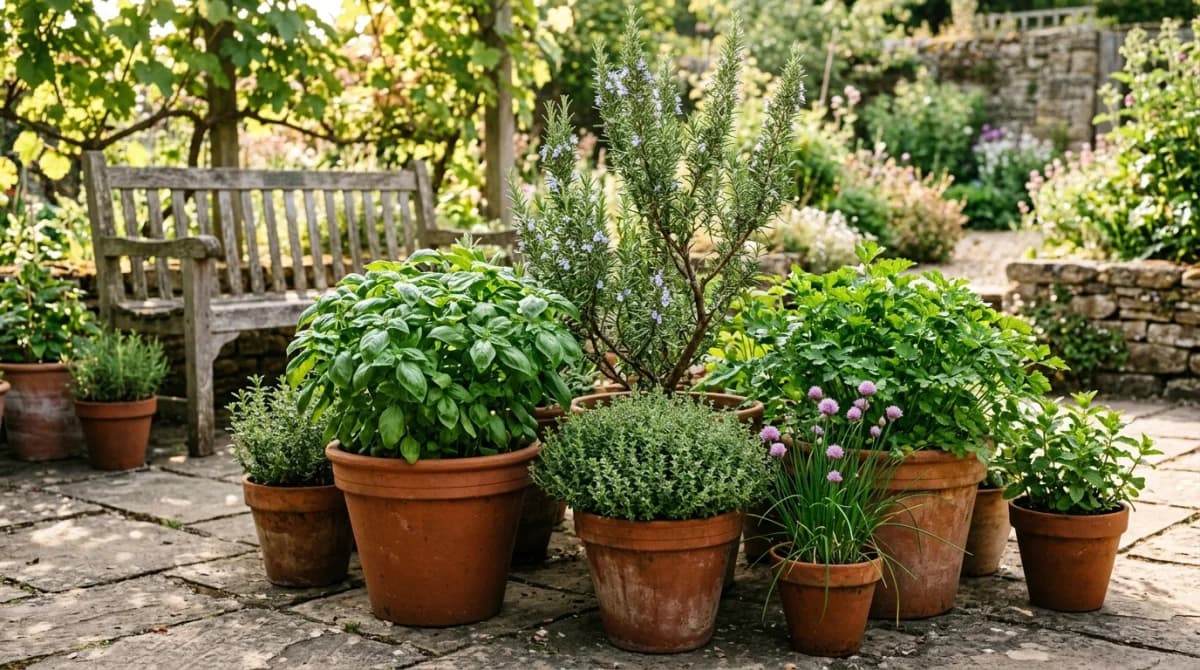
Fresh herbs change the way you cook. The difference between dried supermarket basil and a handful torn from a plant on your porch is the difference between remembering a meal and forgetting it. Yet most people who try growing herbs end up with leggy basil that flowers in two weeks, cilantro that bolts before they pick it, and rosemary that dies indoors over winter.
The problem isn’t that herbs are hard. It’s that different herbs need fundamentally different treatment, and gardeners tend to treat them all the same. Some are annual and fast. Some are perennial and slow. Some want heat and dry soil. Some want cool weather and consistent moisture.
Here are the ten best herbs for home growing, organized by how easy they actually are, with specific guidance on harvesting them correctly, because bad harvesting kills more herb plants than bad growing.
Quick Answer
The easiest herbs to grow at home are mint, chives and rosemary, which survive neglect. Basil, cilantro and parsley are easy once you know the single trick each one needs: pinch basil before it flowers, succession-sow cilantro every three weeks, and replant parsley annually. Thyme, dill, oregano and sage reward you but want specific conditions, mostly sharp drainage and lean soil.
If you are starting with three, grow mint, chives and basil. They cover the widest range of cooking and none of them needs a garden.
At a Glance
| Herb | Type | Sun | Water | Min pot size | Difficulty |
|---|---|---|---|---|---|
| Mint | Perennial | Part shade to full sun | Keep moist | 12in / 30cm | Very easy |
| Chives | Perennial | Full sun | Moderate | 8in / 20cm | Very easy |
| Rosemary | Evergreen shrub, zone 7+ | Full sun | Let it dry out | 12in / 30cm | Easy outdoors, hard indoors |
| Basil | Warm-season annual | Full sun | Consistent | 10in / 25cm | Easy with pinching |
| Cilantro | Cool-season annual | Full sun to part shade | Consistent | 8in / 20cm | Easy with succession sowing |
| Parsley | Biennial, grown as annual | Part shade to full sun | Consistent | 10in / 25cm | Easy, slow to germinate |
| Thyme | Perennial subshrub | Full sun | Let it dry out | 8in / 20cm | Needs sharp drainage |
| Dill | Annual | Full sun | Moderate | 12in / 30cm deep | Direct sow only |
| Oregano | Spreading perennial | Full sun | Let it dry out | 10in / 25cm | Easy, spreads |
| Sage | Perennial shrub, zone 5+ | Full sun | Let it dry out | 12in / 30cm | Needs drainage |
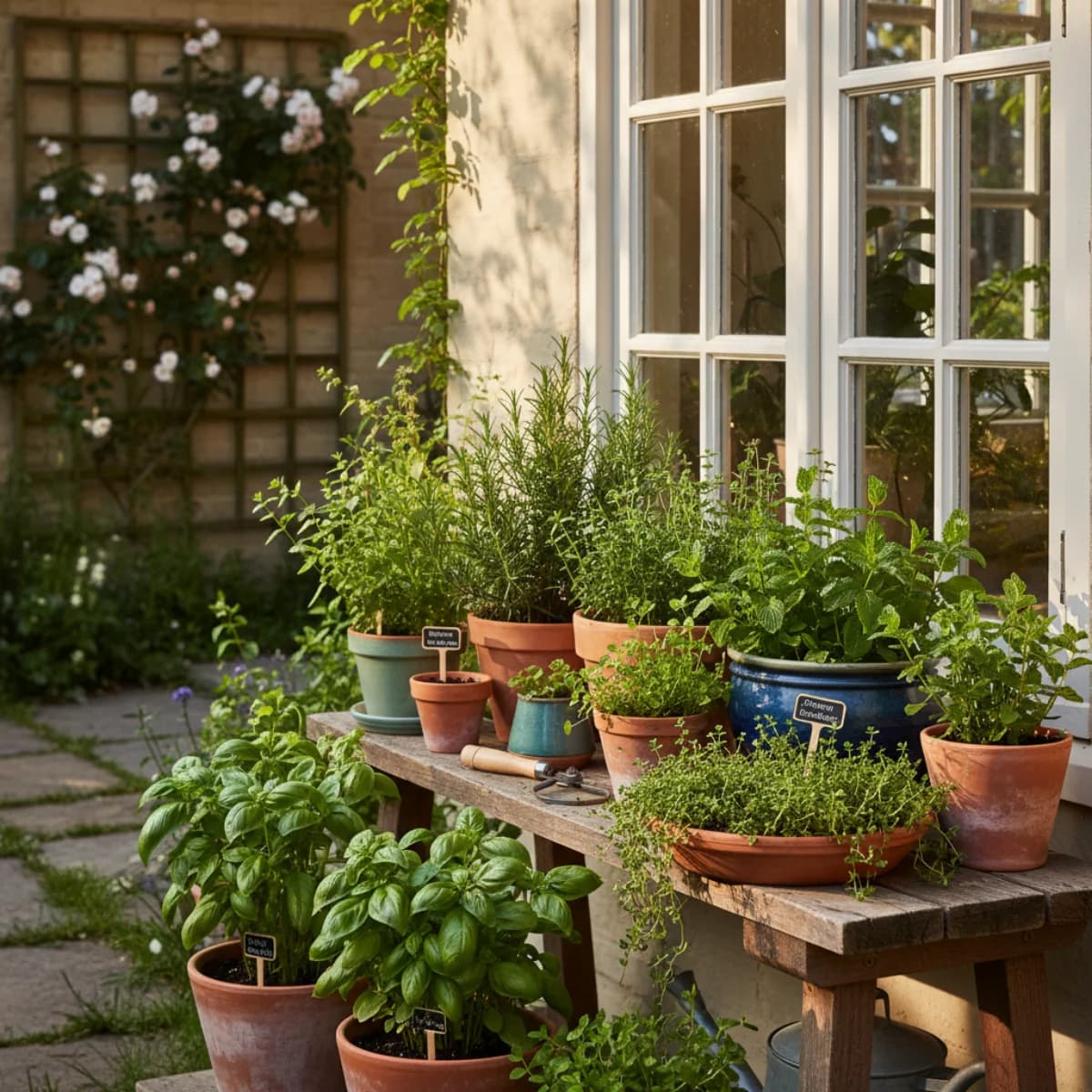
Two groups, and mixing them is the most common mistake. Mint, basil, cilantro, parsley and dill want consistent moisture. Rosemary, thyme, oregano and sage want to dry out between waterings. Plant them in the same pot and one group suffers all season.
Tier 1: Almost Impossible to Kill
Mint
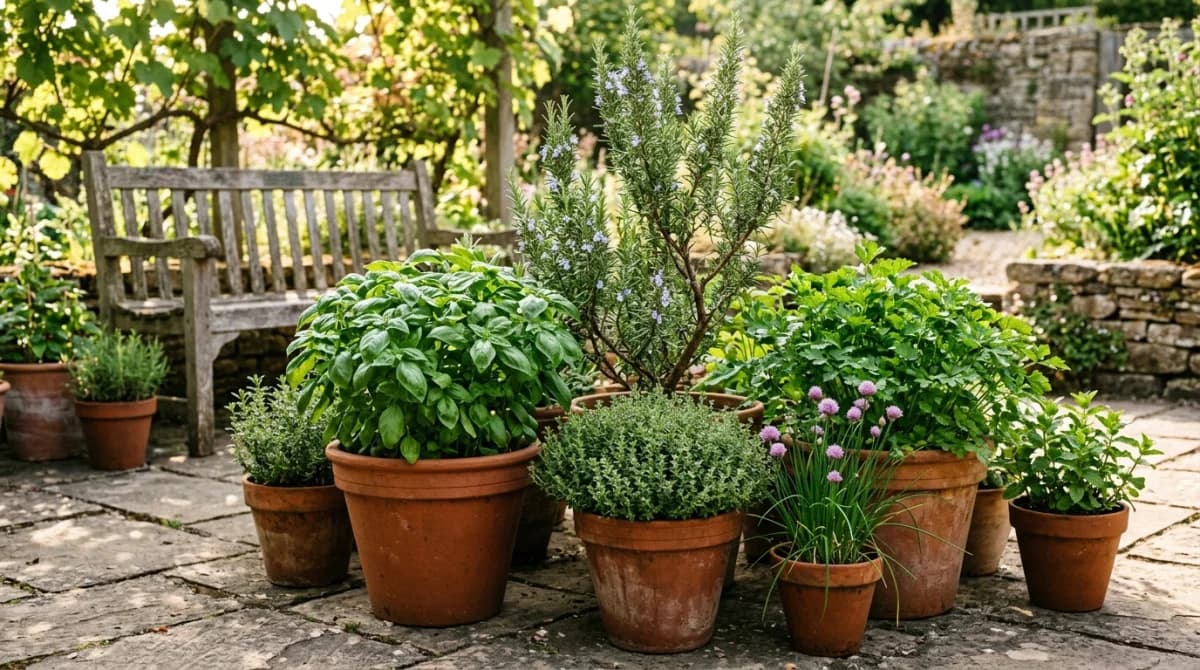
Mint is so easy to grow that the main challenge is stopping it. Plant it in the ground and it spreads aggressively via underground runners, colonizing your entire garden within a season. Always grow mint in its own pot. A 12-inch container on the patio is ideal.
Mint thrives in partial shade to full sun and likes consistent moisture. Harvest by cutting stems back to a leaf node. The plant branches from every cut, becoming bushier and more productive. There are dozens of varieties: spearmint and peppermint are the standards, but chocolate mint, apple mint, and mojito mint are worth trying.
Kitchen use: Tea, cocktails (mojitos, juleps), Middle Eastern salads, lamb, yogurt sauces, ice cream. Dry extra bunches by hanging stems upside down in a cool, dark place.
Chives
Chives are a perennial herb that returns every spring, expands gradually into a tidy clump, and produces pretty purple flower puffs that are also edible. They need full sun and decent soil, and that’s about it.
Harvest by snipping leaves at the base with scissors rather than cutting tips. This encourages fresh growth from the center. The entire plant can be cut to an inch above ground level several times per season and will regrow completely.
Kitchen use: Anything that wants a mild onion flavor: eggs, potatoes, cream cheese, soups, salad dressings. Chive flowers can be pulled apart and scattered over salads for color and a light onion bite.
Rosemary
In zones 7 and warmer, rosemary is an evergreen shrub that grows for years with zero attention. In colder zones, grow it in a pot and bring it indoors before frost, though indoor rosemary is notoriously difficult, as it needs bright light, cool temperatures, and good air circulation to survive winter inside.
Rosemary prefers full sun, excellent drainage, and lean soil. Overwatering and rich soil are the most common ways to kill it. Let the soil dry out between waterings.
Harvest by snipping 3-to-4-inch stem tips. This also keeps the plant bushy. Avoid cutting into bare woody stems, as rosemary doesn’t regenerate from old wood the way other herbs do.
Kitchen use: Roasted potatoes, grilled lamb, focaccia, roasted chicken, infused olive oil. Rosemary’s flavor is strong, so use it with restraint.
Tier 2: Easy With One Trick
Basil
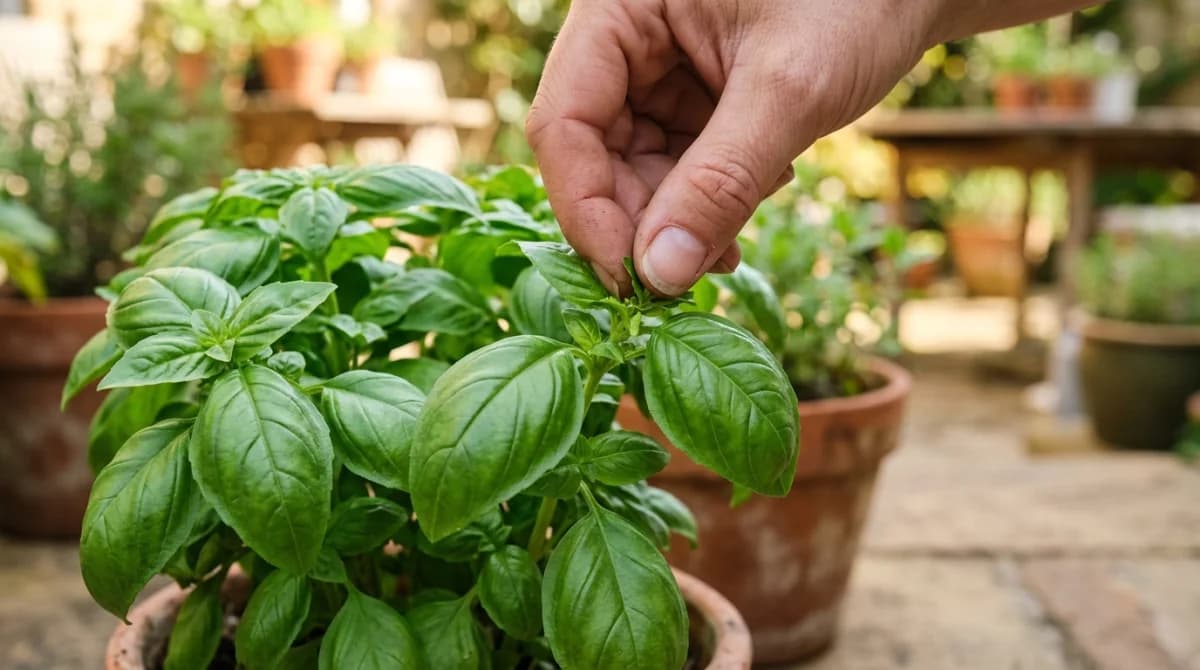
Basil is the most popular herb to grow at home and the most commonly mismanaged. The trick is understanding one thing: basil wants to flower, and your job is to stop it. Once basil flowers, the leaves become bitter and the plant stops producing.
Pinch off the growing tips every week or two, cutting just above a leaf pair. Each pinch point produces two new stems, which means more leaves and a bushier plant. If flower buds appear, remove them immediately.
Basil is a warm-season annual. Don’t plant it outside until nighttime temperatures stay above 50°F (10°C). It wants full sun, rich soil, and consistent moisture. A single plant in a 10-inch pot can produce basil all summer with regular pinching.
Kitchen use: Fresh in caprese salads, torn into pasta sauces at the last minute (heat kills the flavor), pesto, Thai basil in stir-fries, infused in simple syrup for cocktails.
Cilantro
Cilantro’s problem is that it bolts (sends up a flower stalk and goes to seed) as soon as the weather warms up. A spring planting might give you three to four weeks of harvestable leaves before it’s done.
The solution: succession sow. Plant a short row every two to three weeks from early spring through fall. Cilantro germinates fast and grows fast in cool weather. Once hot weather arrives (above 80°F/27°C consistently), switch to heat-tolerant varieties like ‘Slow Bolt’ or ‘Calypso.’
When it does bolt, let it go to seed. The seeds are coriander, an entirely different spice that’s equally useful in the kitchen. And cilantro that goes to seed will reseed itself, giving you volunteer plants in fall and the following spring.
Kitchen use: Salsa, guacamole, Thai curries, Vietnamese pho, Indian chutneys, tacos. Add fresh just before serving, as cooking destroys the flavor.
Parsley
Parsley is a biennial: it grows leaves in the first year, flowers and dies in the second. Treat it as an annual and replant each spring for the best leaf production.
Flat-leaf (Italian) parsley has more flavor than curly parsley and is the standard for cooking. Curly parsley makes a better garnish and garden edger.
Parsley is slow to germinate (two to three weeks), so start seeds indoors or buy transplants. It tolerates partial shade better than most herbs and wants rich, moist soil.
Kitchen use: Tabbouleh, chimichurri, gremolata, green sauces, stocks, virtually any savory dish as a finishing herb. Use far more than you think you need. Parsley is a main ingredient, not a garnish.
Tier 3: Rewarding But Particular
Thyme
Thyme is a perennial subshrub that forms a low, woody mat. It needs full sun, sharp drainage, and lean soil. Wet feet kill thyme faster than anything. Plant it at the edge of a raised bed, in a rock garden, or in a pot with excellent drainage.
There are dozens of varieties. Common thyme (Thymus vulgaris) and lemon thyme (T. citriodorus) are the most useful in the kitchen. Creeping thyme makes an excellent ground cover between stepping stones but has less culinary flavor.
Harvest by snipping tender stem tips, leaving some growth on the plant. In spring, cut back the previous year’s growth by about one-third to promote fresh shoots and prevent the plant from becoming too woody.
Kitchen use: Roasted vegetables, stews, braises, poultry, soups, compound butters. Thyme holds its flavor through long cooking, so add it early.
Dill
Dill grows fast, looks beautiful, and doesn’t transplant well. Direct sow seeds where you want them, in the garden or in a deep pot. It grows 2 to 3 feet tall with feathery foliage and produces large yellow flower heads that attract beneficial insects.
Like cilantro, dill bolts in heat. Plant in spring and again in late summer for a fall crop. Harvest leaves (called “dill weed”) by snipping them at any time. Harvest seed heads when they turn brown and dry.
Kitchen use: Salmon, cucumber salads, pickles, potato salad, tzatziki, Scandinavian dishes. The flavor is best fresh but dried dill has its place in long-cooked dishes.
Oregano
Oregano is a spreading perennial that thrives in hot, dry, poor soil, basically the opposite of what most plants want. Mediterranean oregano (Origanum vulgare subsp. hirtum) has the best flavor. Common oregano from the garden center is often a different subspecies with minimal culinary value, so taste before you buy.
Plant in full sun with excellent drainage. Oregano spreads by runners and can take over, so give it its own container or a confined bed area. Cut it back hard in spring to encourage fresh, tender growth.
Kitchen use: Pizza, tomato sauces, Greek salads, grilled meats, bean dishes. Oregano is one of the rare herbs that actually improves when dried, as the flavor concentrates.
Sage
Garden sage (Salvia officinalis) is a handsome perennial shrub with gray-green fuzzy leaves. It likes the same conditions as rosemary: full sun, lean soil, excellent drainage. It’s hardy to zone 5 and evergreen in mild winters.
Harvest young leaves from the tips. Older leaves develop a stronger, sometimes overpowering flavor. Cut the plant back by about half in early spring to keep it compact and productive.
Kitchen use: Brown butter sage sauce for pasta, Thanksgiving stuffing, pork dishes, sausage seasoning, fried sage leaves as a garnish. A little goes a long way.
How to Preserve Your Harvest
Growing herbs means feast-or-famine harvests. Here’s how to deal with the surplus:
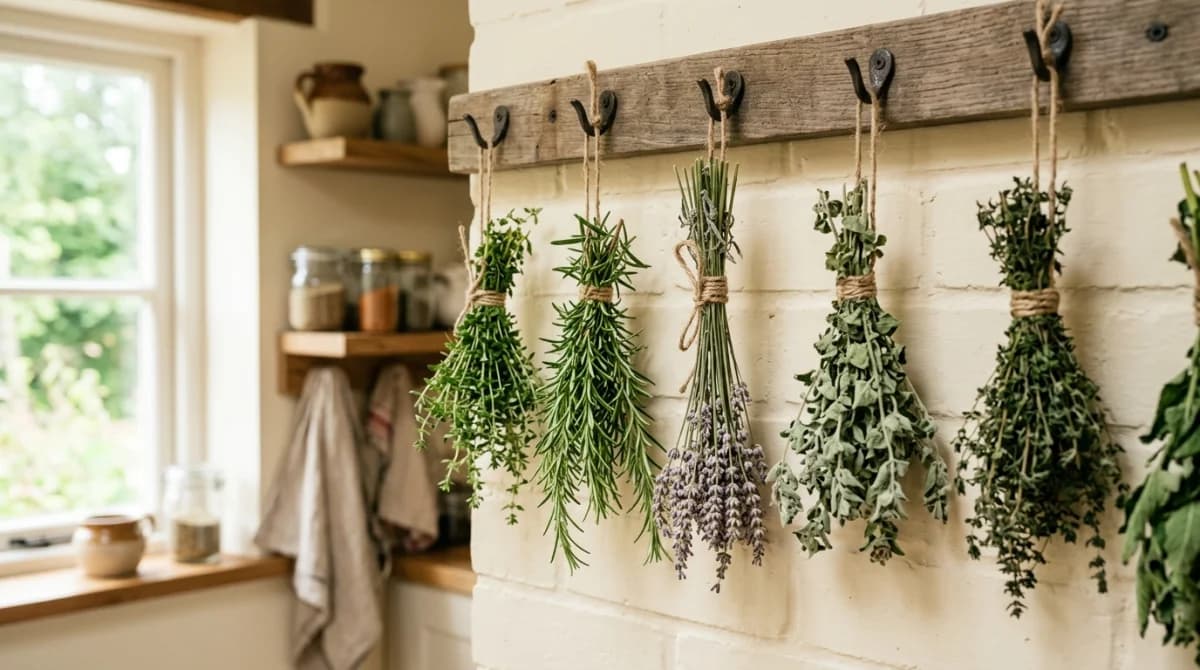
Drying: Bundle stems together, hang upside down in a cool, dark, dry place for one to two weeks. Strip dried leaves and store in airtight jars. Works best for: rosemary, thyme, oregano, sage, mint.
Freezing: Chop fresh herbs and pack into ice cube trays. Fill with olive oil or water and freeze. Pop out cubes as needed for cooking. Works best for: basil, cilantro, parsley, dill, chives.
Herb butter: Mix chopped fresh herbs into softened butter, roll in plastic wrap, and freeze. Slice off rounds for steaks, vegetables, and bread. Combine herbs freely. A mix of parsley, chives, and thyme is classic.
Infused oil or vinegar: Pack herbs into a bottle, cover with oil or vinegar, let steep for two weeks. Strain and use. Works best with rosemary, thyme, oregano, and basil.
Growing Herbs Indoors
Most indoor herb failures come down to light. A kitchen windowsill that feels bright to you delivers a fraction of what these plants got outside, and herbs respond by stretching, thinning and giving up.
Light is the whole problem. A south-facing window is the minimum, and even that falls short from November to February in northern latitudes. A cheap LED grow light on a timer for 12 to 14 hours a day fixes it more reliably than any windowsill.
Which herbs actually work indoors: chives, mint, parsley and basil do best, since they tolerate lower light and higher humidity. Thyme and oregano manage in a bright south window.
Which do not: rosemary and sage. Rosemary indoors needs bright light, cool temperatures and moving air at the same time, which almost no home provides. It usually dies of powdery mildew or root rot by February. If you are in zone 6 or colder, expect to treat rosemary as a plant you replace, or overwinter it in an unheated but frost-free space such as a garage with a window.
Water less than you think. Indoor pots dry out far more slowly than outdoor ones. Overwatering kills more indoor herbs than drought does.
Repot supermarket herbs immediately. Those pots hold a dozen seedlings crammed together in peat, grown for a two-week shelf life. Split them into two or three clumps, repot into real compost, and cut them back hard.
Getting Started
Start with three herbs you actually cook with. There’s no point growing tarragon if you never make béarnaise. Match your herb garden to your kitchen habits and you’ll use everything you grow.
A few pots on a sunny windowsill, balcony, or back step is all you need to start. Expand as you learn which herbs thrive in your conditions. And if you’re designing a dedicated herb garden area, an AI garden design from a photo can help you plan a layout that groups herbs by their water and sun needs, which is the key to keeping them all happy in the same space. For a full bed layout, see the herb garden design guide.