Spring Container Gardens: Cold-Hardy Plants You Can Pot Up Right Now
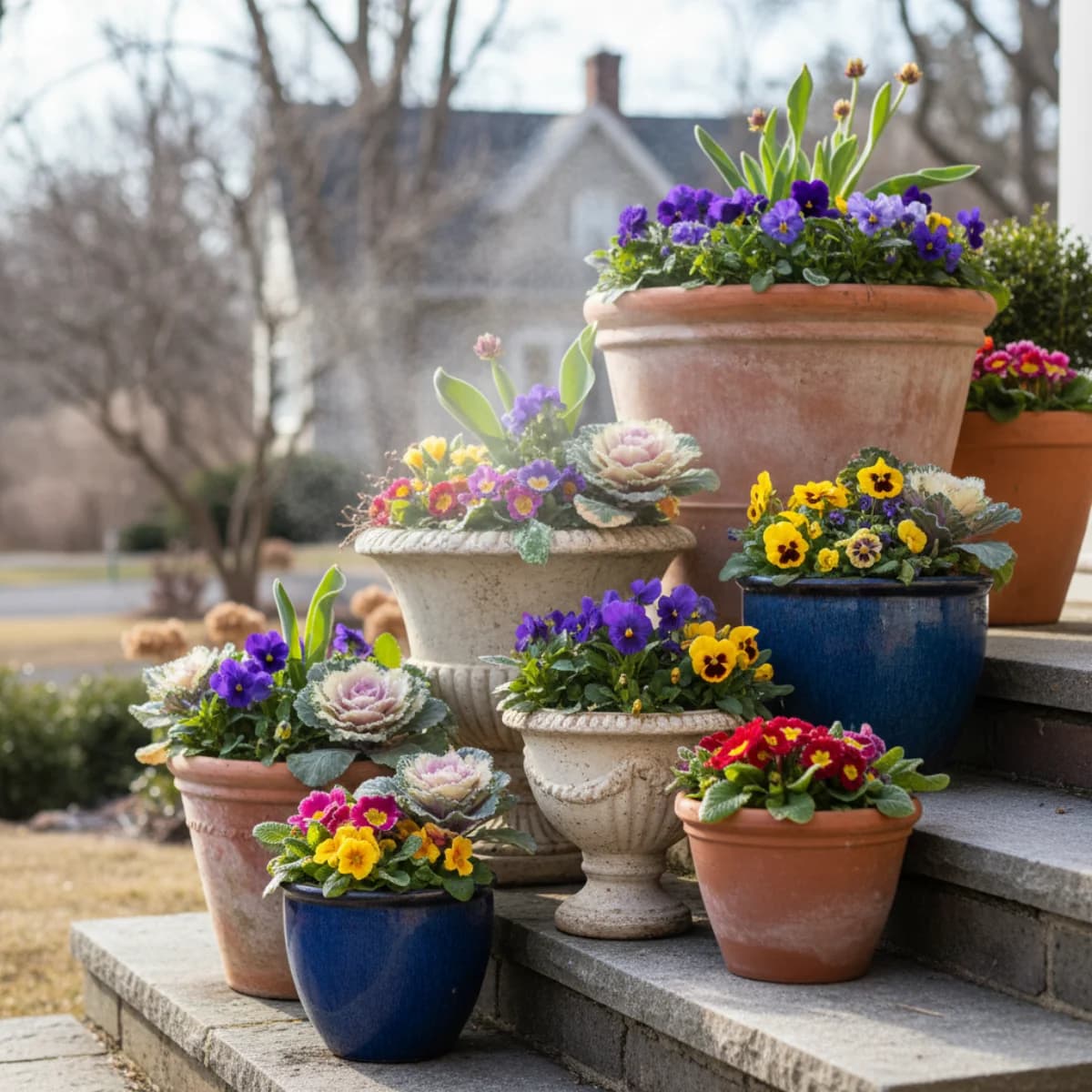
Late February is that awkward stretch where you are desperate to garden but the ground is still cold and the beds are not ready. The good news is you do not need garden beds to get started. A few containers, some quality potting mix, and the right plant choices can give you a genuinely beautiful display on your porch or patio weeks before your neighbors have even picked up a trowel.
The trick is choosing plants that actually enjoy cool weather. Plenty of ornamentals and edibles not only tolerate frost but perform better in it. Here is how to put together spring containers that look good now and keep looking good well into April.
The Foundation: Getting Your Containers Ready
Before you plant anything, a few basics make the difference between containers that thrive and ones that struggle.
Use fresh potting mix. Last year’s soil is compacted and nutrient-depleted. A good-quality soilless mix with perlite or pumice provides the drainage that cold-season plants need. Waterlogged roots in cold soil is the fastest way to kill an otherwise tough plant.
Choose containers with drainage holes. This is non-negotiable in late winter. Rain and snowmelt will saturate containers without drainage, and roots sitting in cold water rot quickly. If you love a pot that has no hole, use it as a cachepot and set a plastic nursery pot inside.
Go bigger than you think. Larger containers insulate roots better against temperature swings. A 14-inch pot handles a hard freeze far better than an 8-inch one. The extra soil mass acts as a thermal buffer.
The Stars: Ornamentals That Laugh at Frost
These plants are not just frost-tolerant. They are at their best in cool weather.
Pansies and Violas
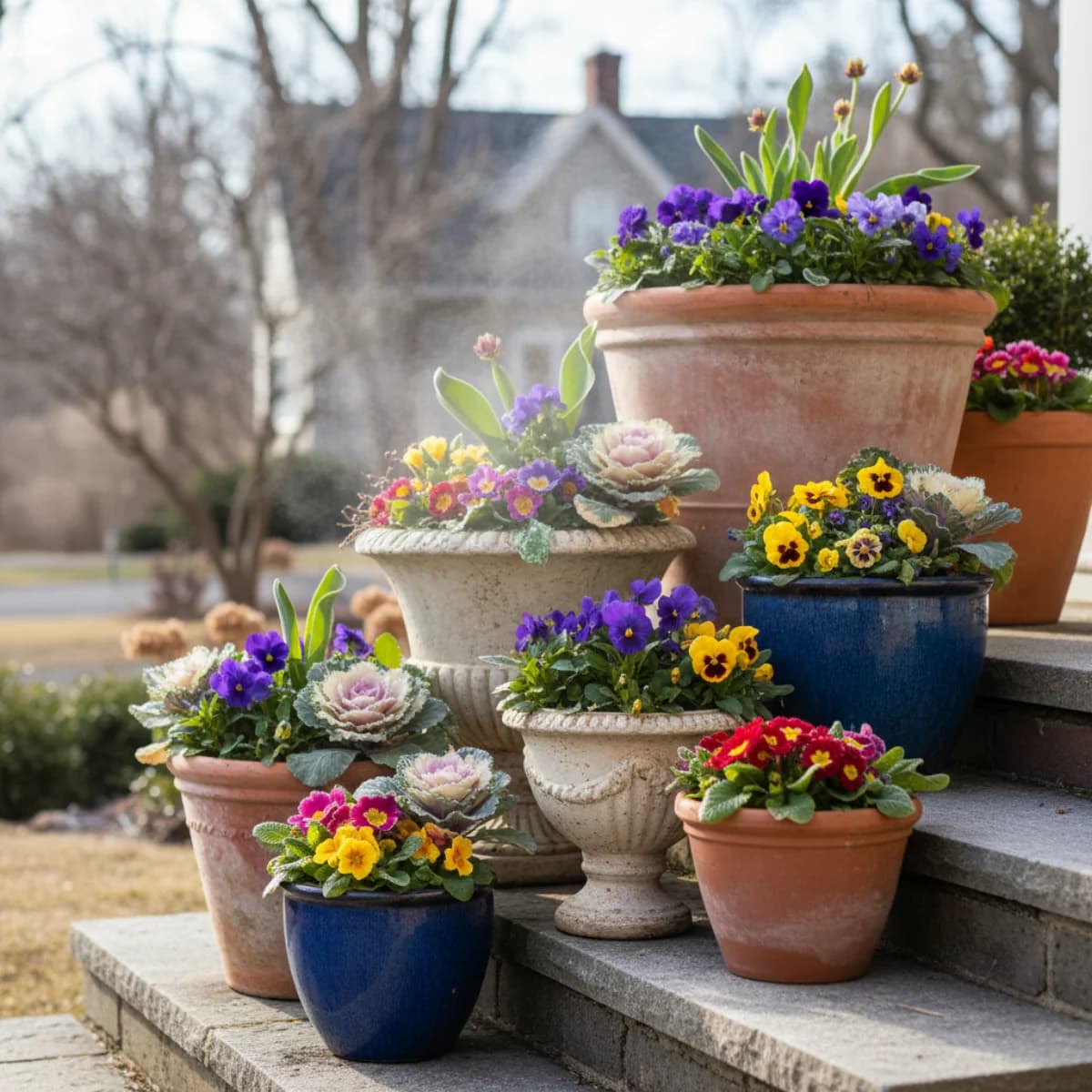
The workhorses of early spring containers. Modern pansy cultivars like ‘Matrix’ and ‘Delta’ bounce back from temperatures down to 15°F once established. Violas like ‘Sorbet’ and ‘Penny’ are even tougher, with smaller flowers but far more of them. Plant them densely for immediate impact.
Primroses (Primula vulgaris)
Few plants deliver as much color per square inch in late winter. English primroses come in nearly every shade and bloom for weeks in cool conditions. They fade fast in heat, so enjoy them now. Tuck them into the front of mixed containers where their low, rosette habit works as a living edge.
Hellebores
If you want sophistication in a winter container, hellebores are the answer. Lenten roses (Helleborus × hybridus) bloom from February through April in shades of plum, green, cream, and spotted pink. They are expensive but perennial, so you can transplant them into the garden when the container display is done.
Ornamental Kale and Cabbage
The ruffled, purple-and-cream rosettes of ornamental brassicas intensify in color as temperatures drop. They handle hard freezes without flinching and provide bold, structural texture that makes everything around them look more polished. Use a single large specimen as a container centerpiece.
Heather (Calluna and Erica)
Winter-blooming heathers add fine texture and subtle color to containers. Erica carnea cultivars bloom through snow, producing tiny bell-shaped flowers in pink, white, or purple. They pair beautifully with the broader leaves of hellebores or the bold rosettes of ornamental kale.
The Bonus: Edibles That Prefer the Cold
Spring containers do not have to be purely decorative.
Lettuce and Mesclun Mixes
Leaf lettuce thrives in the 40-60°F range and actually tastes better when grown cool. Sow seeds directly into a wide, shallow container and you will be cutting salad greens in three to four weeks. Varieties like ‘Red Sails’, ‘Buttercrunch’, and ‘Flashy Trout Back’ add color to the container while they grow.
Spinach
Even hardier than lettuce, spinach handles temperatures down to the mid-20s once it has a few true leaves. Sow thickly in a deep pot and thin as needed. ‘Bloomsdale Long Standing’ and ‘Space’ are reliable performers in containers.
Cilantro and Parsley
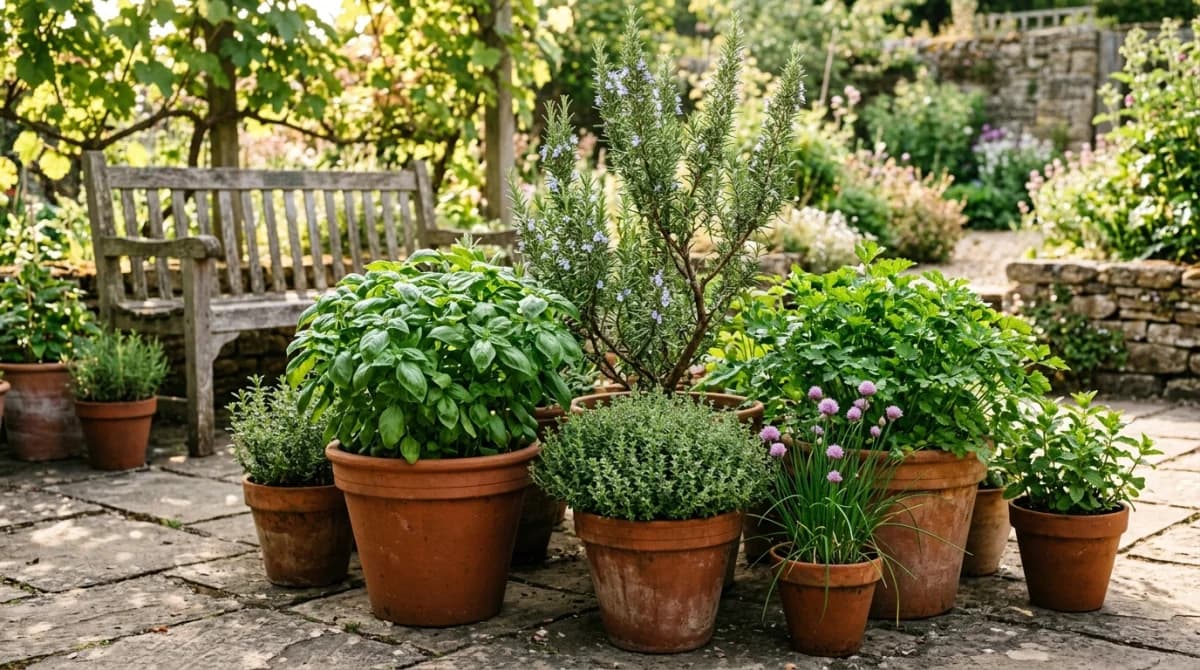
Both of these herbs bolt fast in summer heat but love cool weather. Start them in a pot on the porch now and you will have fresh herbs for weeks. Flat-leaf parsley is especially handsome in mixed containers, doubling as both an herb and an ornamental filler.
Snap Peas
A container at least 12 inches deep with a small obelisk or trellis makes a surprisingly productive pea planter. ‘Sugar Ann’ and ‘Patio Pride’ are compact varieties bred for containers. Direct-sow the seeds and they will germinate even in cold soil.
Designing the Container
A good container arrangement follows the classic thriller-filler-spiller formula, and it works just as well with cold-weather plants.
Thriller: One tall or structural element in the center or back. An ornamental kale, a hellebore, or a dwarf evergreen like a small boxwood or conifer.
Filler: Plants that fill the middle zone. Pansies, violas, primroses, or a cluster of lettuce.
Spiller: Trailing plants that cascade over the rim. Trailing pansies, creeping thyme, or ivy provide that finished, overflowing look.
For a single-species approach, a large bowl densely packed with one variety of viola or pansy is just as striking as a mixed arrangement. Sometimes simplicity wins.
Keeping Them Going
Cold-hardy does not mean indestructible. A few care notes to keep your containers looking sharp.
Water carefully. Overwatering kills more container plants in winter than cold does. Check the soil before watering. If the top inch is still moist, leave it alone. On the other hand, containers dry out faster than you think on sunny, windy late-winter days.
Skip the fertilizer for now. Most cold-season plants grow slowly and do not need extra feeding. The nutrients in fresh potting mix are sufficient for weeks. Start a light liquid feed in mid-March when growth picks up.
Move containers during extreme cold. If your forecast calls for single digits, slide containers against the house wall or into a garage overnight. Most of these plants handle the low 20s just fine, but single-digit cold can damage even tough varieties in containers where roots are more exposed than they would be in the ground.
From Containers to the Bigger Picture
Once your spring containers are thriving, you will start seeing opportunities everywhere in your outdoor space. That bare corner by the front door. The empty stretch along the patio. The side yard that gets morning sun.
This is exactly the right time to think about your larger garden layout. With the beds still dormant, you can see the bones of your space clearly. Gardenly makes it easy to photograph your yard right now and test different garden designs before the planting rush begins. The containers give you a head start on color. The design gives you a plan for where everything else will go.
Get Your Hands Dirty
The best part of late-winter container gardening is that it scratches the itch. You get to dig in soil, arrange plants, and watch things grow while the rest of the garden is still sleeping. And when spring finally arrives in earnest, you will already have a porch full of color and a head start on the season.
Pick up a few pansies, grab a bag of fresh potting mix, and start planting. Your February self will thank your April self.
Sources & Further Reading
- Extend the Season with Resilient Pansies — Penn State Extension
- What to Plant to Survive Cool Spring Nights — Oregon State University Extension
- Seasonal Container Gardening: Fall Through Winter — Clemson University Home & Garden Information Center