Build a Bean Tepee This Weekend and Pick Pole Beans Until Frost
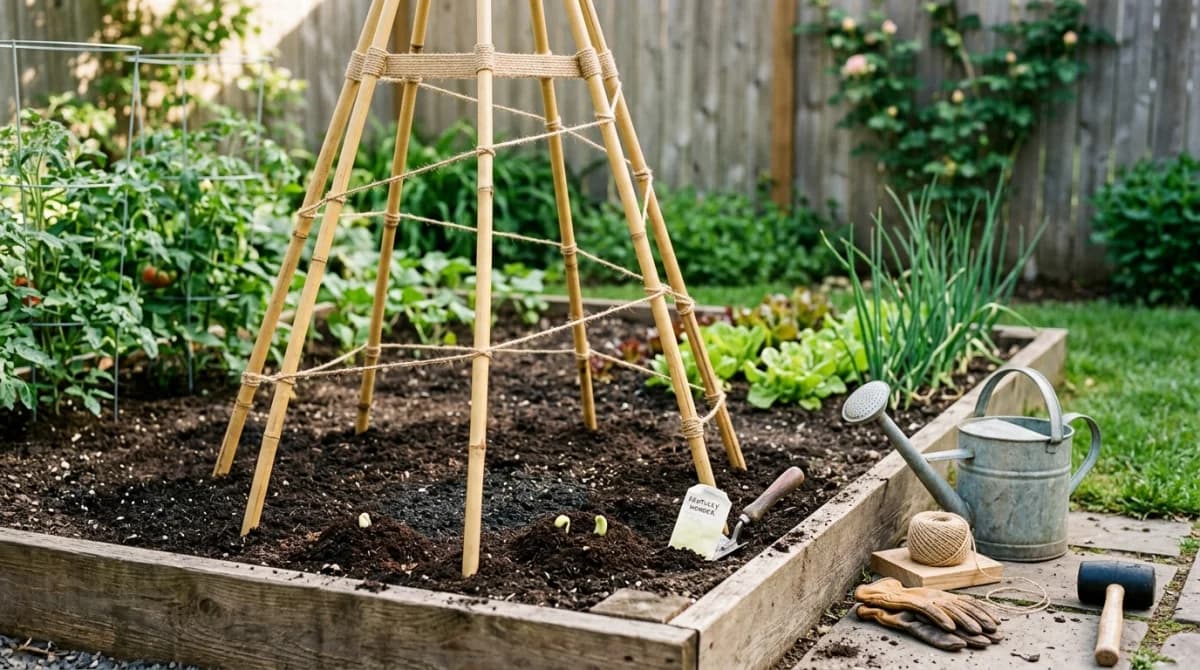
A bush bean produces for two weeks and quits. A pole bean keeps producing as long as you keep picking, right through to the first hard frost. That is the entire case for growing pole beans instead of bush beans, and almost no first-time vegetable garden does it — partly because the structure looks intimidating, and partly because most online instructions describe a fence-and-post arrangement that involves driving steel T-posts and stretching cattle panel between them. None of that is necessary. A six-pole bamboo tepee is the simplest, sturdiest, and best-looking pole-bean structure for a backyard vegetable bed, and it goes up in about an hour with materials that cost roughly fifteen dollars total.
The same tepee, sown this weekend with a single packet each of two bean varieties, will start producing tender pods in late June, peak in August, and still be handing over a colander a week in mid-October. It also turns into a green hideout for any child between the ages of three and ten who happens to walk past it once it is in full leaf, which is not a side effect to dismiss lightly.
Why a Tepee, Specifically
The two structures most commonly recommended for pole beans are a flat trellis (poles, wire, twine running between them) and a tepee. A flat trellis grows more linear feet of bean per square foot of garden, but it is twice as much work to build, three times as much work to take down at the end of the season, and it shades the row to its north all summer. A tepee uses a single square metre of bed, casts a circular shadow that moves across the day rather than blocking a long strip, and stores flat in a corner of the shed when the season is over.
A six-pole tepee with two beans planted at the base of each pole comfortably yields enough green beans for a family of four through the whole season — fifteen to twenty pounds of beans across the summer from a structure that takes up the same footprint as a garbage can.
What to Buy on Saturday Morning
The list, on a single trip:
- Six bamboo poles, eight feet long, three-quarter to one inch diameter. Most garden centres stock them in May at three to four dollars apiece. Avoid the slimmer “stake” bamboo at six feet — it bends under a full load of beans in August wind. Eight-foot poles, sunk a foot deep, give you a seven-foot tepee, which is exactly the right size: tall enough that the beans never reach the top until late August, short enough that you can reach the highest pods to pick them.
- A ball of jute or sisal twine. Natural fibre, not synthetic, so the whole thing composts at the end of the year without unwinding plastic from the poles.
- Two packets of pole-bean seed. One green pod and one yellow or purple. The combination matters more than people think — a single colour on the plate looks like cafeteria food; mixed colours look like a meal. Reliable suggestions in order of toughness: ‘Kentucky Wonder’ (the standard, productive, the bean every grandmother grew), ‘Fortex’ (longer slimmer pods, French-style, no string), ‘Rattlesnake’ (purple-streaked pods that turn green when cooked, drought-tolerant, beautiful), and ‘Algarve’ or ‘Gold of Bacau’ for yellow flat pods that are sweet and very productive.
- Optional: one packet of climbing nasturtium seed (‘Trailing Mixed’ or ‘Indian Cress’) to sow at the base of one or two poles. Nasturtiums climb a tepee happily, distract aphids from the beans, and feed pollinators when the bean flowers slow down in the heat. Their leaves and flowers are also edible — peppery, lovely on a salad.
Skip “bean towers” sold at garden centres. They are powder-coated steel structures designed to be reused, but they cost forty to sixty dollars for what twelve dollars of bamboo does better, and the beans do not climb the slick painted metal as readily as they grip rough bamboo.
Pick the Spot
Pole beans want six hours or more of direct sun, decently drained soil, and a spot where a seven-foot tower of green will not shade something else that matters. The corner of a vegetable bed is ideal; the middle of a lawn next to a path is even better, because a lone tepee in a lawn looks intentional and architectural rather than agricultural.
A south-facing corner of a raised bed works perfectly. East-facing is the second-best option (morning sun, afternoon dappled shade is fine for beans; they prefer it in zones 7 and warmer). North-facing is the only orientation that fails — beans in dense shade flower late and yield half as much.
Soil prep is light. Beans fix their own nitrogen from the air, so a heavily fertilised bed actually grows lush leaves and few pods. Loosen the top six inches with a fork, work in a one-inch layer of compost, and stop. Skip the chicken manure pellets, the blood meal, and the tomato fertiliser. Beans like lean ground.
Build It in an Hour
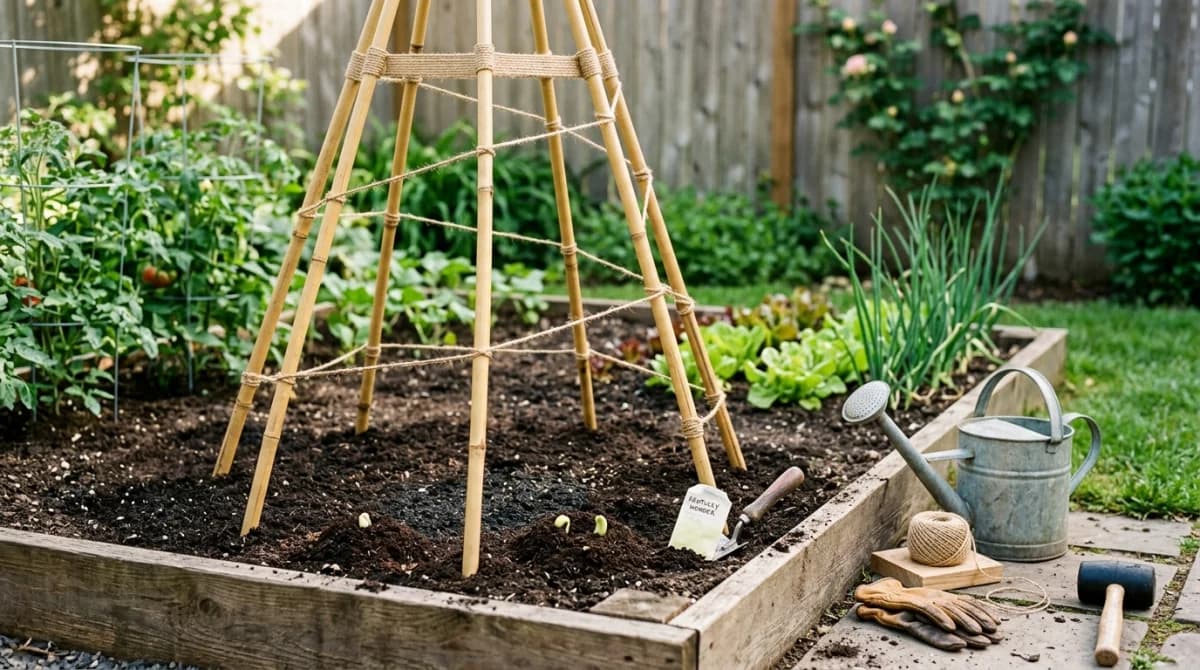
The geometry is simple: six poles in a circle three to four feet across, leaning together at the top. Tie tightly. Done.
A clear sequence:
- Mark the circle. Push a stake or trowel into the ground in the centre of the chosen spot, tie a thirty-inch length of string to it, and walk the string around the circle, scoring the ground with a heel as you go. The result is a 60-inch (5-foot) diameter circle, which is the right size for six poles.
- Sink the poles. Push each pole 10–12 inches into the ground at evenly spaced points around the circle, leaning slightly inward. A rubber mallet helps in dry soil. The poles do not need to be perfectly upright at this stage — they will lean further inward when you tie the top.
- Gather the tops. Hold all six pole-tops together at about seven feet up. (Easier with two people; possible with one if you have a step-stool.) The natural angle is roughly twenty degrees from vertical.
- Lash the top. Wrap jute twine tightly around the bundle of pole-tops eight to ten times, then take the twine in a figure-eight pattern between the poles for two or three rotations to lock the bundle, then tie off. The lashing should be tight enough that the poles cannot slide independently. If it feels loose, add another wrap. A wobbly tepee in a July thunderstorm is what people remember about pole beans.
- Spiral twine down the structure. From the top, run a single strand of twine in a slow downward spiral around the outside of the poles, tying it loosely at each pole as you pass it. This gives the bean tendrils something to grip in the early weeks before they reach pole height. Stop the spiral about twelve inches above the ground — beans climb up, not from the very base.
- Sow at the base of each pole. Two seeds per pole, an inch deep, on the outer side of each pole (the side you will be picking from). Six poles × two seeds = twelve plants. Press the soil firm. Water thoroughly.
The whole thing takes forty minutes the first time, twenty the second.
Sowing Day Through to First Pick
Pole beans germinate when soil is at least 60°F (16°C) and rot in cold wet ground. Mid-May in zones 5 and warmer is ideal; in cooler regions, wait one more week and the catch-up happens fast — beans sown into warm soil overtake beans sown into cold soil within ten days.
Once the seedlings emerge (usually six to ten days after sowing), thin to one strong plant per pole. Do not feel sentimental about it. Two beans on one pole compete for water and produce smaller crops than one bean given the whole pole.
For the first three weeks the plants do nothing visible — they are putting down roots. Around three weeks in, vines suddenly start climbing, and from there the structure fills out fast. By late June you should see flowers, and pods follow within ten days of the first bloom.
The single rule for pole beans, written on every old gardening book and ignored by most modern gardeners: pick every two days, even if you cannot eat them all. A bean left on the vine until it bulges signals the plant to stop making new flowers. A bean picked young (six to eight inches, before the seeds inside swell) signals the plant to keep flowering. Two-day picking is the difference between a tepee that fades in August and a tepee that is still producing in October.
If you cannot eat them, give them away. A neighbour with a paper bag of warm fresh-picked pole beans on a Tuesday in July is a more durable gift than most things bought in a shop.
A Note on the Family Hideout
By mid-July the tepee will be solid green. Children of any age between three and roughly ten will discover that the inside is a small enclosed room, and will start using it as one. This is fine. Beans grow back from broken vines within a few days, and the trodden soil at the base of the poles is not a problem the structure cares about. If you are building a tepee with a child in the family in mind, leave one of the six poles two feet apart from its neighbours when sowing, so there is a permanent clear “doorway” — otherwise vines knit closed across the gaps within four weeks and turn the inside genuinely inaccessible.
Some gardeners take this to its logical end and build a tepee twice the size — eight poles, six feet across — explicitly as a green hideout, and sow only one half of it with beans, leaving the other half for sweet peas, morning glories, or hyacinth bean (Lablab purpureus) for ornamental cover. The structure stays the same; only the planting changes. If a tepee is being placed where it will be visible from the house all summer, designing it as part hideout is worth doing properly.
If you want to see how a seven-foot bean tepee will sit against the rest of the garden — particularly whether the circular footprint reads as architectural or messy against the vegetable bed it neighbours — Gardenly lets you place vertical structures and crops on a photo of your own beds and previews them at full summer height. Useful when deciding whether the tepee belongs in the corner of a raised bed or as a freestanding feature on its own circle of soil cut from the lawn.
Why This Weekend in Particular
Pole beans want warm soil, and the second weekend of May is when the eight-inch soil temperature reliably crosses 60°F across most of zones 6 and 7. Sown now, the first pods are picking ten weeks from today, which lands the first harvest in the third week of July — peak summer-vegetable season. Sown two weeks from now, the harvest pushes to early August and shrinks the productive window before frost by a fortnight. The tepee structure itself has no urgency, but the planting moment does, and it is now.
Sources
- Royal Horticultural Society — Climbing French Beans
- Cornell Cooperative Extension — Growing Beans in Home Gardens
- University of Minnesota Extension — Growing Beans in Home Gardens
- Missouri Botanical Garden — Phaseolus vulgaris