How to Choose the Right Plants for Your Climate Zone
Every plant tag has a hardiness zone range. “Zones 5–9” or “Hardy to zone 4.” Most gardeners look at that number, compare it to their zone, and decide whether to buy. If the math works, into the cart it goes.
This system prevents the worst mistakes (you won’t plant a tropical hibiscus outdoors in Minnesota), but it’s a crude filter that ignores most of what determines whether a plant will actually thrive in your garden. Hardiness zones measure one thing: the average annual minimum winter temperature. They say nothing about summer heat, rainfall, humidity, soil type, or the dozens of microclimatic variables that affect plant performance.
A plant can be “hardy” in your zone and still fail miserably because of conditions that zones don’t measure. Understanding what zones tell you, and what they don’t, is the key to choosing plants that thrive rather than merely survive.
USDA Hardiness Zones Explained
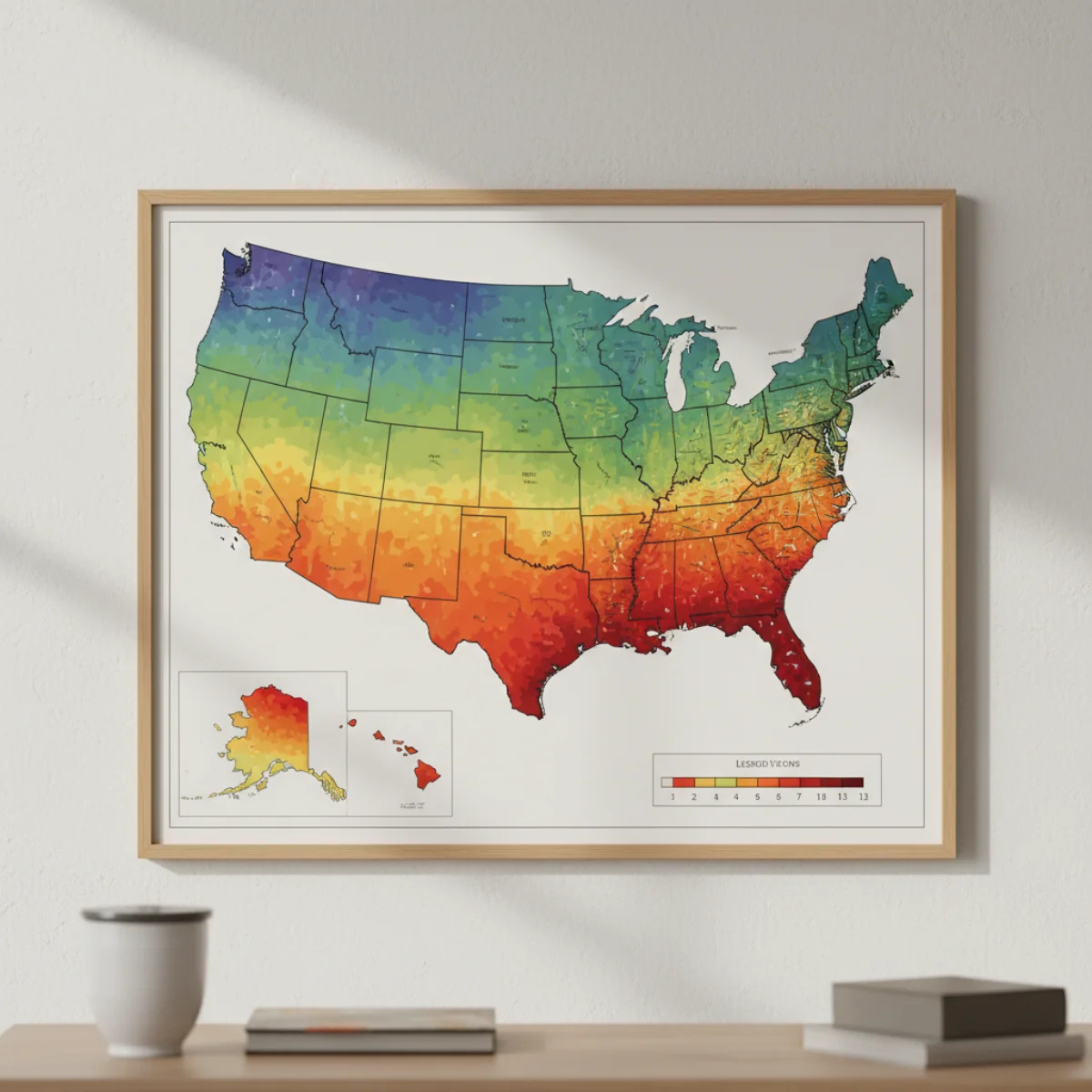
The USDA Plant Hardiness Zone Map divides North America into 13 zones based on average annual extreme minimum temperature. Each zone represents a 10°F range:
- Zone 3: -40 to -30°F
- Zone 5: -20 to -10°F
- Zone 7: 0 to 10°F
- Zone 9: 20 to 30°F
Each zone is further divided into “a” and “b” subzones representing 5°F increments.
What this tells you: Whether a perennial plant’s roots and crown can survive your coldest winter temperatures. A zone 5 plant can handle temperatures down to -20°F. Plant it in zone 3 where it hits -40°F, and it will die.
What this doesn’t tell you: Whether the plant will actually grow well. Survival and thriving are different things.
What Zones Miss
Summer Heat
A plant hardy to zone 5 might handle Minnesota winters perfectly but collapse in Georgia’s zone 8 summer heat, even though zone 8 winters are mild. The American Horticultural Society developed a Heat Zone Map that rates areas by the number of days above 86°F (30°C), which is the temperature at which many plants experience heat stress.
Lavender is a perfect example. It’s hardy to zone 5, so it survives cold winters. But in the hot, humid summers of zone 7b in the Southeast, it rots and dies. The winter hardiness is fine; the summer conditions are wrong.
Rainfall and Humidity
Western gardens receive most rainfall in winter. Eastern gardens receive rainfall throughout the year, with summer often being the wettest season. Mediterranean plants (lavender, rosemary, many salvias) evolved with dry summers and wet winters. Plant them in the eastern US where summer humidity is high and afternoon thunderstorms are routine, and they suffer from root rot and fungal disease regardless of the temperature.
Soil Type
Zones say nothing about soil. A plant adapted to well-drained sandy soil will struggle in heavy clay regardless of temperature. Blueberries need acidic soil (pH 4.5 to 5.5). Plant them in alkaline soil and no amount of zone compatibility will make them grow.
Your Microclimate Matters More Than Your Zone
Within your single hardiness zone, your yard contains multiple microclimates that can span the equivalent of two or three zones.
Warm Spots
- South-facing walls: Absorb heat during the day and radiate it at night. Can be a full zone warmer than the open garden. Perfect for pushing the limits with tender plants.
- Urban areas: Concrete, asphalt, and buildings create heat islands that can make city gardens a full zone warmer than suburban gardens a few miles away.
- Protected courtyards: Sheltered from wind, they hold heat and stay warmer.
Cold Spots
- Low-lying areas: Cold air is heavier than warm air and flows downhill. The bottom of a slope or a depression can be significantly colder than the top, sometimes enough to cross a zone boundary.
- North-facing slopes: Less direct sun, cooler soil, later snowmelt. Plants here experience functionally colder conditions.
- Exposed hilltops: Wind exposure increases cold stress. A plant that survives -10°F in a sheltered spot may not survive -10°F with 30 mph wind.
Mapping Your Microclimates
Walk your property during different conditions:
- On a frosty morning, note which areas frost first and which stay frost-free
- On a hot afternoon, note which areas are cooler (shade, breeze) and which are heat traps
- After a heavy rain, note where water pools and where it drains quickly
These observations tell you more about what will grow where than any zone map.
Reading Plant Tags Correctly
Plant tags and catalog descriptions provide more information than just the zone, but you need to read all of it.
What to Look For
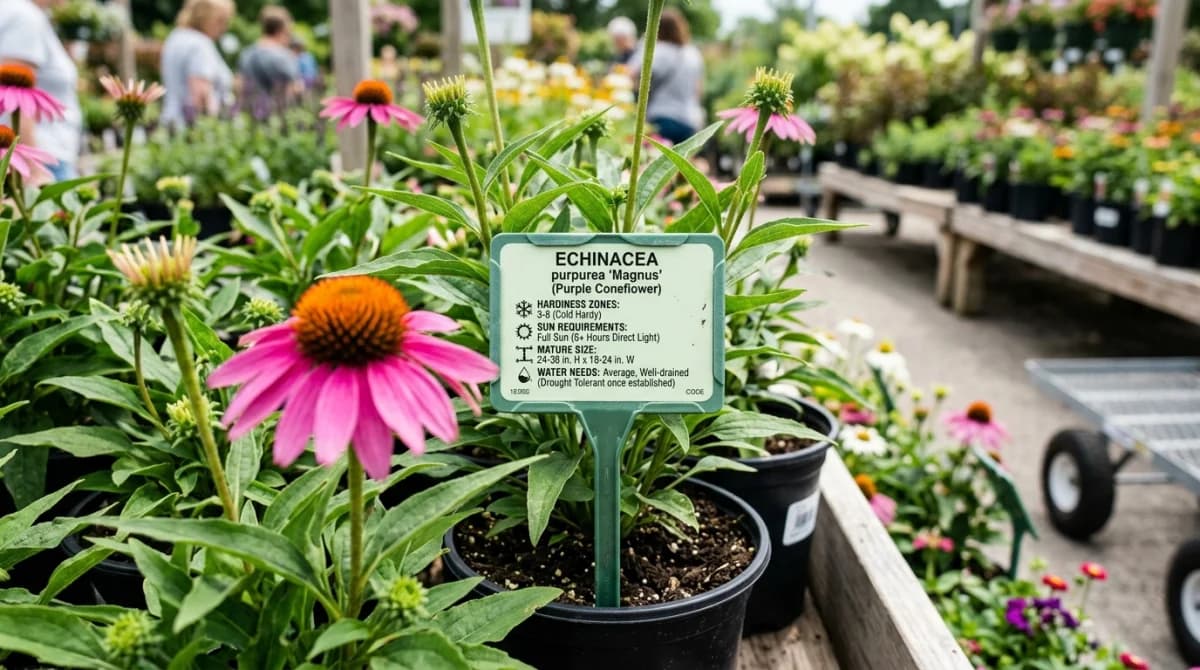
- Sun requirements: “Full sun” means 6+ hours of direct sun. “Part shade” means 3 to 6 hours. “Full shade” means less than 3. These requirements are non-negotiable for flowering and fruiting.
- Soil preference: “Well-drained” means the plant will rot in heavy clay. “Moist” means it needs consistent watering. “Dry” means it wants neglect.
- Native range: If a plant is native to the Pacific Northwest and you’re in Alabama, think carefully regardless of zone compatibility. The growing conditions are fundamentally different.
- Mature size: Buy for the mature size, not the size in the pot. A “compact” holly that reaches 8 feet tall is not compact for a 3-foot-wide bed.
The Right Plant, Right Place Principle
The most successful gardens are built on one simple idea: match each plant to the conditions it prefers. Don’t try to change the conditions to fit the plant. Find the plant that fits the conditions.
Wet corner? Plant something that loves wet feet (Joe-Pye weed, blue flag iris, red twig dogwood) instead of constantly trying to drain it.
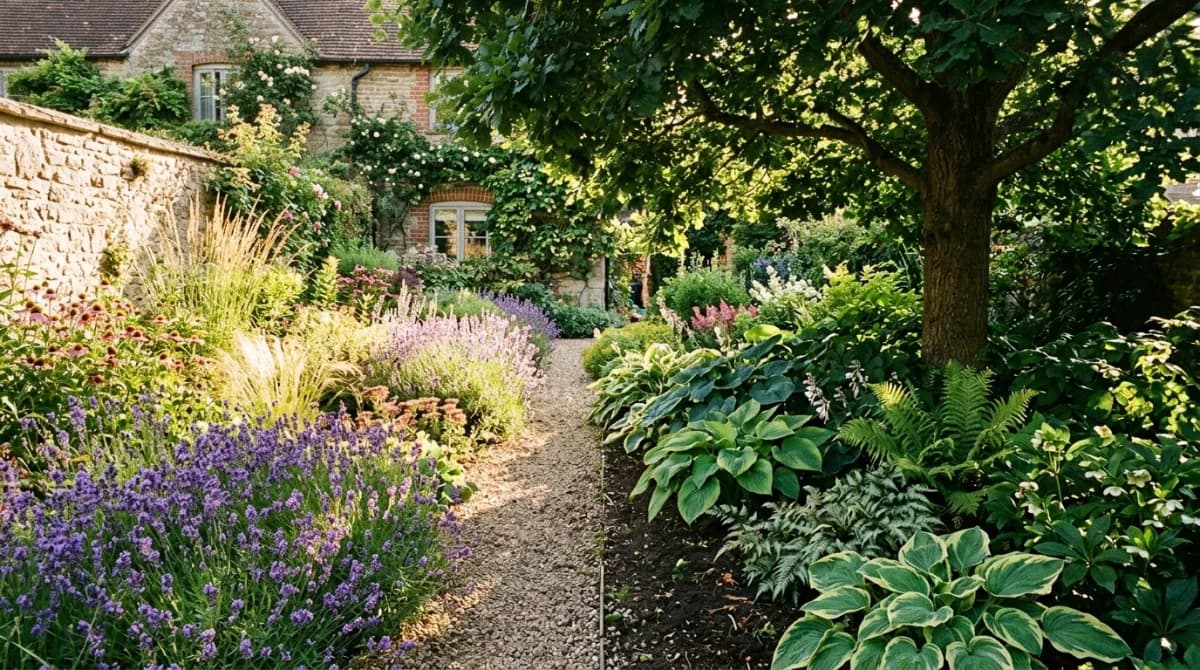
Hot, dry strip along the driveway? Plant drought-tolerant species (sedum, lavender, ornamental grasses) instead of fighting to keep moisture-loving plants alive.
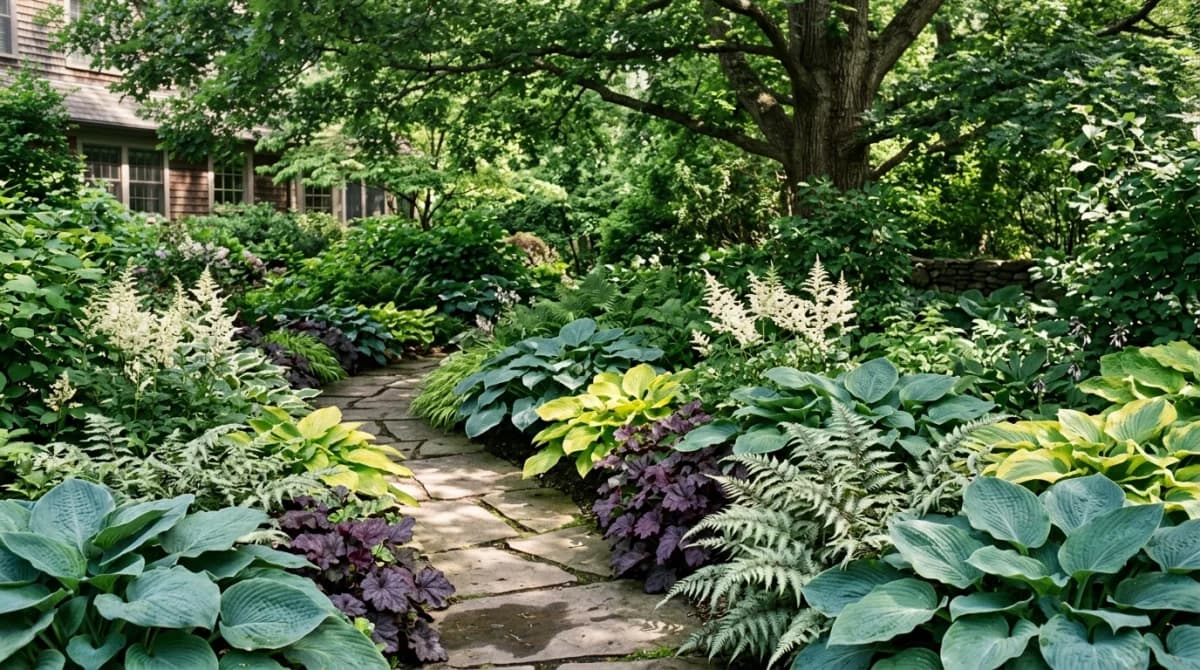
Deep shade under a mature tree? Plant shade-adapted species (hostas, ferns, Solomon’s seal) instead of watching sun-loving flowers struggle and die.
This approach is less work, costs less money (fewer replacement plants), and produces better results than fighting your conditions.
Beyond Zones: A Plant Selection Checklist
Before buying any plant, run through this checklist:
- Is it hardy in my zone? (The baseline, necessary but not sufficient)
- Can it handle my summer heat and humidity? (Check heat zone or regional growing guides)
- Does my soil match its preference? (Drainage, pH, fertility)
- Does the planting spot match its sun requirements? (Measured, not guessed)
- Does my rainfall pattern match its water needs? (Supplemental irrigation counts)
- Will it fit at mature size? (Not the size in the pot, but the size in five years)
- Does it have known problems in my region? (Ask local nurseries, extension services)
If the answer to all seven is yes, you have a plant that will thrive, not just survive.
Regional Resources
The best plant selection advice comes from sources specific to your region:
- Cooperative Extension services: Every US state has one. Their plant recommendations are tested locally.
- Local nurseries: Not big-box stores. Independent nurseries that grow or source plants for your specific area.
- Botanical gardens: Their public plantings demonstrate what works in local conditions.
- Native plant societies: State and regional groups that specialize in plants adapted to your exact conditions.
Choosing the right plant for the right place is the single most important gardening skill. It determines whether your garden is a constant struggle or a self-sustaining pleasure. If you’re planning a new garden, tools like Gardenly can help you visualize your layout and make sure each plant goes in a spot where it’s set up to succeed.
Master this skill and most other gardening problems disappear. The right plant in the right place practically takes care of itself.