Understanding Plant Hardiness Zones: A Practical Guide for Gardeners
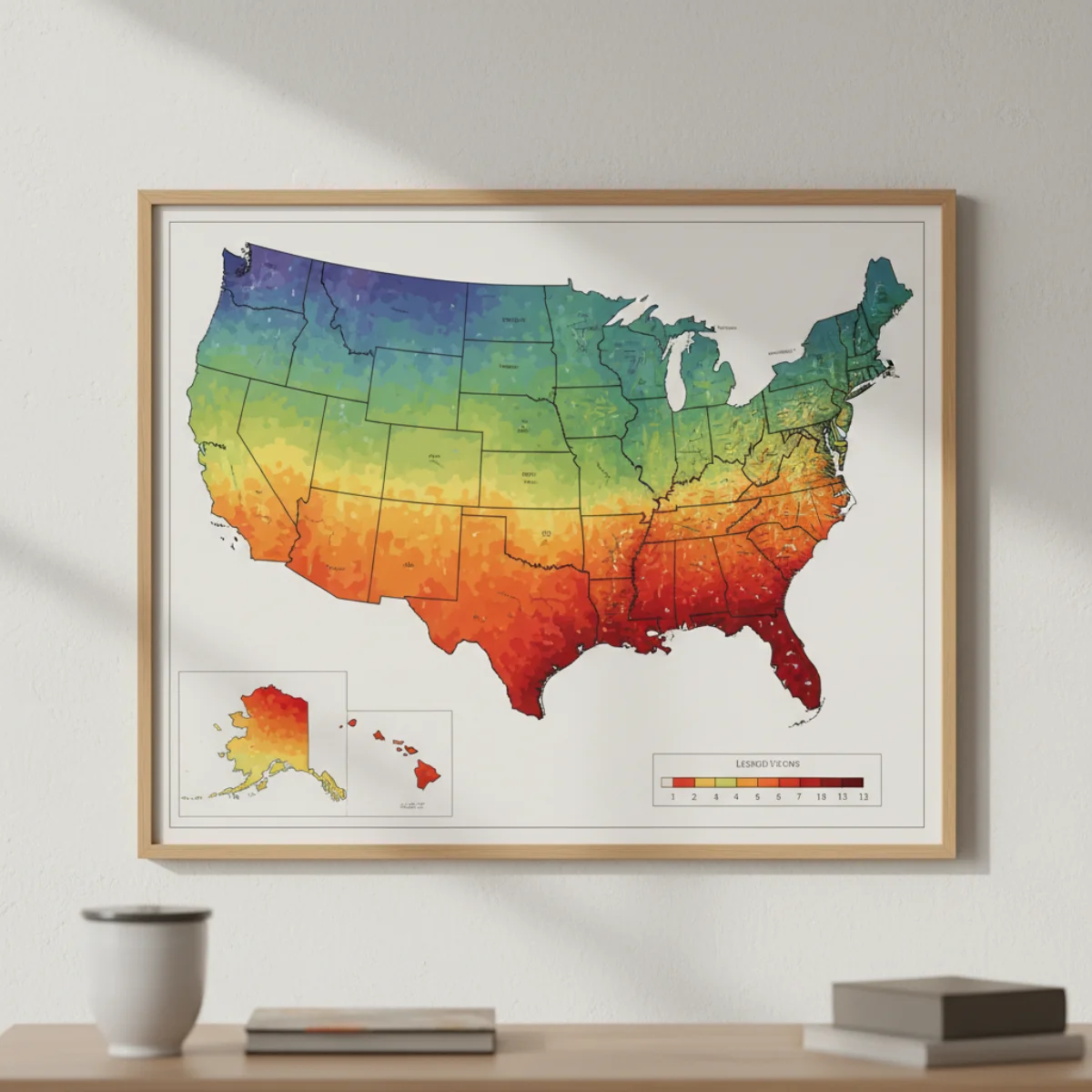
When you buy a plant at a garden center or browse a seed catalog, you’ll often see “Zones 5-9” or “Hardy to Zone 6” in the plant description. These zone ratings are shorthand for a critical question: will this plant survive winter where you live?
Zone ratings are useful, but they’re frequently misunderstood—applied as a definitive answer when they’re really just one variable in a more complex picture. Understanding what zones do and don’t tell you will make you a better shopper and a better gardener.
What Hardiness Zones Are
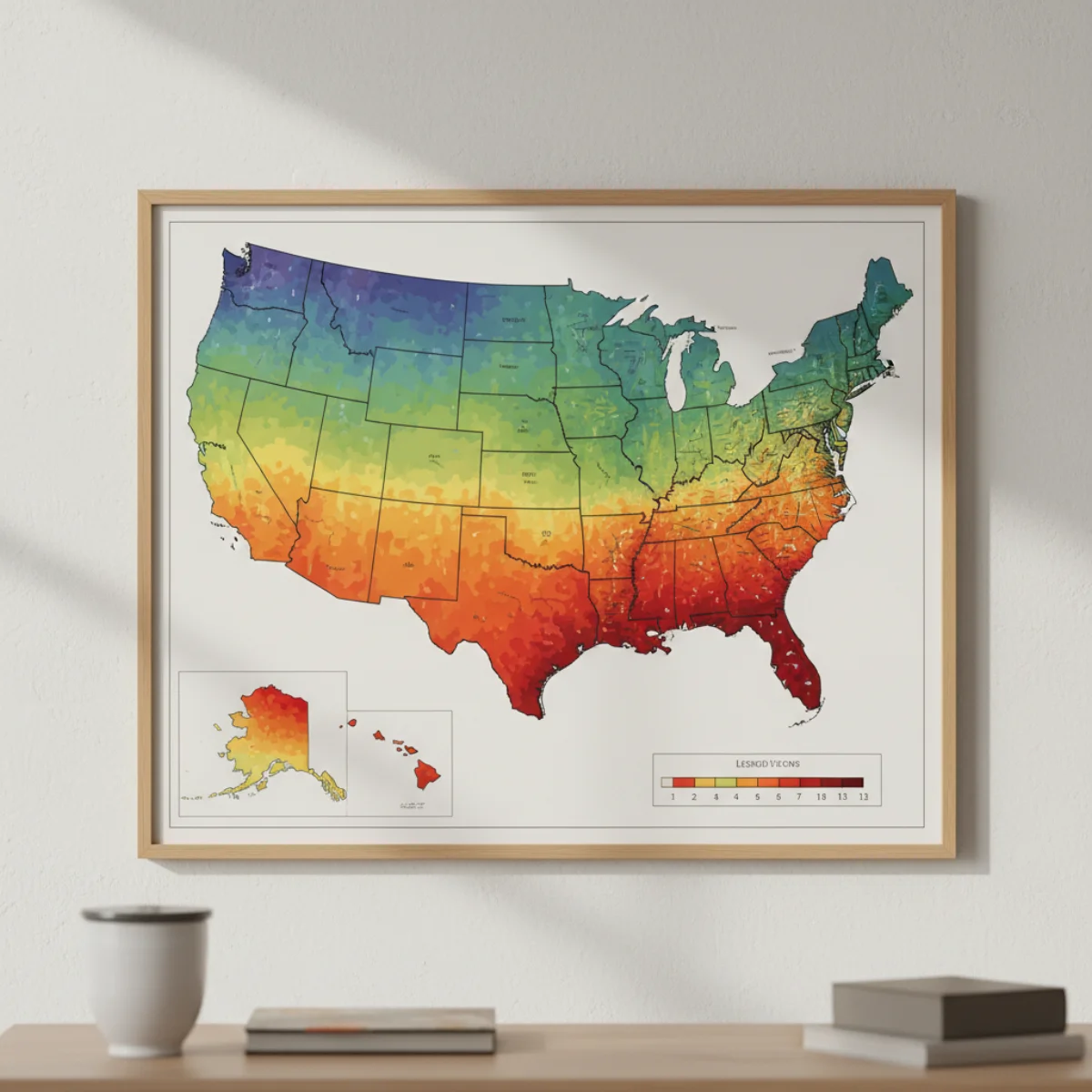
The USDA Plant Hardiness Zone Map (the standard in the US, with equivalent systems in the UK and other countries) divides the country into zones based on the average annual extreme minimum temperature—the coldest it typically gets each winter.
Zone numbers correspond to temperature ranges:
- Zone 3: Minimum -40°F to -30°F (-40°C to -34°C) — northern Minnesota, most of Canada’s prairies
- Zone 4: -30°F to -20°F — northern New England, northern Midwest
- Zone 5: -20°F to -10°F — much of the Midwest, New England, Pacific Northwest
- Zone 6: -10°F to 0°F — mid-Atlantic, Midwest cities, Pacific Coast
- Zone 7: 0°F to 10°F — Pacific Northwest coast, mid-South, mid-Atlantic coast
- Zone 8: 10°F to 20°F — coastal Pacific Northwest, parts of the South
- Zone 9: 20°F to 30°F — California’s Central Valley, Gulf Coast
- Zone 10: 30°F to 40°F — coastal California, south Florida
Each zone is also divided into “a” and “b” halves, representing 5°F increments.
When a plant is rated “Hardy to Zone 6,” it means the plant’s roots can survive temperatures as low as -10°F without dying. If your area is Zone 6 or warmer (with higher zone numbers), the plant should overwinter.
The 2023 Update
The USDA updated the hardiness zone map in 2023 for the first time since 2012, using temperature data from 1991-2020 rather than 1976-2005. The result: about half of the country shifted half a zone warmer—reflecting the broader warming trend in average winter temperatures.
This means plants rated for Zone 6 may now succeed in areas previously considered Zone 5b. Check the current 2023 map rather than older versions.
What Zones Don’t Tell You
Zone ratings are based on one factor: cold temperatures. But plant survival depends on multiple factors, and many plants fail for reasons unrelated to cold:
Summer Heat
A plant rated to Zone 6 will survive Zone 6 winters, but it may also need a Zone 6 summer—moderate heat with cool nights. Lavender, for example, is hardy to Zone 5 cold, but struggles in the hot, humid summers of the mid-Atlantic and Southeast, where it dies from heat stress and root rot, not cold. Gardeners in Zone 7 or 8 in the South may find Zone 5 plants more difficult to grow than their zone number suggests.
The AHS (American Horticultural Society) Plant Heat Zone Map addresses this, using the number of days per year above 86°F as its metric. A plant listed as Zone 6-10 with a heat zone of 1-6 needs both cold hardiness and cool summer heat limits.
Snow Cover
Snow is an excellent insulator. A plant rated to Zone 4 may struggle in Zone 5 without consistent snow cover—the freeze-thaw cycles during snowless winters in Zone 5 can be more damaging than the steadier cold of a Zone 4 location blanketed under snow all winter.
This explains why some plants survive better in colder Minnesota (consistent cold, good snow cover) than in the roller-coaster winters of Zone 6 Ohio (frequent freezing and thawing).
Drainage and Winter Wet
Many plants are rated as hardy to a certain zone but listed as needing “good drainage” or “protect from winter wet.” Lavender, rosemary, and many Mediterranean herbs are killed by combination of cold AND wet far more often than by cold alone.
A plant rated Zone 7 may fail in a Zone 7 garden with heavy clay soil that stays saturated through winter—not because it’s too cold, but because wet roots and cold together are fatal.
Microclimates
Your zone is an average; your garden contains microclimates that may differ significantly from that average:
- South- or west-facing walls: Absorb and radiate heat; can be 1-2 zones warmer than the surrounding garden
- Low spots: Cold air drains to low areas; frost pockets can be several degrees colder than elevated areas nearby
- Under deciduous tree canopy: Slightly warmer because trees radiate some heat from their mass
- Exposed hilltops: Often colder and windier than nearby sheltered areas
- Urban areas: Cities are typically 1-5°F warmer than surrounding rural areas (“urban heat island effect”)
Understanding your garden’s microclimates lets you successfully grow plants rated one zone warmer by positioning them in protected, south-facing spots—and helps explain why some plants fail even though your zone says they should be hardy.
Provenance
A plant labeled as a certain species doesn’t tell you where its seed or vegetative material came from. A lavender grown from seed sourced in Spain behaves differently in cold climates than one grown from seed selected over generations in the northern US or UK. Provenance—the geographic origin of the plant material—affects cold hardiness significantly.
When buying perennials and shrubs, plants propagated from locally-adapted stock (available through reputable regional nurseries) often outperform plants from commercial operations that may source from warmer climates.
Practical Use of Zone Information
Use Zones as a Starting Filter
Zone ratings are useful for eliminating clearly unsuitable plants. If you’re in Zone 5 and a plant is rated Zone 8, it won’t overwinter without significant protection. Zones tell you where not to bother—which is valuable. If you don’t know your zone yet, our free hardiness zone finder gives you your USDA zone instantly by ZIP code, along with plant recommendations.
Push Zones With Microclimates
If you want to try a plant at the edge of your hardiness zone, position it in the most favorable microclimate in your garden: a south-facing wall, a well-drained raised bed, or a sheltered corner.
Add protection for the first winter or two (a mulch mound, a frost cloth tent in extreme events) while the plant establishes. Established plants often prove hardier than newly planted ones.
Buy Locally When Possible
Regional nurseries and garden centers stock plants suited to local conditions. They’ve made the provenance decisions for you. This is less true of big-box garden centers, which stock plants from national suppliers that may not be locally adapted.
Track Your Own Experience
Keep notes on which plants survive your winters and which don’t. After several years, you’ll know which plants rated to Zone 6 thrive in your specific Zone 6 garden and which ones consistently fail. This is more useful than any map.
The UK and European Equivalent
In the UK and Europe, the RHS (Royal Horticultural Society) uses a hardiness rating system from H1 (tender tropical) to H7 (hardy to below -20°C). It roughly parallels the USDA zone system but is calibrated for the UK’s maritime climate.
The USDA zone equivalent for the UK: most of England and Wales is Zone 8-9; Scotland is Zone 7-8 in coastal areas; inland and highland areas can be Zone 6-7.
Europe ranges from Zone 4-5 in Scandinavia and alpine areas to Zone 9-10 on Mediterranean coasts.
Zones as One Tool Among Many
The hardiness zone is the starting point for plant selection, not the ending point. Combined with understanding of heat tolerance, drainage requirements, snow cover patterns, and your garden’s specific microclimates, zone information becomes genuinely useful for making good planting decisions.
The experienced gardener uses zone information as context, not rule—knowing which variables matter most for the plants they’re trying to grow and the garden they’re trying to build. Once you know your zone, our frost date calculator and planting calendar can help you turn that knowledge into a practical planting schedule.
Sources & Further Reading
- 2023 USDA Plant Hardiness Zone Map — USDA Agricultural Research Service
- USDA Unveils Updated Plant Hardiness Zone Map — USDA ARS
- A New Plant Hardiness Zone Map from the USDA — University of Minnesota Extension