The February Garden Checklist: Everything to Do This Month
February is a liminal month in the garden. You’re not quite in spring, but you’re not stuck in the dead of winter either. In most parts of the US and UK, the days are noticeably longer than they were six weeks ago, the seed catalogs have been pored over, and the soil is beginning its slow thaw.
There’s more to do than you might think—and most of it happens at a table, not outside.
Early February (Weeks 1-2)
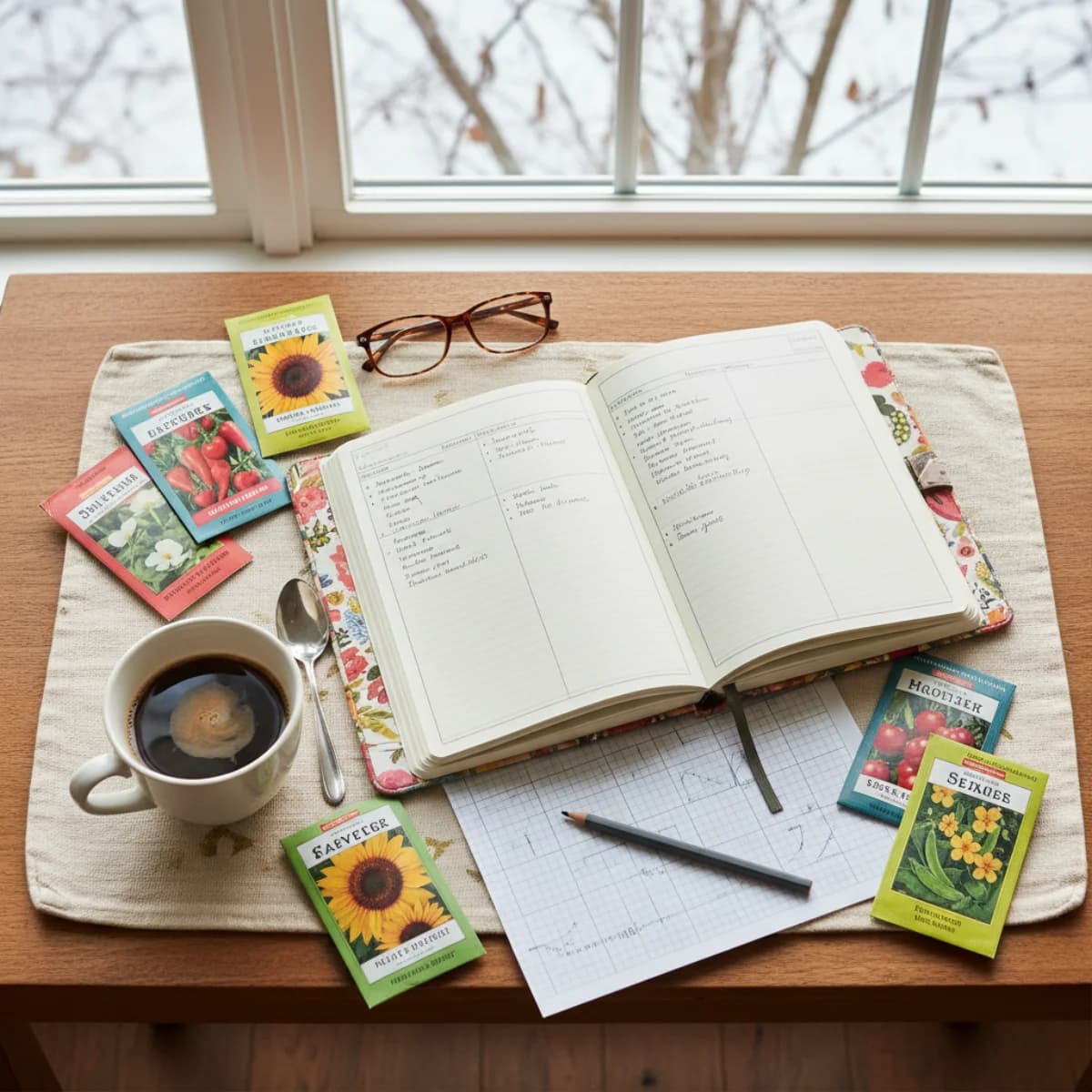
Finalize Your Seed Order
If you haven’t ordered seeds yet, now is the time to stop browsing and start clicking. Popular varieties sell out earlier every year, and specialty seeds from small farms often disappear by mid-February. Order what you need now, with at least a few backup variety options in case something is out of stock.
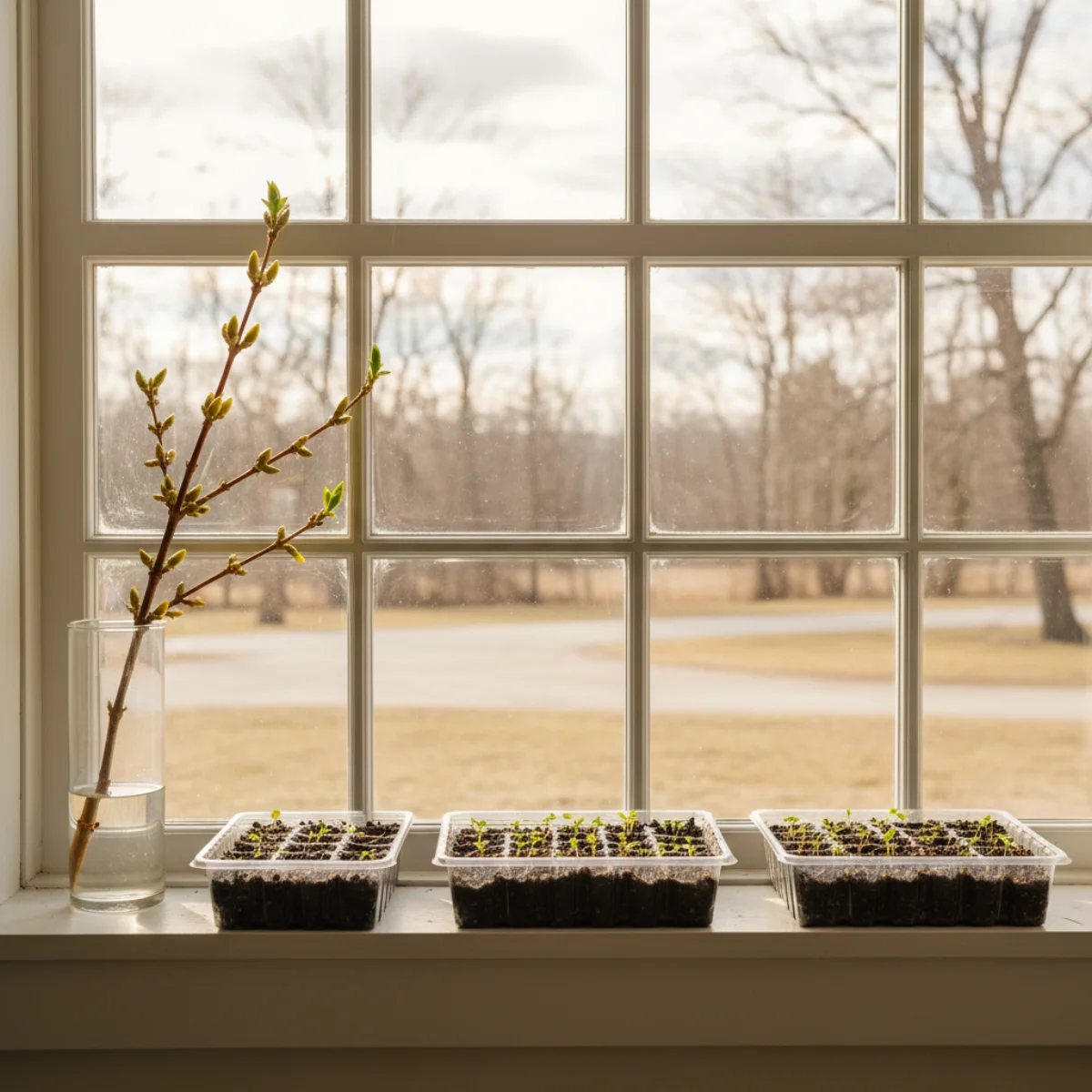
Start the First Wave of Seeds Indoors
February is the prime window for seeds that need the longest head start:
- Peppers (sweet and hot): 10-12 weeks before last frost
- Onions and leeks: 10-12 weeks
- Celery: 10-12 weeks
- Rosemary and lavender: 10-12 weeks (slow germinators)
- Slow annual flowers: snapdragons, petunias, pansies
Calculate backward from your last average frost date. Most of the Midwest and mid-Atlantic region has last frost dates between April 15 and May 15, which puts the February 1-15 window squarely in the right range for these crops.
Inventory and Organize Supplies
Before you’re in the middle of seed starting, make sure you have what you need:
- Fresh seed-starting mix (not last year’s opened bag)
- Cell trays or small pots
- A heat mat for germination
- Grow lights or a confirmed sunny window
- Labels and waterproof marker
- A mister or watering can with a gentle head
Prune Fruit Trees and Grapes
Dormant pruning is one of the most important tasks of the gardening year, and February—while trees are still fully dormant but the worst cold has likely passed—is ideal in most climates.
For apple and pear trees: remove crossing branches, water sprouts growing straight up from major limbs, and any dead or diseased wood. Aim for an open vase or central leader shape depending on variety.
For grapevines: most of last year’s growth gets removed. The vine produces fruit only on new growth emerging from one-year-old wood, so you’re keeping last year’s canes and cutting everything older back to the main trunk.
Wait until you see the first swollen buds before pruning in colder zones—this confirms the worst cold is behind you.
Mid-February (Weeks 2-3)
Take Stock of Perennial Beds
On a mild day, walk your beds and assess what made it through winter. Look for:
- Crown damage: any division that got pushed out of the ground by freeze-thaw cycles needs to be pressed firmly back in
- Dead vs. dormant: scratch the stem of a plant you’re unsure about—green means alive, brown means dead
- Invasive spread: note where mint, artemisia, or other spreaders have pushed into new territory—flag them for action in March
Clean and Sharpen Tools
Now, before the rush of spring maintenance, is the time to sharpen your hori-hori, pruners, loppers, and lawn edger. Sharp tools make cleaner cuts that heal faster, and they’re simply less work to use.
A diamond sharpening rod or a simple sharpening stone is all you need for pruners. A flat mill file handles most larger blades. Wipe blades with a lightly oiled rag after sharpening to prevent rust.
Start Tomatoes (If You’re in Zone 5 or Colder)
If your last frost date is May 15 or later, mid-February is when tomatoes belong in trays. Eight to ten weeks of indoor growing produces strong, branchy transplants ready to hit the ground running in May.
For zones with earlier last frost dates (April 15 or sooner), wait until early March for tomatoes.
Force Spring Branches Indoors
Any woody plant that produces spring flowers—forsythia, pussy willow, quince, cherry, serviceberry—can be cut now and brought indoors to bloom weeks ahead of schedule. Cut 18-24 inch branches with plenty of flower buds, smash the cut ends lightly to help water uptake, and place in a vase of room-temperature water. Within a week or two, they’ll open into cheerful blooms.
Late February (Weeks 3-4)
Plan Garden Layout Changes
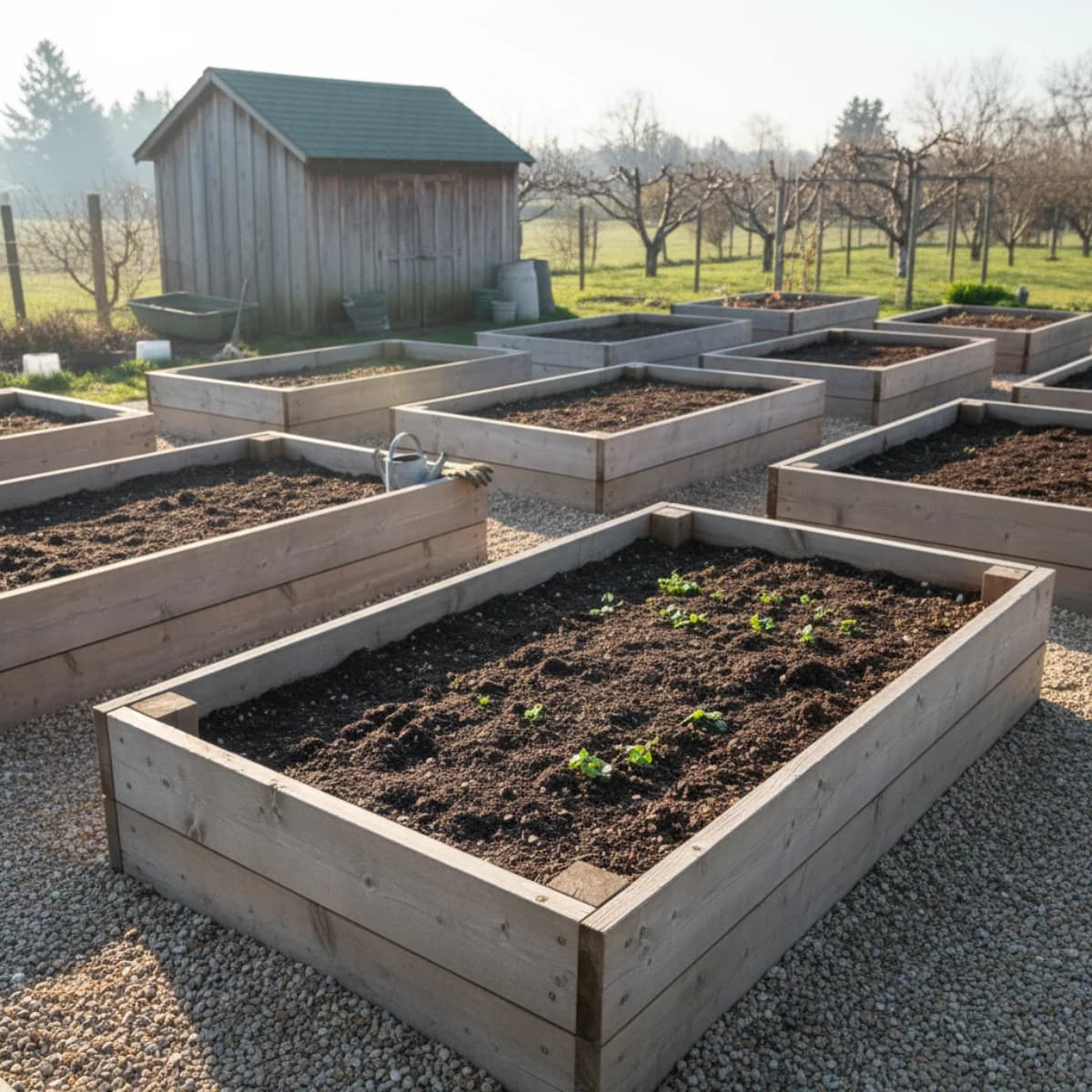
If you’ve been thinking about moving a bed, adding a raised bed, or redesigning a planting area, now is the time to sketch it out before the season’s chaos begins. Decisions made from a chair in February are calmer and more thoughtful than decisions made in a muddy garden in April.
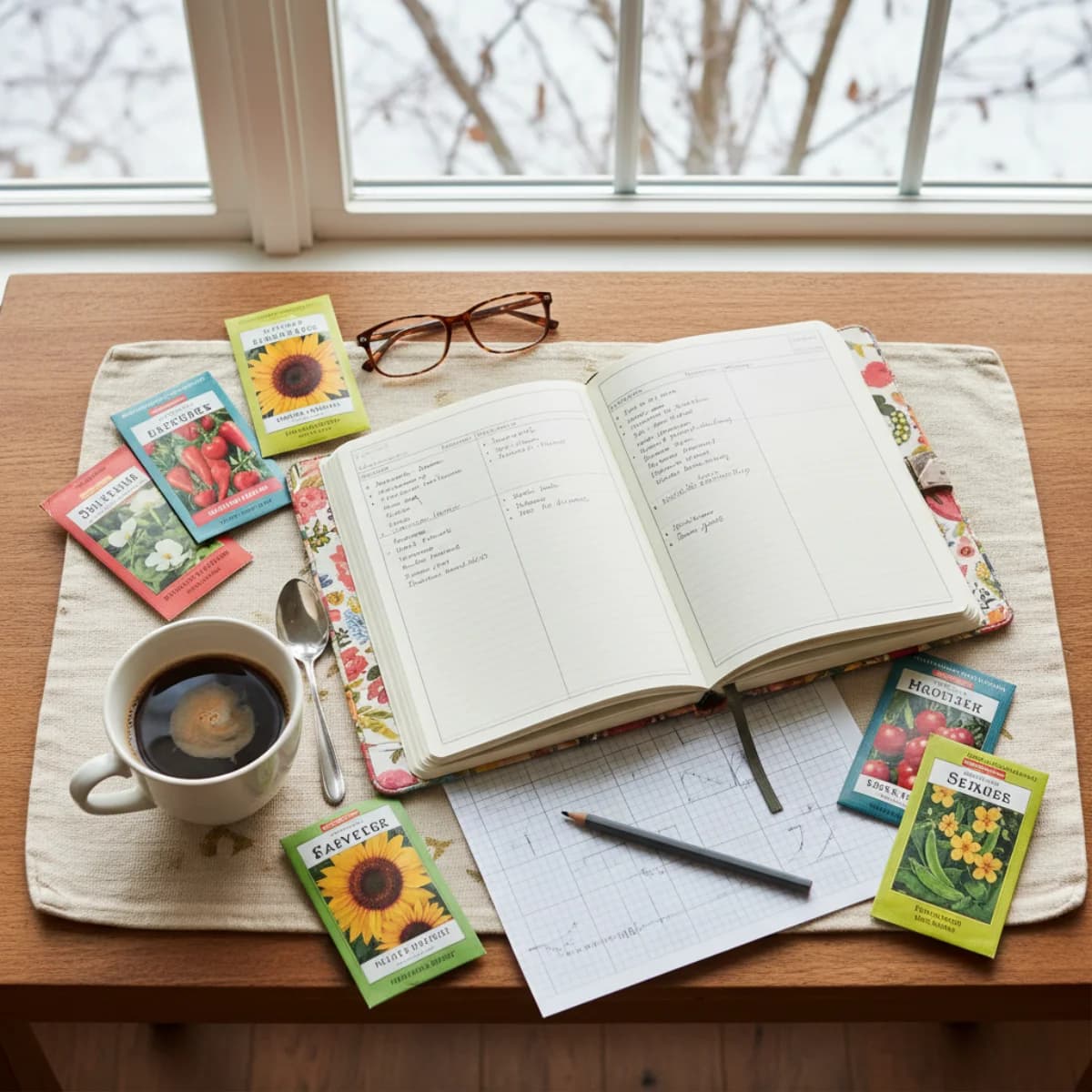
Use graph paper, a whiteboard, or a digital tool to work out dimensions, plant placement, and traffic flow.
Order Bare-Root Trees, Shrubs, and Roses
Bare-root plants—available only in late winter when dormant—are significantly cheaper than containerized versions and establish better. Order now for late February or early March delivery, which is often the best planting window.
Look for bare-root fruit trees, ornamental trees, climbing and shrub roses, raspberries, and asparagus crowns.
Refresh Houseplants
Longer days mean houseplants are starting to grow again after their winter rest. Resume or increase watering, begin fertilizing with a diluted balanced fertilizer, repot anything that’s seriously rootbound, and move plants closer to windows where light quality is improving.
Plan and Design Before the Rush
The biggest mistake gardeners make is waiting until spring to figure out where things go. By April, you’re too busy planting to think clearly about design. February’s quiet gives you the mental space to look at the whole picture.
Where will the new tomato beds go? Does the perennial border need restructuring? Is it time to finally commit to that pollinator garden you’ve been putting off?
Gardenly is a helpful tool for working through garden design decisions visually—upload a photo of your space and experiment with different layouts before you commit to anything in the real world.
Zone-by-Zone Variations
- Zone 9-10 (Southern California, Gulf Coast, Florida): You’re planting tomatoes, squash, and beans outdoors now. February is spring in your garden.
- Zone 7-8 (Mid-South, Pacific Northwest): Pansies, spinach, and kale can go out now under light protection. Start tomatoes and peppers indoors.
- Zone 5-6 (Midwest, Mid-Atlantic, New England): Focus on indoor seed starting and dormant pruning. Direct sowing is still 6-8 weeks away.
- Zone 3-4 (Northern states, High Plains): Start onions, leeks, and peppers now. Everything else waits until March or April.
February rewards the gardener who uses it. The lists above might look long, but spread across the month, they represent a few hours of work that compounds into a dramatically better spring.
Sources & Further Reading
- February Garden Calendar — OSU Extension Service
- How and When to Start Your Seeds — University of Minnesota Extension
- Winter Garden Activity Guide — Penn State Extension
- Pruning Roses and Fruit Trees — UC Cooperative Extension, Ventura County