Why Every Gardener Needs a Journal (And How to Actually Start One)
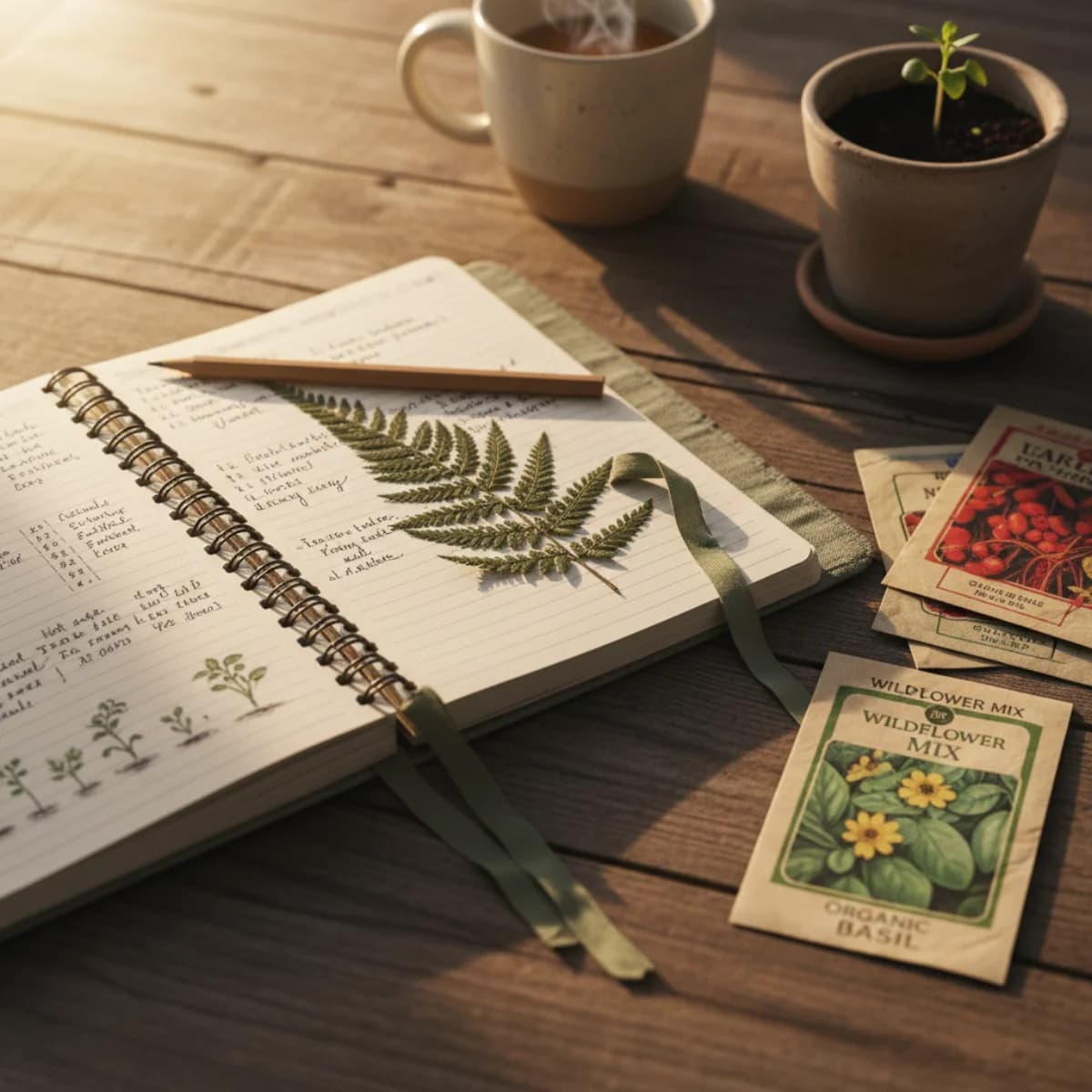
Ask any experienced gardener what they wish they’d started earlier and a surprising number will say: keeping records. Not a complicated system—just some way of remembering what they planted, when it happened, what worked, and what didn’t.
Memory is unreliable, especially seasonal memory. By February of the following year, you genuinely can’t remember whether the peppers went out May 15 or May 30, whether the tomatoes that did so well were ‘Mortgage Lifter’ or ‘Cherokee Purple,’ or what caused that weird yellowing on the zucchini in July. The information was there; you just didn’t write it down.
A garden journal fixes this. And February—while the garden is quiet and planning season is just beginning—is the ideal time to start one.
What a Garden Journal Actually Does For You
The value compounds over time. In year one, you’re building a record. In year two, you’re comparing to last year. By year five, you have a rich picture of your garden’s patterns, your local microclimate, what varieties perform in your conditions, and what mistakes you keep making.
Practically, a journal helps you:
Time things correctly. When did you start peppers last year? When did the first frost come? When did the tomatoes actually start producing? This information, recorded when it happens, is far more reliable than your winter reconstruction of it.
Track variety performance. Every gardener grows multiple varieties of the same crop and forgets by the following winter which ones won. A note at harvest time—“Cherry tomatoes: ‘Juliet’ was prolific, ‘Sungold’ outstanding flavor, ‘Black Cherry’ slow and underwhelming”—is gold the following February when ordering seeds.
Identify patterns. The bed that always gets aphids. The spot that never quite drains. The late frost date that’s crept a week earlier over the past decade. Patterns only emerge from records.
Hold yourself accountable. Writing “I was going to divide the hostas this fall” and then seeing that note in February is a gentle push to actually do it.
What to Record
Keep it simple enough to actually maintain. These are the entries worth making:
Planting dates. Date, what, where, how many. This is the core record. Takes 30 seconds to write.
Germination observations. Did seeds germinate in the time promised? Was germination rate good or spotty? This helps you evaluate seed quality and supplier reliability over time.
Transplant dates. When seedlings moved from indoors to the garden.
First bloom and first harvest. A date note for when things happen.
Pest and disease observations. What appeared, when, on what plant. What you did about it and whether it worked.
Weather notes. Especially unusual events: late frosts, drought periods, excessive rain, heat waves. These explain a lot in retrospect.
Harvest quantities. If you care about yield, a rough note of how much you harvested and over what period is useful for planning the following year.
End-of-season notes. At the end of each season, a paragraph or two summarizing what worked, what didn’t, and what you’d change. This is the most valuable entry in the whole journal.
What Not to Record
Don’t try to record everything. A journal you maintain imperfectly is infinitely more valuable than a perfect system you abandon in June. Set a realistic threshold:
- Skip the daily weather if it becomes a chore
- Skip detailed notes on plants you don’t care about
- Skip any entry you’ve been putting off for more than a week—let it go and start fresh
The most important thing is a habit that continues, not an archive that’s comprehensive.
Format Options
Paper Journals
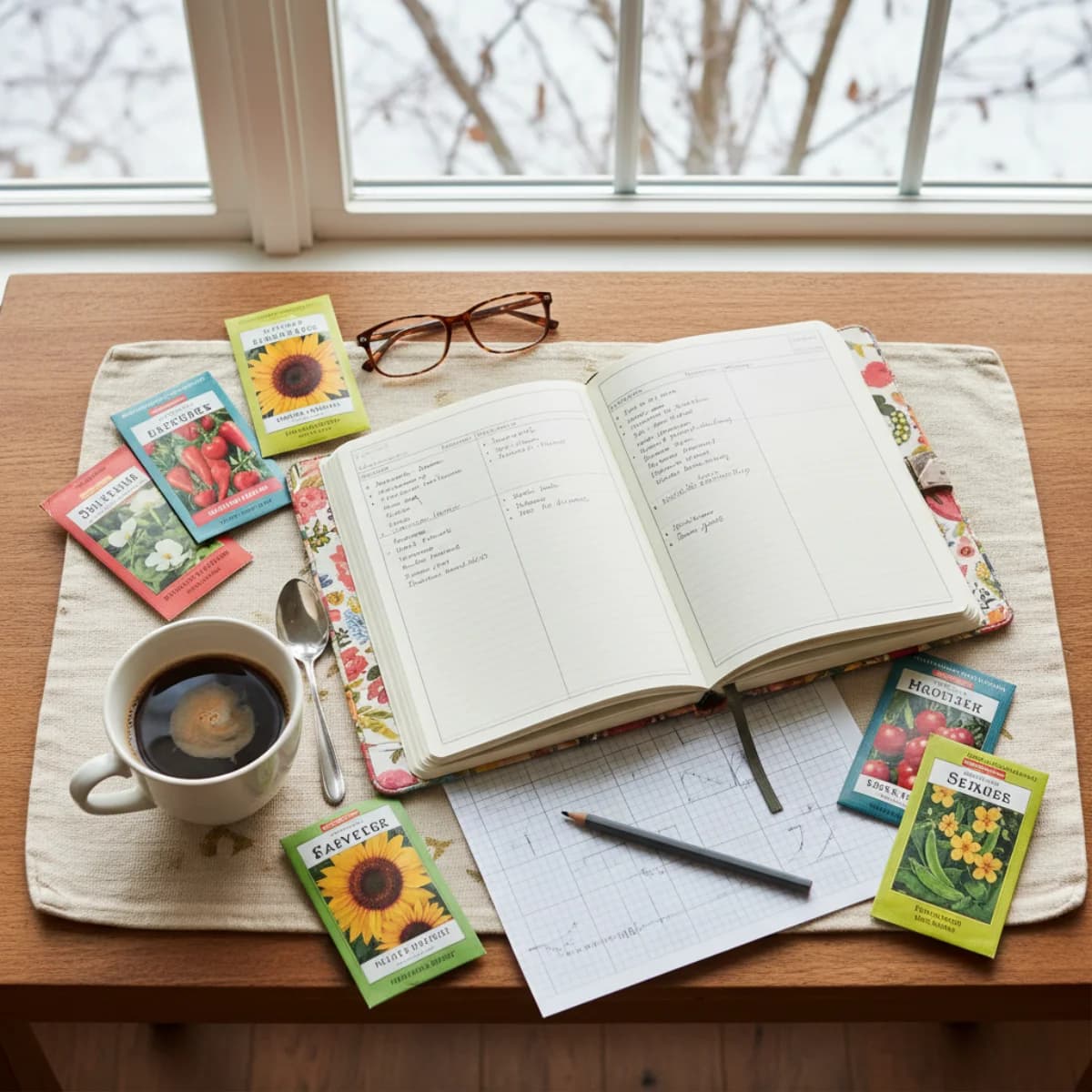
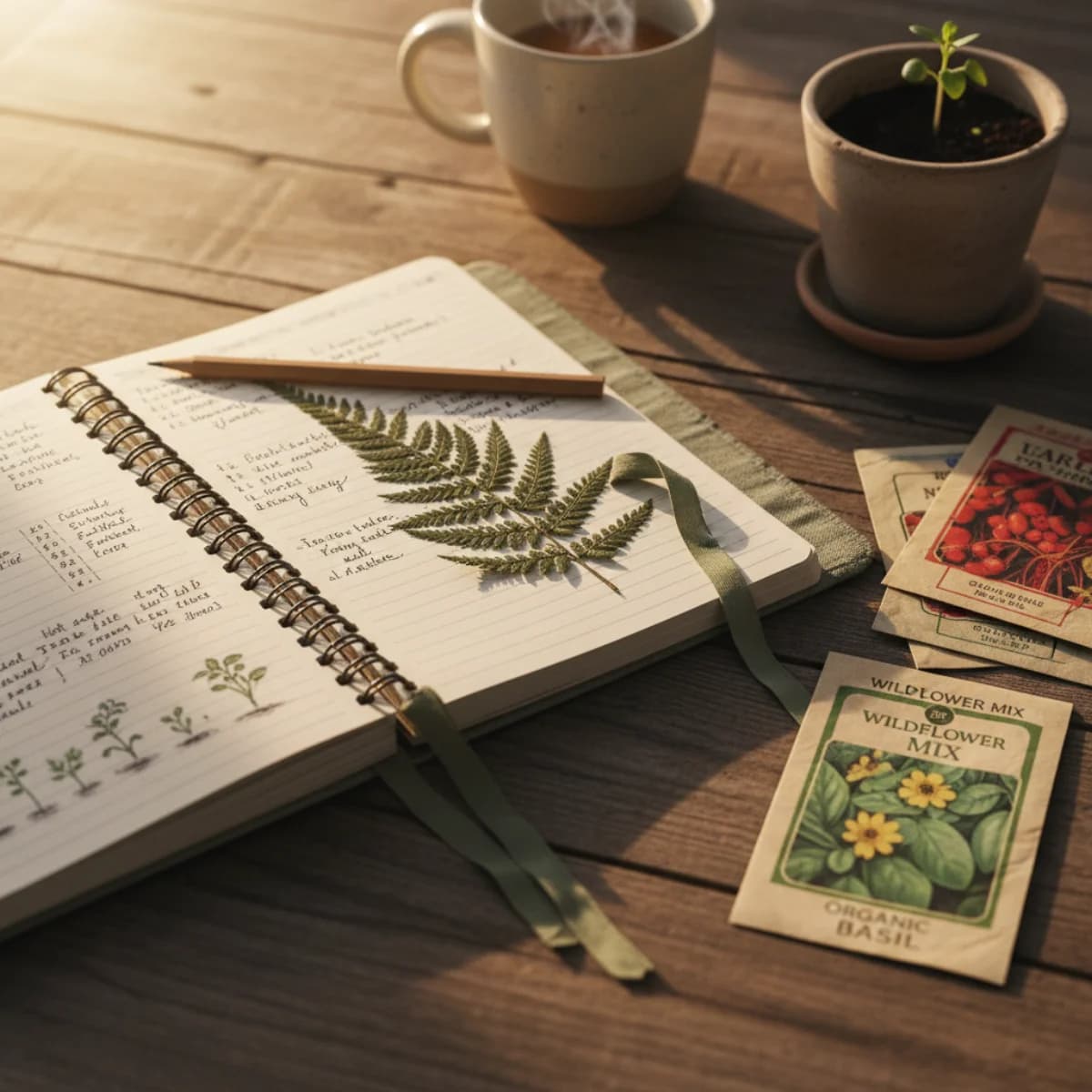
The low-tech option has real advantages: no app to maintain, nothing to update or migrate, the satisfaction of physical notes. A dedicated notebook works well. Divide pages by date or by plant—either works, though date-organized is usually simpler.
Good paper journals for gardeners exist (several companies make blank notebooks with soil type, zone, and observation pages built in), but a plain notebook is just as useful and usually better looking on a shelf.
The disadvantage: searching is hard, and photos require printing or separate storage.
A Notes App
A basic notes app (Apple Notes, Google Keep, Notion) works for many gardeners. Quick to pull out in the garden, easy to search, photos attach naturally. The disadvantage is that it’s less pleasant to browse in winter and more likely to be lost in a phone upgrade.
A Dedicated Garden App
Several apps exist specifically for garden journaling—Garden Manager, Planter, and others let you draw your garden map and attach notes to specific beds and plants. These work well for people who want integration between layout and notes. The risk is app discontinuation or paywalls over time.
Spreadsheets
For analytically-minded gardeners, a spreadsheet is a powerful tool. Columns for date, plant, location, action, outcome allow filtering and sorting in ways a journal can’t. Not everyone’s personality, but those who use this approach love it.
How to Start Today
The most common reason gardens go unjournaled is waiting for the perfect system. Pick a format—any format—and make your first entry today.
For February, your first entries might include:
- Date you placed seed orders and what you ordered
- Date you started first seeds indoors
- Notes from last year’s end-of-season observations (even if from memory—it’s better than nothing)
- What you’re planning to change or try this year
Then maintain the habit through planting season by keeping your journal somewhere visible: on the kitchen counter, next to where you do your seed starting, near the back door.
Pairing a Journal with Digital Planning Tools
A physical journal works beautifully alongside digital tools. A journal captures the temporal record—what happened when—while a tool like Gardenly lets you visualize and plan the spatial layout of your garden before the season begins.
Together, they cover different aspects of garden knowledge: the where and what-will-look-like-this versus the when and what-actually-happened. Most serious gardeners end up using both.
The habit that makes the most difference, though, is the journal. Start now, keep it close, and consult it every February for the rest of your gardening life.
Sources & Further Reading
- Keeping a Garden Journal — Penn State Extension
- A Garden Journal Can Be a Useful Tool — UC Agriculture and Natural Resources
- Keeping a Garden Journal — Royal Horticultural Society
- Garden Record-Keeping — UC Agriculture and Natural Resources