Neighborbrite Review 2026: Cost, Free Tier and Limits
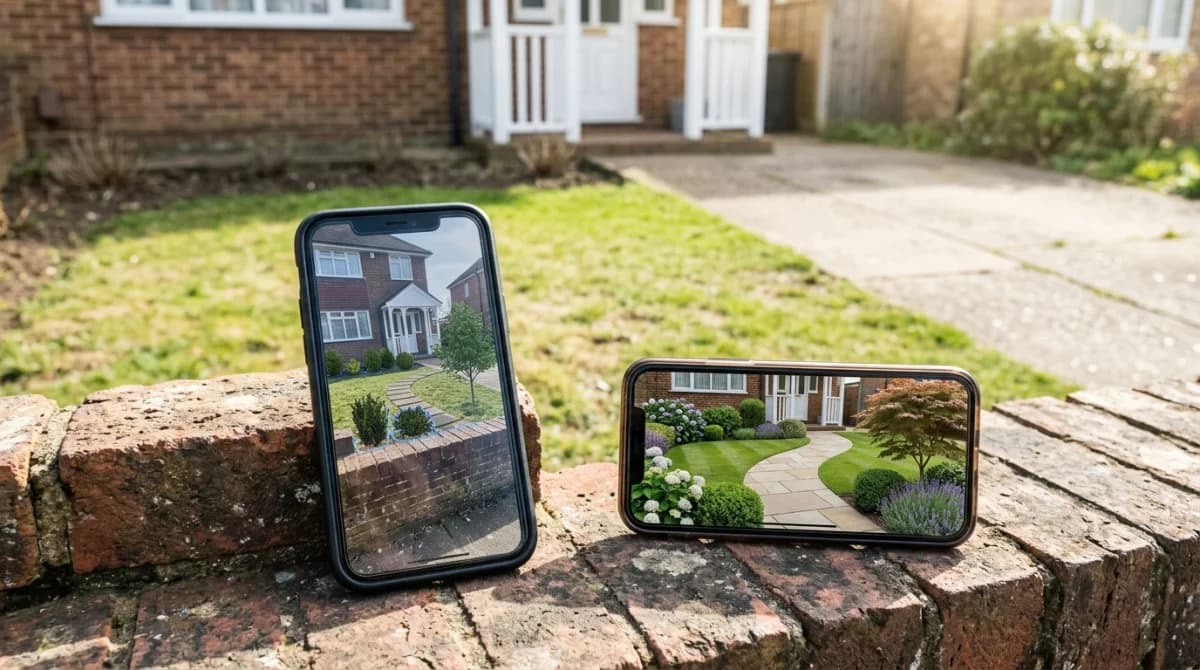
Neighborbrite is a free web tool that restyles a photo of your yard with no signup and no credit card, and the render is the whole deliverable: no species-level plant list, no hardiness-zone filtering. Gardenly costs $4.50 to $7 a month on annual billing and returns the same photo-to-render workflow plus a climate-matched plant list, a shopping list and 27 or more styles. Both work from a single yard photo. Your pick comes down to whether you want to look at the design or build it.
Shopping a wider shortlist than a head-to-head? Top 5 Neighborbrite alternatives ranks five tools on price, styles and plant lists.
Quick Answer
Gardenly is better than Neighborbrite when you want a buildable AI garden design with a photorealistic render, climate-adapted species list, shopping list, care guidance, and contractor-friendly output. Neighborbrite is better when you want a free, no-signup visual preview and do not need plant names or climate filtering.
At a Glance
| Feature | Gardenly | Neighborbrite |
|---|---|---|
| Photo-to-design workflow | ✅ | ✅ |
| Photorealistic render | ✅ | ✅ |
| Climate-adapted plant list with species | ✅ (USDA + international climate adaptation) | Not documented |
| Shopping list | ✅ | Not documented |
| Sketch-to-render conversion | ✅ | Not documented |
| AI video generation | ✅ | Not documented |
| Number of styles | 27+ | A handful |
| Platform | Web, plus an iOS app | Web, plus iOS and Android apps |
| Free option | None — paid tool | Free, no signup needed |
| Paid pricing | $4.50–$7/mo (annual) | — |
| Best for | Buildable, climate-adapted designs | Free quick-look style browsing |
What Each Tool Returns
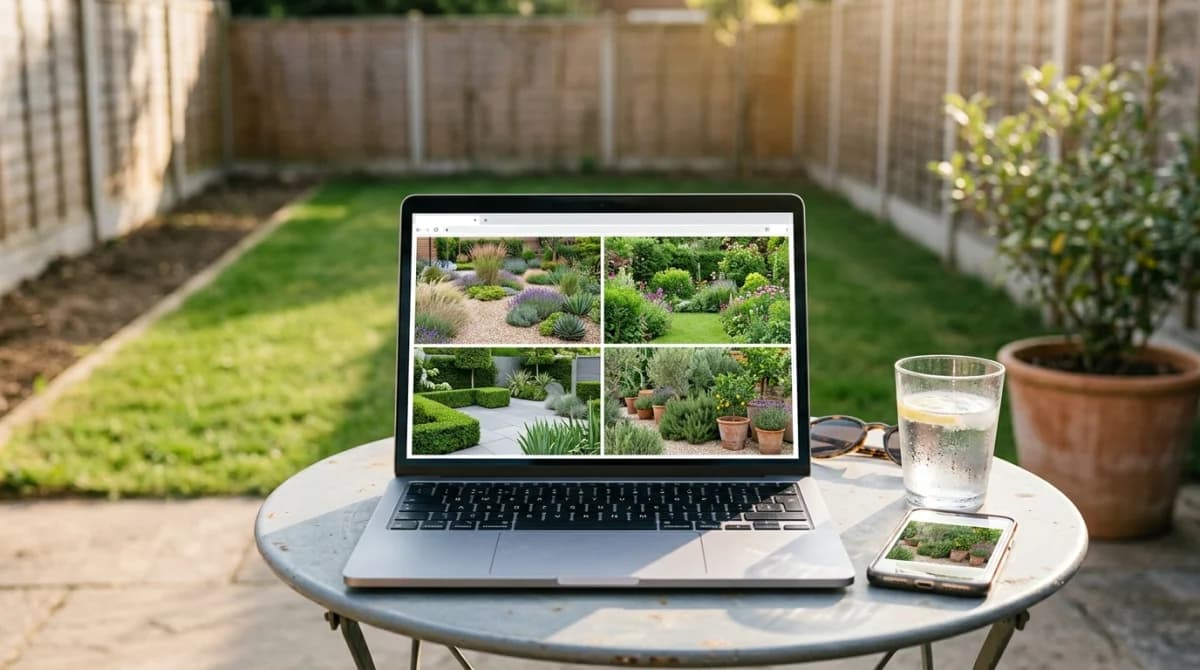
Gardenly is built around a complete design output. Every render comes paired with a plant list (species names + quantities), a shopping list to take to a garden centre, and the option to generate an AI video walkthrough of the design. It also supports sketch-to-render conversion, so you can iterate from a hand drawing instead of a photo. Plant suggestions are filtered by USDA hardiness zone, sun exposure and rainfall, and adapt to international climates as well — so they match your local growing conditions, not a generic temperate baseline.
Neighborbrite focuses on the visual. You upload a photo, pick a style, get a redesign. The output is the render itself — Neighborbrite’s marketing pages do not advertise a structured species-level plant list, climate-zone filtering or a shopping list. If you want to know what’s in the picture, you have to identify the rendered plants yourself.
This single difference is the core of the comparison. If you only need inspiration, the render alone is enough. If you actually plan to plant from the design, you need the plant list.
Pricing
Gardenly: Paid only. Starter $4.50/mo (billed annually at $54/yr) or $9/mo monthly. Pro $7/mo annually or $14/mo monthly. 7-day money-back guarantee for new purchases.
Neighborbrite: Free. No signup required for basic use.
If price is your only deciding factor and you don’t need a plant list, Neighborbrite wins. If you’ll spend any time at a garden centre or with a contractor, the plant list alone is worth Gardenly’s entry price.
Style Range
Gardenly: 27+ curated styles. The full set includes Modern Minimalist, Cottage, Japanese, Mediterranean, Native Pollinator, Edible Kitchen, Coastal Nautical, Xeriscaping, Forest Woodland, Prairie Meadow, English Traditional, French Formal, Spanish Courtyard, Desert Oasis, Rustic Country, Urban Rooftop, Scandinavian, Bohemian Naturalistic, Industrial Modern, Victorian, plus more.
Neighborbrite: Smaller set, focused on the most popular styles (modern, cottage, tropical, etc.). Exact count varies as the tool updates.
If you want range or a more specialised aesthetic, Gardenly has more options. If you want the mainstream styles only, both will cover them.
International / Climate Use
Gardenly: Plant recommendations adapt to international climates and regional growing conditions. The model accounts for hardiness zone (or the regional equivalent), sun exposure and rainfall, so suggested species are actually plantable where you live.
Neighborbrite: US-first product. Outputs assume a temperate North American context, with no documented climate-zone filtering on plant suggestions.
If you garden outside the US, Gardenly’s regional adaptation is the more useful default.
When to Pick Neighborbrite Over Gardenly
- You want a 5-minute free preview of one or two styles with zero friction.
- You’re at the inspiration stage and don’t yet care which plants would actually go in.
- You don’t want to create an account or enter any payment details.
When to Pick Gardenly Over Neighborbrite
- You’re going to actually plant from the design — you need a real species list.
- You’re outside the US and want a tool that adapts to your climate.
- You want stylistic range beyond the mainstream.
- You want to share the design with a contractor or landscaper (a contractor needs the plant list).
- You want a shopping list and care guidance for the recommended species.
Frequently Asked Questions
Bottom Line
Both tools work, and they solve overlapping but different problems. Neighborbrite is the easiest free way to see your yard restyled. Gardenly is the better fit if you want to build from the design, because it’s built around a climate-adapted plant list and shopping list rather than the render alone.
For a broader comparison across all AI garden design apps in 2026, see our full ranking: Best AI Garden Design Apps in 2026.