How to Organize and Store Your Seeds So They Last for Years
Seed packets accumulate. Every gardener knows the feeling of opening a drawer to find a jumble of used packets, some with a few seeds left, some expired, some unlabeled. January is the right time to sort this out—before the season starts and you’re squinting at tiny print to figure out whether something is worth planting.
Good seed storage is simple: keep seeds cool, dry, and dark. The challenge is organization, not technology.
Why Storage Conditions Matter
Seeds are living organisms in a state of suspended animation. The embryo inside is metabolically dormant but still alive. The conditions that degrade seeds fastest are the opposite of dormancy conditions: warmth, moisture, and light all accelerate the biochemical processes that break down stored energy and reduce viability.
Temperature: Seeds store best at temperatures below 40°F. A refrigerator (not freezer, for most seeds) is close to ideal. Room temperature is acceptable for many seeds but shortens viable storage life significantly.
Humidity: Moisture is the biggest threat. Seeds stored in humid conditions deteriorate rapidly. The target is below 50% relative humidity for storage; many seeds maintain viability best below 30% RH.
Light: Less critical than temperature and humidity, but darkness prevents any light-induced chemical degradation and keeps temperatures more stable.
Expected Viability by Crop
Not all seeds age equally. Some are viable for a decade or more under good conditions; others degrade quickly.
Long-lived (5+ years with good storage):
- Tomatoes: 4-6 years
- Cucumbers: 5-6 years
- Squash and pumpkins: 4-6 years
- Watermelons: 4-5 years
- Lettuce: 3-6 years (highly variable by variety)
Medium-lived (3-4 years):
- Peppers: 2-4 years
- Beans: 3-4 years
- Peas: 3-4 years
- Kale and cabbage: 3-4 years
- Basil: 3-5 years
Short-lived (1-3 years):
- Parsnips: 1-2 years (replace annually)
- Onions: 1-2 years
- Corn: 1-3 years
- Carrots: 2-3 years
- Chives: 1-2 years
These are general guidelines under good storage conditions. Heat and humidity degrade seeds much faster; cool, dry conditions can extend viability significantly beyond these estimates.
How to Test Old Seeds
Before discarding last year’s packets or old stored seeds, test viability with a simple germination test:
- Count out 10 seeds from the packet
- Lay them on a damp paper towel, fold the towel over them
- Place inside a labeled plastic bag (zip-seal) and put in a warm spot (on top of refrigerator, near a heat vent)
- Check daily after day 3
Count germinated seeds at the expected germination time for the species (usually 5-14 days for most vegetables).
7-10 of 10 germinate: Good seed, use at normal seeding rates 5-6 of 10: Acceptable but reduced; sow 2x as many seeds and thin 3-4 of 10: Poor; sow heavily and expect patchy germination—may not be worth it for most crops 0-2 of 10: Discard
Setting Up a Simple Storage System
The Container
The goal is an airtight container that can include a desiccant (silica gel) to absorb moisture. Options:
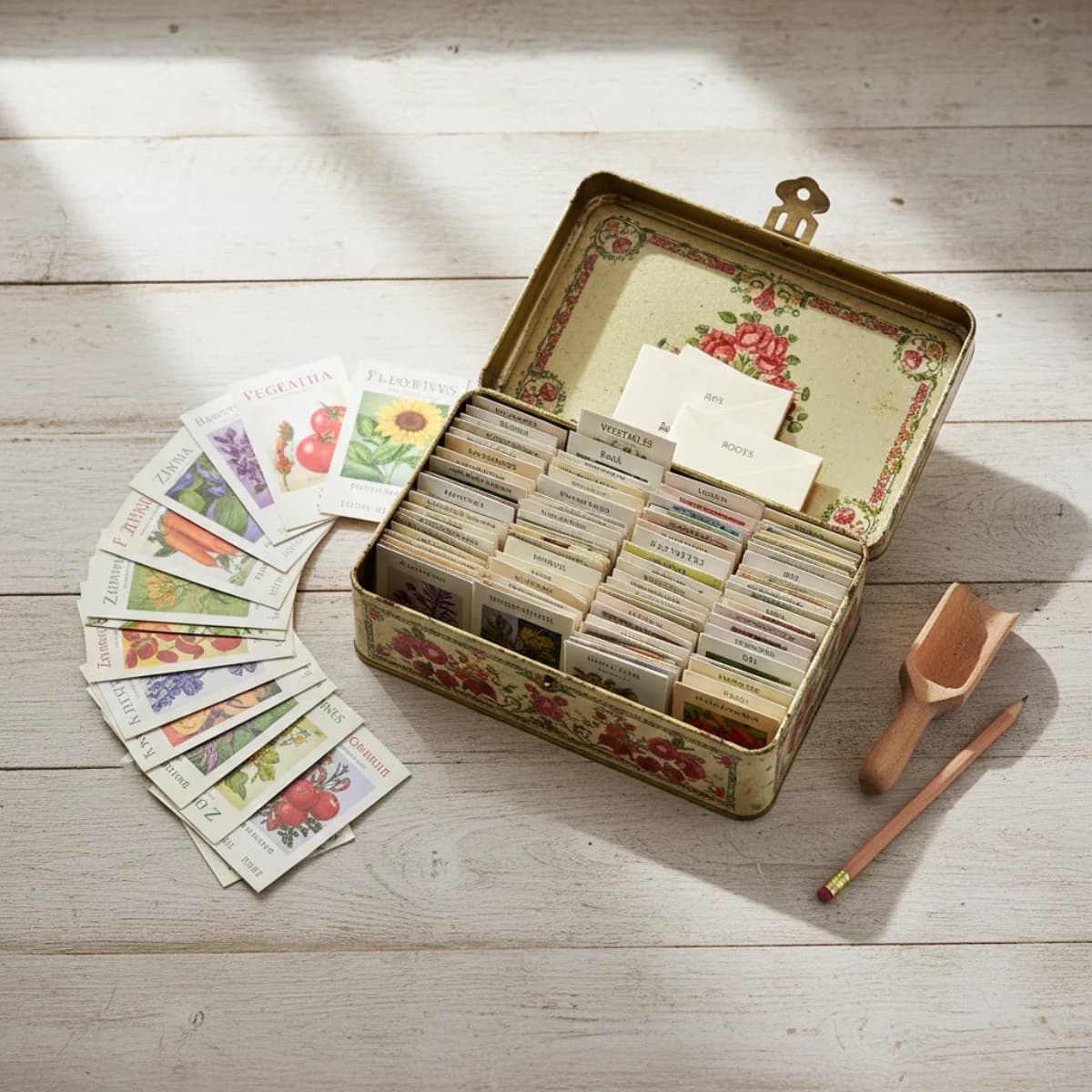
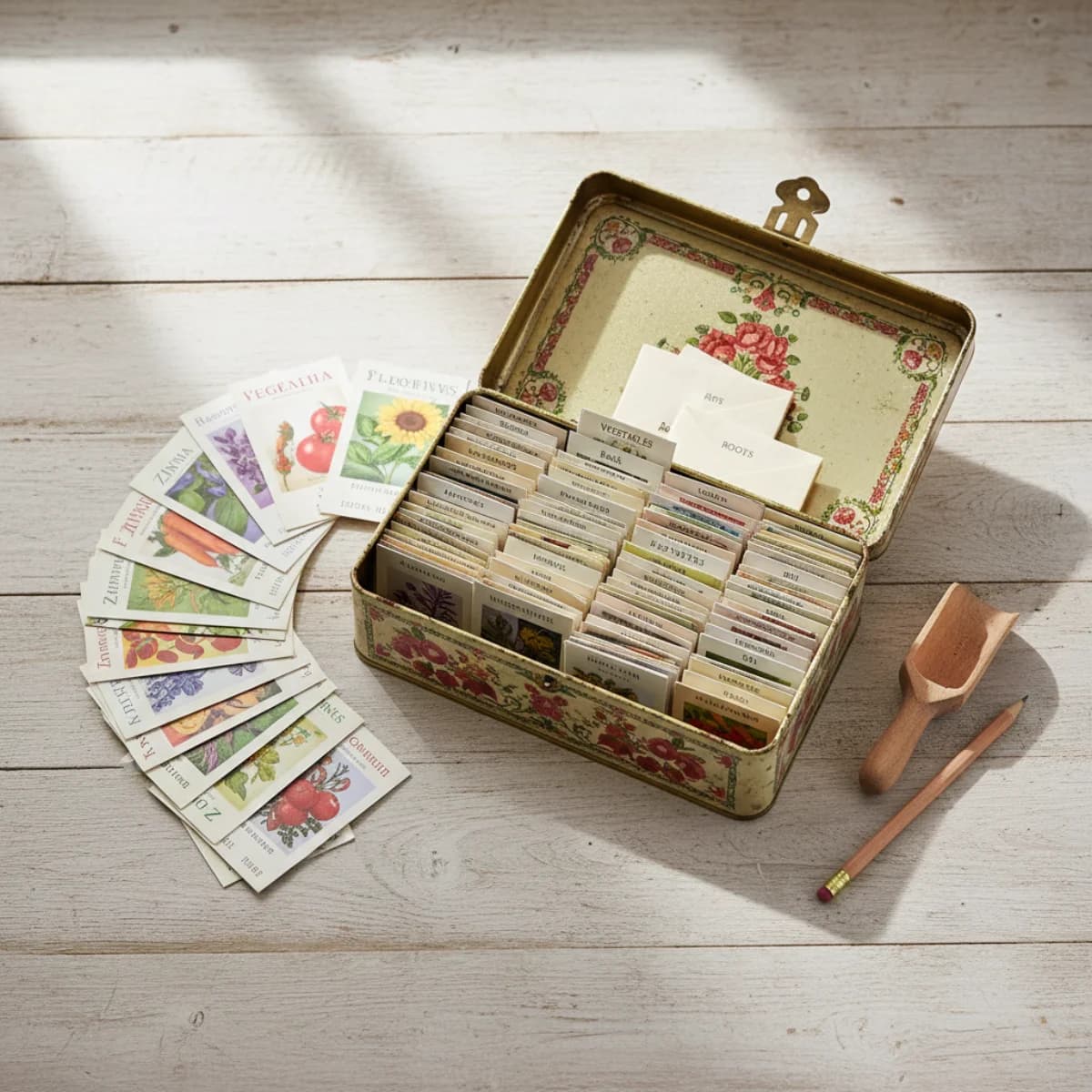
- Dedicated seed storage tin or box: Many companies sell decorative boxes designed for this; they work well. The key is an airtight fit.
- Airtight glass jars: Mason jars work perfectly. Store all seed packets in one large jar per category, or dedicate smaller jars to specific families.
- Biscuit tins or cookie tins: Old-fashioned and perfectly functional.
- Plastic containers with snap lids: Fine if the seal is good. Avoid containers with loose-fitting lids.
Add a sachet of silica gel desiccant to the container. These can be reactivated by heating in an oven at 250°F for an hour—they change color when they’ve absorbed all the moisture they can.
The Organization System
How you organize depends on how many seeds you keep. Common approaches:
By plant family or type: Vegetables together, annuals together, perennials together. Works well if you have a moderate collection (20-50 packets).
Alphabetically by crop: Simple and fast for finding what you need. Works at any collection size.
By planting time: Organized by when you’ll use them—cool-season first plantings, warm-season starts, direct sow, etc. Good for people who want a ready-made planting reference.
By seed-starting calendar: Most useful approach for active gardeners. Divide into sections by starting month (January/February starters, March starters, April/May, direct sow after frost). Requires more upfront organization but saves searching during the season.
Labeling
Keep all seed packets in their original packets if possible—the growing information on the packet is genuinely useful. For seeds you’ve saved yourself or decanted from bulk purchases, use small coin envelopes (widely available cheaply) with clear labels:
- Common name and variety
- Source (where you got them)
- Year saved or purchased
- Any important notes (germination rate from a previous test, unusual requirements)
What to Do With Old Packets
Go through your collection and assess:
- Test anything you’re uncertain about
- Discard or compost anything that fails the germination test or is clearly past its expected viability
- Make a list of what needs to be replenished before ordering new seeds
January is the right time for this because you’re about to order seeds anyway. Don’t order varieties you already have in viable stocks; do order replacements for depleted or failed ones.
Long-Term Preservation: Freezer Storage
For seeds you want to keep for many years—particularly saved varieties with sentimental value, or expensive seeds from rare suppliers—the freezer extends viability significantly.
Requirements before freezing:
- Seeds must be thoroughly dry. Any moisture will form ice crystals that damage the embryo. Spread seeds on a tray in a dry room for several days before packaging, or store in airtight containers with desiccant for a week first.
- Place in airtight container (small zip-lock bags inside a larger jar or tin)
- Include silica gel desiccant
- Label clearly (permanent marker, as labels can fade in condensation)
- Place in the coldest part of the freezer, away from the door
When removing seeds to plant, let the container come to room temperature before opening—this prevents condensation from forming on the cold seeds, which would add moisture.
Properly frozen seeds can last a decade or more for many species.
The Payoff
An organized seed collection saves money (you don’t buy what you already have), saves time (no searching through a pile for what you need), and produces better results (you plant viable seed at the right time).
The January reorganization takes an hour. The benefit lasts all season.
Sources & Further Reading
- How long do garden seeds last? — Oregon State University Extension Service
- Saving vegetable seeds — University of Minnesota Extension
- Collecting and storing seeds from your garden — Oregon State University Extension Service