When to Start Seeds Indoors in February: Your Complete Timing Guide
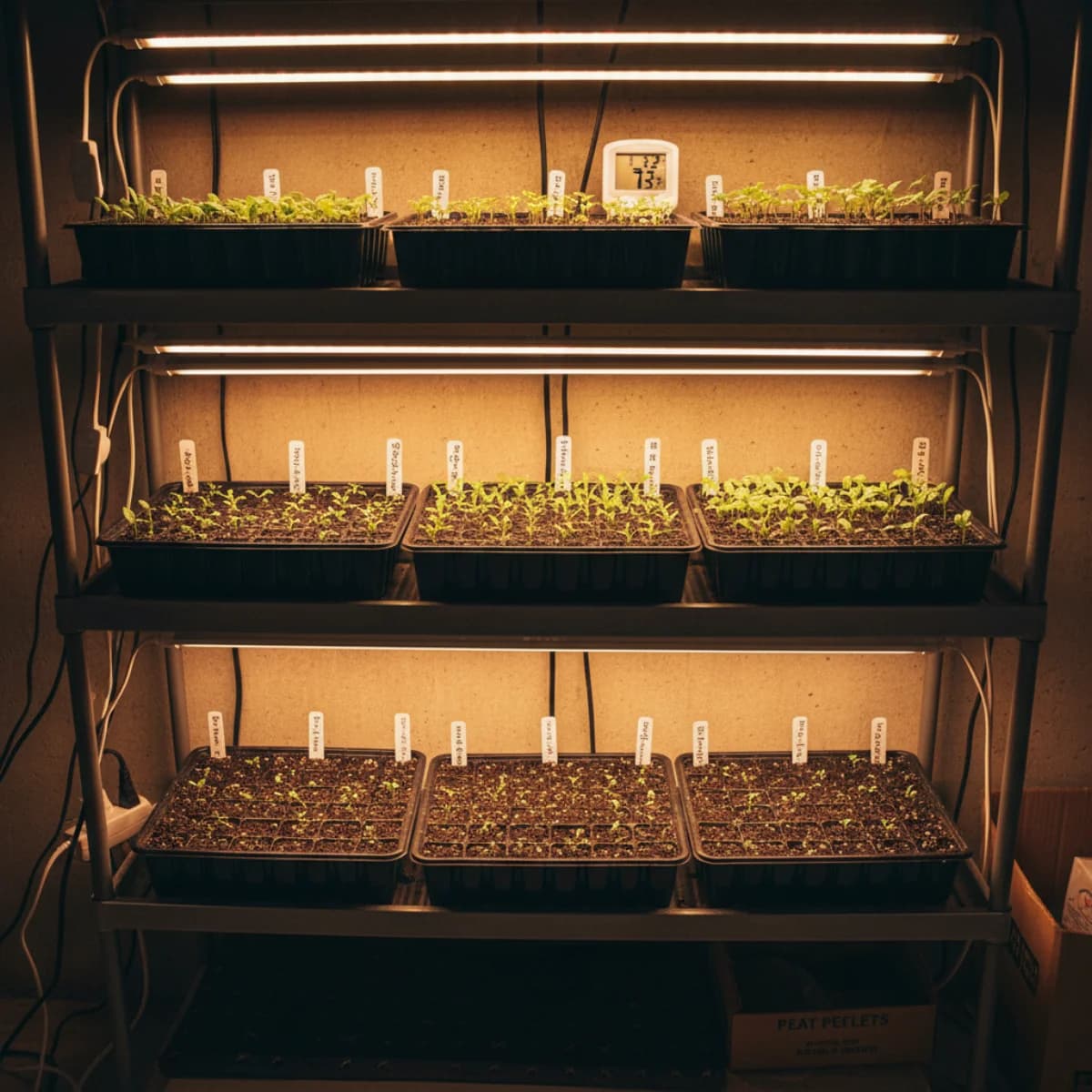
February might feel like the dead of winter, but for gardeners, it’s one of the most exciting months of the year. Those seed packets that have been accumulating on your kitchen table since January? It’s finally time to open them. February is the sweet spot for starting certain crops indoors—start too early and you’ll end up with leggy, stressed transplants by spring, start too late and you’ll lose weeks of prime growing weather.
The key is knowing exactly which seeds to start now versus which ones can wait.
How to Calculate Your Seed Starting Dates
The starting point for any seed-starting calendar is your last average frost date. Everything works backward from there.
If you don’t know yours, a quick search for your zip code will bring it up. Once you have it, the math is simple: seed packet says “start 8-10 weeks before last frost,” your last frost is April 15—count back 8-10 weeks and you’re looking at February 4-18.
For most of the continental US, that puts February squarely in the window for:
- Peppers: 10-12 weeks before last frost (these need the longest lead time)
- Onions and leeks: 10-12 weeks before last frost
- Slow-growing herbs like rosemary and lavender: 10-12 weeks
- Celery and celeriac: 10-12 weeks
Seeds that need 8-10 weeks—tomatoes, eggplant, and most annual flowers—may be borderline in February depending on your zone. If you’re in Zone 5 or colder with a late frost date (May or beyond), February is exactly right for tomatoes too.
Seeds That Belong in Trays Right Now
Peppers (All Types)
Peppers are notoriously slow to germinate and grow. Sweet bell peppers, spicy jalapeños, habaneros—they all need a head start that most gardeners underestimate. Germination alone takes 10-21 days at soil temperatures of 80-85°F, and then they grow slowly for weeks before they look like much.
Start them now in a warm spot (a heat mat is almost essential for peppers), and they’ll be robust, well-branched transplants ready for the garden when warm weather arrives.
Onions and Leeks
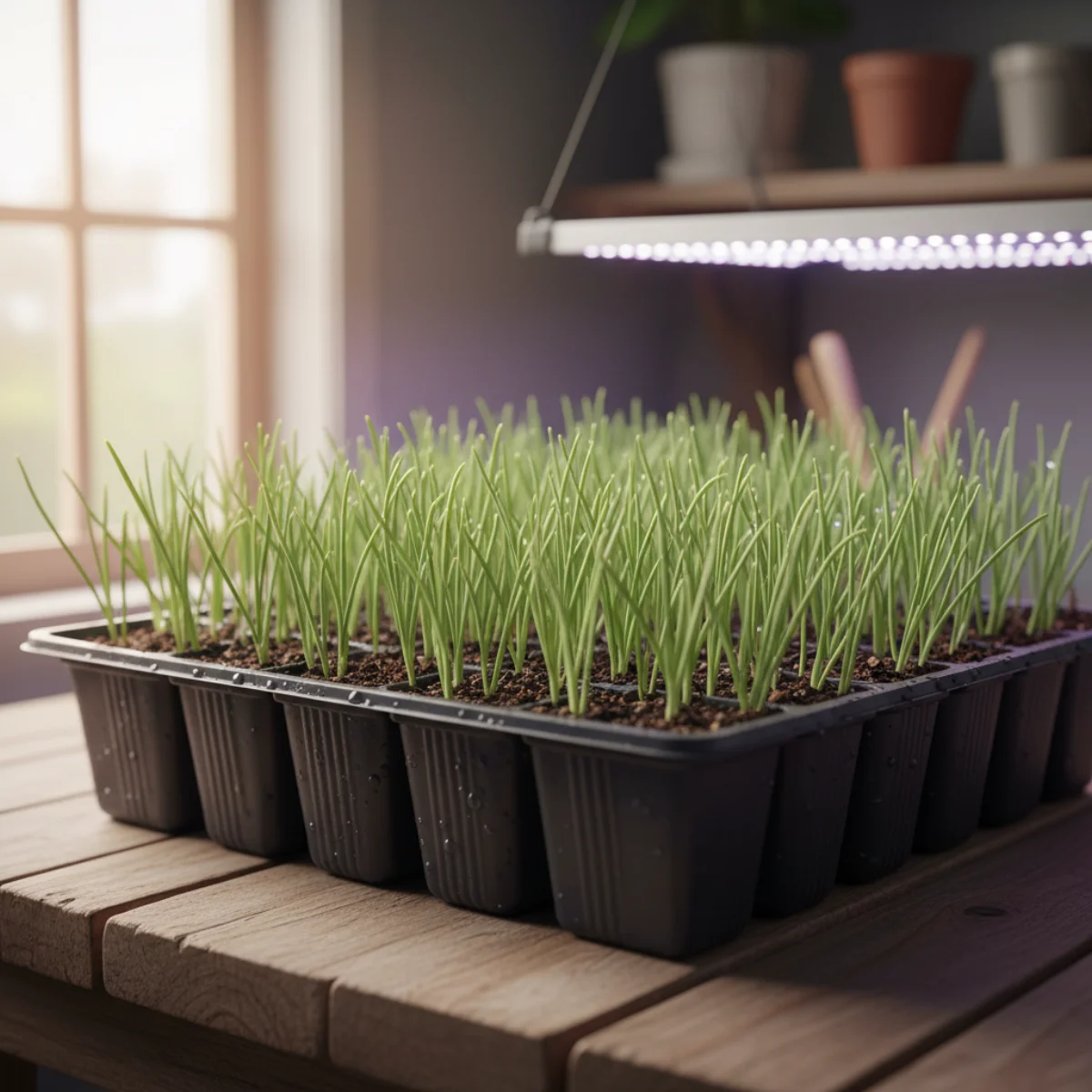
Onions started from seed are significantly cheaper than buying sets, and you get access to better varieties—candy onions, torpedo onions, unusual heirlooms. The tradeoff is time: onions need 10-12 weeks indoors to develop properly.
Start them densely in trays, trim the tops when they get floppy (this actually strengthens them), and pot up into larger cells around week 6-8.
Rosemary and Lavender
These Mediterranean herbs are notoriously slow from seed. Germination can take 2-3 weeks, and early growth is sluggish. If you want plants of any real size by summer, start them in February. Keep soil temperature around 70°F and don’t let them dry out while waiting for sprouts.
Celery
Celery is one of the trickiest vegetables to grow from seed—it needs light to germinate (press seeds onto the soil surface without covering), constant moisture, and a long growing season. February is the time to get it going.
What NOT to Start Yet
Resist the urge to start everything at once. These plants do better started later:
- Tomatoes: Unless your last frost is in May or later, wait until March
- Cucumbers, squash, and melons: 3-4 weeks before transplant date—these grow fast and don’t like being potbound
- Beans, peas, corn: Direct sow outdoors; they hate transplanting
- Most annual flowers: Unless they have an unusually long lead time (impatiens, snapdragons), most can wait
Setting Up for Success
Soil and Containers
Use a dedicated seed-starting mix, not garden soil or potting mix. Seed-starting mix is finer and lighter, allowing delicate roots to push through easily. Fill cells or small pots, moisten thoroughly before seeding, then press 1-2 seeds per cell at the depth shown on the packet.
Light Is Everything
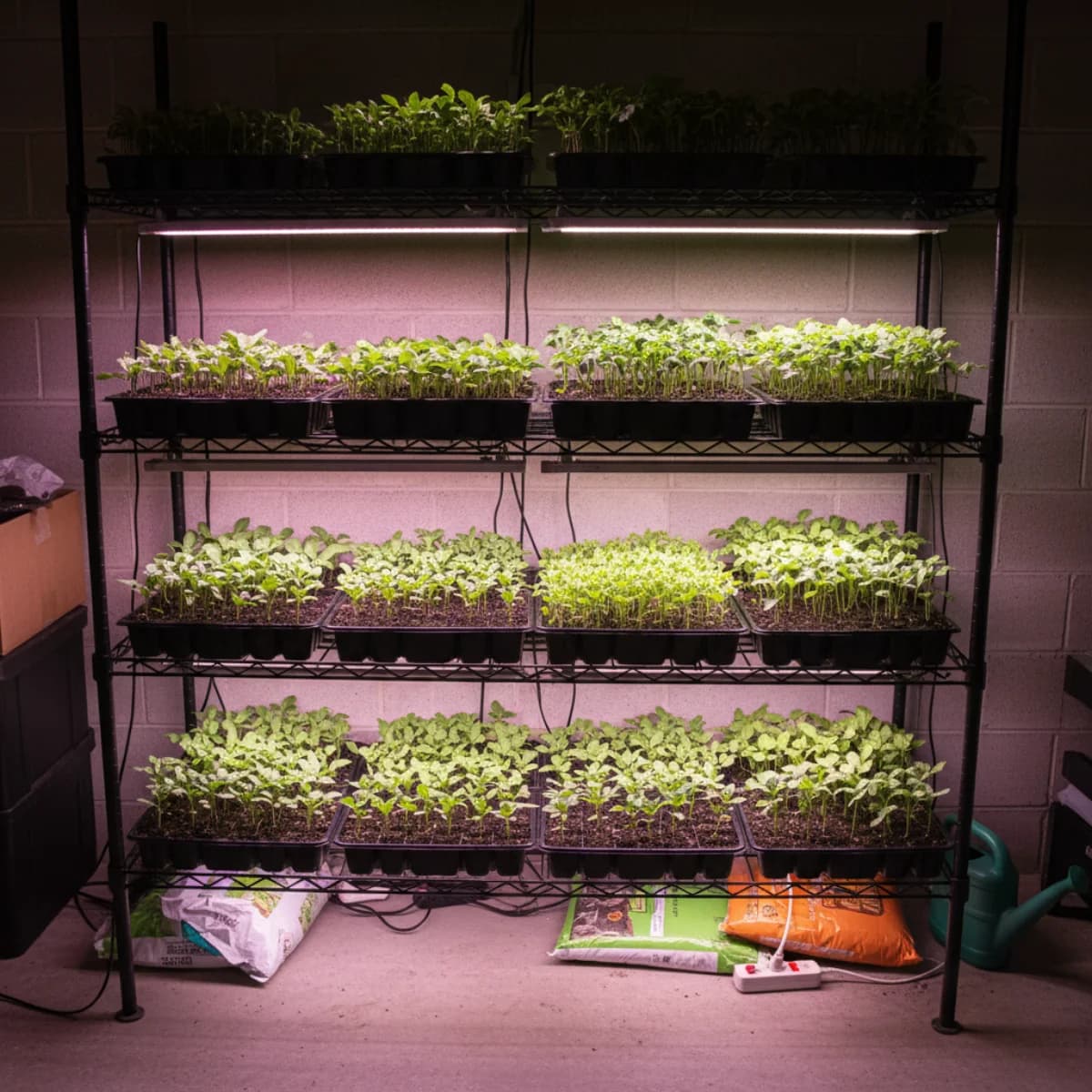
The number one reason indoor seedlings fail is inadequate light. A sunny south-facing window helps but usually isn’t enough—plants end up etiolated (stretched, pale, weak) reaching for light they can’t quite get.
A simple shop light with LED grow bulbs hung 2-4 inches above seedlings, on a 16-hour timer, produces stocky, robust plants that outperform window-grown seedlings every time. This doesn’t need to be expensive: a two-bulb T5 or T8 fluorescent fixture works well and can be found for under $40.
Heat and Watering
Most seeds germinate best at 70-80°F soil temperature. A seedling heat mat under your trays speeds germination and improves germination rates. Once seeds sprout, they don’t need as much heat—normal room temperature is fine.
Water from the bottom when possible: pour water into the saucer and let cells absorb it. This prevents damping off (a fungal disease that kills seedlings at the soil line) and encourages roots to grow downward.
Labeling and Record-Keeping
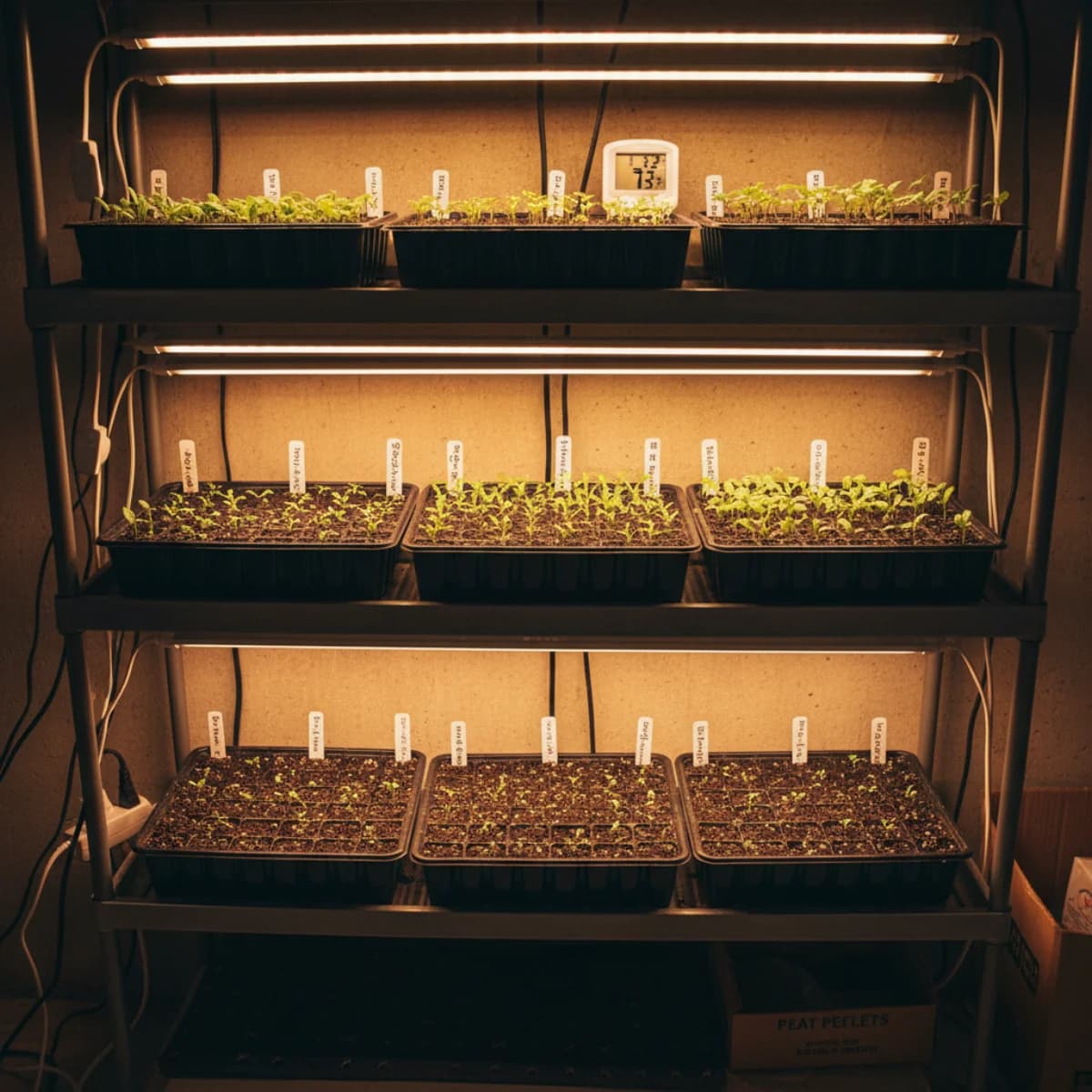
It sounds tedious, but label everything the moment you plant it. Within two weeks, four varieties of peppers look identical, and by the time they have true leaves you’ll never remember what’s what. A popsicle stick and a permanent marker are enough.
Keep a simple notebook (or a notes app) with what you planted, when, and how it germinated. This becomes invaluable the following February when you’re setting up again.
Planning the Whole Season
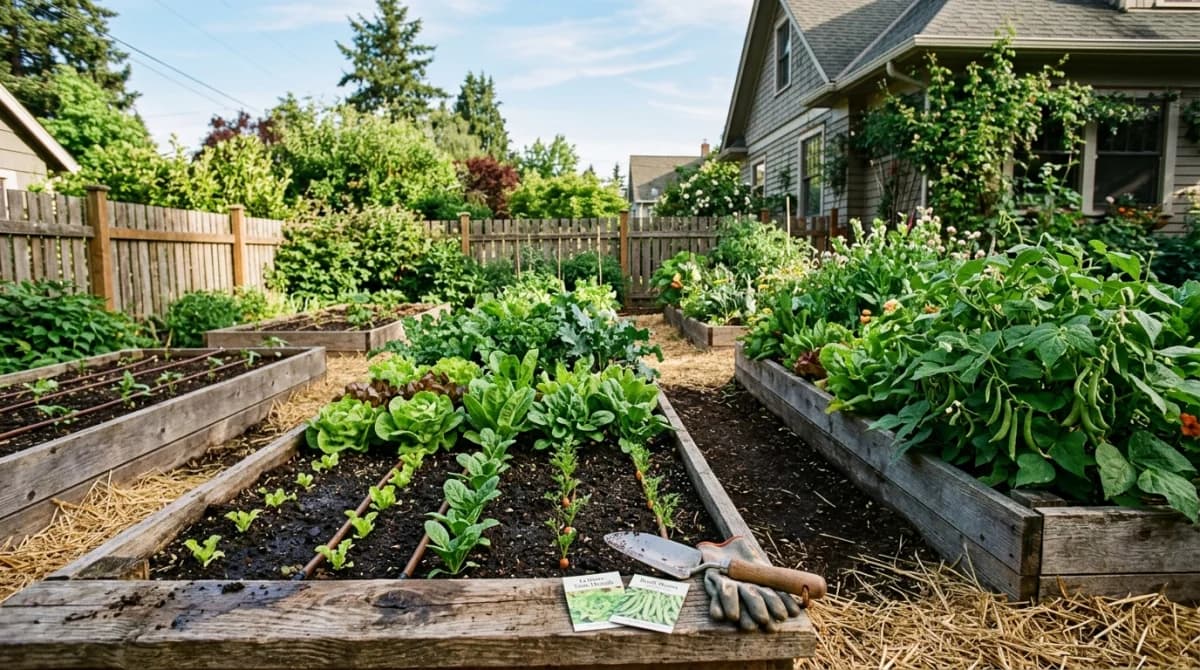
February seed starting works best when it’s part of a larger garden plan. Knowing what you’re growing, where it’s going, and when it’ll be ready to transplant helps you start the right things at the right time—and avoid the chaos of having too many plants and no idea where to put them.
Tools like Gardenly can help you visualize your whole garden space before the season begins, so by the time your seedlings are ready to go outside, you already know exactly where each one belongs.
The seeds you start this month will be some of your most valuable plants all season. Give them a good beginning, and they’ll reward you well.
Sources & Further Reading
- Starting Seeds Indoors — University of Minnesota Extension
- Starting Seeds Indoors — University of Maryland Extension
- Seed Starting Demystified — Penn State Extension