Pinch Out Your Broad Bean Tips This Week to Beat the Blackfly
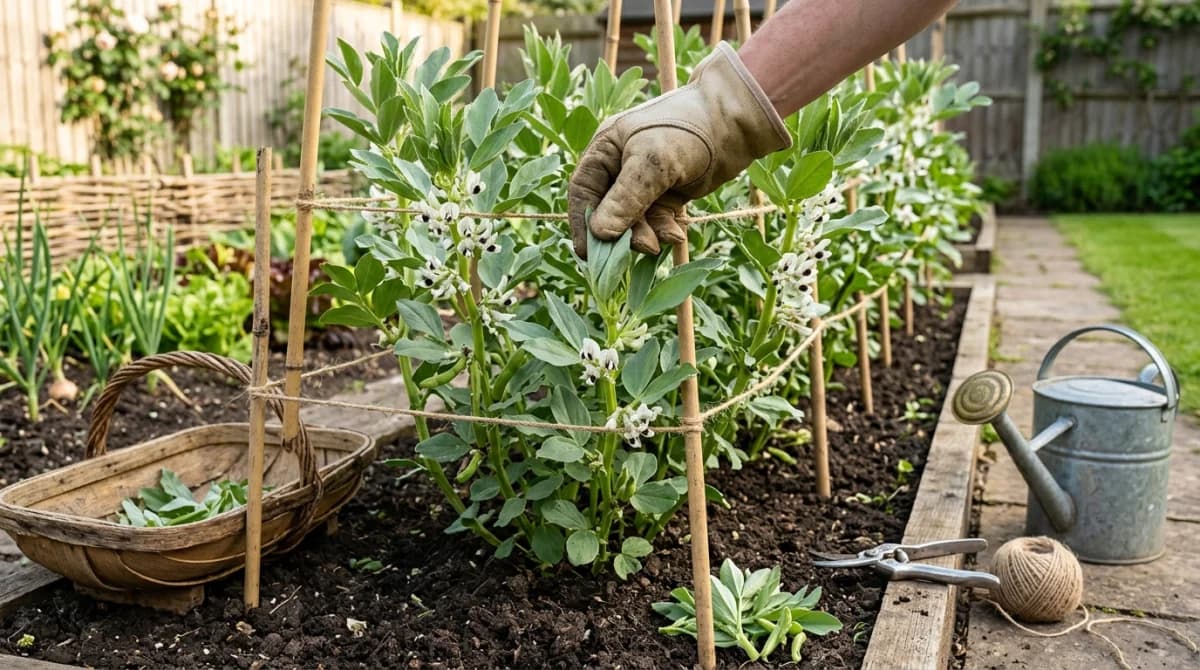
There is a single, free, thirty-second job that decides whether broad beans are a clean and generous crop or a sticky, ant-patrolled disaster, and the window for it is open right now. Pinching out the growing tips of broad beans in mid-May is one of those rare garden tasks where doing nothing has a visible cost within two weeks and doing the job has no downside at all. It costs nothing, needs no equipment, takes a couple of minutes per row, and removes the need to ever spray a broad bean crop. Most gardeners who lose broad beans to blackfly are not unlucky. They simply missed the week.
Broad beans (Vicia faba) grow as a single upright stem — or a small cluster of stems from one station — topped by a soft, pale, fast-growing shoot. That tip is the most tender, most sugar-rich, most nitrogen-rich part of the whole plant, and it is the part that black bean aphid (Aphis fabae, universally called blackfly) heads for first. A blackfly colony does not spread evenly over a plant. It starts at the tip, builds there into a dense black crust, and only spreads down the stem and onto the developing pods once the tip is fully occupied. Remove the tip in mid-May, before the colony has established, and you have removed the launchpad for the entire infestation.
Why Mid-May Is the Exact Moment
The timing is not arbitrary. By the third week of May a healthy autumn-sown or early-spring-sown broad bean row has reached most of its final height — somewhere between two and a half and four feet depending on cultivar — and the lowest trusses of flowers have opened and begun to set their first small pods. Those two things happening together is the signal.
Once the lowest flowers have set, the plant no longer needs to keep extending upward. Every inch of new tip growth from this point is competing with the pods for the plant’s resources, and producing nothing the gardener wants. Meanwhile blackfly populations, which overwinter on spindle bushes and other woody hosts, take to the wing in warm mid-May weather and begin actively seeking out soft bean tips. The plant’s least useful growth and the pest’s preferred target are the same four inches of stem. Pinching it out in the week the lowest pods set is the moment both problems are solved with one cut.
A week or two earlier and the plant is still genuinely building height and flowering trusses, and removing the tip too soon costs you some of the crop. A week or two later and the blackfly have usually already arrived, the tip is already coated, and pinching it out becomes damage control rather than prevention — you are now removing an existing colony rather than denying it a home. The clean preventive version of this job has a window of roughly seven to ten days, and for most temperate gardens it is open now.
How to Pinch — and How Much
The technique is genuinely as simple as it sounds, but two details matter.
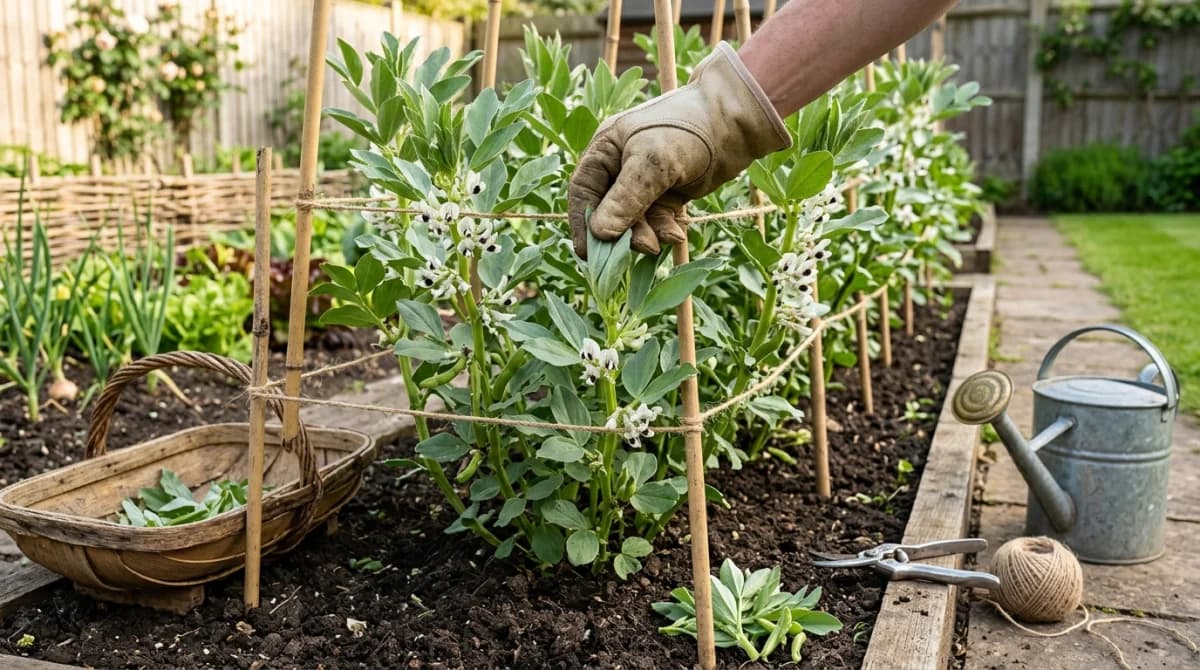
Take hold of the soft growing tip at the top of each main stem and remove the top two to four inches — the section that is still pale, soft, and clearly tender, down to where the stem and leaves have toughened and darkened. You can do this with finger and thumbnail or with a quick snip of clean secateurs; on a soft tip the fingers are faster and just as clean. The cut does not need to be precise. The plant seals a pinched tip within a day and the wound is far too small to be an entry point for disease.
Do every main stem in the row. If a plant has thrown up three or four stems from one station, each one has its own tip and each one needs doing. It feels slightly brutal the first time, because you are removing the freshest, greenest, most vigorous-looking growth on the plant — but that vigour is precisely the point. You are redirecting it. With nowhere to grow upward, the plant pushes everything into the flowers and pods already on the stem, and the lower trusses fill faster and more fully than they would on an un-pinched plant.
One bonus worth knowing: the pinched-out tips are edible. The top few inches of a broad bean shoot, lightly steamed or wilted in butter like spinach, are a genuine spring delicacy with a clean, faintly nutty pea-shoot flavour. A row’s worth of tips is a free side dish, and there is a quiet satisfaction in a pest-control job that ends with supper.
If the Blackfly Have Already Arrived
If you look along the row this week and the tips are already carrying a black, crusted colony of aphids, the job changes from prevention to removal — but pinching is still the first move, and it is still highly effective. Cut the colonised tips off lower than you otherwise would, taking the whole infested section, and do not drop them on the soil or the compost where the aphids can simply walk back. Bag them, or crush them underfoot, or drop them into a bucket of water.
For colonies that have already spread down the stem below the tip, a firm jet of water from a hose knocks most of the aphids off, and they are poor at climbing back up. A wipe along the stem with a cloth dipped in very dilute washing-up water deals with the rest. There is almost never a reason to reach for an insecticide on a broad bean — a sprayed crop also kills the ladybird larvae, hoverfly larvae, and parasitic wasps that are the long-term answer to aphids, and broad bean flowers are heavily worked by bees you do not want to spray. Pinch, jet, wipe, and let the predators clean up the survivors.
Watch the ants, too. Ants farm blackfly for the sugary honeydew they excrete, actively protecting the colony from predators and even carrying aphids to fresh growth. A line of ants running up a bean stem is a reliable early sign that a colony is establishing somewhere above, often before the blackfly themselves are obvious. If the ants are busy, check the tips.
The Rest of the Mid-May Broad Bean Job
While you are working down the row with the tips, two other small tasks belong in the same visit.
The first is support. A broad bean row in full flower and starting to carry pods is heavy and top-prone, and a single windy May night can lay a whole row flat. The traditional method is quick and effective: push a sturdy cane or stake in at each corner of the row and at intervals of about four feet along both sides, then run a double line of stout string between them at roughly knee height and again at waist height, so the row is held in a corridor of string and cannot splay outward. It takes five minutes and saves the crop.
The second is water. Broad beans are not thirsty plants for most of their lives, but the period when pods are setting and swelling — exactly now — is the one stretch where a dry spell genuinely reduces the harvest. If the soil is dry, a good soak at the base of the row once a week through pod-fill makes a measurable difference to the number and size of beans. Water the soil, not the foliage, and water in the morning. A mulch of compost or grass clippings along the row holds that moisture and saves you half the watering.
Why This Crop Is Worth the Two Minutes
Broad beans are one of the most rewarding things a beginner can grow, and the mid-May pinch is the moment that reputation is earned or lost. A clean, pinched, supported, watered row will hand you weeks of pods, fix nitrogen in the soil for whatever follows it, and ask for almost nothing else. A row left un-pinched into a warm late May becomes a blackfly colony with beans attached, and the gardener who loses one crop that way often decides broad beans are “difficult” and never grows them again. They are not difficult. They are a thirty-second job done in the right week.
If you are still deciding where broad beans and the rest of the vegetable garden should sit — which bed catches the morning sun, where a support row will not shade a shorter crop behind it, how to rotate the legumes through next season so they feed the bed that follows — Gardenly can render your plot in full mid-summer growth from a photo of the space, so you can see the layout standing up before you commit a single seed to the ground. Useful for a kitchen garden where the difference between a good year and a poor one is often just which crop ended up in which corner.
Sources
- Royal Horticultural Society — Broad Beans: Growing Guide
- Royal Horticultural Society — Black Bean Aphid
- University of Minnesota Extension — Aphids in Home Gardens
- Garden Organic — Broad Bean Growing Guide