How to Plan Your Vegetable Garden Layout Before the Season Starts
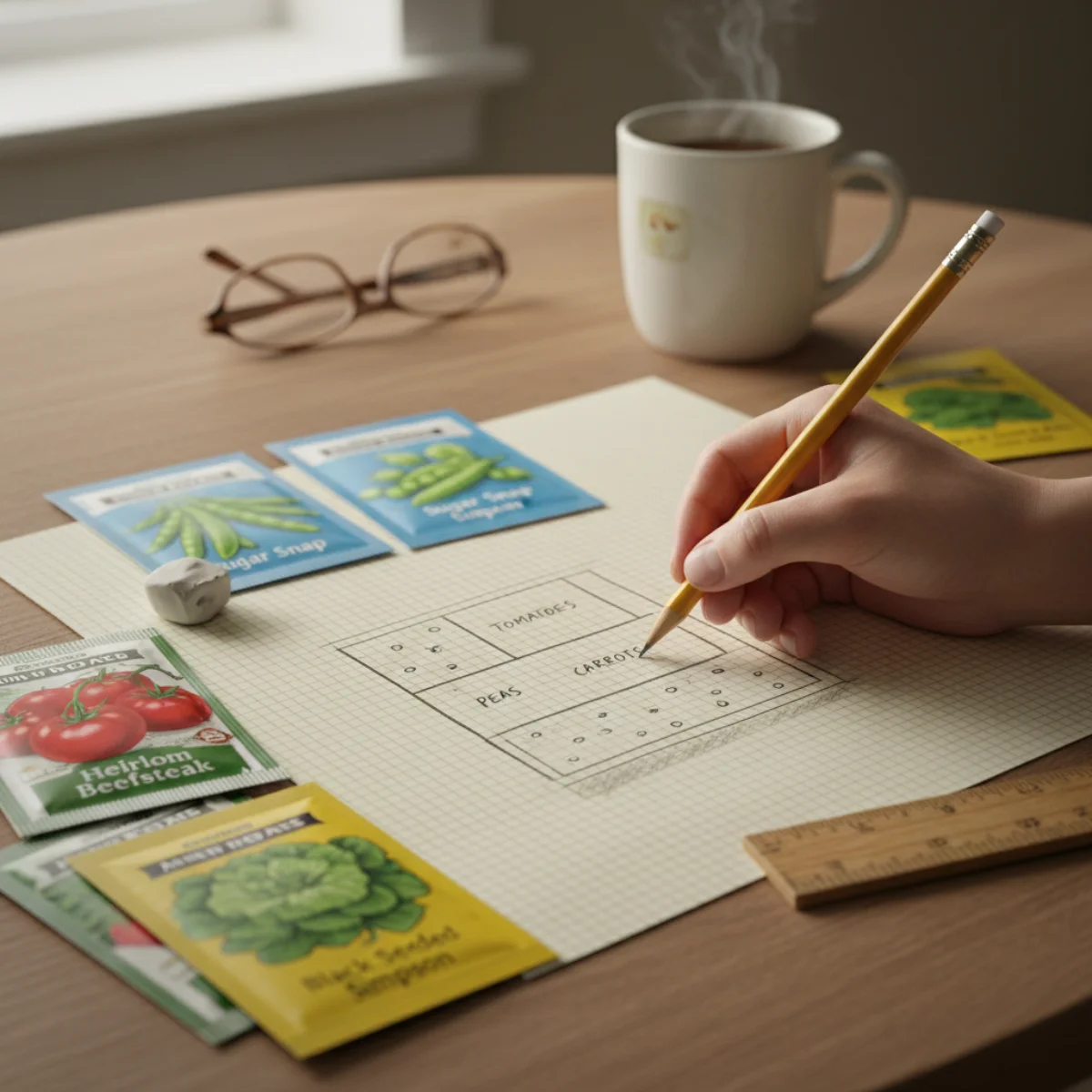
Every great vegetable garden starts on paper. Or a spreadsheet. Or the back of a seed catalog. The medium doesn’t matter—what matters is spending time now, in February, working through where things will go before you’re standing in a muddy garden in April trying to figure it out on the fly.
Planning a vegetable garden layout is part logistics, part puzzle, and genuinely enjoyable. Here’s how to approach it.
Start With What You Have
Before planning what to grow, accurately map what you’re working with.
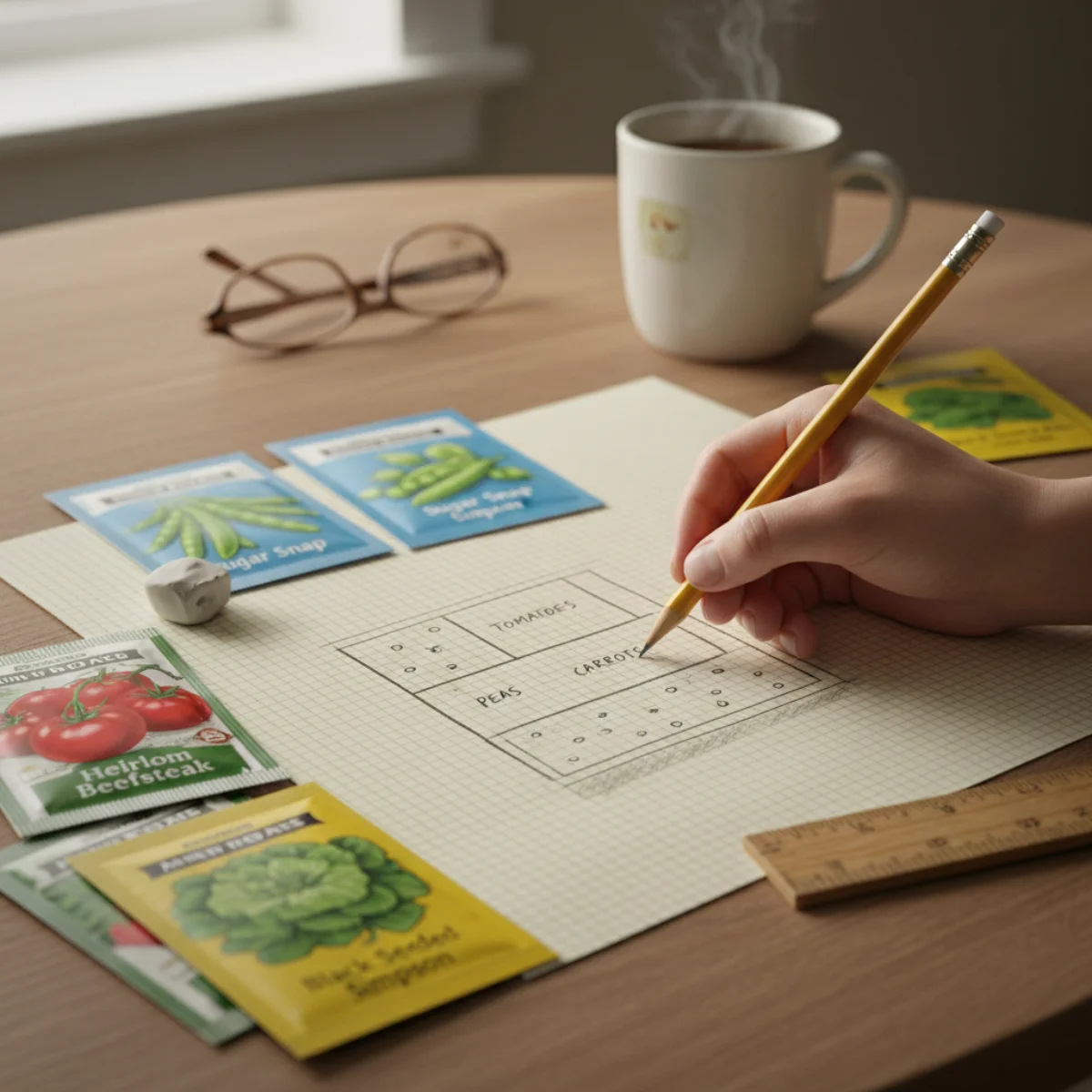
Measure your space. Even if you’ve gardened the same beds for years, measure again. Knowing that your main bed is 4’ × 12’ rather than “about that size” lets you plan more precisely. Use a tape measure and graph paper (1 square = 1 foot works well for most gardens).
Assess sun exposure. Most vegetables need 6-8 hours of direct sun. Walk your garden at midday and again in late afternoon, noting where shadows fall from buildings, fences, and trees. Shade patterns shift through the season—a spot with full sun in May may be partly shaded by July as the sun angle changes and nearby trees leaf out.
Note water access. Where are your hose bibs and irrigation connections? Proximity to water affects how you’ll plant: plants that need frequent watering should be near a hose connection, while drought-tolerant crops can go further out.
Identify soil quality differences. If parts of your garden grow better than others, note that now. Depressed areas that collect water, spots where tree roots compete, beds that never seem to grow great tomatoes despite everything—map it all.
Decide What to Grow
Before anything goes on the layout, decide what you actually want. This sounds obvious, but most gardeners don’t think critically enough about this step and end up growing things “because you’re supposed to have a vegetable garden” rather than things they actually eat.
Make an honest list. What vegetables do you buy at the farmers market or grocery store that you’d genuinely rather grow yourself? Start there. What didn’t you use last year? Cross those off.
Consider space-to-reward ratio. Some crops take a lot of space for modest yield; others produce abundantly in a small footprint.
High-yield small-space crops:
- Cherry tomatoes
- Bush beans (two or three succession plantings)
- Leaf lettuce and salad greens
- Radishes
- Herbs (basil, parsley, chives)
- Zucchini (one or two plants produce more than you’ll want)
Space-intensive crops worth it only if you love them:
- Melons and watermelons
- Corn (needs a block planting to pollinate)
- Winter squash
- Asparagus (permanent bed, takes 2-3 years to establish)
Think about succession planting. Certain crops mature and are done—radishes, spinach, cilantro, lettuce. In your plan, these spots will be replanted 2-3 times through the season, so note that they’ll serve double or triple duty.
Key Layout Principles
Tall Crops Go North
In the Northern Hemisphere, taller plants belong on the north side of your beds where they won’t shade shorter plants. Put trellised tomatoes, pole beans, corn, and sunflowers on the north end. Shorter crops—lettuce, herbs, bush beans, root vegetables—go south.
Group by Water Needs
Crops with similar water requirements should be planted together. Tomatoes, peppers, and eggplant all like consistent moisture but can handle drying slightly between waterings. Leafy greens and cucumbers want more consistent moisture. This makes irrigation and hand-watering far more efficient.
Think About Rotation
Rotating vegetable families from bed to bed each year reduces soilborne disease and pest buildup. The main families to rotate:
- Solanaceae (tomatoes, peppers, eggplant, potatoes)
- Brassicaceae (cabbage, broccoli, kale, Brussels sprouts)
- Cucurbitaceae (cucumbers, squash, melons)
- Leguminosae (beans, peas)
A simple rule: don’t grow the same family in the same bed two years in a row. A four-bed rotation covers four years.
Use Every Vertical Inch
A trellis turns two dimensions into three. Pole beans, cucumbers, peas, and small-fruited tomatoes all grow vertically, freeing up ground space for other crops. Even an 8-foot section of livestock panel or cattle panel makes a huge difference in how much you can grow in a small space.
Plan for Access
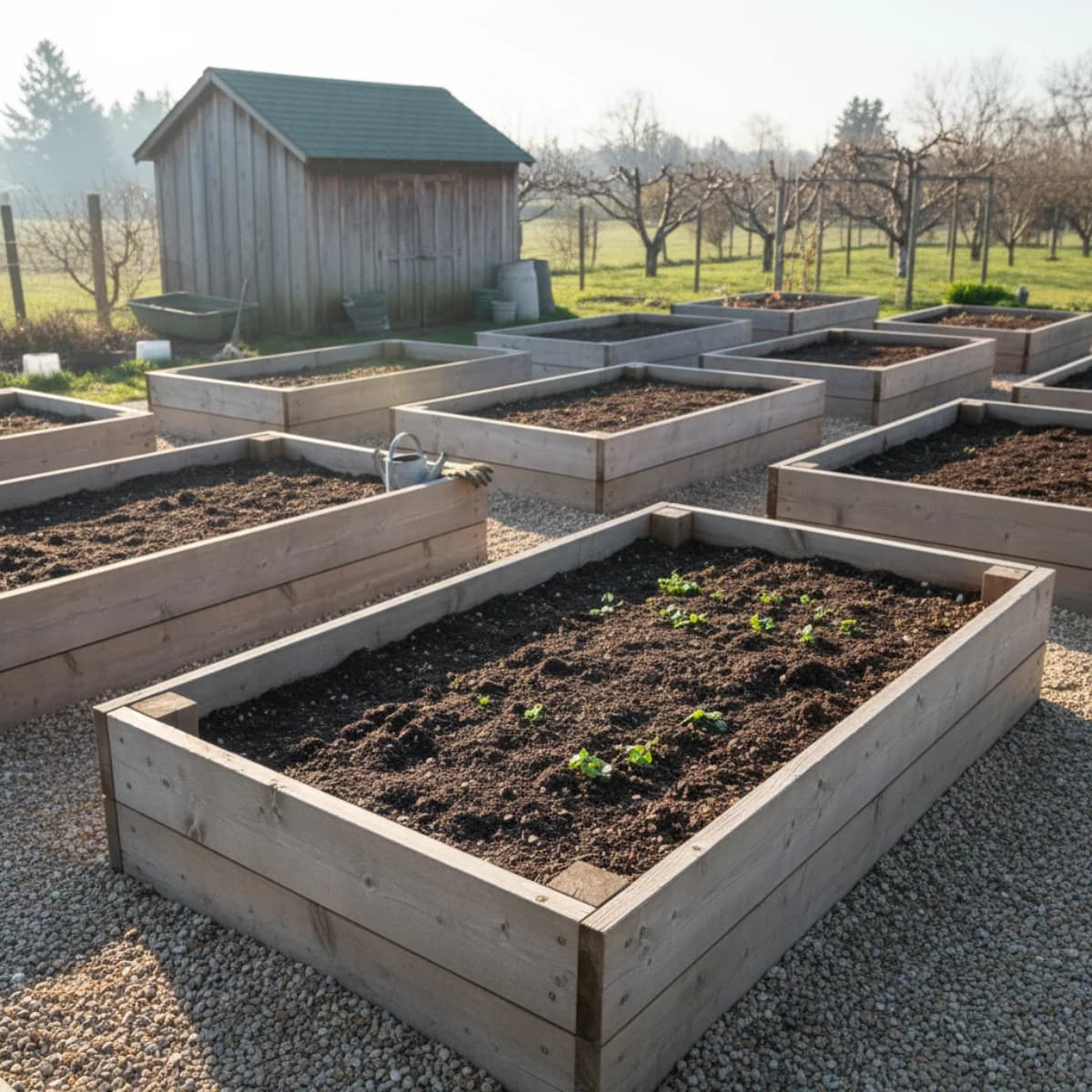
You should be able to reach every part of your bed without stepping on the soil. The standard recommendation is 4-foot wide beds—most people can reach 2 feet from either side comfortably. If your beds are wider, build in stepping stone access or make sure you can work from both sides.
Account for the Season Arc
Your layout should think in phases, not just at one moment in time.
Spring crops that will be done by early summer: peas, spinach, lettuce, radishes. Where will these go? Can you plant a summer crop in that same spot after they’re finished?
Long-season crops that will occupy space from May through October: tomatoes, winter squash, peppers. Commit to these spaces early and don’t plan anything else there.
Fall succession: many gardeners replant cleared spring beds with fall crops in August—brassicas, root vegetables, a second round of salad greens. Factor this into your plan.
Tools That Help
Graph paper is the classic approach and works well. A ruler, pencil, and some eraser make it easy to sketch multiple variations quickly.
Digital tools offer more flexibility. You can move things around without erasing, layer in sun maps and irrigation layouts, and save multiple versions. Gardenly lets you upload a photo of your actual space and overlay garden design elements, which is particularly helpful for visualizing how a planned layout will look in your real garden rather than as an abstraction on paper.
Whatever tool you use, make a final plan that you’ll actually refer to during planting season—don’t let it end up in a folder somewhere never to be seen again. Pin it up in your garden shed or take a photo on your phone.
The Plan Is Not a Contract
One important caveat: the plan is a starting point, not a contract. Actual gardening involves surprises—a crop fails to germinate, something takes off unexpectedly, or a late frost forces replanting. The plan gives you a framework to work from so you’re not making every decision from scratch in the moment. But garden with flexibility.
The gardens that work best are planned thoroughly in winter and then adjusted in real time through the season by a gardener who’s paying attention.
Start planning now. The seed packets aren’t getting any younger.
Sources & Further Reading
- Crop Rotation for the Home Vegetable Garden — Penn State Extension
- Where Do I Put My Crops — Penn State Extension
- Raised bed gardens — University of Minnesota Extension
- Maximizing Your Vegetable Garden — Penn State Extension