How to Plan a Garden Layout That Maximizes Your Space
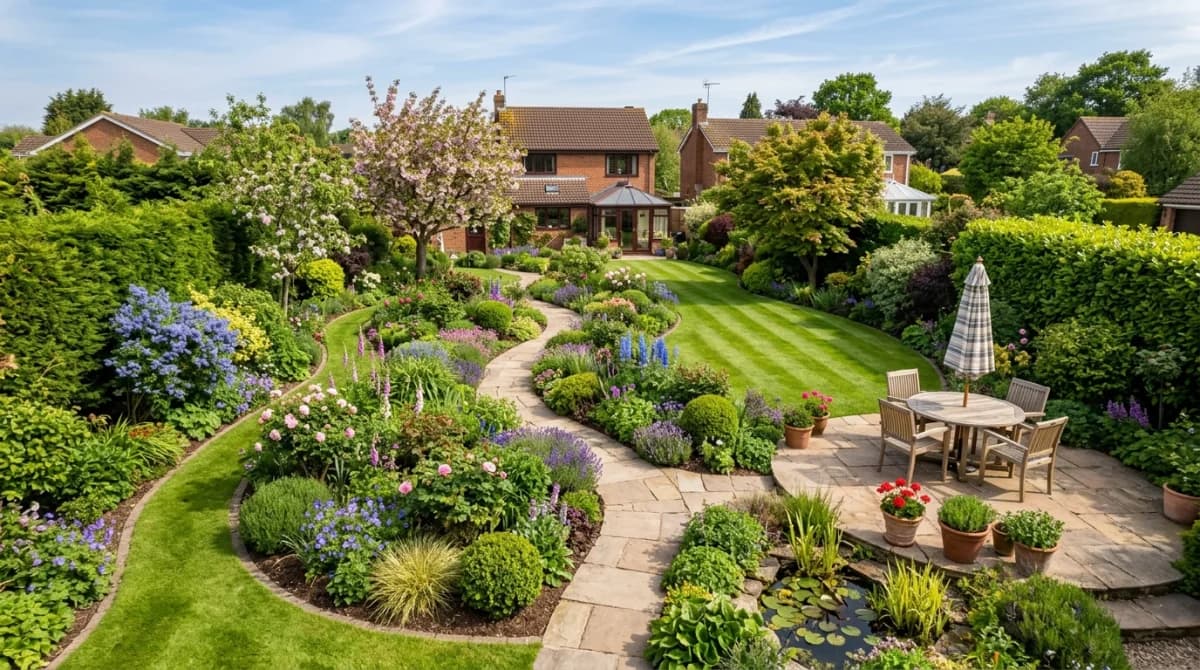
Most gardens grow by accident. You buy a shrub and stick it wherever there’s room. A raised bed goes in the sunniest spot without considering what that does to the rest of the yard. Paths develop where people walk through the grass. A decade later, the garden is a collection of individual decisions that never added up to a coherent whole.
A planned layout changes everything. It makes small yards feel bigger, large yards feel intentional, and every square foot work harder. Planning doesn’t mean rigid or formal; it means making conscious decisions about where things go and why before you dig the first hole.
If you want a fast visual starting point, use an AI garden design from photo to test bed shapes, paths, and planting zones on your actual yard, then refine the layout with the steps below.
You don’t need a landscape architecture degree. You need a tape measure, some observation, and a willingness to think about your space before filling it.
Start With What You Have
Measure Your Space
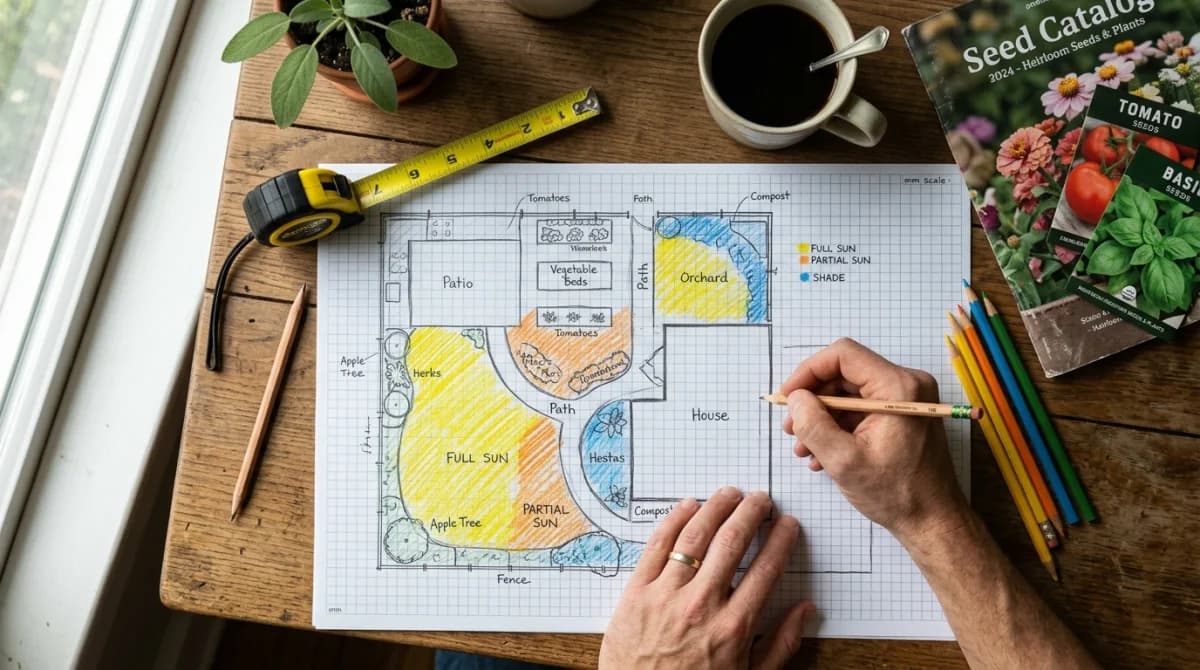
Walk your property with a tape measure and sketch the outline on graph paper (one square equals one foot is a standard scale for home gardens). Include:
- Property boundaries and fences
- The house footprint, including doors, windows, and outdoor faucets
- Existing trees, shrubs, and beds you plan to keep
- Hardscape: driveway, patio, paths, shed, garage
- Utilities: AC units, meters, septic system, overhead wires
This base plan is your canvas. Everything else gets designed around these fixed elements.
Track the Sun
Sun patterns dictate what goes where. Spend a day noting which areas get full sun (6+ hours), partial sun (3 to 6 hours), and full shade (less than 3 hours). Mark these zones on your base plan.
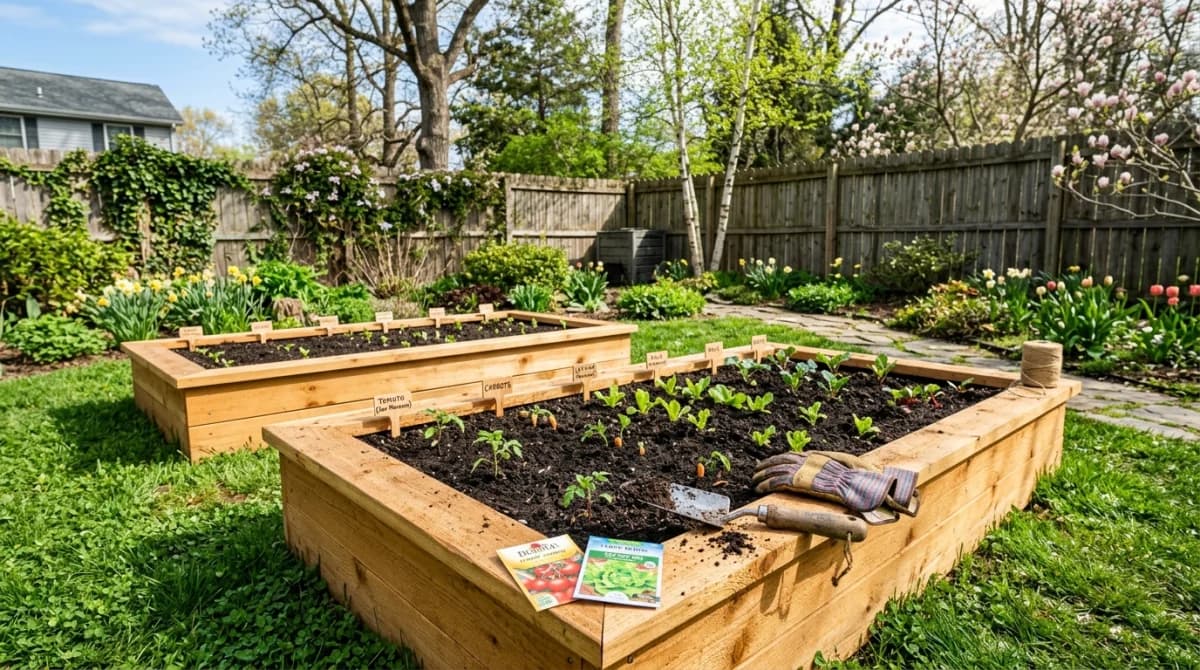
Remember that sun patterns change through the season. A spot that gets full sun in June may be shaded by a neighbor’s tree in September. The April and May patterns matter most for deciding where to put spring plantings and vegetable gardens.
Identify Microclimates
Every yard has them. A south-facing wall radiates heat and creates a warm microclimate perfect for tender plants. A low-lying area collects cold air and stays frosty longer in spring. A spot sheltered from wind by a fence or hedge is calmer than exposed areas.
These microclimates are assets. Design to take advantage of them rather than fighting them.
Create Zones
Divide your garden into functional zones based on how you use the space and how often you visit each area.
Zone 1: The Doorstep
The area immediately outside your most-used door. This is the space you see every day and access most frequently. Put your herb garden, favorite containers, and highest-impact seasonal color here. It should always look good because you can’t avoid seeing it.
Zone 2: The Main Garden
The areas you use regularly: entertaining space, play area, main flower borders, vegetable garden. These deserve the most design attention because they get the most use. Keep them accessible with clear paths and close enough to water and power for practical maintenance.
Zone 3: The Background
The far corners, side yards, and back boundaries. These areas are seen from a distance and visited less frequently. Use them for lower-maintenance plantings, screening, compost bins, tool storage, and wildlife habitat. They should look good from the main garden but don’t need the same level of detail.
Plan Paths and Access
Paths are the most underappreciated element in garden design. Good paths make a garden feel inviting and functional. Bad paths (or no paths) make it feel chaotic and hard to use.
Design for How People Actually Move
Watch where you and your family naturally walk. Those desire lines tell you where paths should go. Fighting natural movement patterns with awkward routing means people will ignore the paths and walk across the garden anyway.
Functional Widths
- Primary paths (driveway to front door, patio to garden): 4 to 5 feet wide, with room for two people side by side.
- Secondary paths (between garden beds, to the compost bin): 3 feet wide, comfortable for one person with a wheelbarrow.
- Maintenance paths (between vegetable rows, access behind beds): 18 to 24 inches, enough to walk and kneel.
Materials
Match the path material to its use:
- Heavily used paths: Flagstone, brick, poured concrete, or pavers. Durable, low-maintenance, usable in all weather.
- Garden paths: Pea gravel, crushed stone, or wood chips. Less formal, less expensive, easy to install and change.
- Stepping stones through beds: Flat stones set in mulch or ground cover. Casual, practical, easy to reposition.
Design for Year-Round Interest
A garden that peaks in June and looks empty for eleven months is poorly designed. Layer elements that provide interest across all four seasons:
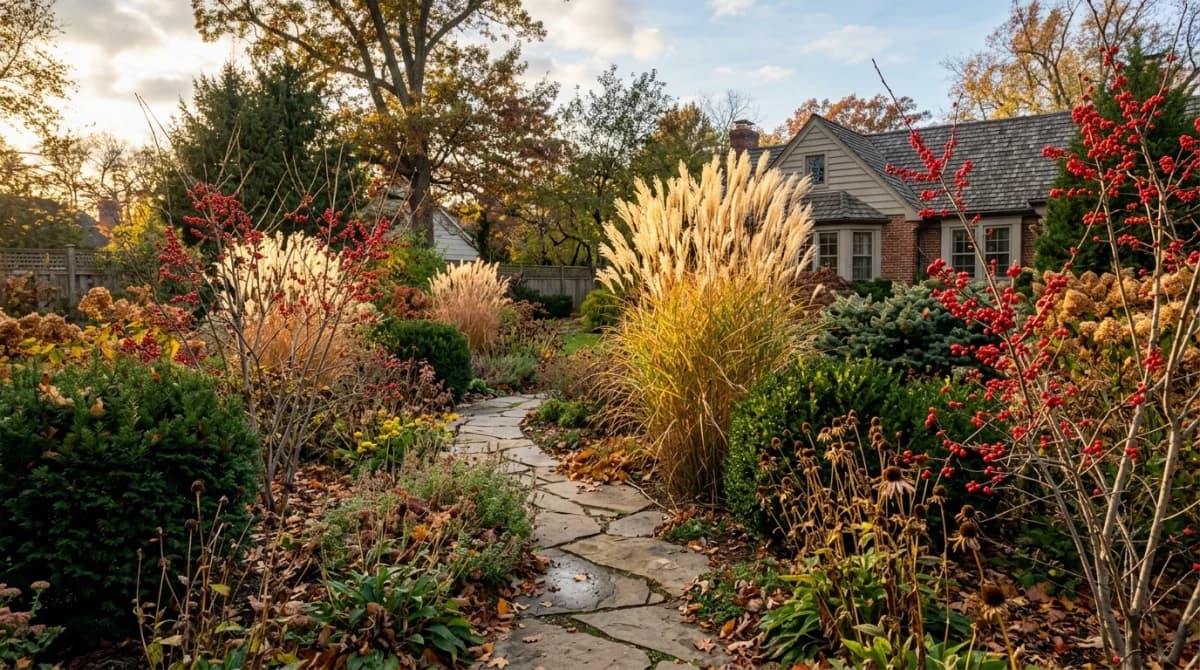
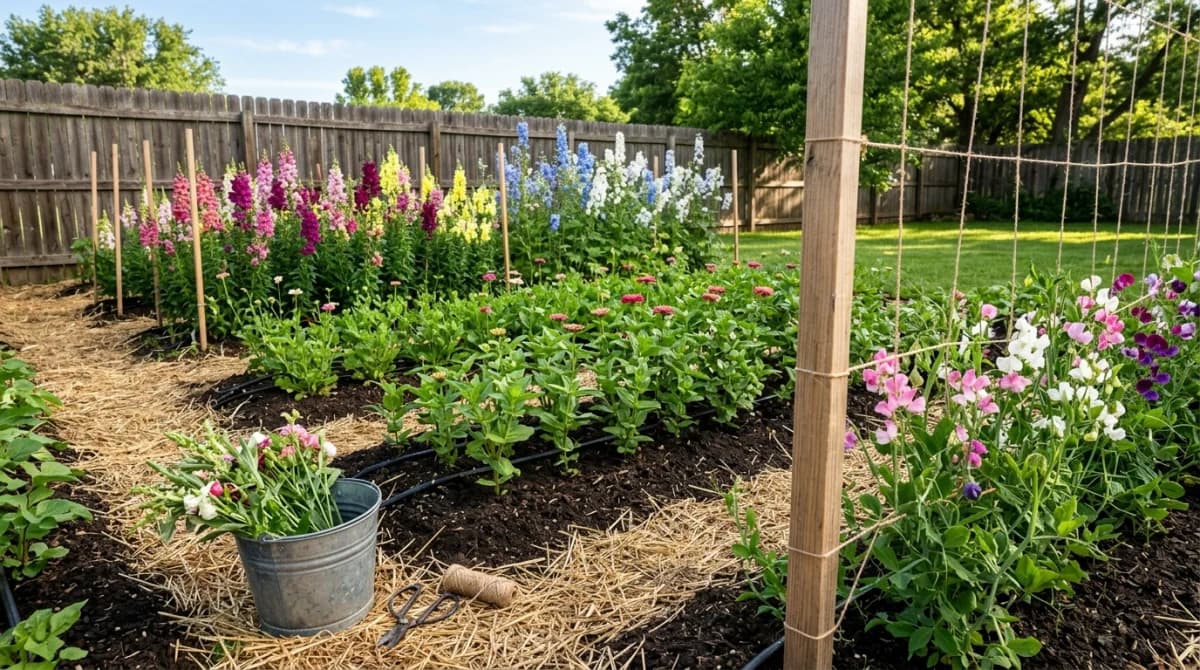
Spring: Bulbs, flowering trees, early perennials Summer: Peak perennial bloom, annuals, vegetable garden in full production Fall: Ornamental grasses, seed heads, fall color from trees and shrubs Winter: Evergreen structure, ornamental bark, berries, dried grasses
The trick is making sure every area of the garden has at least one element providing interest in each season.
Common Layout Mistakes
Everything Against the Fence
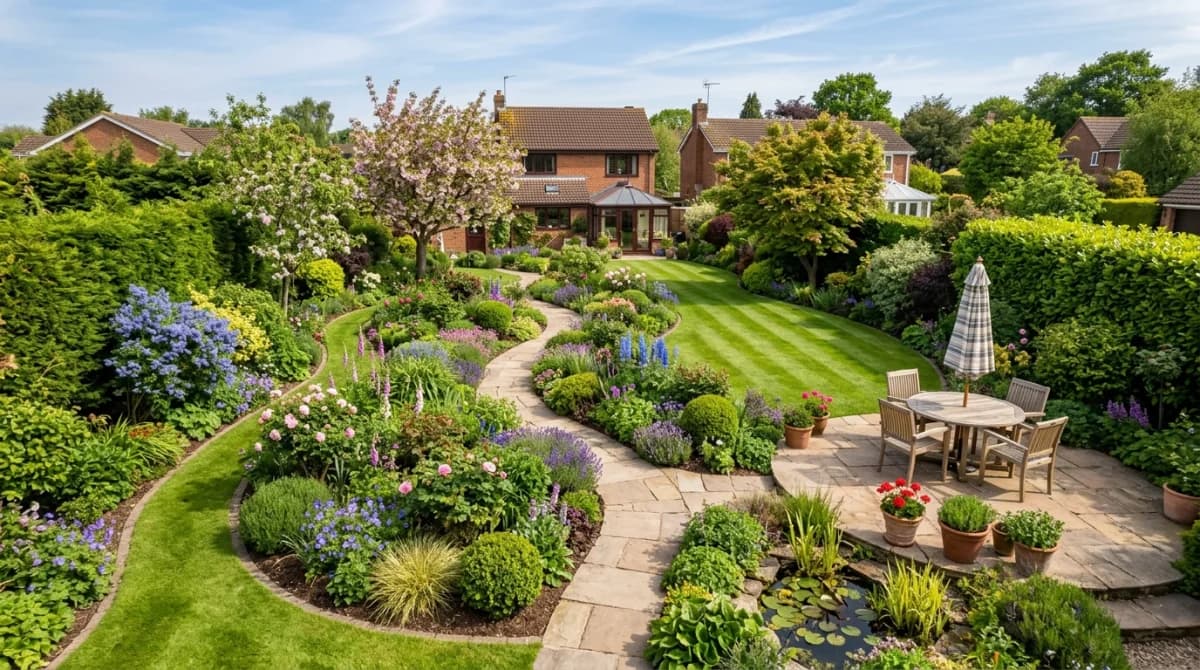
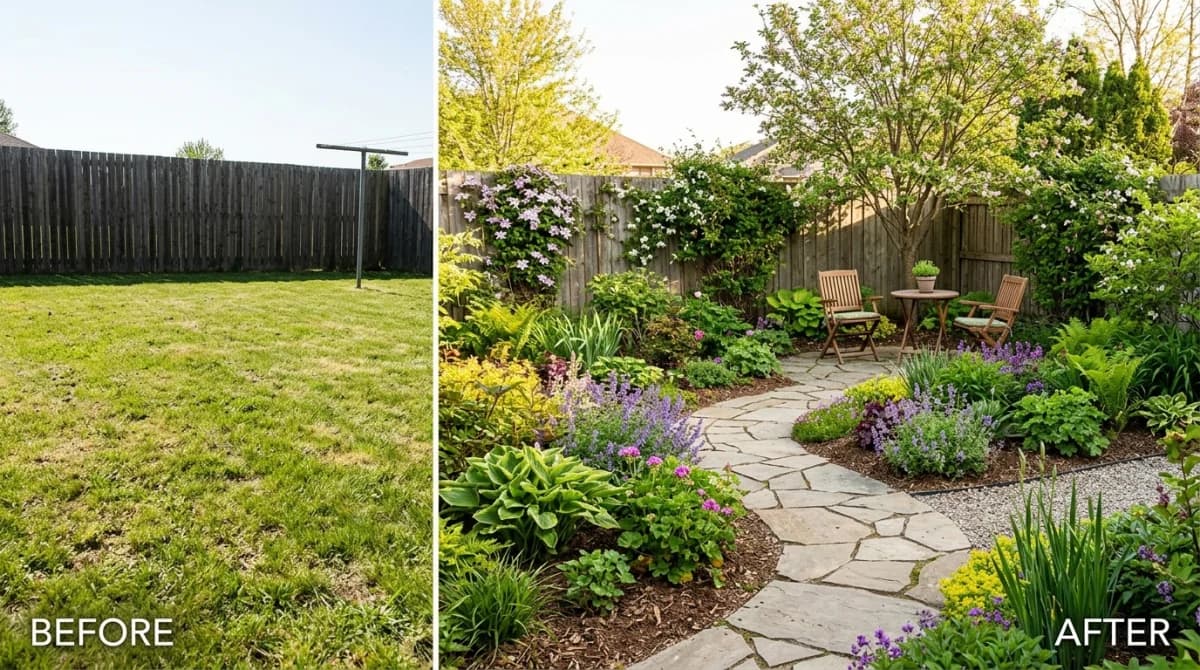
Pushing all the planting to the perimeter and leaving an empty lawn in the middle is the default for most yards. It makes the garden feel like a green picture frame around nothing. Instead, bring planting into the yard with island beds, a single ornamental tree, or a pathway that curves through the space.
No Focal Point
Every view from a window or sitting area should land on something intentional: a specimen tree, a water feature, a bench, a beautiful container, an arbor. Focal points give the eye a destination and make the garden feel designed rather than random.
Ignoring Scale
Small gardens need small-scale plants and fine-textured materials. A 6-foot arborvitae in a 10-foot-wide yard overwhelms the space. Conversely, large gardens need bold plants and large-scale features to feel proportional. Match the scale of your plantings to the scale of your space.
Forgetting About Maintenance Access
Can you get a wheelbarrow to the compost bin? Can you reach the center of every bed without stepping in it? Can you access the faucet to water? Design for practical use, not just visual beauty.
Too Many Materials
Mixing flagstone, brick, gravel, concrete, river rock, and railroad ties in one small garden creates visual chaos. Pick two or three complementary materials and use them consistently throughout the garden.
Visualize Before You Dig
The most expensive mistake in garden design is building something and then deciding you don’t like it. A flagstone patio in the wrong spot costs thousands to move. A tree planted too close to the house becomes a problem for decades.
This is where design visualization matters. Sketching on paper is a start, but tools like Gardenly let you experiment with layouts in your actual space, trying different bed shapes, plant placements, and structures before committing to anything. Moving a bed on screen takes seconds. Moving a bed in the ground takes a weekend.
Start With One Area
You don’t have to design the entire garden at once. Start with the area you use most or the one that bothers you most. Create a detailed plan for that space, implement it, live with it for a season, and then move on to the next area.
Incremental improvement guided by an overall vision beats trying to do everything at once. The overall vision keeps each piece coherent with the rest, even if it takes years to implement the full plan.
A well-planned garden feels bigger than it is, works better than it should, and looks better every year as the plants fill in and the design comes to life. The time you spend planning saves tenfold in plants you don’t have to move, structures you don’t have to rebuild, and frustration you don’t have to feel.