Plant Your Dahlias Out This Week for Blooms from August to Frost
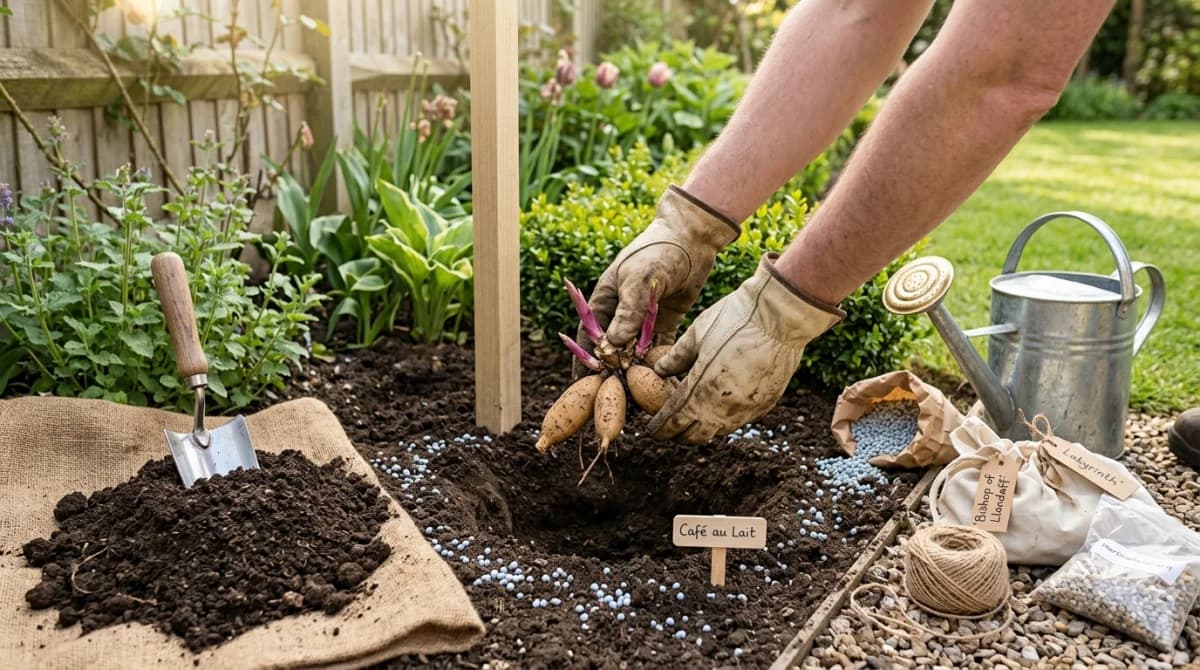
A dahlia tuber is one of the few plants that gives the patient gardener almost exactly what they were promised. Put a healthy tuber in the ground in mid-May at the correct depth, with a stake driven on the same afternoon and a ring of slug pellets around the spot, and you can mark a date eight to ten weeks ahead on the calendar for the first bud. By late July the plant is three feet tall and starting to set; by the second week of August it is in full flower; and from that point onward it carries the garden, without flagging, until a frost in October ends the show. There is no other tuber, bulb, or perennial that gives the second half of the season such a long and reliable run, and yet most gardeners who lose dahlias lose them not to disease or weather but to one of three avoidable mistakes on planting day.
The second week of May is the textbook moment to plant dahlias out across most of the temperate growing zones. Dahlia tubers are frost-tender — a late frost on emerging shoots is fatal — but the tubers themselves rot in cold, wet soil, which means planting before the soil reliably holds 60°F at four inches deep is an exercise in inviting tuber rot. In zones 6 and 7, the eight-inch soil temperature crosses 60°F in the second week of May in most years. In zone 5 and colder, wait one more week. In zones 8 and 9, you are slightly late but not problematically so. The planting window closes around the first week of June; tubers planted after that will flower, but the season runs short at the back end and the plant has not had time to bulk up properly before the days shorten.
Pick the Right Site First
Dahlias are not subtle about their requirements. They want full sun — at minimum six hours of direct light, and they perform visibly better at eight — and they want soil that drains. A spot that puddles for half a day after a heavy rain is the wrong spot. The plant tolerates heat, drought once established, and a wide range of soil pH, but standing water on the tuber crown for forty-eight hours rots the centre of the tuber and ends the season before it starts.
A useful test on the morning of planting: dig the hole, fill it with water from a watering can, and time how long the water takes to drain. Under fifteen minutes is good. Fifteen to thirty is workable. Over thirty means the spot needs amending with grit and compost, or the plant needs to go somewhere else. The single most common cause of a dahlia tuber that simply never emerges is not a dead tuber but a drowned one.
The other site consideration is air. Dahlias get powdery mildew on the lower leaves in August and September when planted into still corners against fences, where air pools and dew sits for hours after sunrise. A spot with some passing air movement — the side of a path, the open end of a border, the windward side of a vegetable bed — stays markedly cleaner. The plant does not need a windy site; it needs a site where air moves through rather than around the planting.
Planting Depth and Spacing
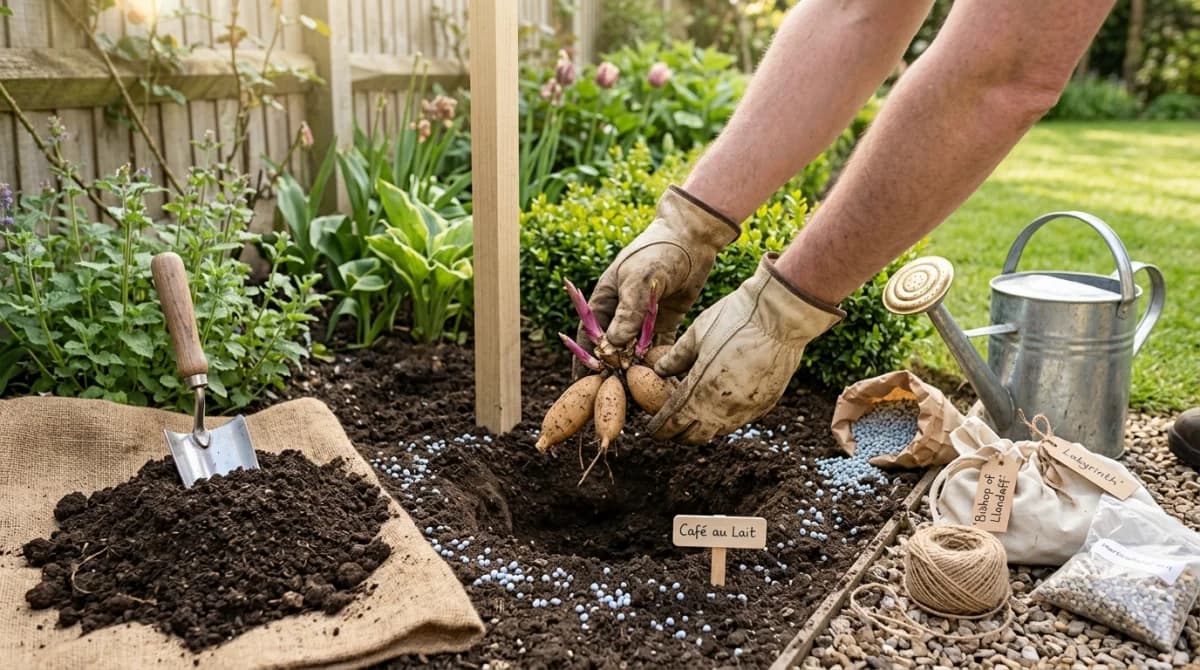
Dig the hole six inches deep and roughly twelve inches across — deliberately wider than the tuber. Sit the tuber in the hole so that the central crown, where the pink sprouting eyes are emerging, sits four inches below the final soil surface. Lay the tuber on its side with the eyes pointing upward; the long fingers of the tuber radiate out from the crown like the spokes of a flat wheel. There is no need to bury the tuber any deeper than this — deeper planting simply delays emergence by a week or more without improving the plant. Backfill with the soil you removed, mixed with a generous trowelful of mature compost and, if the soil is heavy clay, a handful of horticultural grit.
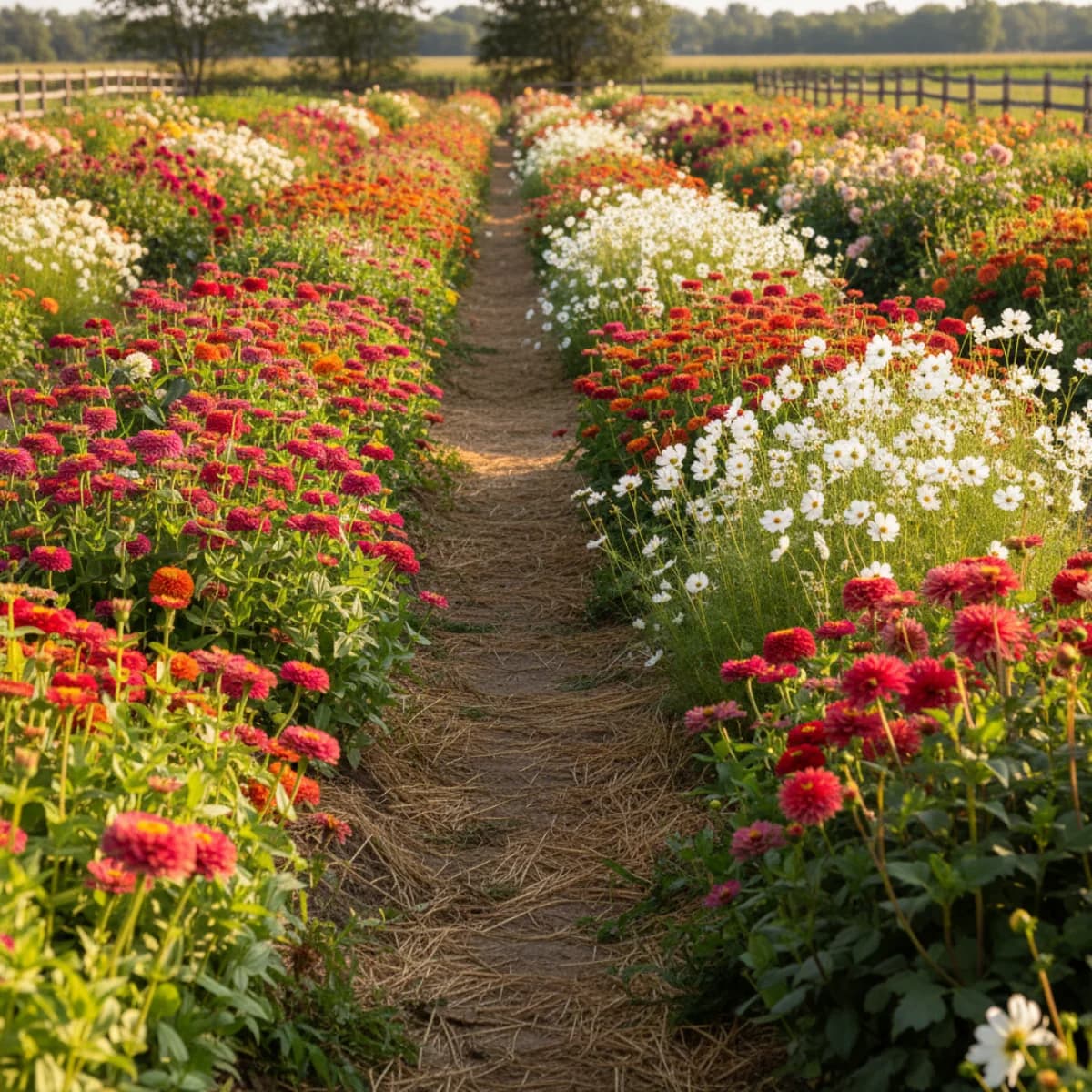
Space tubers at the distance recommended on the supplier’s label for that variety, which usually falls between eighteen inches for smaller bedding types like ‘Bishop of Llandaff’ and ‘Happy Single Wink’ and thirty-six inches for the giant decoratives like ‘Café au Lait’, ‘Labyrinth’, and the dinnerplate types. The temptation is always to plant tighter, particularly when the soil looks empty in May. Resist it. By late July the plants will have filled in completely; a row of dahlias planted at proper spacing looks like nothing for six weeks and then becomes a wall of bloom that you can walk between for cutting.
Drive the Stake on Day One
This is the single most consequential decision on planting day and the one most commonly skipped. A dahlia in full bloom in September is a plant five feet tall, top-heavy with flowers and water-loaded leaves, growing from a brittle hollow stem that snaps in a thunderstorm — and the tuber underneath has thrown a network of fragile feeder roots that fill the planting hole in every direction. Driving a stake through that root system in August, when the plant has already become unstable, severs roots and often ends the season.
Drive a hardwood stake — a one-by-one-inch square stake, four feet of it above the soil — into the back of the planting hole before you set the tuber. The stake sits two to three inches behind the tuber crown, driven a foot deep into firm soil. As the plant grows, tie the main stem loosely to the stake every twelve inches with soft twine, using a figure-of-eight tie that lets the stem move without chafing. By the time the plant reaches its full height, it is climbing a stake that has been there all along, and a late-August thunderstorm passes through without breaking anything.
For larger varieties — anything sold as ‘dinnerplate’, ‘giant decorative’, or growing taller than four feet on the label — use three stakes in a triangle around the planting position with twine threaded between them as the plant grows. This is the structure professional cut-flower growers use, and it is the difference between a dahlia row that stands through October and one that collapses in the first gusty week of September.
Slugs Find Emerging Dahlias First
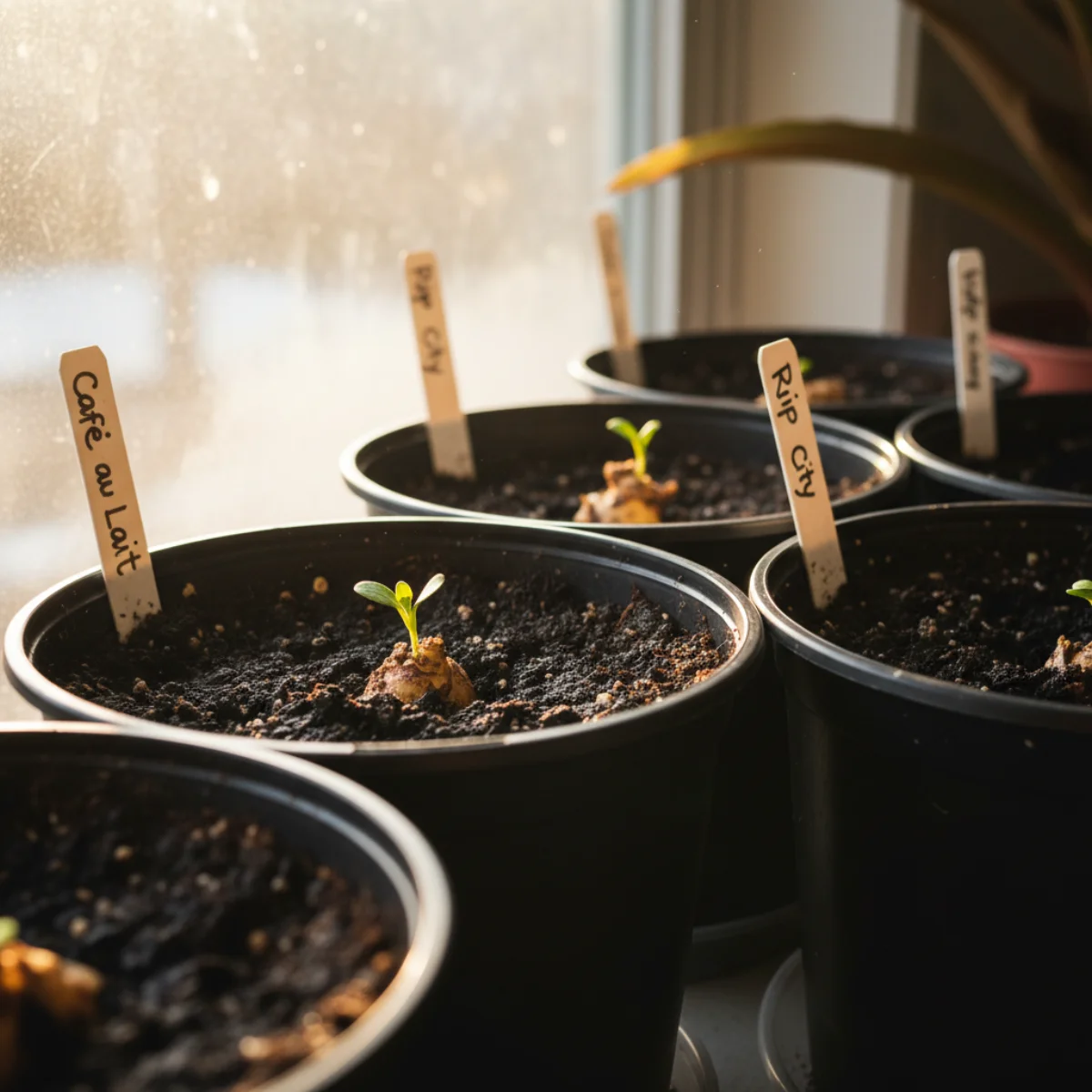
A dahlia tuber underground is invisible to slugs. The moment the first pale shoot pushes above soil — usually ten to fourteen days after planting in mid-May — slugs locate it overnight and can eat the entire emerging shoot down to the soil in a single night. The plant then attempts to push a second shoot, which is also eaten, and the tuber slowly exhausts its stored energy producing shoots that never get above ground. By the time the gardener notices, in early June, the tuber is fatally weakened and the season is lost.
The fix is straightforward and must be done on planting day, before any shoots emerge. Three options, in rough order of effectiveness:
- Ferric phosphate slug pellets, scattered in a six-inch ring around the planting spot. Safe around pets and wildlife, broken down by rain into iron and phosphate that the soil absorbs as fertilizer. Re-apply after heavy rain. This is the standard professional approach in cut-flower production and the easiest fix in a domestic garden.
- A copper ring pushed into the soil around the planting spot. Effective and permanent, but expensive and only practical when planting a small number of named tubers.
- A daily evening slug patrol with a torch for the first three weeks after planting, picking slugs off the soil around the spot. Effective if you do it every single evening; one missed evening is enough.
Whichever method, the critical window is from planting day until the shoots are six inches above the soil. After that the stems are tough enough that slugs lose interest. Lose the plant in this window and there is no second chance; protect it through this window and the rest of the season is dahlia season.
Hold Off the Water
A planted dahlia tuber does not need watering until the first shoots are visible. The tuber holds its own moisture, and adding water to a cold May soil around a dormant tuber is the most reliable way to rot it. Water the planting hole once on the day of planting to settle the soil, and then do not water again until shoots are showing — usually ten to fourteen days later. Once shoots are up and growing, dahlias want a thorough weekly soak rather than a daily sprinkle: a deep watering pushes roots down, while shallow daily watering keeps the root system at the surface and produces a plant that wilts in the first heatwave.
From early July onward, when the plant is approaching flowering size, switch to a weekly drench with a high-potassium tomato feed at half the strength recommended on the bottle. The same feeding regime that produces good tomatoes produces good dahlias, for the same reason: both plants are heavy bloomers that respond strongly to potassium during bud production.
Pinch the Tip at Four Pairs of Leaves
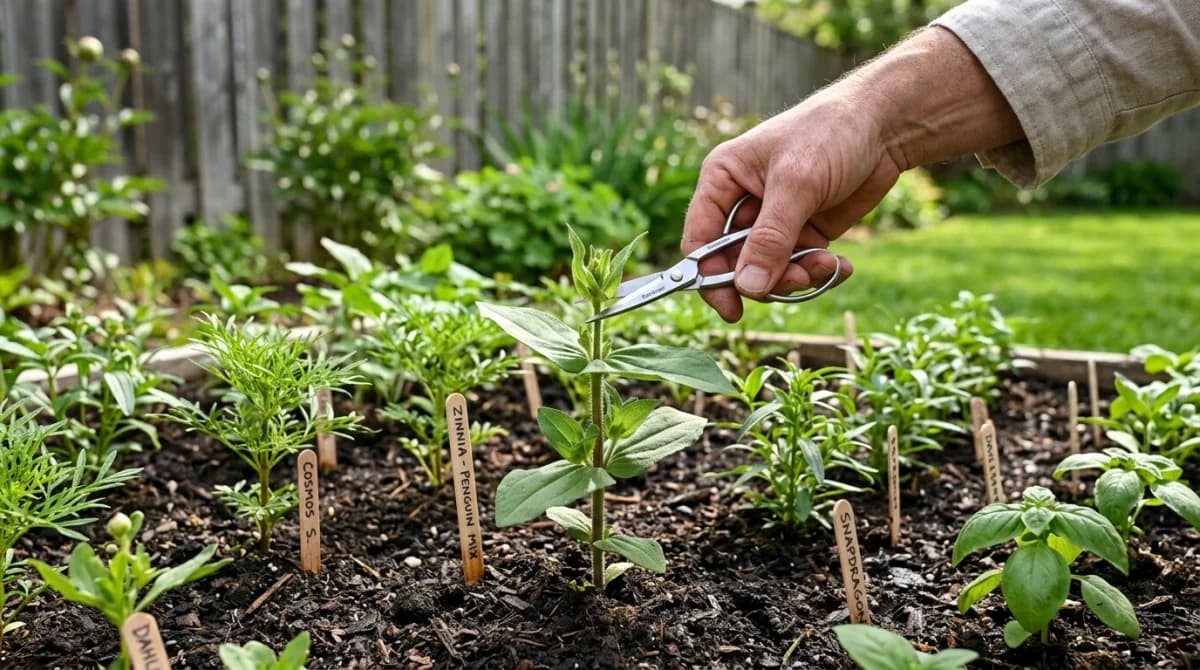
When the plant reaches four pairs of true leaves — usually around the first week of June — pinch out the very top growing tip, cleanly with thumb and forefinger, just above the fourth pair. The plant responds by producing side branches from each leaf node below the pinch, doubling or trebling the number of flowering stems. An unpinched dahlia produces one large central flower per stem on a long unbranched plant; a pinched dahlia produces a bushy plant with six to ten flowering stems, each carrying multiple buds. For garden display the difference is significant; for cut flowers it is the difference between a hobby row and a productive cutting patch.
The pinch costs the plant about a week of growth and is repaid many times over by the end of July. There is no good reason not to do it on every dahlia destined for cutting or for visible border display.
Common First-Year Mistakes
Three patterns account for most lost dahlias in their first year:
- Planting too early into cold wet soil. The tuber rots before it sprouts. Wait for the soil to warm; the lost two weeks are made up in faster growth once the plant gets going.
- Not staking until the plant needs staking. By the time a dahlia visibly needs support, it is too late to drive a stake without damaging the root system. Stake on planting day, every time, without exception.
- Ignoring slugs at emergence. This is by far the most common single cause of a tuber that “never came up”. It came up; something ate it on the second night. Protect aggressively for the first three weeks.
Get those three things right and the plant largely takes care of the rest. Dahlias are not difficult; they are simply unforgiving of the wrong start.
If you are uncertain whether a corner of your border gets enough light to support dahlias, or whether a planting row will read well against the rest of the bed once the plants reach full height, Gardenly can place dahlia rows on a photo of your garden and preview the planting at August scale, including the typical mature heights of the variety you have chosen. Useful for deciding between the back of the border, where a five-foot ‘Café au Lait’ belongs, and the middle, where a two-foot ‘Bishop of Llandaff’ earns its place.
Sources
- Royal Horticultural Society — Dahlias: Growing Guide
- Oregon State University Extension — Dahlias for Home Gardens
- Penn State Extension — The Dirt on Dahlias
- Cornell Cooperative Extension — Dahlia Production