Do the Chelsea Chop This Week to Stop Your Late-Summer Perennials Flopping
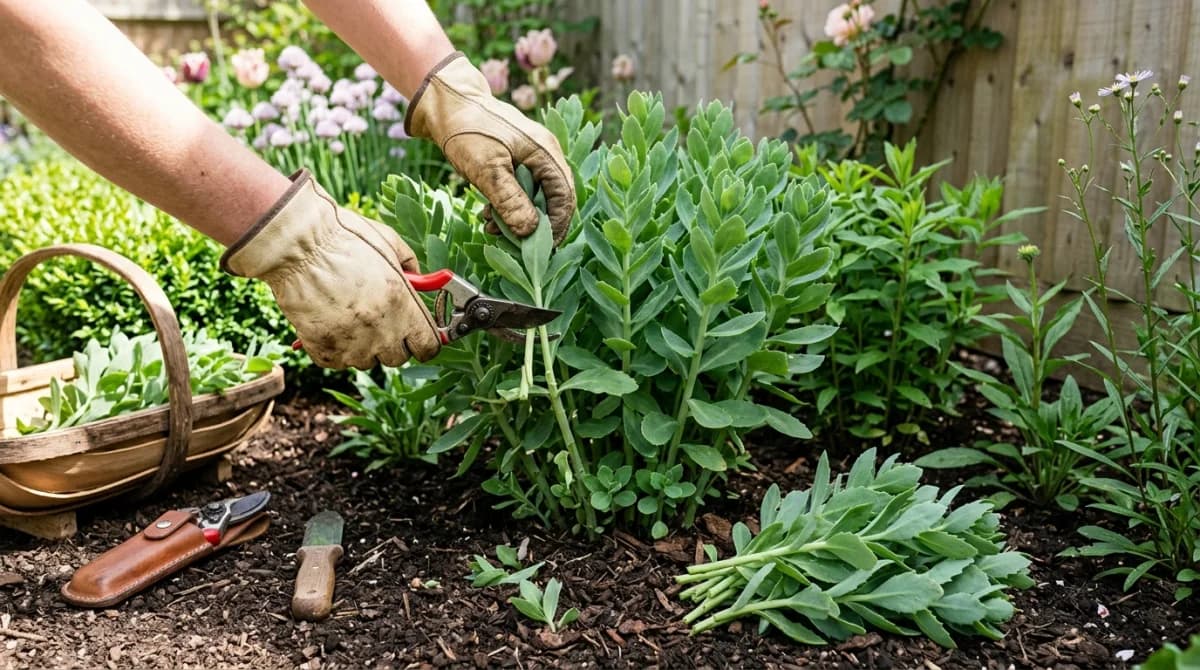
The Chelsea chop is one of those techniques that sounds wrong until you have done it once. The idea is to walk into the border in mid- to late May, when your sedum is a tidy fifteen-inch dome of fresh grey-green leaves and your phlox is a knee-high column of healthy growth, and cut the top third of every stem off with a pair of secateurs. The plant, which a moment ago looked like the picture of perennial health, now looks like it has been hit with a strimmer. For ten days it looks even worse — the cut tips brown slightly, the plant stands shorter than its neighbours, and you spend that fortnight quietly wondering whether you have just ruined a clump that took three years to establish.
You have not. By the second week of June the chopped clump puts out a flush of side branches from below each cut, doubles its number of growing tips, and ends the season noticeably shorter, denser, sturdier, and crucially still upright in September. The unchopped clumps in the same border, by contrast, hit four feet by August, splay open in the first heavy rain, and spend the rest of summer face-planting onto the lawn no matter how many grow-through hoops you stuff under them.
The technique is named for the Chelsea Flower Show, held at the Royal Hospital Chelsea in London during the third week of May, which falls — by coincidence and not design — at almost exactly the right moment in the season for this kind of cutback in most of the temperate northern hemisphere. The second week of May is early but legitimate; the last week of May is the textbook moment; the first week of June is the latest you can do it without pushing the bloom unhelpfully late.
What the Chop Actually Does
A herbaceous perennial in May has a fixed budget of buds for the season. Left alone, that budget is spent producing tall stems with a single large terminal flower head per stem, blooming on the schedule the plant has decided. Cut a stem back, and the plant responds by activating dormant buds lower down, producing two or three side branches from each cut point, each carrying its own flower head. The new flower heads are smaller individually, more numerous in total, and bloom one to three weeks later than the unchopped version of the same plant.
That delay is not a bug. The default bloom window for many late-summer perennials — sedum in early September, phlox in mid-July, helenium in late July — falls on the early side of when most gardens actually want them in flower. A two-week delay pushes phlox into the moment when the early-summer perennials are fading, and pushes sedum from “still mid-September” into October just as fall is starting, when almost nothing else is doing anything useful. The Chelsea chop is, in effect, a free succession-bloom adjustment performed without buying a single extra plant.
The shorter, denser habit is the second prize. A four-foot phlox is an attractive plant for about ten days at peak bloom; for the rest of the season it is a long stem with leaves at the bottom and a leaning flower head at the top, prone to powdery mildew at the base where air circulation is poor. A chopped phlox stays at two-and-a-half feet, branches densely from the middle, holds its flowers level with the gardener’s hand, and stays markedly cleaner because air moves through the plant rather than around it.
What to Chop
The technique works on herbaceous perennials that flower on new wood produced this season, late enough in summer that they have time to recover and rebloom. The reliable list, in roughly the order they are easiest to be confident about:
- Sedum (now technically Hylotelephium) ‘Autumn Joy’, ‘Matrona’, ‘Purple Emperor’. The textbook subject of the Chelsea chop. An unchopped ‘Autumn Joy’ splays open from the centre by August every single year. A chopped one stays a tidy dome and blooms two weeks later, which often coincides with the first really good monarch and bee activity of late summer.
- Phlox paniculata in any cultivar. Cut by a third and the plant stays under three feet, blooms ten days later, and almost completely sidesteps the powdery mildew that plagues the bottom leaves of unchopped clumps in humid summers.
- Helenium ‘Moerheim Beauty’, ‘Sahin’s Early Flowerer’, ‘Rubinzwerg’. Helenium without the chop reaches five feet and flops sideways the first week of August; with the chop it stays at three feet, blooms in mid-August, and holds itself.
- Echinacea purpurea and its named selections. A chopped echinacea is shorter, branches more, produces noticeably more flower heads, and starts blooming in late July rather than early July.
- Rudbeckia ‘Goldsturm’ and Rudbeckia laciniata. Worth chopping mainly to delay bloom; ‘Goldsturm’ starts in early July if left alone, and if the rest of the border is mid-summer-focused, that is a fortnight too early. A chopped clump pushes the start of bloom into mid-July and holds it longer.
- Aster (now Symphyotrichum) novae-angliae and novi-belgii. This one matters. New England asters chopped in late May stay under three feet by September; unchopped, they grow to five feet, flop the moment a thunderstorm passes through, and bloom only at the very tips. Chopped asters bloom in dense clouds at eye level. There is no contest.
- Monarda (bee balm). Same logic as phlox: chopping reduces height, increases branching, and reduces mildew significantly because air circulates through a denser, shorter plant.
- Veronicastrum, Eupatorium, Solidago, Heliopsis, Leucanthemum ‘Becky’. All respond cleanly to a third off the top in late May.
What Not to Chop
The chop fails on plants that have already set their flower buds for the season, or that flower on previous year’s growth, or that produce only a single flush of bloom. The list to leave alone:
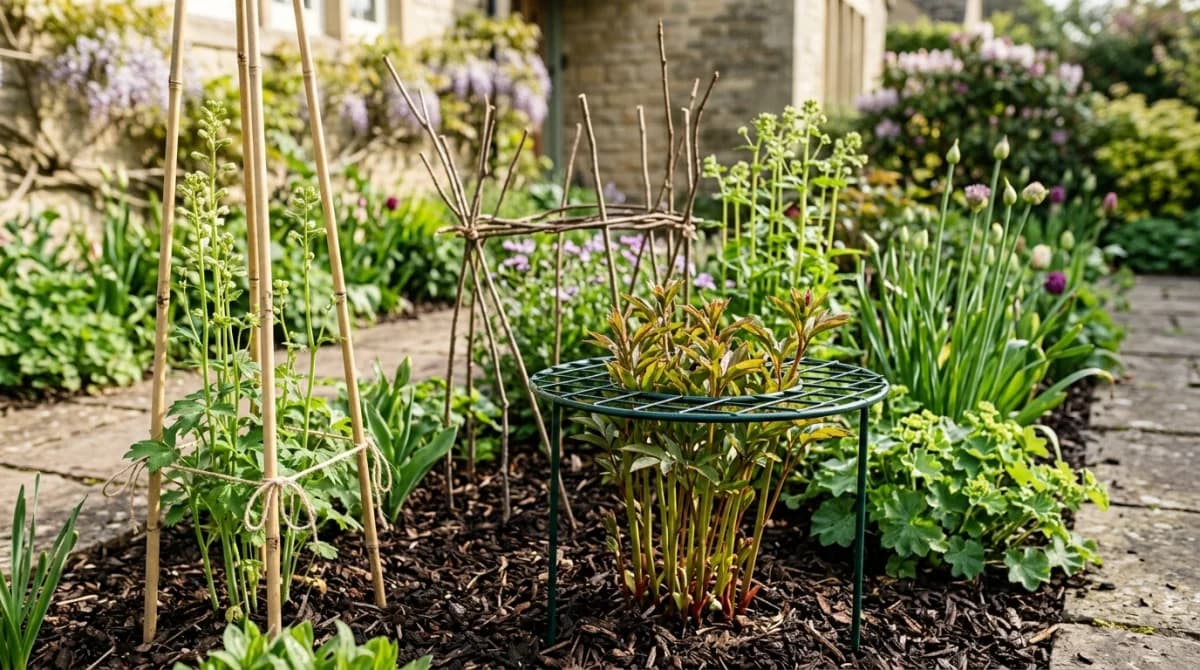
- Peonies. Buds are already swollen on the stems by mid-May. Cutting them off removes this year’s flowers entirely. Stake instead.
- Oriental poppies. Same situation — buds are already on the stems and about to open.
- Bearded iris, Siberian iris. Already in bud or flower.
- Delphiniums. Already producing the flower spike. Stake; do not chop. (After bloom they can be cut hard for a second flush, but that is a different technique called the Chelsea second chop and applies to a smaller set of plants.)
- Roses. Pruned at a different time, on different logic.
- Daylilies, hostas, geraniums in their first flush. Either already in bud or unimproved by the chop.
- Anything that has only ever bloomed once a year for you. If a perennial you grow does not naturally rebloom or branch, cutting it back in May is just removing this year’s flowers.
If in doubt, leave it. The chop is a tool for plants that bloom in late summer or early autumn, not a universal pruning event.
How to Actually Do It
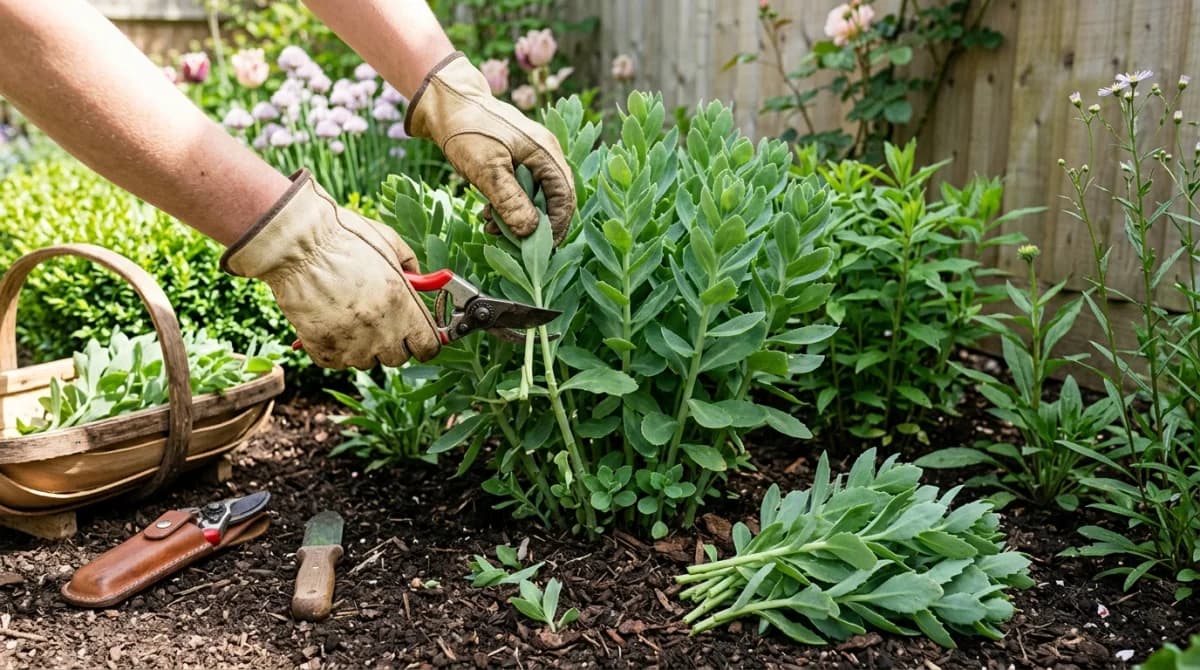
The technique is genuinely simple. Walk the border with a sharp pair of bypass secateurs and a basket or compost bucket. For each clump of a chop-suitable perennial:
- Look at the height of the foliage. A clump ready to chop is between twelve and twenty-four inches tall, depending on the species, with healthy fresh growth and no flower buds yet visible. If buds are already forming, you are too late this year — leave it and stake.
- Cut the top third off every stem. Hold the cluster of stems loosely with one hand and shear across the top with secateurs in the other, taking the same amount off every stem. The cut does not need to be at any particular angle or just above any particular leaf node — perennials are far less fussy about cut placement than shrubs and roses are.
- For a longer bloom window, chop only half the clump. A useful refinement: cut back the front half or one half of a clump and leave the back half untouched. The unchopped half blooms on its normal schedule; the chopped half blooms two weeks later. Total bloom window for that one clump roughly doubles. This is most worthwhile on sedum, helenium, and aster.
- Compost the cuttings. They are clean, soft, leafy material — perfect green compost. They will not regrow if you toss them in the heap.
The whole task, for a typical mixed border with eight to twelve chop-suitable clumps, takes about fifteen minutes. The visual hangover lasts about ten days. The payoff lasts the rest of the season and through to first frost.
A Word on Watering and Feeding After the Chop
A chopped plant is not a stressed plant — it is a plant with reduced foliage and the same root system, which is in fact a position perennials handle well. There is no need to water heavily, mulch differently, or fertilise. The single thing worth doing within a week of chopping is a thorough soak if the soil is dry, simply because the plant will be putting out new side branches over the next ten days and would prefer not to have to draw on dry roots while doing so. Beyond that, leave the plant alone.
Why This Week Specifically
Mid-May is the textbook window for most of the north-temperate world: late enough that the plant has put on enough growth to spare a third of it, early enough that it has eight to twelve weeks to recover, branch, set buds, and bloom before frost. In zones 5 and 6, the second week of May is on the early end but legitimate — the plants are vigorous and will respond. In zones 7 through 9, this same week is solidly in the middle of the window. In zone 4 and colder, wait one more week.
The single failure mode is doing it too late. A chop done in mid-June leaves the plant insufficient time to rebloom before the days shorten and growth slows in late August, and produces a clump that simply blooms small and late instead of richly and on a useful schedule. Earlier in May is fine; June is starting to push your luck; July is too late and produces no flowers at all.
If you are uncertain which clumps in your border will benefit and which to leave alone, Gardenly can tag the perennials in a photo of your border and flag which ones respond well to a Chelsea chop and which to leave standing. Useful as a sanity check before walking out with secateurs, particularly in a mixed border where the chop-suitable plants are interplanted with peonies and irises that absolutely should not be touched.
Sources
- Royal Horticultural Society — The Chelsea Chop
- Missouri Botanical Garden — Pinching and Disbudding Perennials
- Cornell Cooperative Extension — Pruning Herbaceous Perennials
- Chicago Botanic Garden — Pinching Perennials for Better Bloom