How to Prune Roses in Late Winter: The Complete Before-Spring Guide
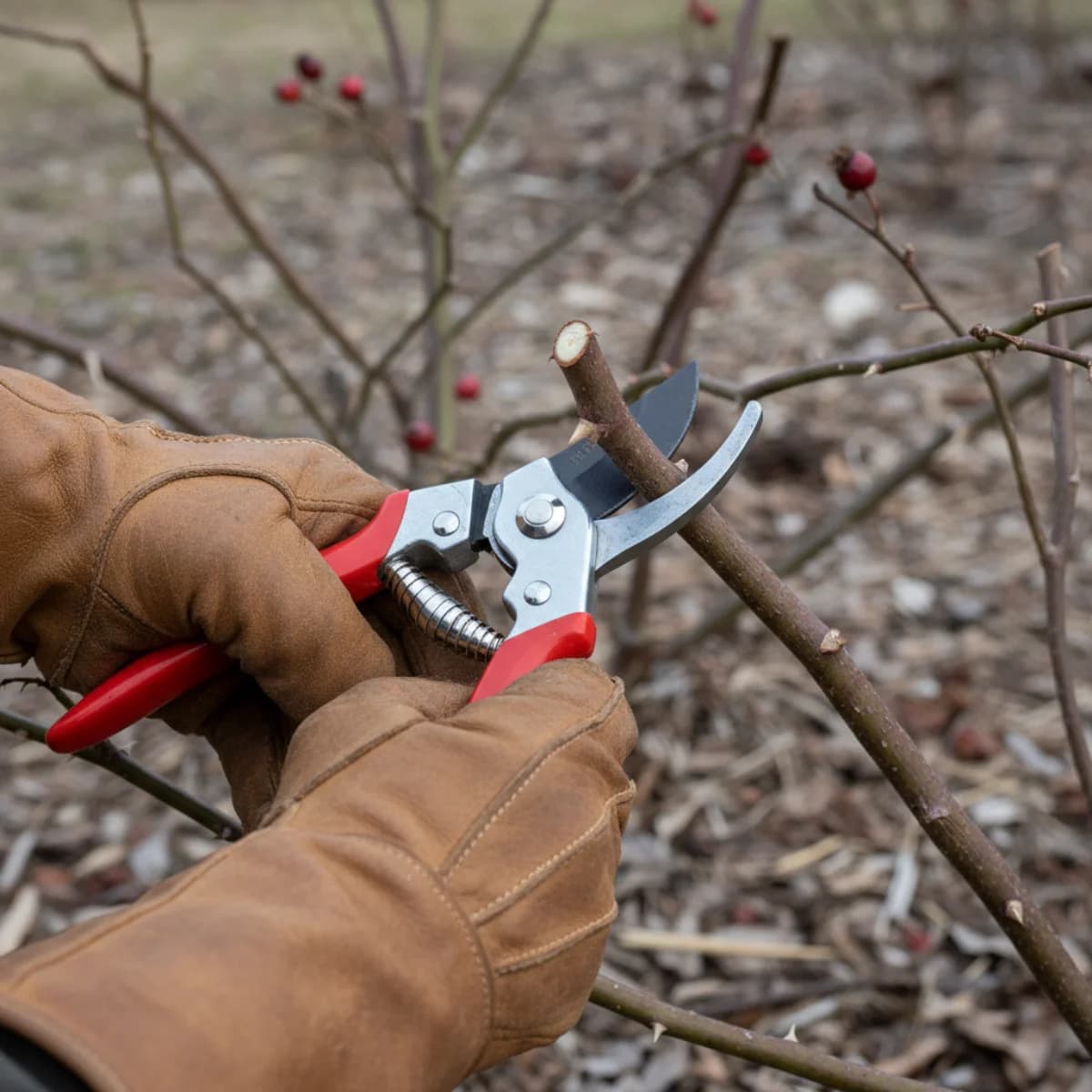
Pruning roses intimidates a lot of gardeners. The thorns don’t help. Neither does the vast and sometimes contradictory advice that exists about when to prune, how hard to cut, and what to remove. The truth is simpler than most rose books make it seem.
The fundamental principle: roses that bloom in summer and fall (which is most roses) bloom on growth they produce this year. Cutting them back in late winter stimulates robust new growth, which means more flowers. The harder you prune (within reason), the more vigorously they respond.
Here’s how to do it.
When to Prune
The classic timing cue: when forsythia begins blooming in your area. This reliable folk calendar works because forsythia and roses respond to similar temperature cues—forsythia blooms when the risk of severe late-season cold has passed but before growth season is really underway. Prune roses when forsythia flowers.
Other indicators:
- Bud swell: When you see fat, red swelling buds beginning to break dormancy on rose canes, it’s time
- Zone-specific timing: Zone 7+ (February–March); Zone 5-6 (March–April); Zone 3-4 (April)
The risk of pruning too early: late cold snaps can damage exposed new growth from cut ends. But this is rarely catastrophic—roses regenerate. The risk of pruning too late: you’re cutting off growth the rose already invested energy in. Both errors are recoverable.
Before You Start: Tools and Prep
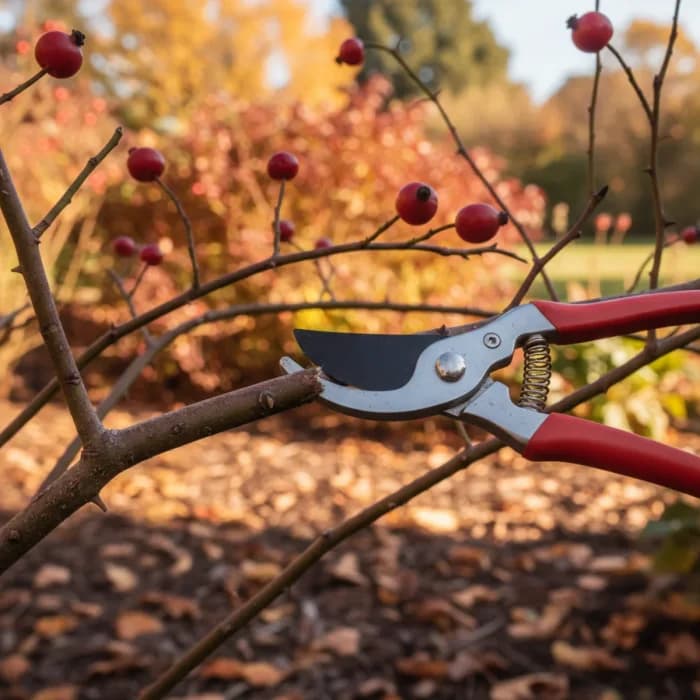
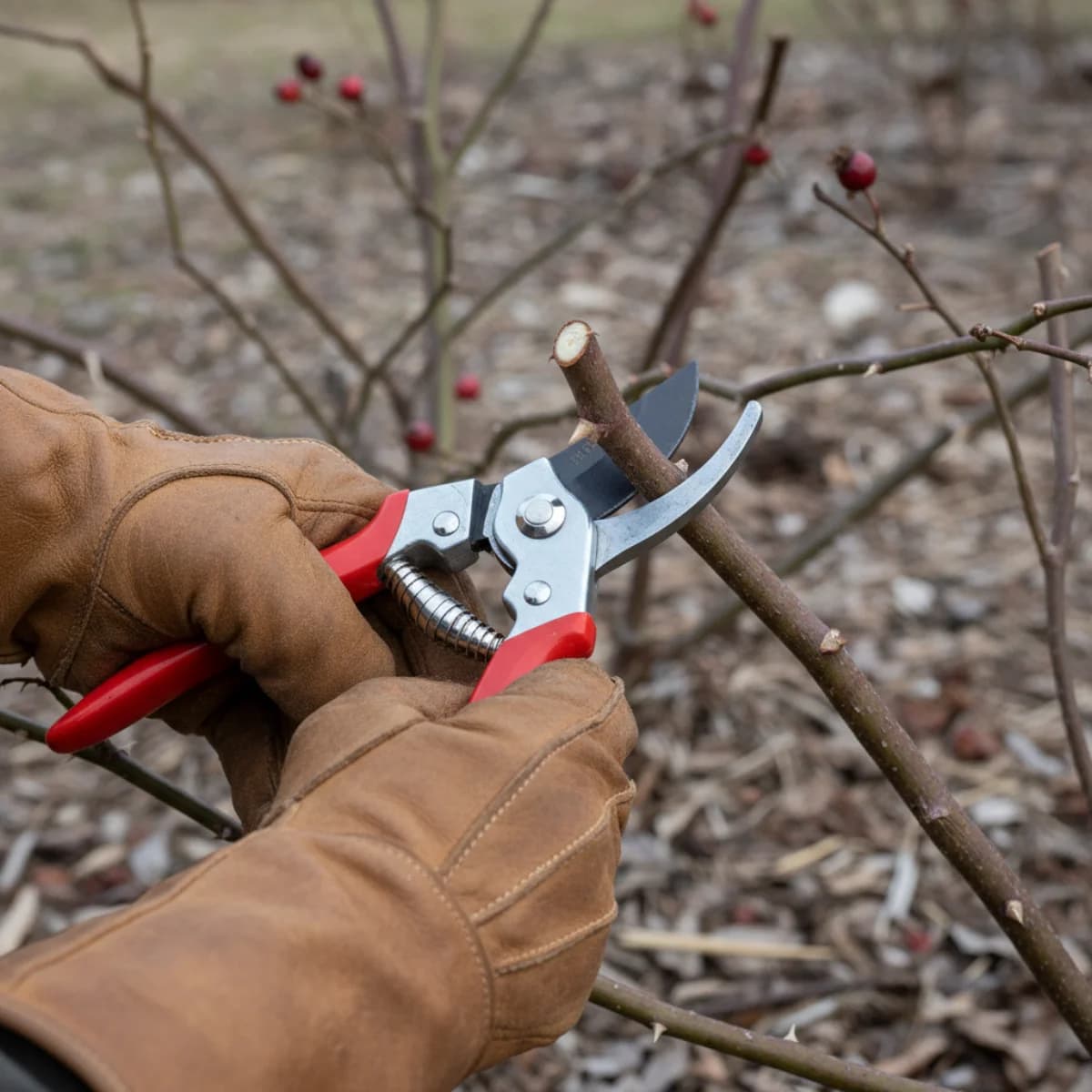
Bypass pruners: Essential. Bypass action (like scissors) cuts cleanly; anvil pruners (blade closes against a flat surface) crush stems. Clean cuts heal faster. Felco, Bahco, ARS—any quality brand is worth the investment.
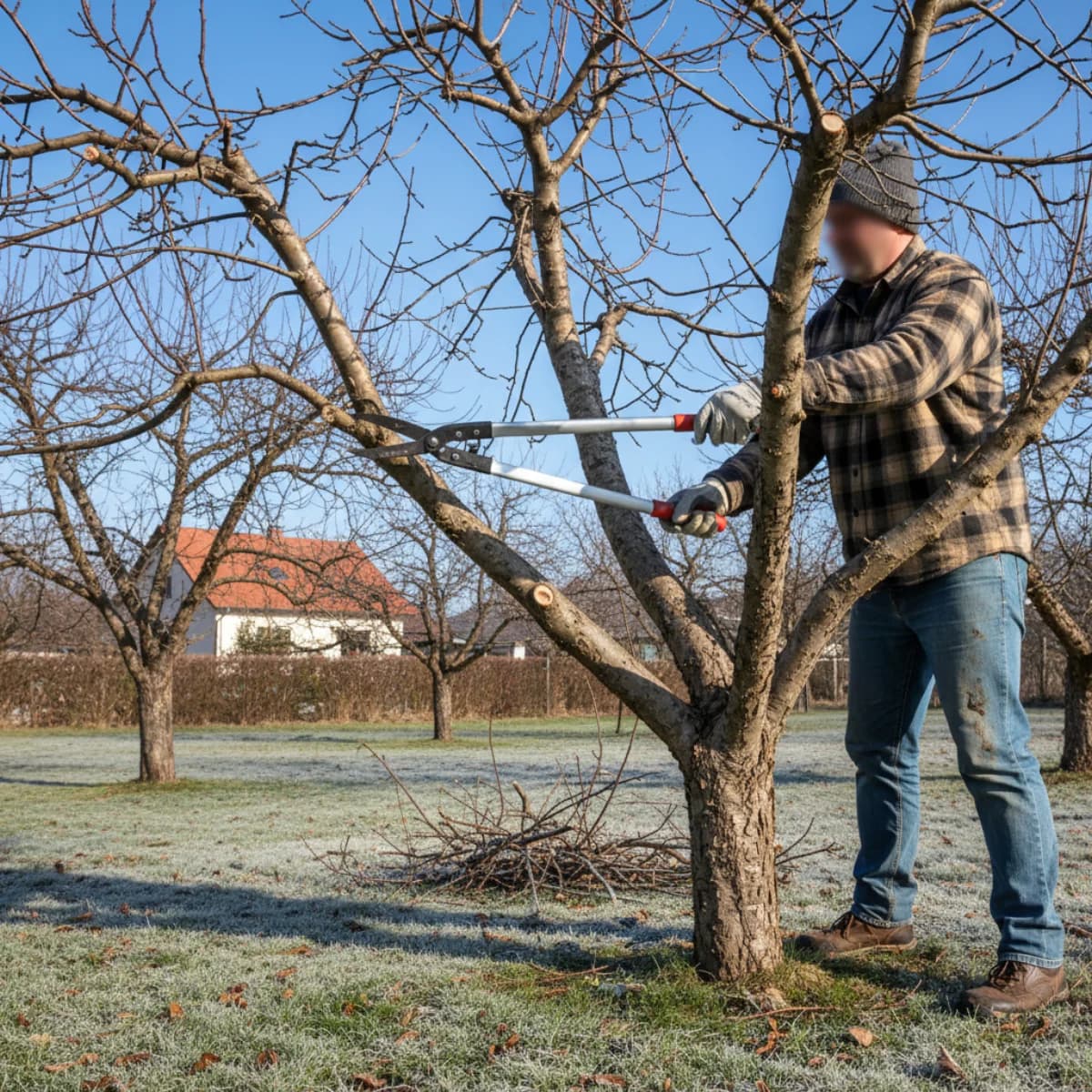
Loppers: For canes thicker than ¾ inch. Long handles give leverage.
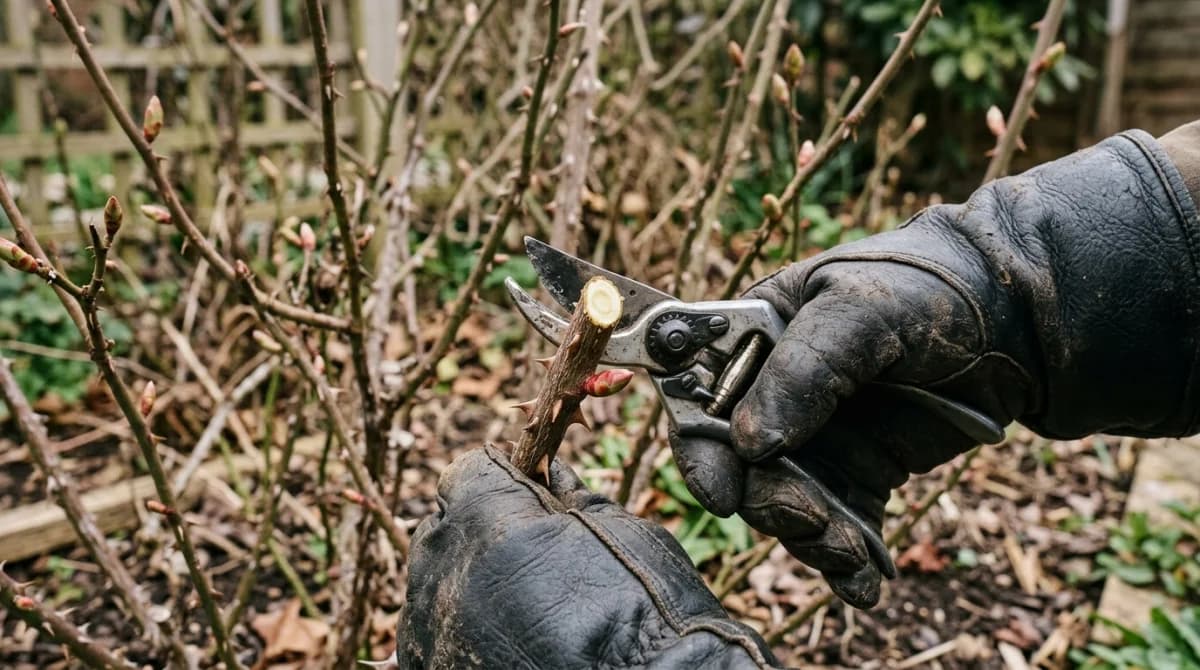
Heavy-duty gloves: Not garden gloves—thick leather, wrist-high gauntlets. Rose thorns are serious.
Clean your tools: Wipe blades with rubbing alcohol before moving between plants to avoid spreading disease. Especially important if you’ve had blackspot or other disease issues in your roses.
What to Remove First
Work through categories in order:
1. Dead Canes
Dead canes are dry, shriveled, and often brown or gray. Make a test cut—healthy rose wood is white or cream inside; dead wood is brown. Cut back to where you find live tissue.
Remove dead canes completely when possible; if they’re attached at the base and the whole cane is dead, remove it to the crown (base of the plant at soil level).
2. Damaged or Diseased Canes
Any cane with canker (sunken, discolored spots), severe blackspot from last year, or physical damage from winter cold. Remove to healthy wood.
3. Crossing Canes
Where two canes cross and rub against each other, they create wounds. Remove the weaker or more poorly positioned one. Aim for outward-facing cane angles that keep the center of the plant open.
4. Thin, Weak Canes
“Thin as a pencil, cut it to the minimum.” Any cane much thinner than a pencil lacks the vigor to produce quality blooms. Remove these—they drain energy from the plant without contributing meaningfully.
How Hard to Prune: By Rose Type
The answer to “how much to cut” varies by rose type. Here’s the breakdown:
Hybrid Tea and Grandiflora Roses
These respond best to hard pruning—often the hardest pruning of any rose type.
Cut back to 12-18 inches above ground for established plants. This is more severe than most gardeners attempt, but it produces the most vigorous new growth and the largest individual blooms.
For young plants in their first or second year: prune to 18-24 inches to build structure.
After hard pruning, you’re left with 3-5 healthy outward-facing canes, each cut to just above an outward-facing bud. The shape is an open vase.
Floribunda Roses
Similar approach to hybrid teas, but often pruned slightly less severely—to 18-24 inches—since floribundas bloom in clusters and have slightly different growth habits. The same principles apply: remove dead, damaged, crossing, and weak growth; open the center; cut to outward-facing buds.
Shrub Roses (Including David Austin / English Roses)
Shrub roses need less hard pruning than hybrid teas. The goal is to maintain their naturally mounding or arching shape, remove old wood, and stimulate new growth.
Remove about one-third of the plant total. Cut the oldest canes (thick, gnarled, more than 3-4 years old) out at the base—this encourages fresh, productive young canes. Shorten remaining canes by about a third.
For particularly vigorous growers like ‘Knock Out’ and its relatives, you can cut back more heavily—they recover fast and bloom on new growth.
Climbing Roses
Do not cut climbing roses hard in late winter—you’ll remove all the flowering wood.
Most climbing roses (once-blooming and repeat-blooming types) bloom on lateral shoots growing off the main canes (called “laterals”). Leave the main canes intact and cut the laterals back to 2-3 buds from the main cane.
Remove dead, damaged, and old main canes when replacements have grown. The goal with climbers is to maintain young, flexible main canes trained horizontally (horizontal training stimulates more lateral growth and more flowers).
Once-Blooming Roses (Old Garden Roses, Species Roses)
These roses bloom on old wood—last year’s growth—and should be pruned immediately after flowering in spring/early summer, not in late winter. Examples: Rosa gallica, R. damascena, most alba roses, species roses.
If you prune these in February, you cut off all the flower buds. Check whether your rose blooms once or repeatedly—once-bloomers wait; repeat-bloomers prune now.
Making the Cut
Every cut should be made:
- At a 45-degree angle, sloping away from the bud
- ¼ inch above an outward-facing bud: Close enough that the stub doesn’t die back far; far enough not to damage the bud
- Clean through, not ragged or crushed
Outward-facing buds will produce outward-facing growth, which keeps the center of the plant open for air circulation and light. Inward-facing buds produce growth that crosses into the center—avoid leaving cuts above these.
After Pruning
Clean up: Rake all fallen leaves and clippings from around the rose and remove them from the garden. Last year’s blackspot spores overwinter in debris and cause this year’s infections. Don’t compost—trash.
Apply dormant oil: A horticultural oil spray after pruning suffocates any scale insects or other overwintering pests on cane surfaces.
Mulch: Apply 2-3 inches of mulch around the base of each plant (not touching the cane), which conserves moisture, moderates soil temperature, and suppresses some disease spore splashback.
Fertilize: Start fertilizing when the first leaves unfurl—not before. A balanced granular fertilizer appropriate for roses, or any balanced organic fertilizer, applied every 4-6 weeks through midsummer.
Troubleshooting After Pruning
Most canes dead: This happens in harsh winters in cold zones. If only a few inches of healthy green cane remain near the soil level, cut to that healthy wood and hope. If the bud union (the swollen knob at the base where the plant was grafted) is alive, the plant can recover. Be patient—new growth may take several weeks.
Canes look dead but you’re not sure: Scratch the bark with your thumbnail. Green means alive; brown means dead. Continue cutting until you find green.
Cut ends turning black: Cane dieback from the cut end can indicate weak cuts or disease. Recut to healthy tissue and make sure your pruners are sharp and clean.
Pruning roses properly is one of the most satisfying gardening tasks when you understand the logic behind it. The plant responds with gratitude—within weeks, vigorous red new growth pushes from every bud you left, and the summer garden rewards you for the work.
Sources & Further Reading
- Pruning Roses — Oregon State University Extension
- Guide to Pruning Roses — University of Maryland Extension
- Tips for Confident Rose Pruning — UC Cooperative Extension