Raised Bed Planning: Size, Materials, Layout, and Setup
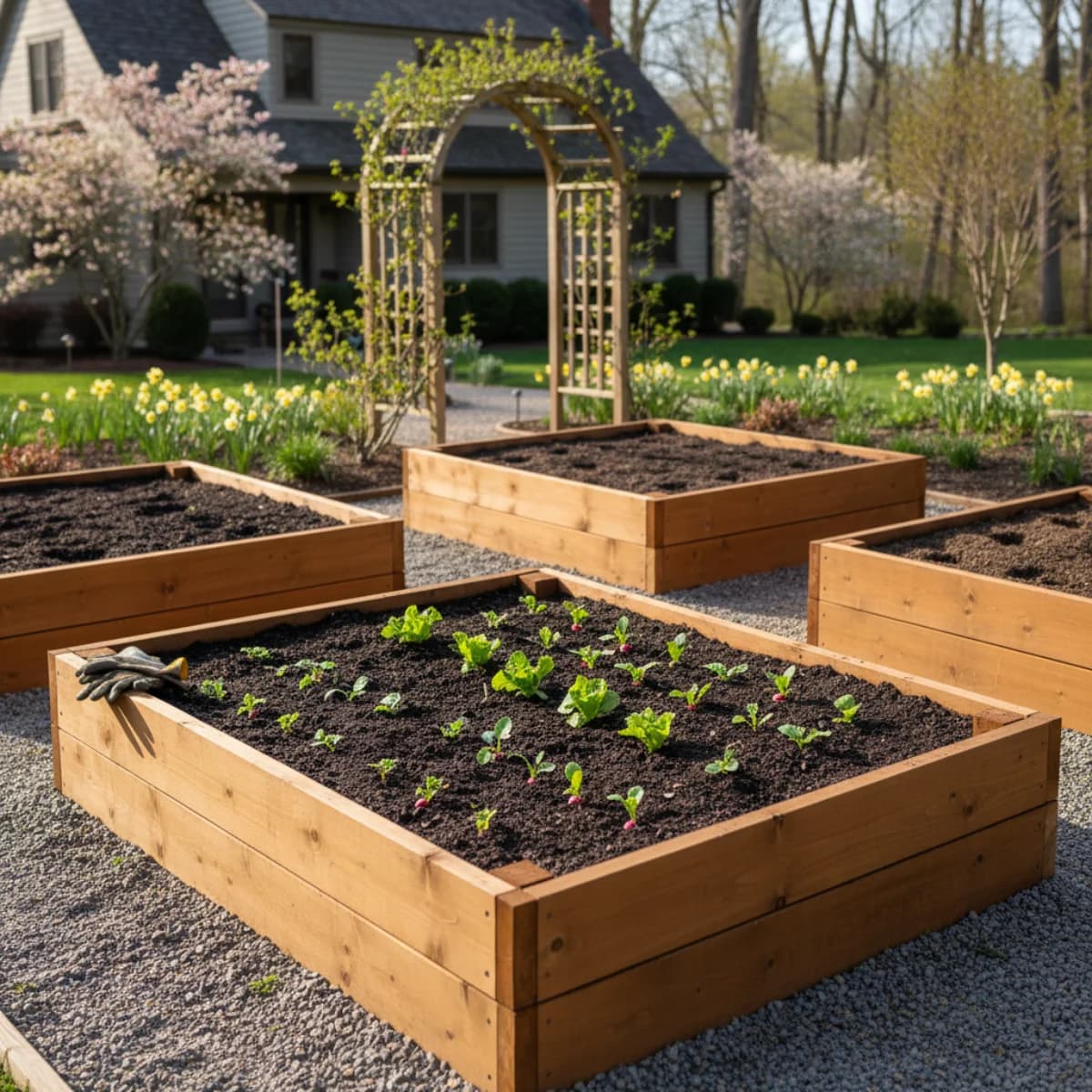
Raised beds are one of the most reliable investments in a productive garden. They’re not essential—excellent vegetable gardens are grown in-ground—but they make several aspects of growing easier: soil quality control, drainage, weed management, and the early-spring warmth that gets cool-season crops going ahead of schedule.
January is the right month to plan raised beds: order materials, decide on dimensions and layout, and have everything ready to build and fill before the growing season opens.
The Case for Raised Beds
Better soil from day one: You fill raised beds with a quality growing mix, not whatever clay-heavy or sandy soil is under your feet. This matters enormously for root crops, heavy feeders, and anything that struggles in poorly structured native soil.
Excellent drainage: Raised beds drain freely, which prevents waterlogging and allows soil to warm earlier in spring than in-ground beds.
Less compaction: Because you never walk in raised beds (you reach in from the sides), the soil stays uncompacted and loose. Root penetration is easier; air and water movement is better.
Fewer perennial weeds: If you lay a weed barrier under your raised bed (cardboard works well and breaks down over time), perennial weeds from below are suppressed. Surface weeds are easier to manage in loose, uncompacted soil.
Accessibility: Raised beds can be built at heights that allow gardening from a seated position or with reduced bending, which is significant for older gardeners or those with mobility limitations.
Dimensions
Width
The most important dimension. Standard recommendation is no wider than 4 feet (accessible from both sides without stepping in) or 2-3 feet if only accessible from one side.
This isn’t a rigid rule—experienced gardeners often manage wider beds—but it’s the most practical guideline for most situations. You should be able to reach the center of the bed comfortably.
For children’s gardens, scale down to 2-2.5 feet maximum width.
Length
Any length works. Practical lengths: 8 feet, 10 feet, 12 feet. Longer than 12 feet starts feeling unwieldy (you’re walking a long way around to get from one side to the other). Shorter is fine too—a 4x4 raised bed can produce substantial amounts of food.
For standard 8-foot lumber lengths, a 4x8 foot bed is an efficient, common-sense dimension that avoids excessive cutting.
Height
8 inches: Absolute minimum for a functional raised bed. Provides some improvement over in-ground planting but limited root depth.
10-12 inches: The standard. Good for most vegetables. Sweet spot between function and cost.
18-24 inches: Excellent for root vegetables (carrots, parsnips, beets), completely eliminates bending, and can be made accessible for people who need to garden seated. Significantly more material cost.
36 inches: Table-height raised beds for seated gardening. Very expensive to build and fill; appropriate for specific accessibility needs.
Paths
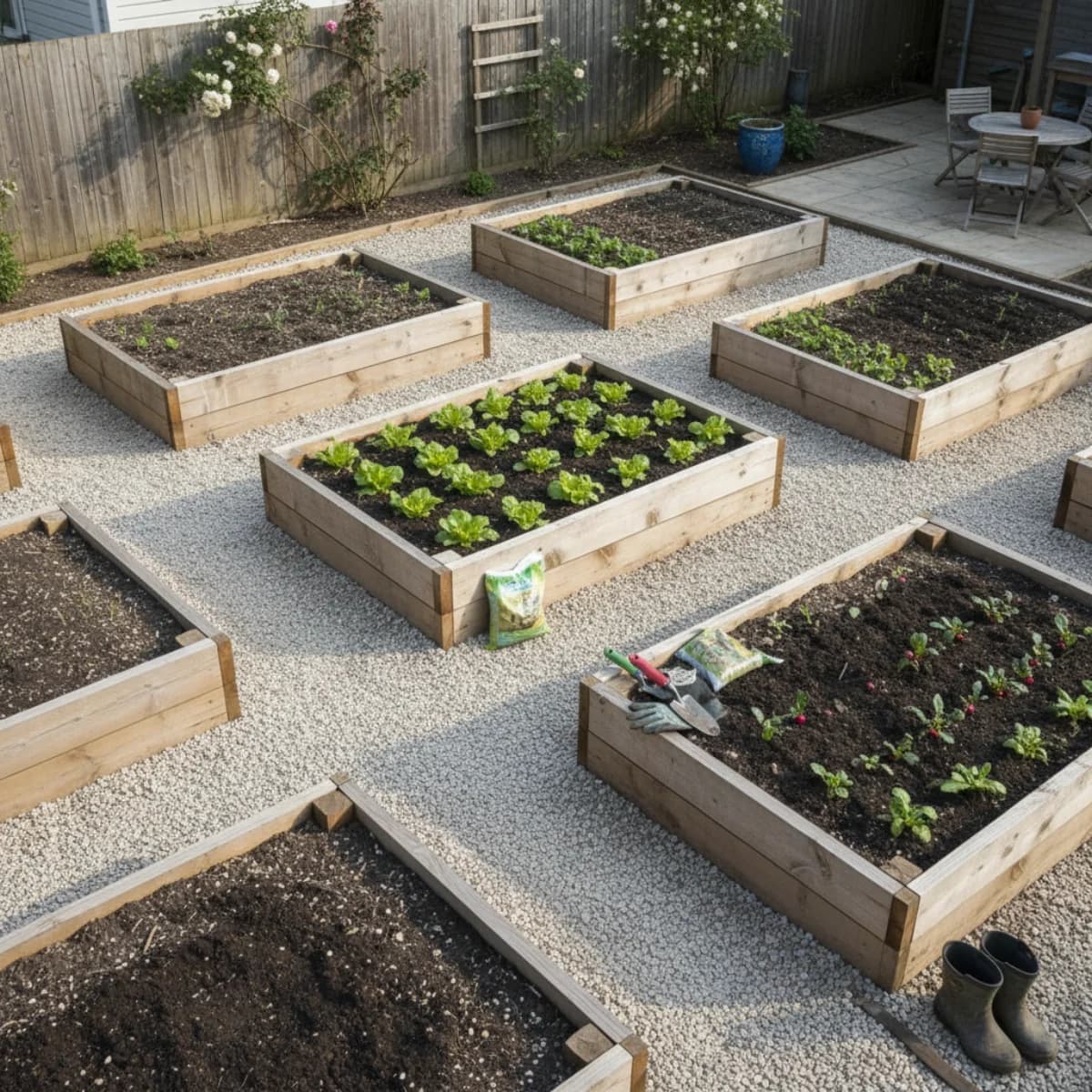
Allow at least 24 inches between beds for comfortable passage; 36 inches if you’ll be using a wheelbarrow. Paths should be covered with wood chips, gravel, or stepping stones to prevent them from becoming muddy tracks.
Materials
Untreated Hardwood
Cedar and redwood: The traditional premium options. Naturally rot-resistant, long-lasting (10-20 years), aesthetically warm. Expensive, particularly in large dimensions.
Untreated oak: A good alternative where available; dense and slow to rot.
The key is “untreated”—don’t use pressure-treated lumber that uses arsenic-based or newer copper-based preservatives in contact with edible plants.
Treated Lumber: Current Situation
Post-2003, pressure treatment in the US shifted to ACQ (alkaline copper quaternary) rather than the earlier arsenic-based CCA. ACQ-treated lumber is generally considered safe for raised beds by most extension services—the copper leaching is minimal. However, many gardeners prefer to avoid any treated wood in contact with food crops.
If you use treated lumber, line the interior with landscape fabric or use naturally rot-resistant wood for the parts most in contact with soil.
Galvanized Steel
Corrugated metal raised beds have become very popular and look excellent in both modern and farm-style gardens. They’re durable (decades), lightweight for their strength, and relatively affordable.
The concern sometimes raised is zinc leaching from galvanized metal. Research on this is not alarming—zinc levels in soil near galvanized beds are typically within normal agricultural ranges—but if you’re concerned, line with food-safe materials.
Steel warms quickly in spring (good for early planting) and can get very hot in summer sun (potentially stressing roots in hot climates—less of an issue with wood).
Other Options
Brick and stone: Permanent, attractive, expensive (both materials and labor). Brick beds retain heat well.
Concrete block: Cheap and durable; utilitarian looking. Can be improved with render, paint, or planted pockets.
Natural stone: Beautiful where locally available and affordable; heavy and labor-intensive to install.
Recycled or reclaimed materials: Old railway sleepers (tie up the UK term), salvaged timber, thick timbers from demolition—can be excellent if not contaminated.
Filling Your Raised Beds
This is where many gardeners underestimate cost and volume. A single 4x8x12 inch raised bed requires approximately 32 cubic feet of fill—about 1.2 cubic yards, or roughly 15-20 standard bags of potting mix. Use our free garden bed calculator to get exact soil and mulch volumes for any bed shape and size.
The Mel’s Mix approach: Equal parts peat moss or coir, coarse vermiculite, and compost. Expensive but very effective—extremely light, well-draining, excellent fertility.
The practical approach: A blend of quality topsoil (about 60%), well-made compost (30%), and a drainage amendment like perlite or coarse sand (10%). This is cheaper in bulk than Mel’s Mix at scale.
Order bulk delivery: For multiple beds, buying topsoil and compost by the cubic yard from a landscape supply company and having it delivered is far cheaper per cubic foot than bagged products. Order now and have it delivered when you’re ready to fill.
Avoid: Cheap “garden soil” that’s often mostly unscreened fill. Straight peat moss or coir (lacks nutrients). Garden soil from your existing beds (compact, brings weed seeds, may have disease issues).
January Action Plan
- Decide on number, dimensions, and placement: Map it on graph paper or use a digital tool
- Calculate materials needed: Lumber lengths and quantities; cubic yards of soil
- Order lumber or source materials: Hardware stores, lumber yards, salvage yards
- Order bulk soil components: For delivery in late winter or early spring
- Plan the layout in relation to water access, paths, and sun exposure
- Decide on path material: Wood chips, gravel, pavers, or cardboard
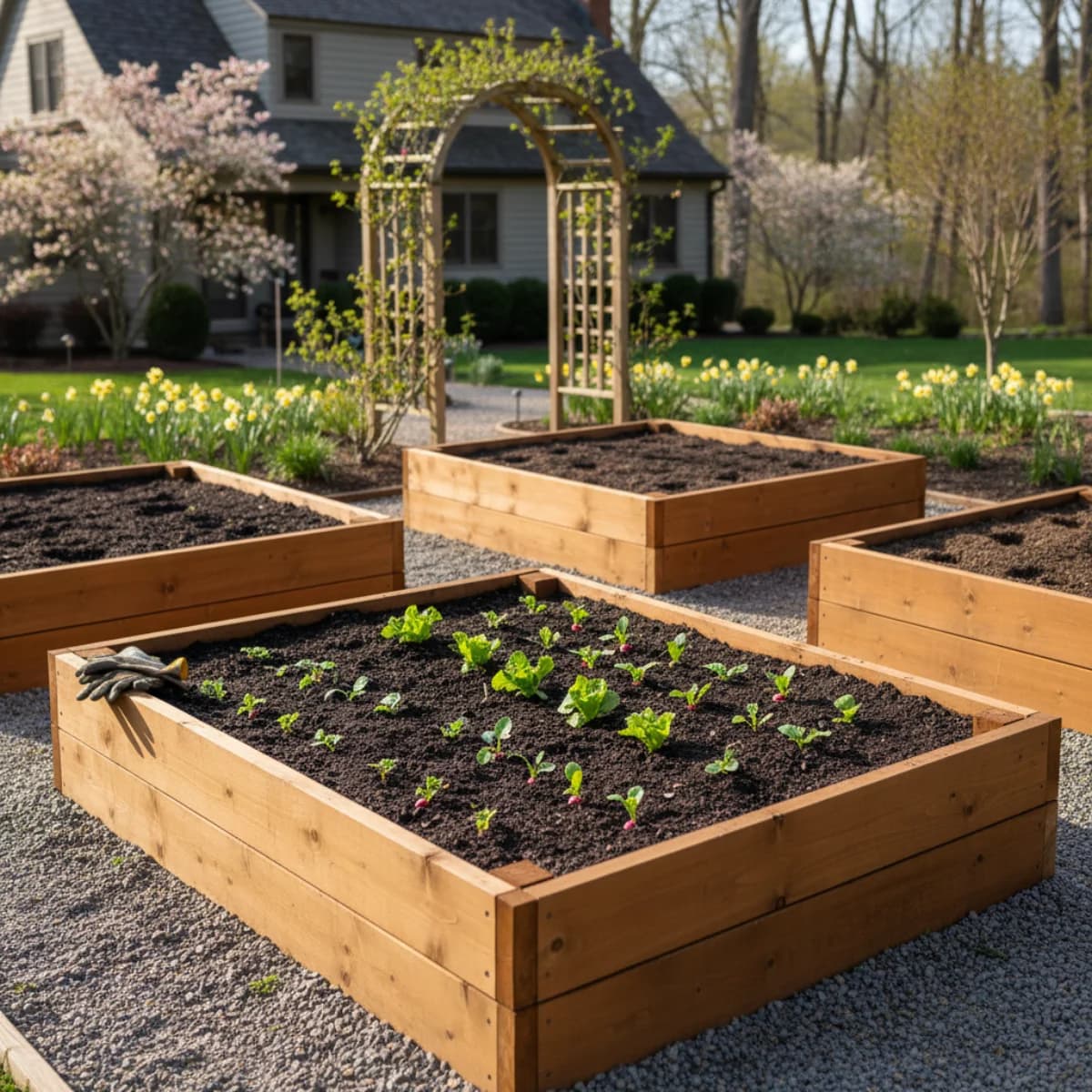
With materials ordered now, beds can be built and filled in February or March—ready for the earliest spring plantings (peas, spinach, and other cool-season crops) by late March or April.
Sources & Further Reading
- Raised Bed Gardens — University of Minnesota Extension
- Raised Bed Gardening — Oregon State University Extension
- Building Raised Beds for Vegetable Gardening — University of Maryland Extension
- How to Construct a Raised Bed in the Garden — Penn State Extension