How to Plan a Vegetable Garden from Scratch
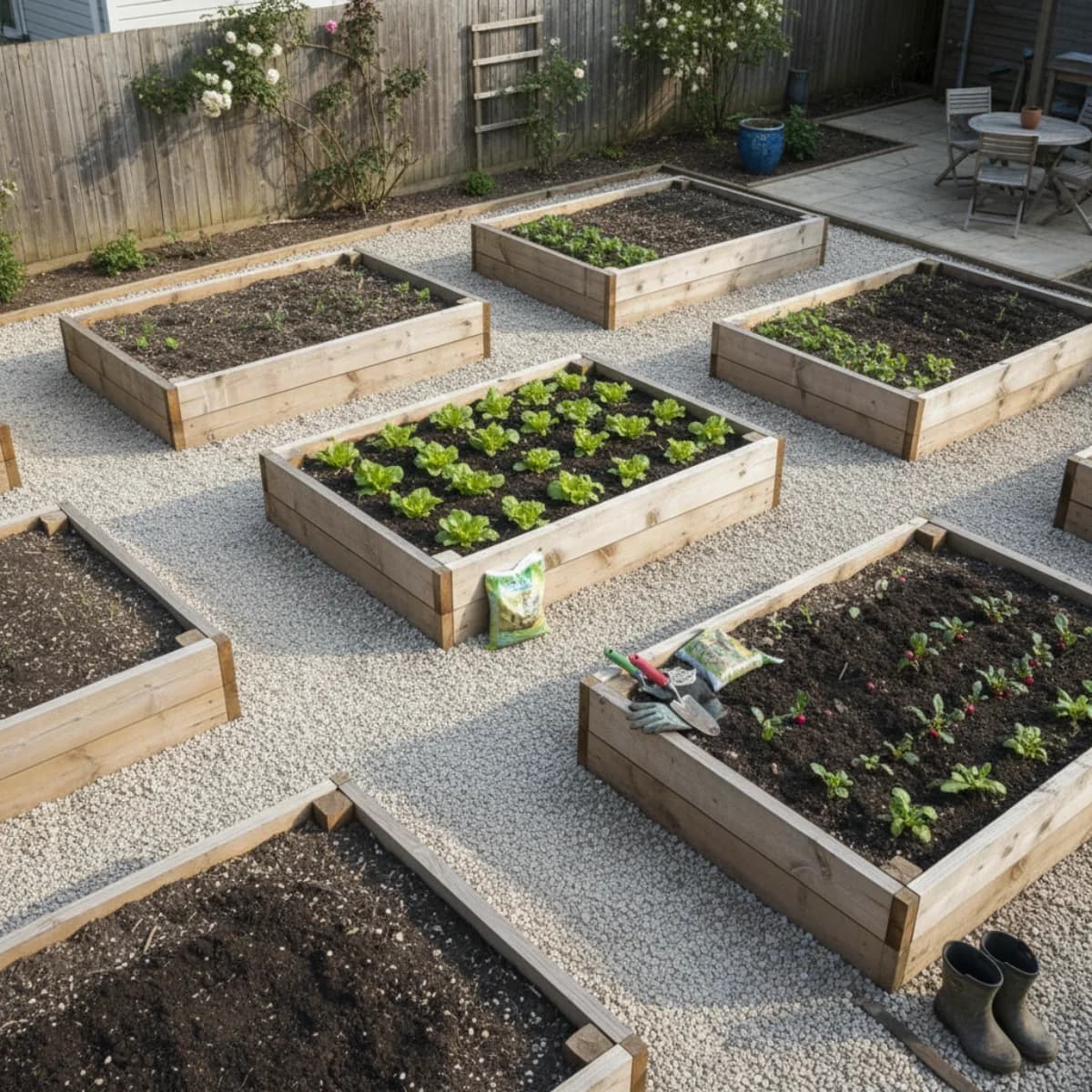
The idea of a vegetable garden is appealing. The reality of planning one from nothing can stop people before they start. Where do you put it? How big should it be? What do you even grow? What’s the right type of bed?
These questions have good answers, and January is the right time to work through them. The decisions you make now—about location, layout, scale, and crops—will shape your garden all season.
Start With Location
Vegetables need sun. This is the most important and least negotiable requirement. Most fruiting crops—tomatoes, peppers, cucumbers, squash, beans—need a minimum of 6 full hours of direct sun daily, and they perform best with 8 hours or more.
Cool-season crops—lettuce, spinach, kale, chard, arugula—tolerate some shade and can manage with 4-6 hours. But even these won’t thrive in deep shade.
Walk your garden on a sunny day (or look at photos you’ve taken over the seasons) and identify the sunniest spots. Note where shadows fall from the house, trees, fences, or neighboring structures. Morning sun is better than afternoon sun for most crops; eastern exposure avoids the scorching late-afternoon heat that stresses plants in summer.
Other Location Factors
Water access: Your beds should be within reach of a hose or within a practical irrigation zone. Hauling water across a garden gets old quickly.
Proximity to the kitchen: Gardens you can see from the kitchen get more attention and more regular harvesting. An out-of-sight plot at the far end of the garden often gets neglected by August.
Drainage: Vegetables don’t like wet feet. Avoid low spots where water pools after rain. If drainage is an issue, raised beds are the solution.
Protection from wind: Strong, drying winds stress plants and interfere with pollination. A fence, hedge, or building providing some windbreak (without shading) is beneficial.
Decide on Bed Type and Size
In-Ground Beds
The simplest approach: till or fork over the existing soil, remove perennial weeds, amend with compost, and plant. In-ground beds are economical and unlimited in scale.
The main challenges are soil quality (compacted, clay-heavy, or very sandy soils make in-ground growing difficult) and ongoing weed management.
Raised Beds
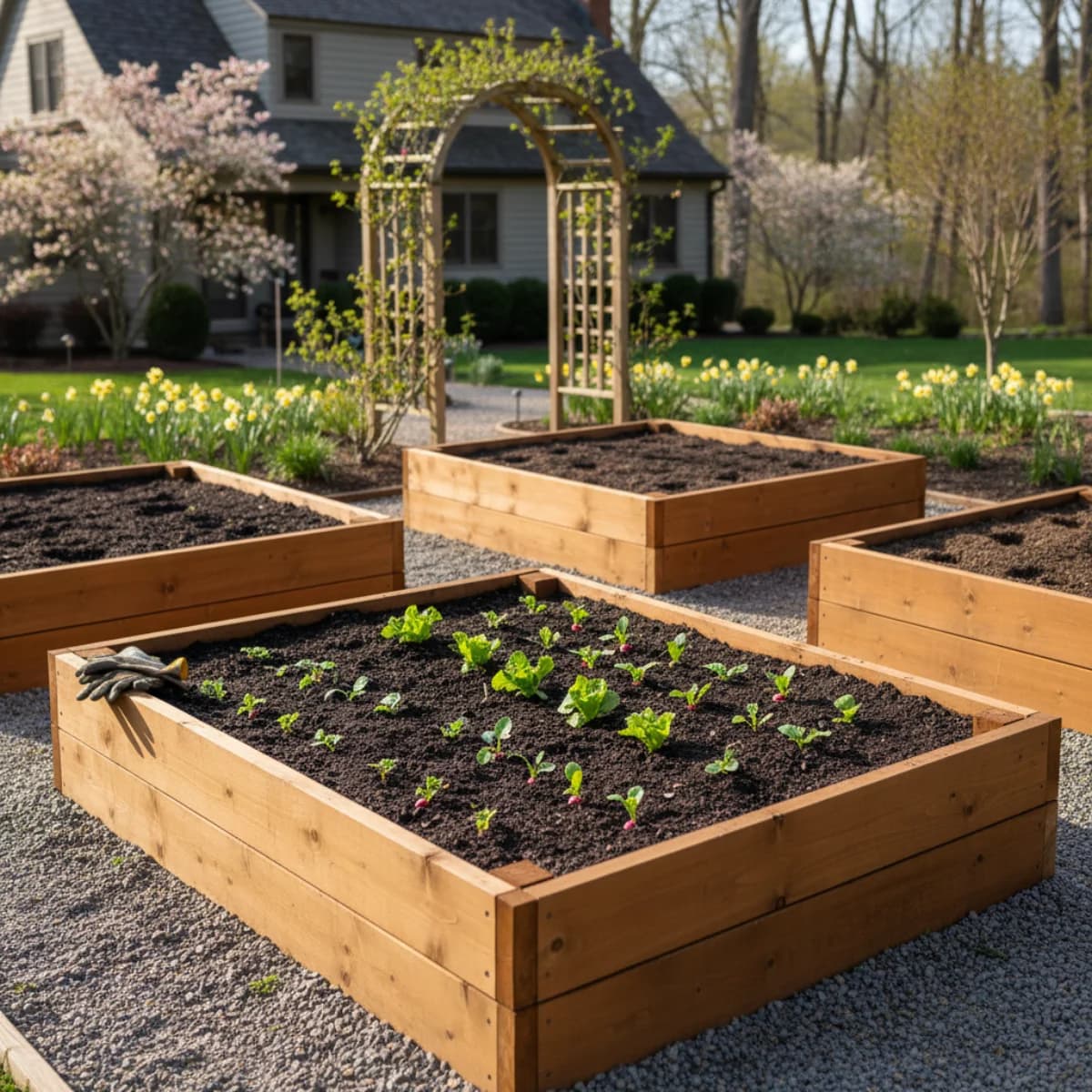
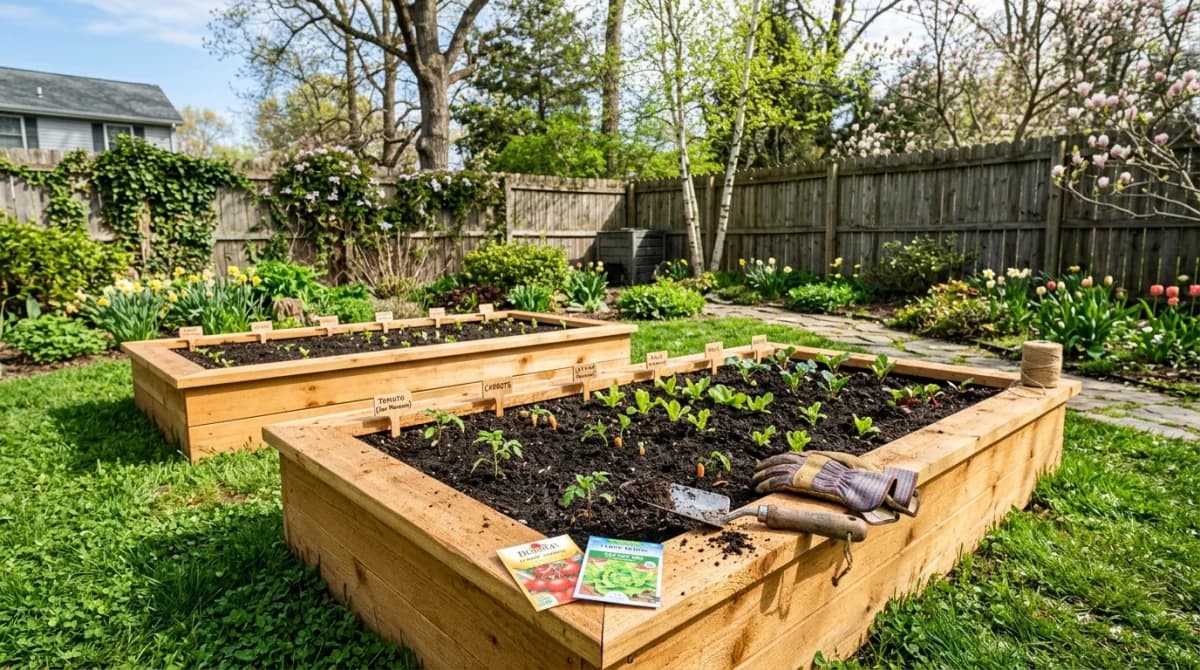
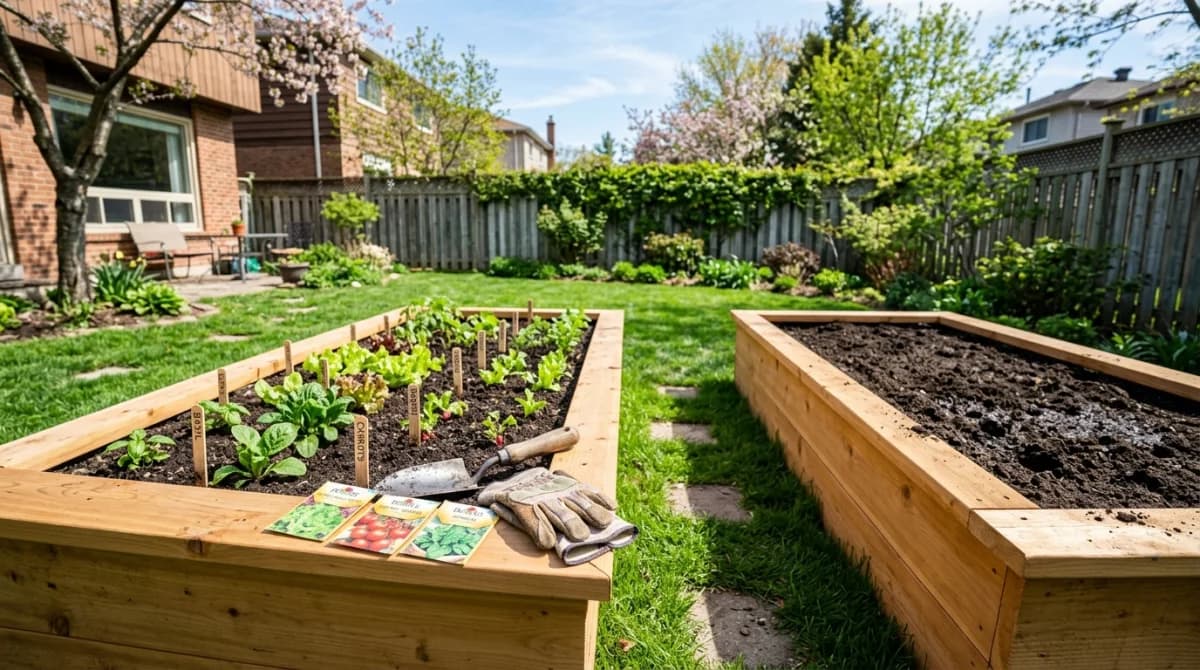
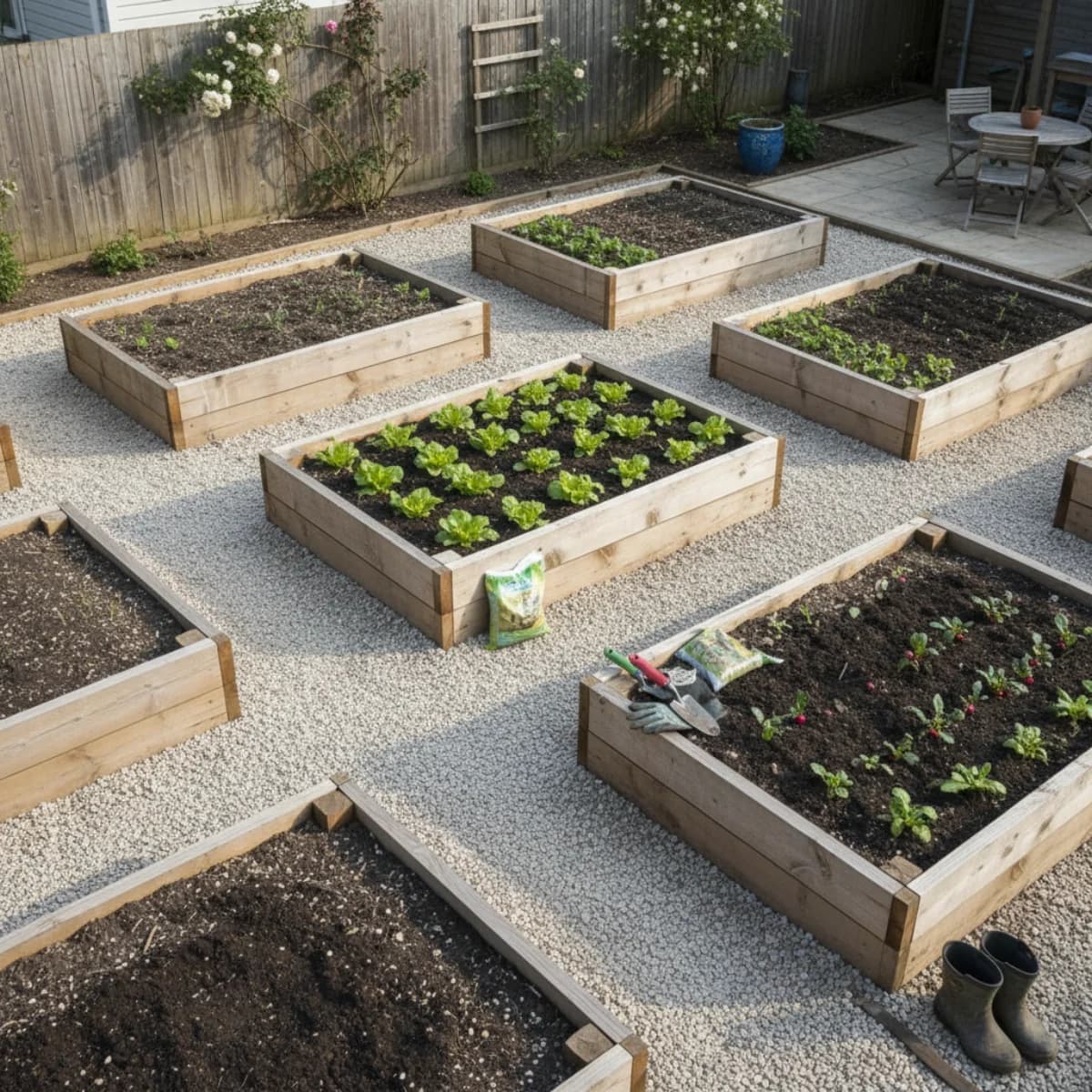
Raised beds filled with a quality growing mix are the most consistently successful option for beginning vegetable gardeners. The soil is exactly what you want from day one, drainage is excellent, warming happens faster in spring, and weed pressure is lower than in-ground beds.
Standard dimensions:
- Width: No more than 4 feet (so you can reach the center from either side without stepping in). Three feet is comfortable for most people.
- Length: Any length you like; 8-12 feet is practical
- Height: 10-12 inches is the minimum useful depth; 18-24 inches is excellent for root vegetables and requires no bending
Materials: untreated cedar or redwood (naturally rot-resistant), pine (cheaper but shorter-lived), galvanized steel (increasingly popular, very durable), or composite lumber.
Fill with a mix of roughly equal parts: good topsoil, compost, and a drainage component (coarse sand, perlite, or aged wood chips). Avoid cheap bulk fill soil—it often contains weed seeds and poor structure. Our garden bed calculator tells you exactly how much soil you need for any bed size, so you avoid overbuying or running short.
Containers
Almost anything edible grows in containers, though some things (sweet corn, pumpkins, sprawling squash) are impractical at container scale. Tomatoes, peppers, herbs, lettuce, chard, beans, cucumbers, and more all work well in pots and fabric grow bags.
Containers need frequent watering (daily in hot weather) and regular fertilizing. They’re perfect for patios, balconies, and situations where in-ground or raised beds aren’t possible.
How Much Space Do You Need?
This is where many beginning gardeners go wrong—they start too big. A 100-square-foot garden (two 4x8-foot raised beds with a path between them, plus a container or two) is enough to provide regular salads and some extras through a growing season. It’s also manageable for a beginner learning the rhythms of vegetable gardening.
Rough production estimates for common crops:
- Tomatoes: 2-3 plants per person for fresh eating; 6-8 per person if canning
- Lettuce/salad greens: A 4-foot row every 3 weeks for continuous supply
- Zucchini: One plant per household is usually enough (sometimes too much)
- Beans: 10 feet of row per person for regular picking
- Cucumbers: 2-3 plants per person
Start small, tend it well, and expand in subsequent years. The disappointment of a neglected large garden is more discouraging than the success of a small, well-managed one.
What to Grow
The best vegetable garden grows things you actually want to eat, things that produce enough to justify the space, and things that suit your climate and skill level.
High Value (Worth Growing)
Lettuce and salad greens: Expensive at the grocery store, easy to grow, and far better fresh. Grow cut-and-come-again varieties; 2-3 square feet kept in successive sowing produces salads all season.
Herbs: Fresh basil, cilantro, chives, and parsley are expensive in stores and easy in the garden. A few plants provide more than you’ll use.
Tomatoes: The classic for good reason. Garden-fresh tomatoes are incomparably better than supermarket ones, especially heritage and heirloom varieties unavailable in stores.
Zucchini: Extremely productive, easy to grow. One plant usually feeds a household through summer.
Beans: Reliable, productive, and excellent fresh-picked. Bush varieties are easier than pole varieties for beginners.
High Effort, High Reward
Peppers: Slow to start, need warmth, but fresh peppers are excellent and productive once established.
Cucumbers: Need trellising and regular harvesting, but prolific once producing.
Peas: Need to be grown in cool weather and picked at exactly the right time, but fresh garden peas are exceptional.
Consider Your Climate
Some crops struggle in certain climates regardless of effort. Brassicas (broccoli, cauliflower, cabbage) bolt quickly in hot summers and need timing to mature in cool weather. Root vegetables like carrots need deep, stone-free soil to grow well. Corn needs a large planting block for pollination and isn’t practical in small gardens.
Crop Rotation
Plan from the start to rotate crop families through different beds each year. This reduces soil-borne diseases and pest buildup. Our companion planting guide can help you figure out which crops grow well together within each rotation group.
- Year 1: Nightshades (tomatoes, peppers, eggplant)
- Year 2: Brassicas (cabbage, broccoli, kale)
- Year 3: Legumes (beans, peas)
- Year 4: Roots and alliums (carrots, beets, onions)
With four beds, you can maintain a four-year rotation. With fewer beds, adapt by alternating family groups and avoiding growing the same family in the same spot two consecutive years.
Mapping Your Garden
Before ordering seeds or building beds, draw your plan. Even a rough sketch is valuable:
- Mark which direction is north
- Draw existing features (trees, buildings, fences) with their shadows
- Lay out your beds with dimensions
- Note which crops go where, with taller crops (tomatoes, trellised beans) to the north so they don’t shade shorter crops
Gardenly can help you visualize the overall design of your outdoor space before you commit to building and planting—a useful step when you’re making permanent decisions about bed placement.
The plan you make now, in January, will make April’s planting decisions faster and better. Take the time to do it right before the season rushes in.
Sources & Further Reading
- Raised bed gardens — University of Minnesota Extension
- Crop Rotation for the Home Vegetable Garden — Penn State Extension
- How to Construct a Raised Bed in the Garden — Penn State Extension
- Planting the vegetable garden — University of Minnesota Extension