How to Plant and Train Climbing Roses This Spring
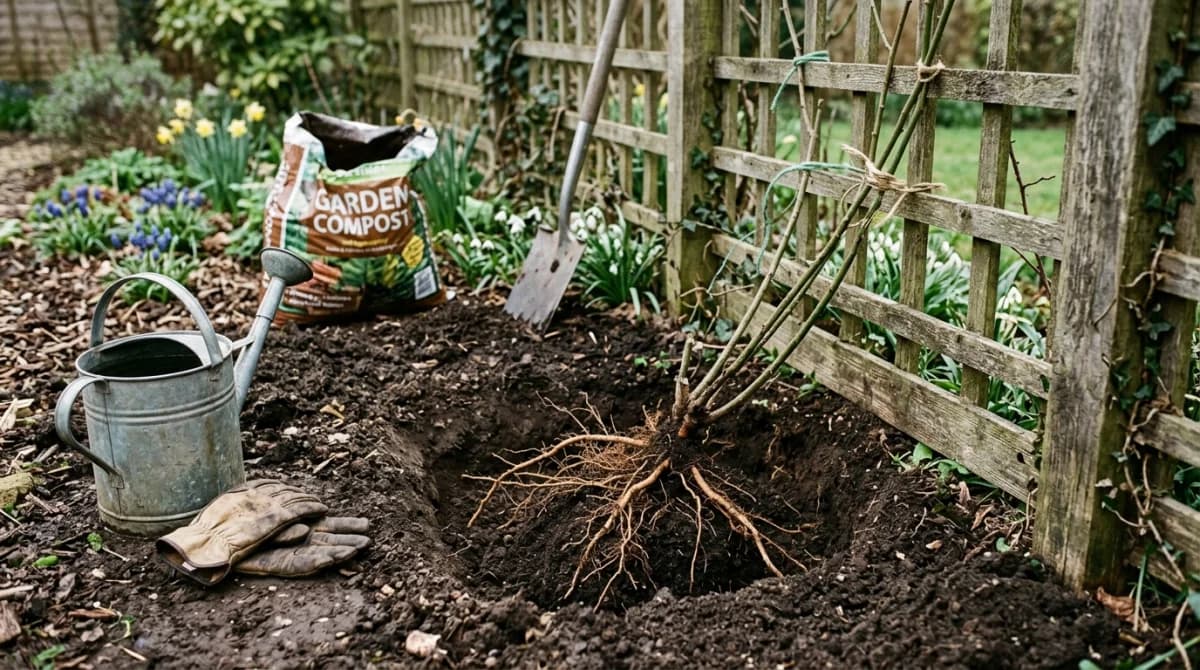
Few plants deliver the drama of a climbing rose in full bloom. A single well-placed climber can turn an ordinary fence into a wall of color, frame a doorway with fragrance, or smother an old shed in a cascade of petals by midsummer. Late March through mid-April is the ideal window to get bare-root climbers in the ground and start training them toward the structure they will eventually cover.
Choosing the Right Climbing Rose
Not all climbing roses behave the same way. The variety you pick determines how tall it gets, how often it blooms, and how much maintenance it demands.
Repeat Bloomers vs. Once-Bloomers
Repeat-blooming (remontant) climbers like ‘New Dawn’, ‘Zephirine Drouhin’, and ‘Golden Showers’ flower from early summer through fall. They bloom on new wood, which means you can prune harder in spring without sacrificing flowers. Once-blooming climbers like ‘Albertine’ and ‘Madame Alfred Carrière’ produce one massive flush on the previous year’s growth. They need lighter pruning to preserve the canes that will flower.
For most home gardens, a repeat bloomer is the safer choice. You get months of color instead of a few spectacular weeks.
Size and Vigor
Climbing roses range from modest 6-foot pillar types to rampant 20-foot ramblers. Match the rose to the structure:
- Small obelisk or post (6–8 feet): ‘Souvenir du Docteur Jamain’, ‘Dortmund’
- Fence or medium trellis (8–12 feet): ‘New Dawn’, ‘Zephirine Drouhin’ (thornless), ‘Iceberg Climbing’
- Large wall or pergola (12–20 feet): ‘Climbing Cécile Brünner’, ‘Kiftsgate’ (very vigorous), ‘Paul’s Himalayan Musk’
Disease Resistance
If you would rather enjoy your roses than spray them, prioritize disease-resistant varieties. ‘New Dawn’, ‘Dortmund’, and the David Austin climbing selections (‘The Generous Gardener’, ‘A Shropshire Lad’) all show strong resistance to black spot and powdery mildew in most climates.
Planting a Bare-Root Climbing Rose
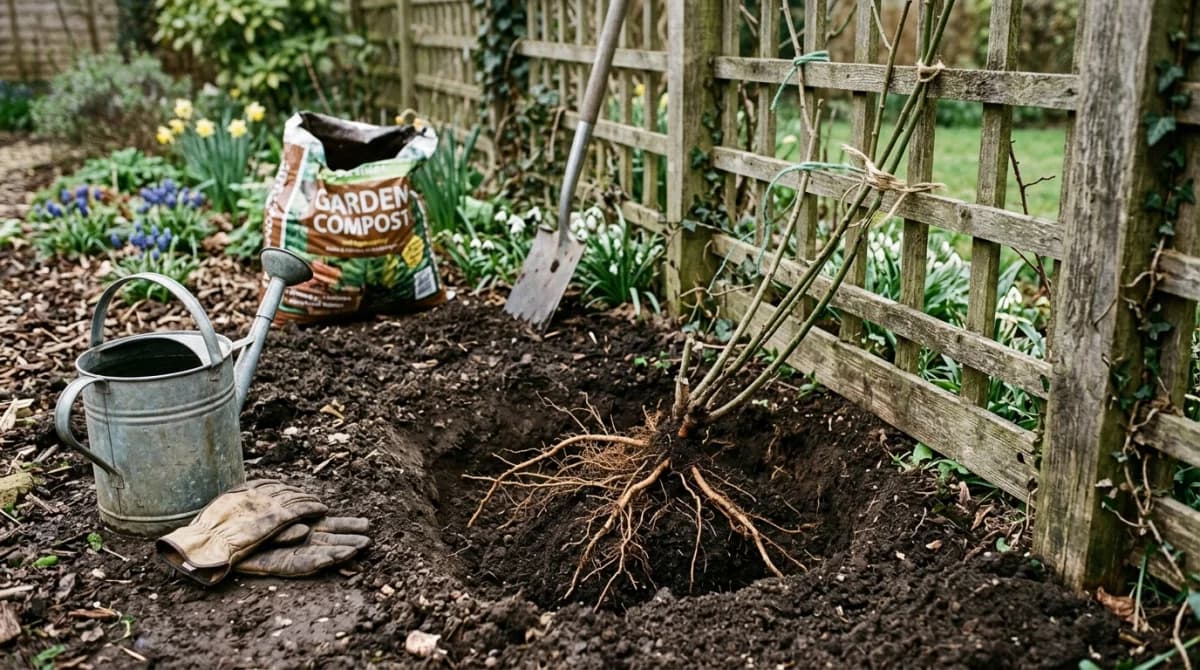
Late March is prime bare-root season. Bare-root roses are cheaper than containerized plants, establish faster, and give you access to a wider selection from specialty nurseries.
What You Need
- Bare-root climbing rose
- A planting hole roughly 18 inches wide and 18 inches deep
- Well-rotted compost or aged manure
- A handful of bone meal or rose-specific fertilizer
- A bucket of water for soaking
Step by Step
-
Soak the roots. Submerge the entire root system in a bucket of water for 8 to 24 hours before planting. This rehydrates the roots after shipping.
-
Dig the hole. Position it about 12 inches from the base of the wall, fence, or trellis. Roses planted tight against a wall sit in a rain shadow and dry out fast. That 12-inch offset lets rain reach the roots while keeping the canes close enough to tie in.
-
Amend the backfill. Mix the excavated soil with a generous shovel of compost and a handful of bone meal. Climbing roses are heavy feeders and will occupy this spot for decades, so give them a good start.
-
Set the depth. In cold climates (zones 3–6), plant with the bud union 2 inches below the soil line for winter protection. In mild climates (zones 7–10), the bud union can sit at or just above soil level.
-
Spread the roots. Fan them outward over a small mound of soil at the bottom of the hole. Backfill in stages, firming gently with your hands. Water deeply to settle the soil and eliminate air pockets.
-
Mulch. Apply 2 to 3 inches of organic mulch (wood chips, shredded bark, or compost) around the base, keeping it a few inches away from the canes to prevent rot.
Training Canes for Maximum Blooms
Here is the single most important thing to understand about climbing roses: horizontal canes produce more flowers than vertical ones. When a cane is trained sideways, every bud along its length is encouraged to break and send up a flowering shoot. A cane growing straight up will bloom only at the tip.
The Fan and Arch Method
As new canes grow through the first season, tie them to your support structure in a fan pattern, angling them as close to horizontal as the structure allows. On a flat wall or fence, this is straightforward. On an obelisk or pillar, wrap the canes in a gentle spiral instead of letting them shoot straight up.
Use soft plant ties, strips of old t-shirt, or stretchy rubber rose ties. Avoid wire or anything that will cut into the bark as the canes thicken.
Year One: Let It Grow
Resist the urge to prune heavily in the first year. Your goal is to grow as many long, strong canes as possible. Remove only dead or damaged wood. Tie new growth in as it appears, redirecting it sideways whenever you can.
Year Two and Beyond: Selective Pruning
By the second spring, you will have a framework of main canes fanning across your structure. Now you can refine:
- Remove dead, diseased, or crossing canes entirely, cutting back to the base or a healthy outward-facing bud.
- Shorten side shoots (the laterals that grow off the main canes) to 2 or 3 buds. These shortened laterals are where this season’s flowers will form.
- Replace old, woody canes with vigorous new ones growing from the base. Keep 4 to 6 main canes at any time and retire the oldest ones every few years.
For repeat bloomers, deadhead spent flower clusters during the growing season to encourage the next flush. For once-bloomers, skip deadheading if you want rose hips in autumn.
Supporting Structures
The support you choose affects both the look and the practicality of your climbing rose.
Walls and Fences
Install horizontal wire supports using vine eyes or screw-in hooks, spacing the wires about 18 inches apart. This gives you attachment points at regular intervals and keeps the rose slightly away from the wall for air circulation.
Arches and Pergolas
Plant one rose on each side of the arch. Train the canes up and over, tying them to the uprights and crossbars. Two plants of the same variety will meet at the top within two to three seasons, creating an unbroken canopy of blooms.
Obelisks and Pillars
Wrap canes in a spiral from bottom to top. This achieves the same horizontal effect as a fan but in a tighter footprint. Pillar roses with moderate vigor (8–10 feet) work best here.
Common Mistakes to Avoid
- Planting too close to the wall. That 12-inch offset matters. Without it, the roots compete with the foundation and miss most rainfall.
- Letting canes grow straight up. You will get a bare base and flowers only at the top, out of sight.
- Using rigid ties. Canes thicken significantly. Check ties twice a year and loosen or replace any that are cutting in.
- Pruning too hard in year one. Give the plant a full season to establish its framework before you start shaping.
Feeding Through the Season
Climbing roses are hungry. Feed in early spring when growth starts (a balanced rose fertilizer or a shovel of compost around the base), again after the first flush of blooms in early summer, and a final light feed in late summer. Stop fertilizing by mid-August so the plant can harden off before winter.
A 2-inch mulch layer renewed each spring does double duty: it feeds the soil as it breaks down and keeps roots cool and moist through summer heat.
Bringing It All Together
A climbing rose is a long-term garden investment. Choose a variety matched to your structure and climate, plant it with room to breathe, and train those canes sideways from the start. Within two growing seasons, you will have a feature that stops people on the sidewalk.
If you are still deciding where a climbing rose would have the most impact in your garden, Gardenly can help you visualize how a new planting will look against your existing space before you commit to digging.
Sources & Further Reading
For more detailed information on rose care, pruning, and training, consult these trusted resources:
- Royal Horticultural Society (RHS): Roses: Planting - A comprehensive guide on when and how to plant bare-root and containerised roses.
- University of California Statewide IPM Program: Roses: Cultural Practices and Weed Control - Detailed advice on selecting, planting, and maintaining roses for long-term health.
- American Rose Society: Basic Rose Care - The national authority on rose selection and care.
- “Right Rose, Right Place” by Peter Schneider - An excellent book covering the best rose varieties for different structures and garden conditions.