Trellises, Arches, and Obelisks: Making the Most of Vertical Space
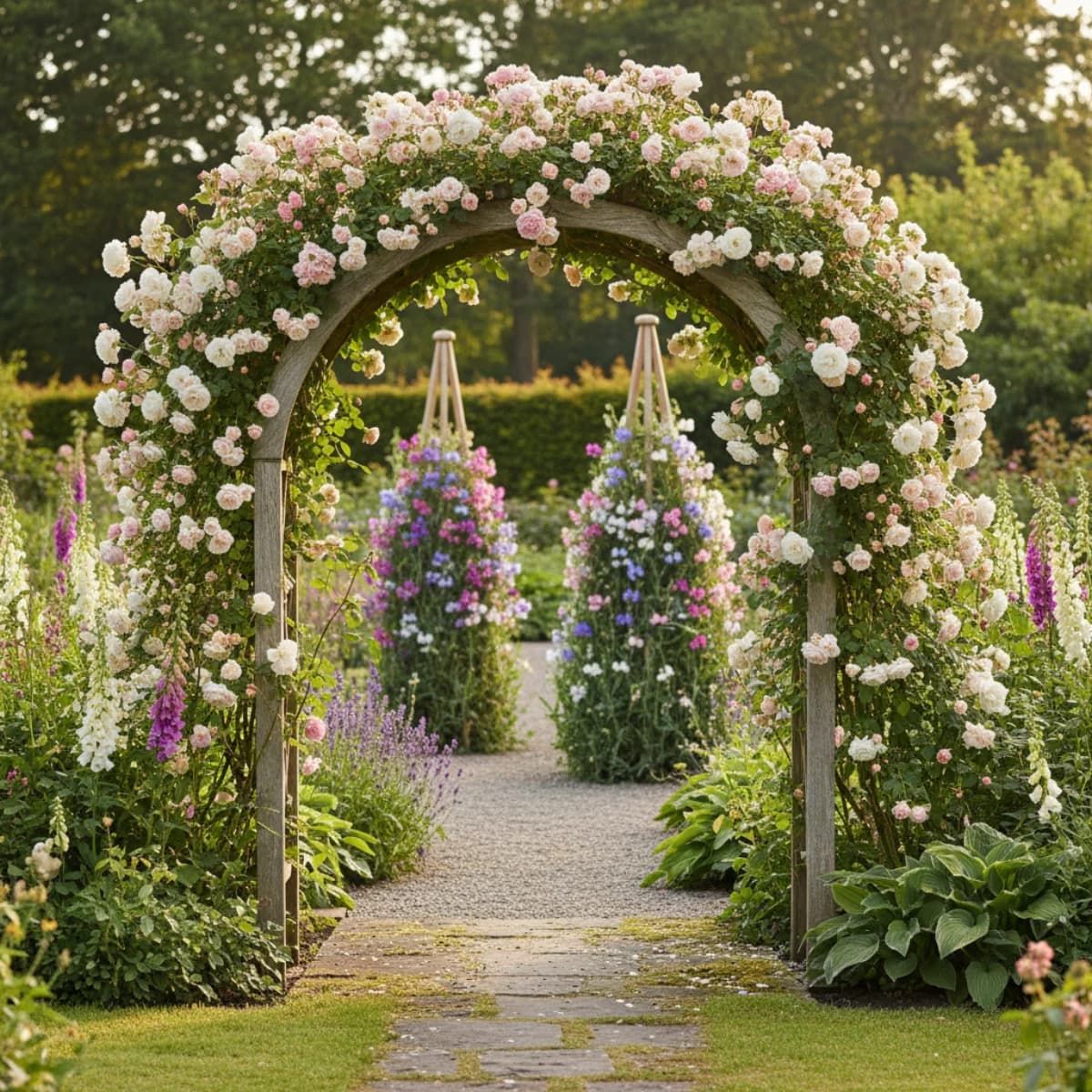
Most gardens use horizontal space well and vertical space badly. Beds are planted at ground level; eye level and above are empty. This is a missed opportunity—vertical growing structures extend your planting space upward, add visual interest at varying heights, and create the sense of enclosure and journey that makes a garden feel designed rather than assembled.
January is the right time to plan structures. Building or buying them now, before the growing season, means they’re in place when plants need support in spring—not installed in a hurry after plants have already been damaged by wind or fallen over from their own weight.
The Case for Vertical Growing
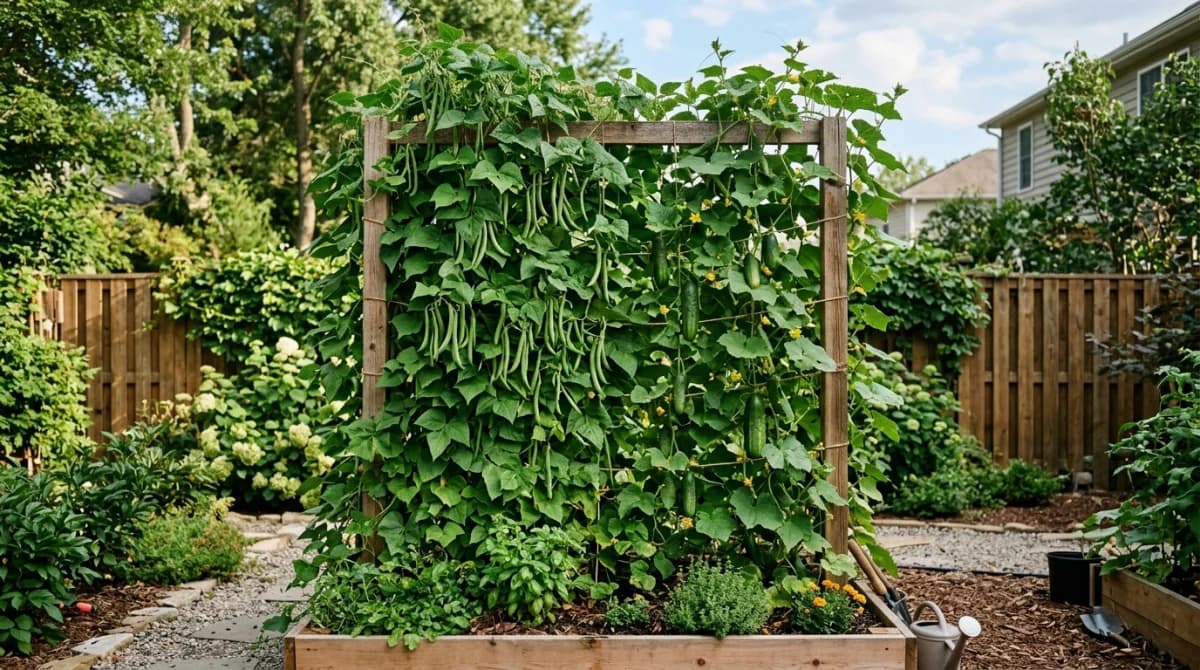
Space efficiency: A 6-foot-tall trellis planted with a climbing rose or sweet peas produces far more flowers per square foot than any border plant. Climbing vegetables—beans, cucumbers, small pumpkins—produce abundant harvests from a narrow footprint.
Structure and height: Flat gardens lack the visual interest of height variation. Obelisks, arches, and tall trellises add vertical rhythm and create focal points. A well-placed arch frames a view; a pair of obelisks flanking an entrance marks a transition.
Privacy and screening: Structures covered with climbers provide seasonal privacy more cheaply and with more visual appeal than fencing. Deciduous climbers on a pergola or trellis provide dense summer screening while allowing winter light.
Microclimate modification: A wall with a trellis facing south or southwest creates a warmer, drier microclimate against it—valuable for growing tender plants that wouldn’t succeed in the open garden.
Types of Structures
Trellises
Flat, panel-based structures attached to walls, fences, or free-standing posts. The most versatile structural option:
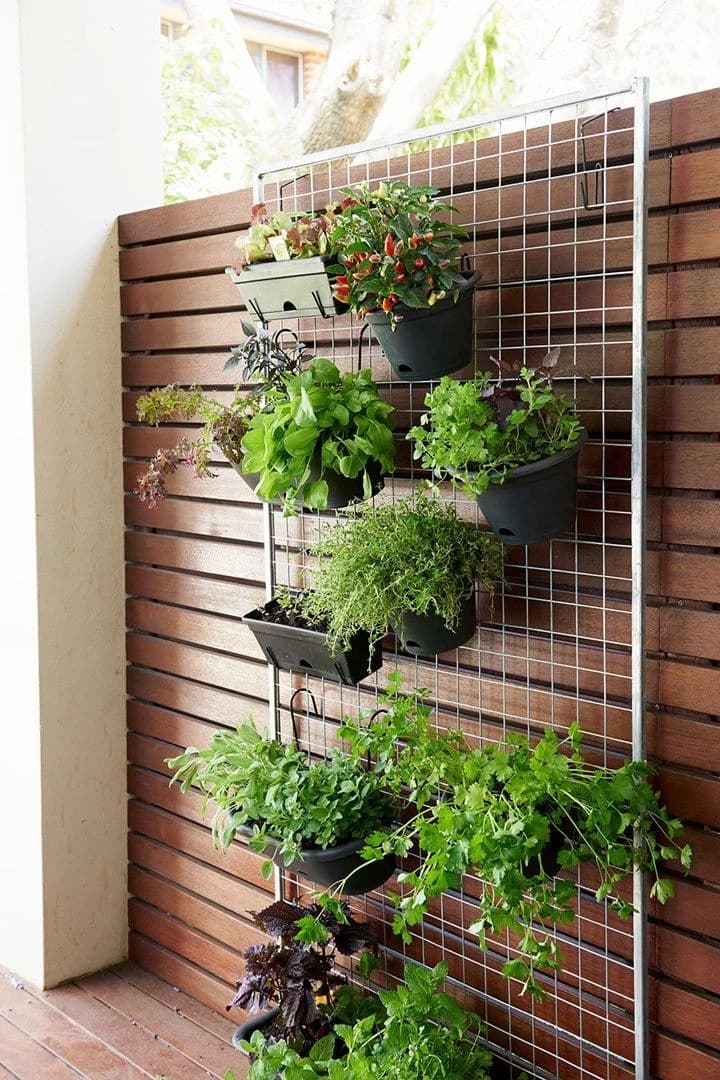
Wall trellises: Fixed to walls with spacers that hold the trellis 4-6 inches away from the surface—this allows air circulation behind the plant and prevents rot in both plant and wall. Wood, metal, and plastic versions available. Quality varies enormously; cheap plastic crumbles within a few years.
Free-standing trellises: Attached to posts driven into the ground. Good for internal garden divisions, creating “rooms” within a large garden, or supporting espalier fruit trees.
Fan trellises: Expand outward from a base point. Useful for training wall shrubs and some climbers into fan shapes.
Materials: Hardwood (oak, cedar, redwood) lasts longest untreated. Pressure-treated pine is durable but requires more careful disposal. Galvanized or powder-coated steel is essentially permanent and suits contemporary garden styles. Wrought iron is traditional and beautiful but expensive and heavy.
Arches
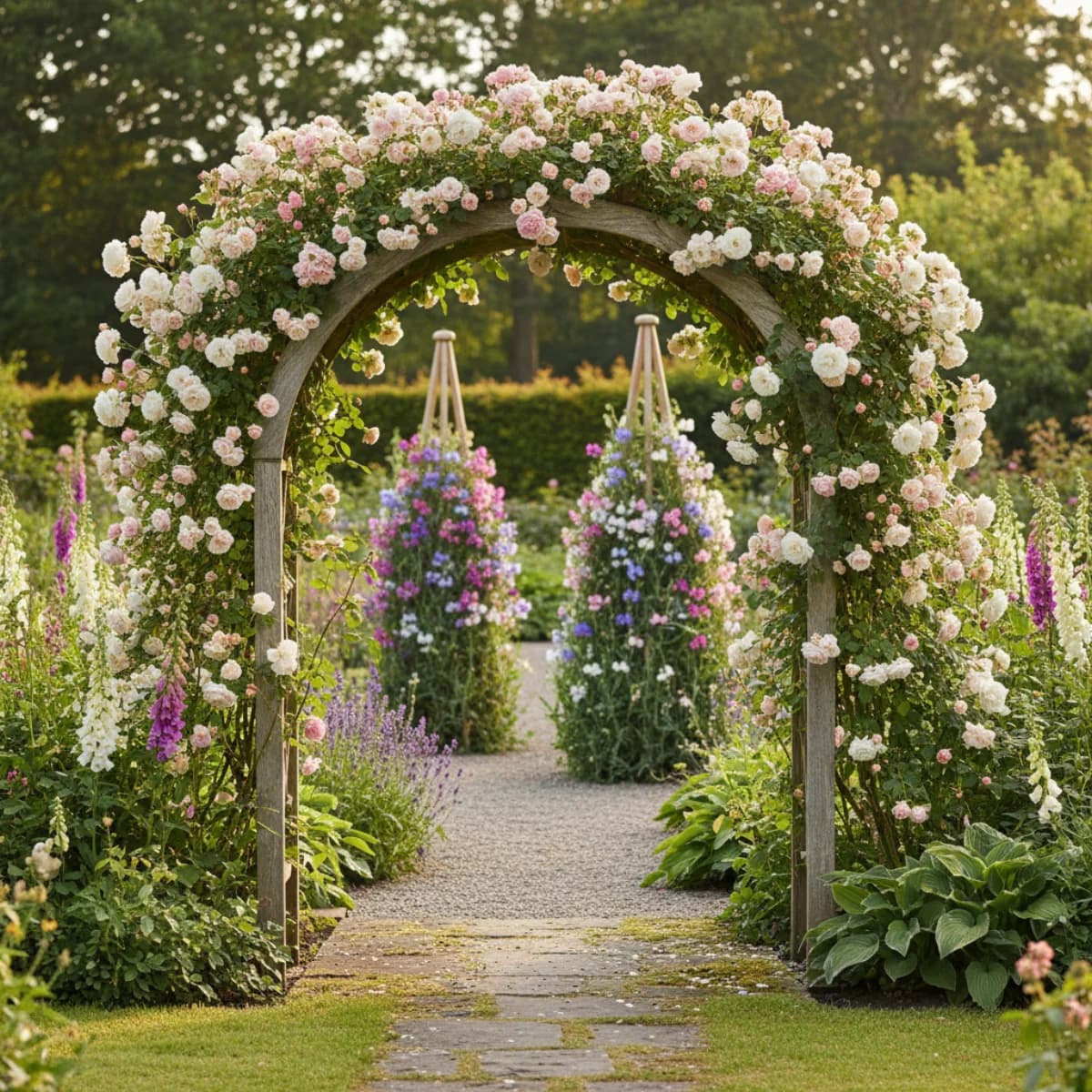
Arches transform a path or garden entrance into a destination. Walking through a rose-covered arch is one of the classic garden experiences; a pair of arches down a path creates a formal tunnel effect.
For climbers and scrambling roses, choose a wide arch—at least 4 feet wide and 7 feet tall. Anything smaller becomes cramped as plants mature and hangs over anyone walking through.
Wood or metal both work. Metal (galvanized or powder-coated) lasts longer; timber (including heavy-duty oak) is traditional and easier to anchor. Avoid painted softwood—it’s neither as durable nor as attractive as better materials.
Planting: Set one climber on each side, trained up the uprights and across the top. Climbing and rambling roses, honeysuckle, clematis, and wisteria (with caveats—see below) are all good choices.
Obelisks and Pyramids
Freestanding vertical structures that stand in border or container. They range from simple bamboo canes tied into a pyramid to elaborate ornate metal forms.
Obelisks work well for:
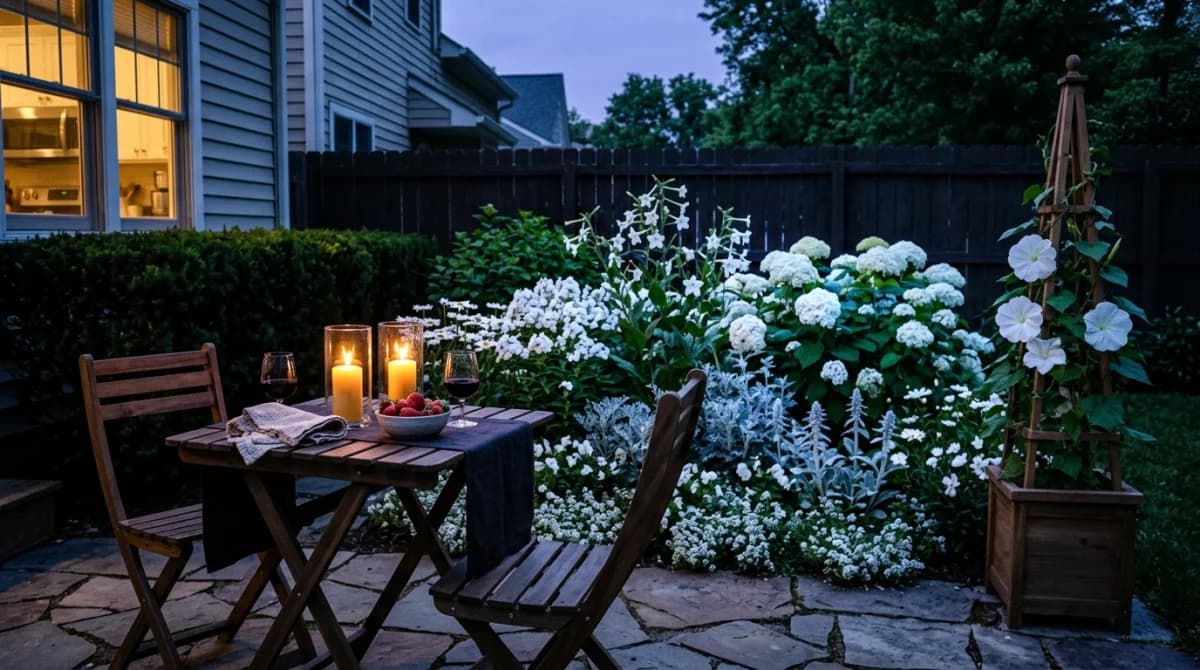
- Annual climbers in cutting gardens: sweet peas, nasturtiums, morning glories
- Clematis species in borders
- Annual or tender perennial climbers in containers
- Making vertical focal points in flat borders
Height typically 4-8 feet. More than 8 feet is difficult to manage and becomes unstable without anchoring.
Simple bamboo or hazel rod obelisks can be made in an afternoon. Metal obelisks from quality manufacturers (many available from garden suppliers or salvage yards for interesting antique pieces) last decades.
Pergolas and Garden Rooms
Pergolas—horizontal beam structures on posts—create outdoor rooms and provide shade. Covered with wisteria, roses, or vines, they produce some of the most spectacular June displays in any garden.
Planning points:
- Siting: Pergolas work best when they connect two points—a house to a separate garden area, one end of a garden to another. A pergola in the middle of a lawn with no clear destination looks stranded.
- Size: Minimum 8 feet of clear height to walk under comfortably with plants hanging down; 10 feet is better.
- Materials: Oak is the traditional material for quality pergolas. Pressure-treated softwood with metal post anchors (not timber posts buried in soil) is practical. Steel and aluminum are increasingly popular and weather well.
- Planting: Wisteria for drama but with patience (often 3-5 years before first bloom); rambling roses for June flowering; grape vines for late summer and autumn; hardy kiwi for interesting foliage.
Choosing Climbers for Structures
Match the climber to the structure’s strength and scale:
Lightweight annual climbers (any structure): Sweet peas, morning glories, cardinal climbers, black-eyed Susan vine. These grow quickly and die at frost, so light structures work fine.
Herbaceous perennial climbers (medium structures): Clematis herbaceous types, most small-flowered clematis (C. viticella, C. texensis groups), annual/perennial nasturtiums. Stems die back each year.
Woody perennial climbers (robust structures required): Climbing roses (heavy canes need strong support), wisteria (can pull down weak structures—needs very strong anchoring), Virginia creeper, hydrangea petiolaris. These are long-lived and add significant weight over years.
On walls specifically: Espalier fruit trees (apples and pears), fan-trained apricots and cherries, and wall shrubs like pyracantha benefit from wall heat and can be trained to fill surprising amounts of vertical space.
January Planning and Build
For structures you’re planning this year:
For existing beds: Decide which beds need height. A border that’s all horizontal can be transformed with two or three obelisks placed at irregular intervals—not symmetrically, but in a naturalistic placement that suggests they grew there.
For new structures: Order or commission now. Lead times for quality metalwork can be 6-8 weeks; timber structures need curing or finishing time.
For wall training: Attach trellis or horizontal wires to walls now, before growth begins. Expanding eye bolts in stone or brick, combined with galvanized wire run between them, create a simple, almost invisible training system.
For annual climbers: Obelisk positions in the cutting garden or border should be decided before planting—the structure often determines what goes around it.
Vertical space is the most underused dimension in most gardens. Use it.
Sources & Further Reading
- How to Grow Climbers and Wall Shrubs — Royal Horticultural Society
- Trellising, Staking and Caging — Vertical Gardening Techniques for Vine-Type Vegetables — University of Wisconsin Extension Horticulture
- Trellises and Cages to Support Garden Vegetables — University of Minnesota Extension