Winter Tool Care: Clean, Sharpen, and Store Your Garden Tools Right
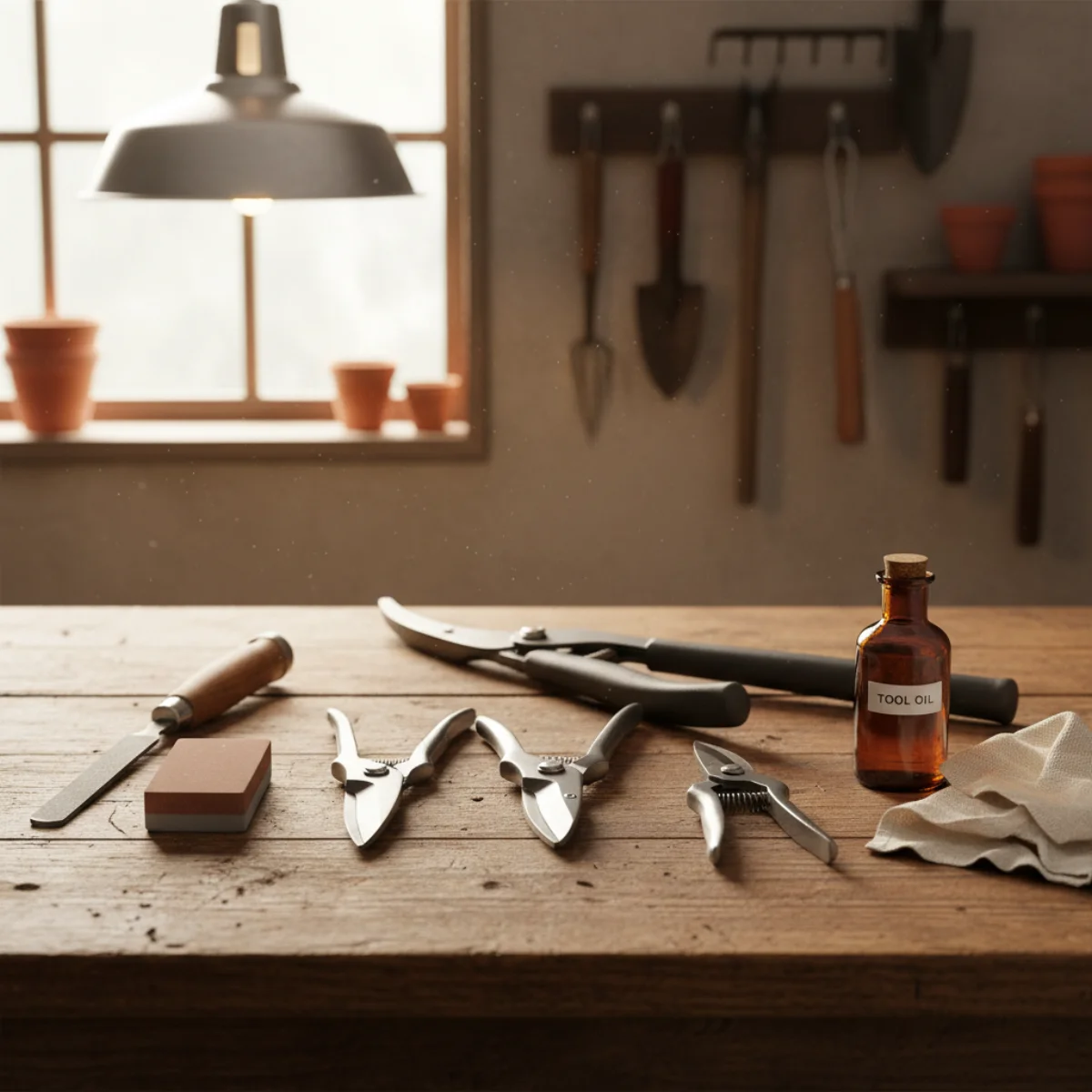
There’s a satisfaction in well-maintained tools that goes beyond the practical. A sharp hoe that cuts cleanly through weeds, a pair of pruners that snip a stem with the satisfying click of well-aligned blades—these tools make gardening more pleasurable, not just more efficient.
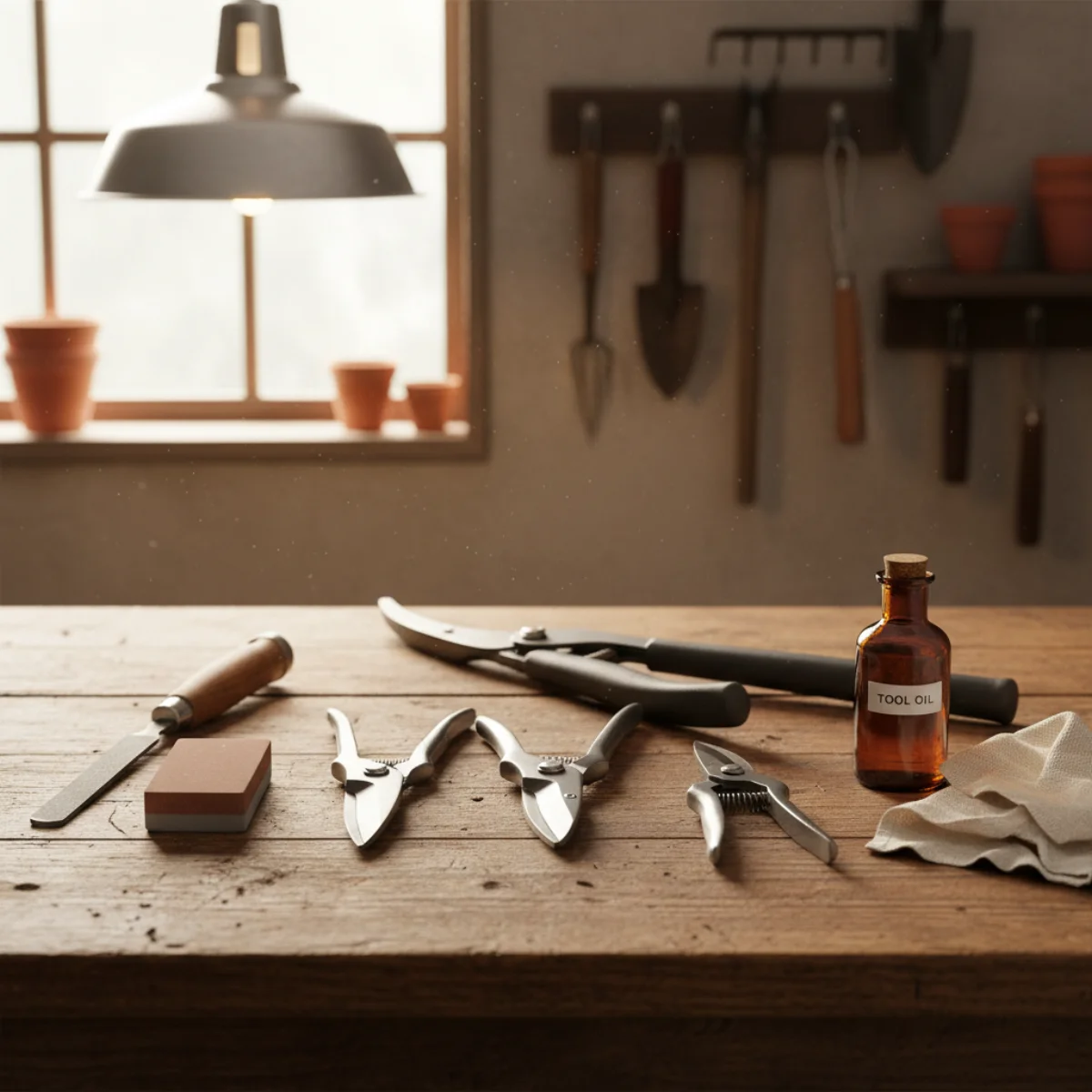
January is the right month to give tools a proper overhaul: cleaning off last season’s accumulated rust and soil, sharpening cutting edges, treating wooden handles, and making sure everything is in good working order before the first busy spring days.
The Core Maintenance Tasks
Cleaning
Most garden tools collect a combination of dried soil, plant sap, and rust after a season’s use. Start with cleaning:
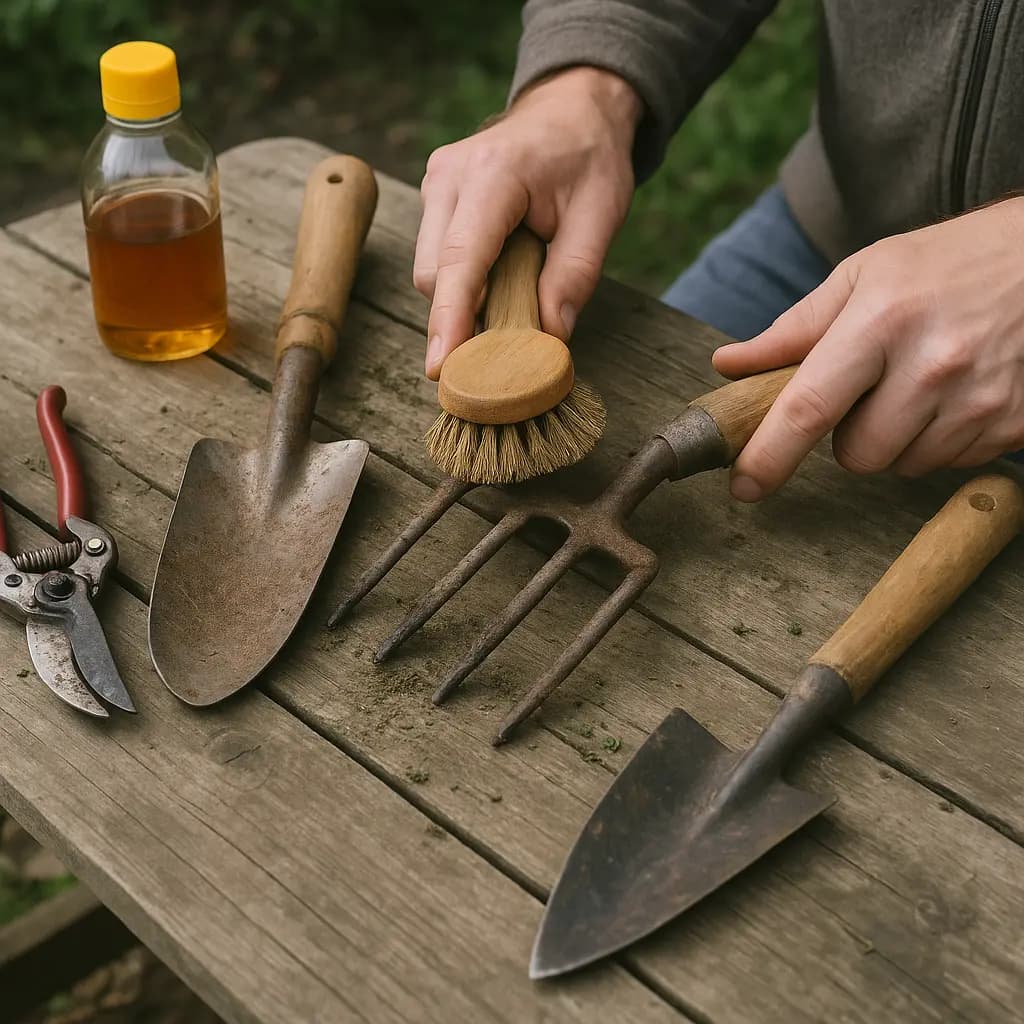
For soil and organic debris: Fill a bucket with coarse sand and pour in a half-liter of mineral oil or vegetable oil. Plunge tools repeatedly into the sand—the abrasive action removes soil and the oil conditions the metal. This is especially useful for spades, forks, trowels, and hoes.
For stubborn, dried soil: soak the metal part in water for a few minutes to soften, then scrub with a stiff brush or steel wool.
For rust: Light surface rust on non-cutting parts (handles, shanks, backs of blades) can be removed with coarse steel wool, a wire brush, or a metal file. For heavier rust, naval jelly (phosphoric acid) dissolves rust on contact—apply, leave for 15-20 minutes, scrub off.
For sap and resin on cutting tools: Pine or fruit tree sap, which builds up on pruner blades and saw blades, is dissolved by WD-40, mineral spirits, or commercial blade-cleaning spray. Apply, leave briefly, then wipe clean.
Sharpening
Sharp tools are safer (they require less force), more effective (they cut cleanly rather than tearing), and less tiring to use over a long session. Dull pruners crush stems; sharp pruners cut them cleanly, and clean cuts heal faster with less disease risk.
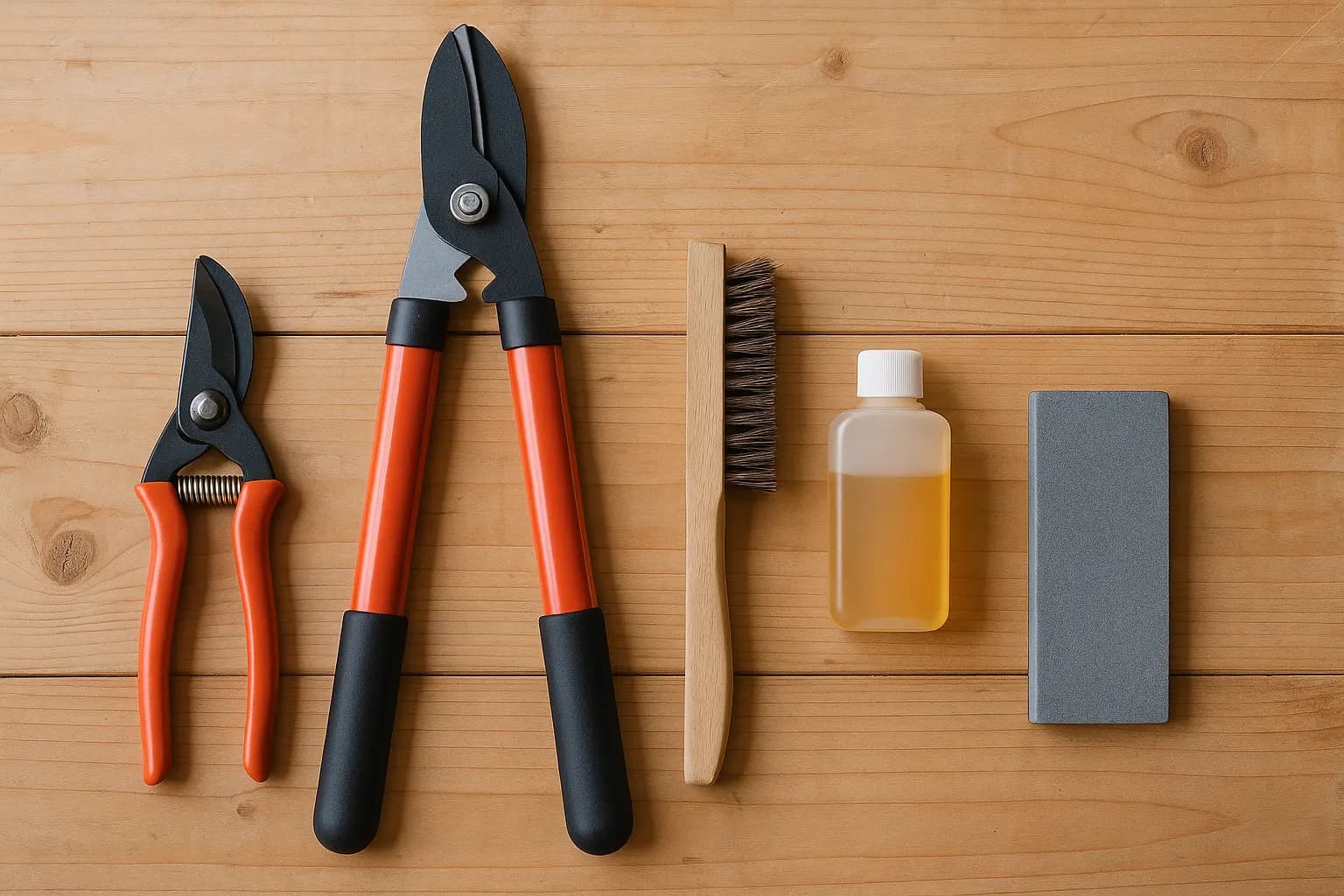
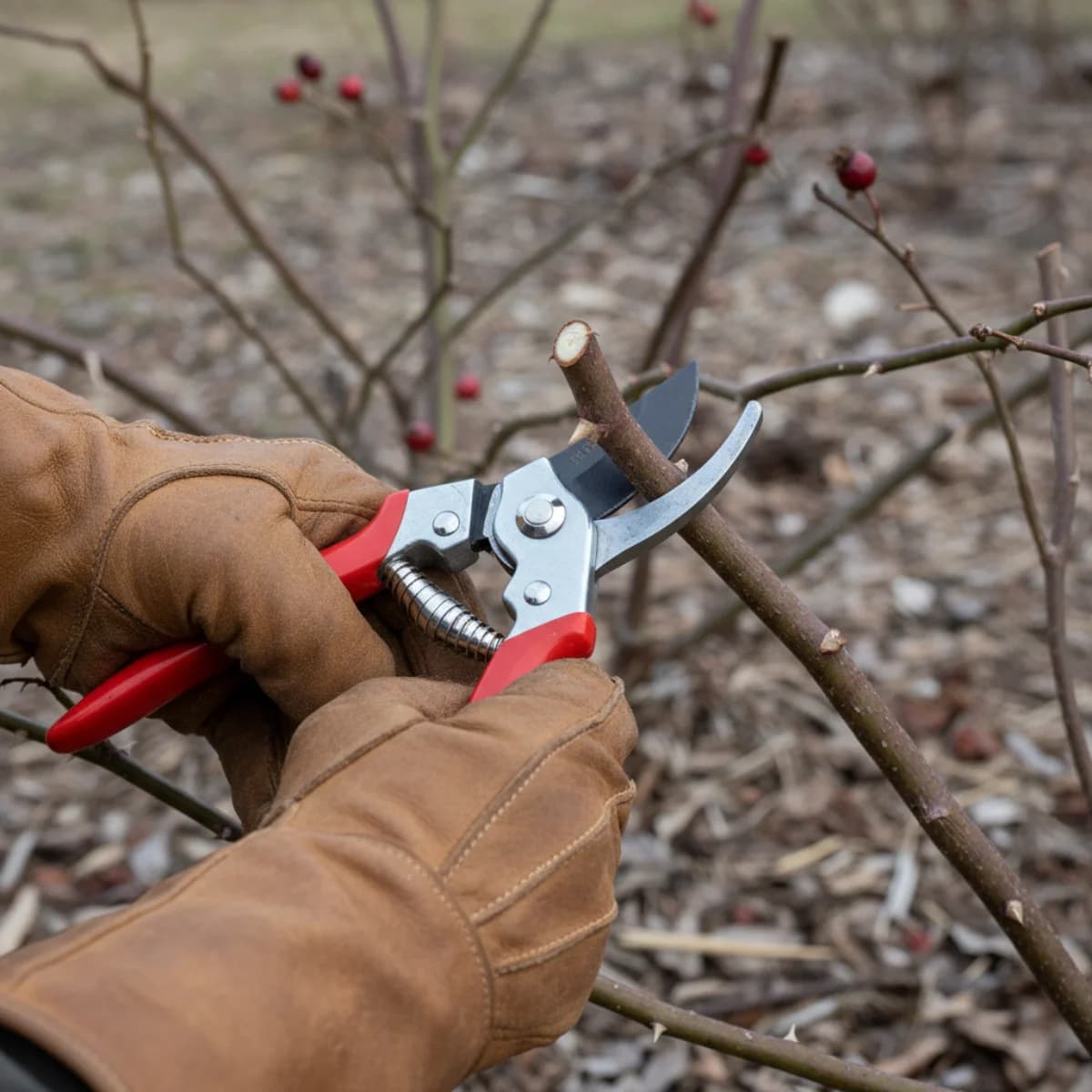
Bypass pruners: The key is the single beveled cutting blade (the curved, sharp blade). Hold the tool at the bevel angle—typically 15-25 degrees—and run a diamond sharpening rod or bench stone along the bevel from heel to tip, with consistent pressure. 5-10 strokes per side is usually enough for regular maintenance. A folding diamond file is the most convenient tool for this job in the field.
Don’t try to sharpen the flat face of the cutting blade—this is intentionally flat and sharpening it changes the geometry. Sharpen only the beveled face.
Loppers: Same principle as pruners but with larger blades. A flat mill bastard file works well for the larger cutting blades.
Hoes, spades, and forks: The cutting edge of a hoe or the blade of a spade should have a reasonable edge—not razor-sharp, but not blunt. A mill bastard file drawn along the beveled edge (typically the front face of a spade, the cutting edge of a hoe) restores it. 5-10 strokes, checking progress as you go.
Pruning saws: Most modern folding and fixed pruning saws have hardened-point teeth that can’t be resharpened with standard files. When the teeth dull, replace the blade (many folding saws have replaceable blades) or retire the saw.
Treating Wooden Handles
Wooden handles dry out and crack with age, which is both uncomfortable to hold and structurally weakening. Annual treatment extends handle life dramatically.
Wipe the handle down with a cloth, then apply a coat of linseed oil (raw linseed oil is traditional; boiled linseed oil dries faster). Let it soak in for a few minutes, then wipe off excess. The wood should darken slightly and feel smooth and slightly tacky. Let dry fully before storing.
Check handles for cracks, splinters, or wobble (loose head connection). A handle that’s cracked through or has a head that wiggles significantly should be replaced—cracked handles can fail under load, which is a safety issue with heavy tools like spades and forks.
Oil Pivot Points
On tools with moving parts—pruner joints, lopper hinges, telescoping handles—a drop of household oil or light machine oil at the pivot point keeps the action smooth and prevents corrosion at the joint.
On scissors-style tools (bypass pruners), over-tightening the blade tensioner makes them hard to use; under-tightening causes them to chew rather than cut. Adjust the tensioner bolt so blades stay in contact along the whole blade length but the action is still smooth.
Tools Worth Investing In
While you’re assessing your kit, consider whether there are tools you’re missing that would make the season easier:
A good hori-hori: This Japanese soil knife—a thick, double-edged steel blade with depth markings—is the most versatile hand tool in the garden. It digs, weeds, divides, cuts roots, and transplants. A quality hori-hori (Niwaki, Radius, or Japanese-made) with a serrated edge on one side is exceptional.
Narrow border spade: Lighter and more maneuverable than a standard digging spade; much more useful in planted borders where you’re working around existing plants.
Quality bypass pruners: Felco (Swiss-made, parts available, repairable), ARS (Japanese, excellent quality), or Bahco are the standard recommendations for serious gardeners. A good pair, properly maintained, will last 20+ years.
Long-handled cultivator or collinear hoe: For surface weeding in beds without bending. A sharp hoe used weekly on dry soil prevents weed establishment; nothing beats it for this task.
Storage
Store tools somewhere dry—a garage, shed, or mudroom. Hanging them on a wall rather than standing them in a corner prevents handles from absorbing floor moisture and keeps them visible and accessible.
A simple wall-mounted tool rack can be built in an afternoon from scrap lumber. Hooks, pegboard, and purpose-built tool racks all work. The goal is individual storage so tools aren’t piled against each other.
For long-handled tools (spades, forks, rakes), hang by their handles. For hand tools, hooks or the sand bucket method (tools stored blade-down in an oil-sand mix) both work well.
The Return on Investment
Quality garden tools are a long-term investment. A $30 spade from a box store often has a pressed steel blade that dulls quickly, a handle that cracks within a few seasons, and a poorly balanced weight that makes every task harder. A $80-120 spade from a quality manufacturer has a forged blade that takes and holds an edge, a well-seasoned ash handle that’s comfortable for hours, and a balance that makes the tool feel like an extension of your arm.
Buy once, buy well, take care of it. A maintained quality tool is better than a new cheap one every few years, and significantly more satisfying to use.
Sources & Further Reading
- Maintaining Lawn and Garden Tools — University of Wisconsin Extension Horticulture
- Care and Maintenance of Garden Tools — OSU Extension Service
- Garden Tool Maintenance — UC Master Gardeners, UC Agriculture and Natural Resources