Amend Your Soil Now for a Better Spring Garden
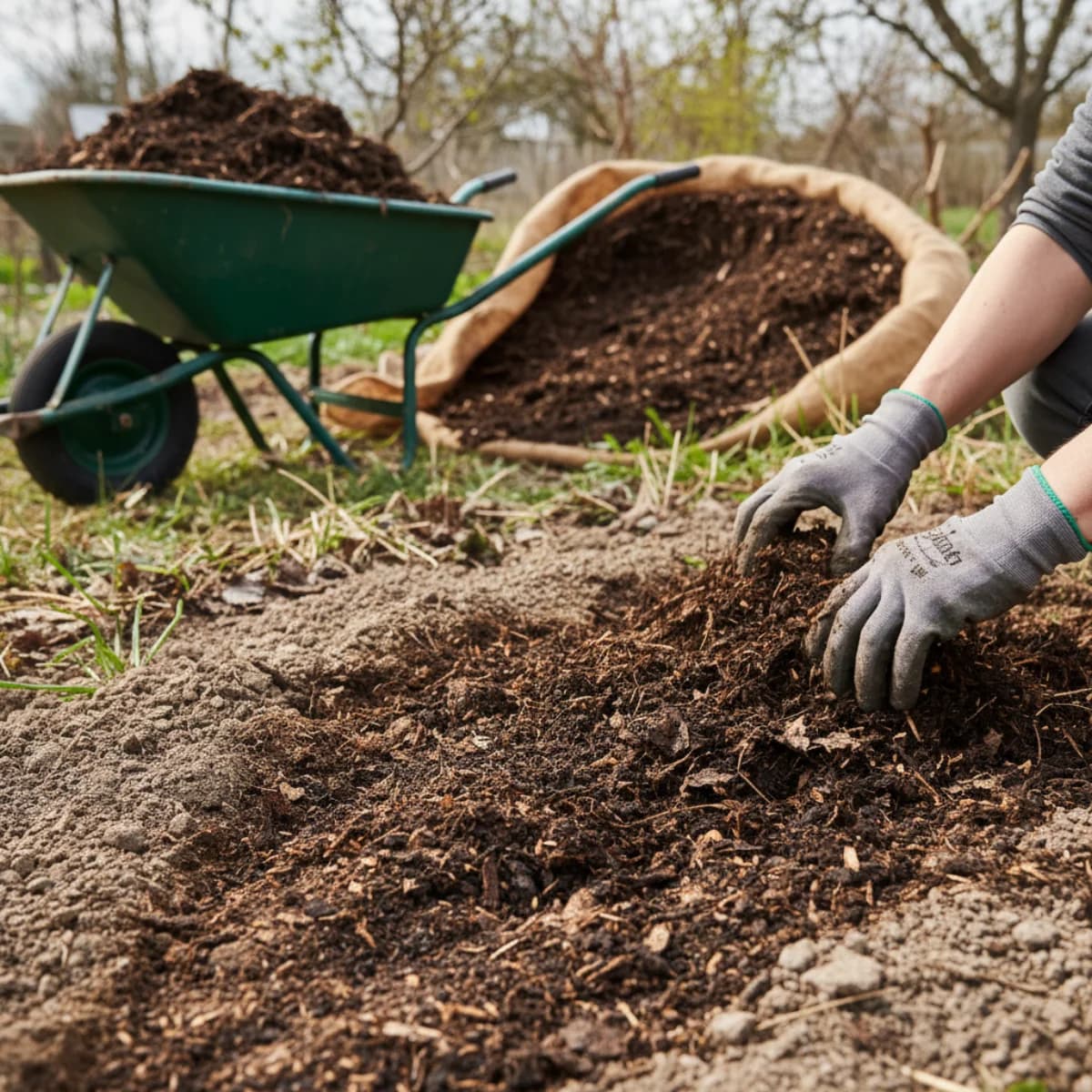
The most important gardening work you do in February doesn’t involve seeds or pruning or any of the tasks that feel like gardening. It involves your soil.
Healthy soil doesn’t happen by accident, and it doesn’t improve overnight. It’s built slowly through deliberate inputs of organic matter, appropriate minerals, and the biological communities that process it all into something plants can use. The best time to do this work is right now—late winter—when the soil is beginning to thaw, your beds are empty, and amendments have weeks to begin integrating before the first transplants go in.
What Soil Actually Needs
Before deciding what to add, it helps to understand what soil is and what it’s trying to do for your plants.
Healthy garden soil is roughly 45% mineral particles (sand, silt, and clay in varying proportions), 25% water, 25% air, and 5% organic matter. That 5% organic matter does a disproportionate amount of work: it feeds the microbial community, improves structure in both clay and sandy soils, buffers pH extremes, and slowly releases nutrients as microbes break it down.
Most garden soils are deficient in organic matter—not because organic matter doesn’t work, but because we remove it constantly by harvesting crops, and replace it inconsistently. The result over time is hard, depleted soil with poor water retention, low microbial activity, and increasingly poor plant performance.
The remedy is consistent, ongoing addition of organic matter, year after year.
The Core Amendment: Compost
Nothing replaces compost as the foundation of healthy soil building. It’s not just fertilizer—it improves physical structure, supports microbial life, and moderates pH, all at once. No bagged fertilizer or soil amendment does all of this.
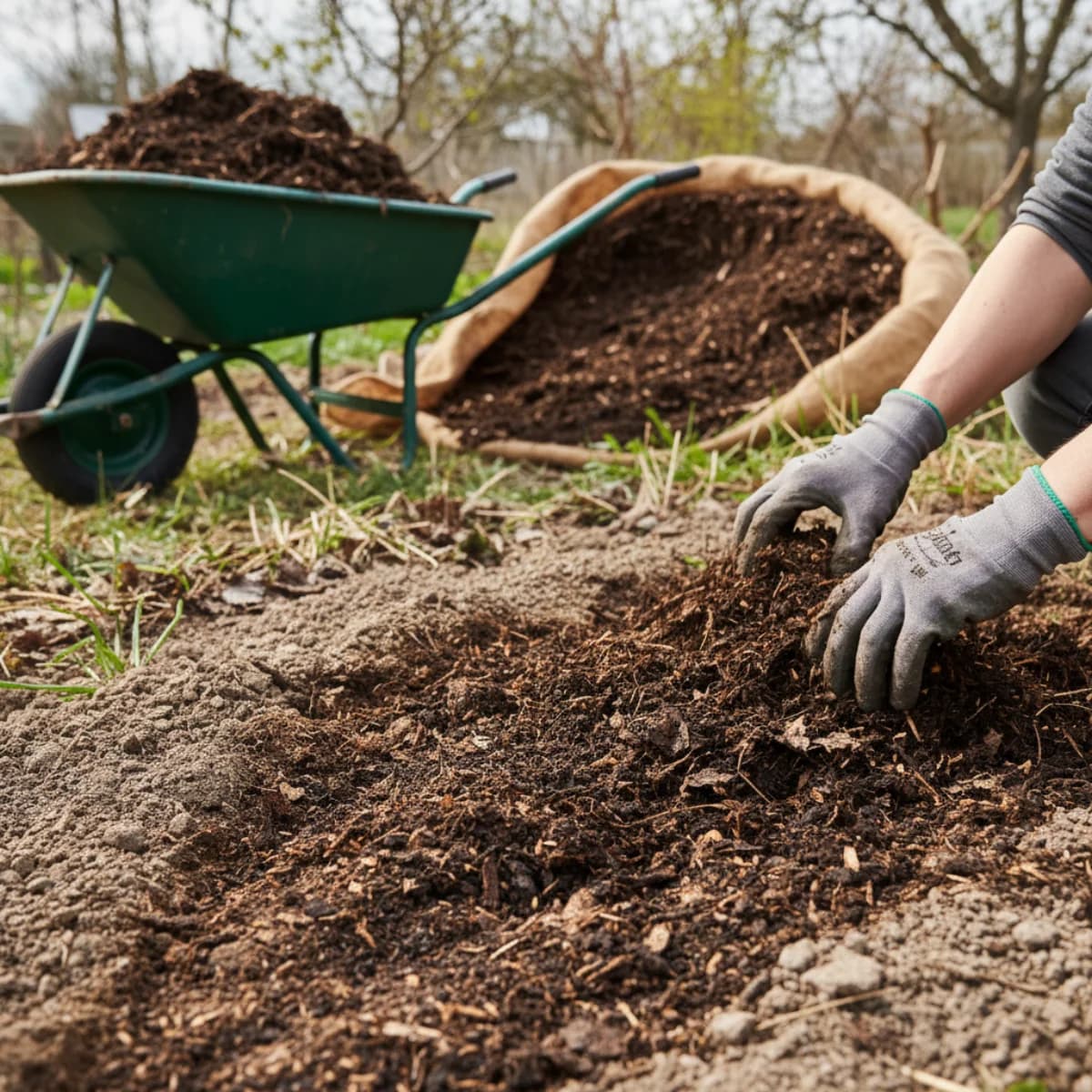
How much to apply: 2-4 inches spread over the entire bed surface, then worked into the top 6-8 inches. This is more than most gardeners typically apply. For a new or depleted bed, go heavy: 4 inches to start. For an established bed that’s been composted for several years, 2 inches as a maintenance application is enough.
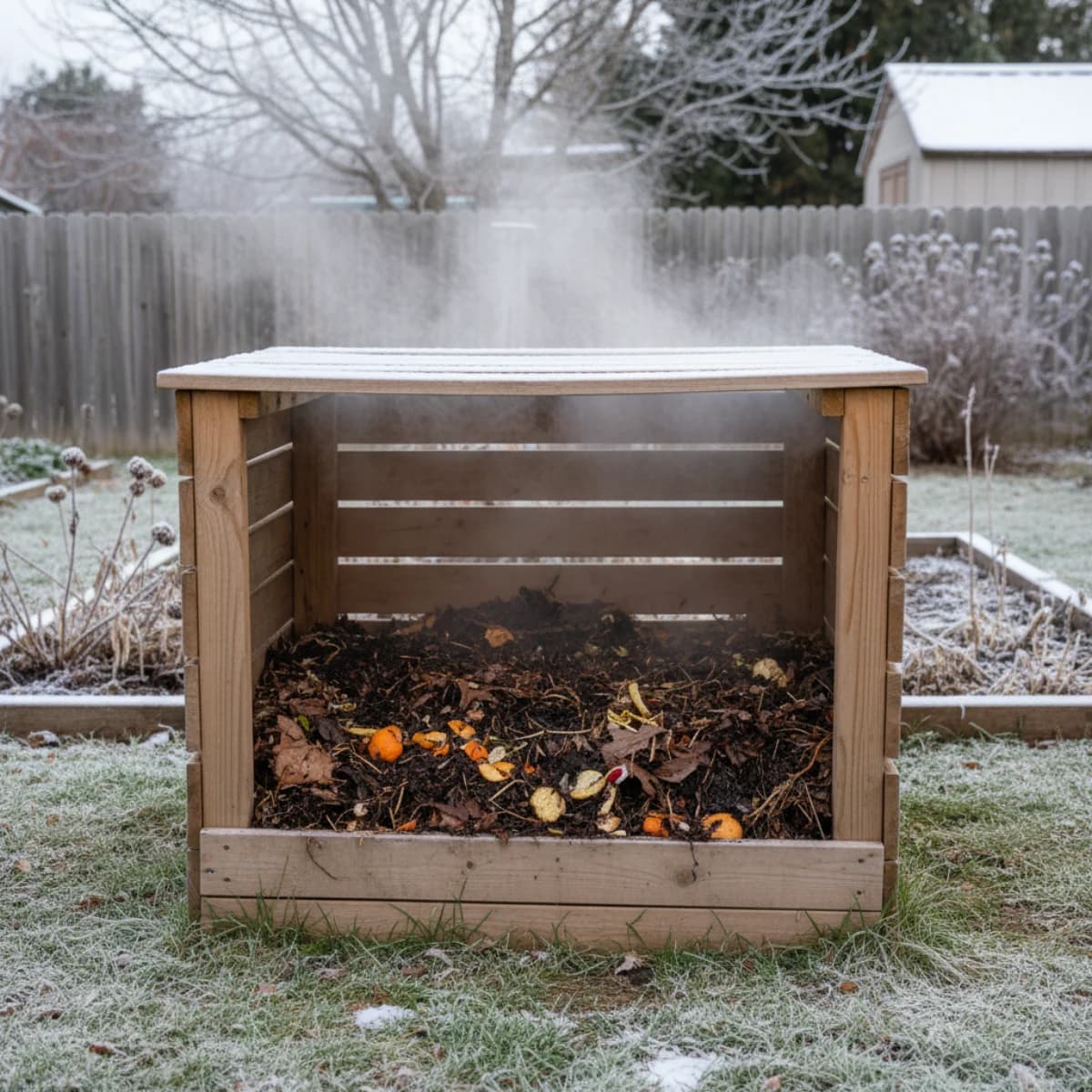
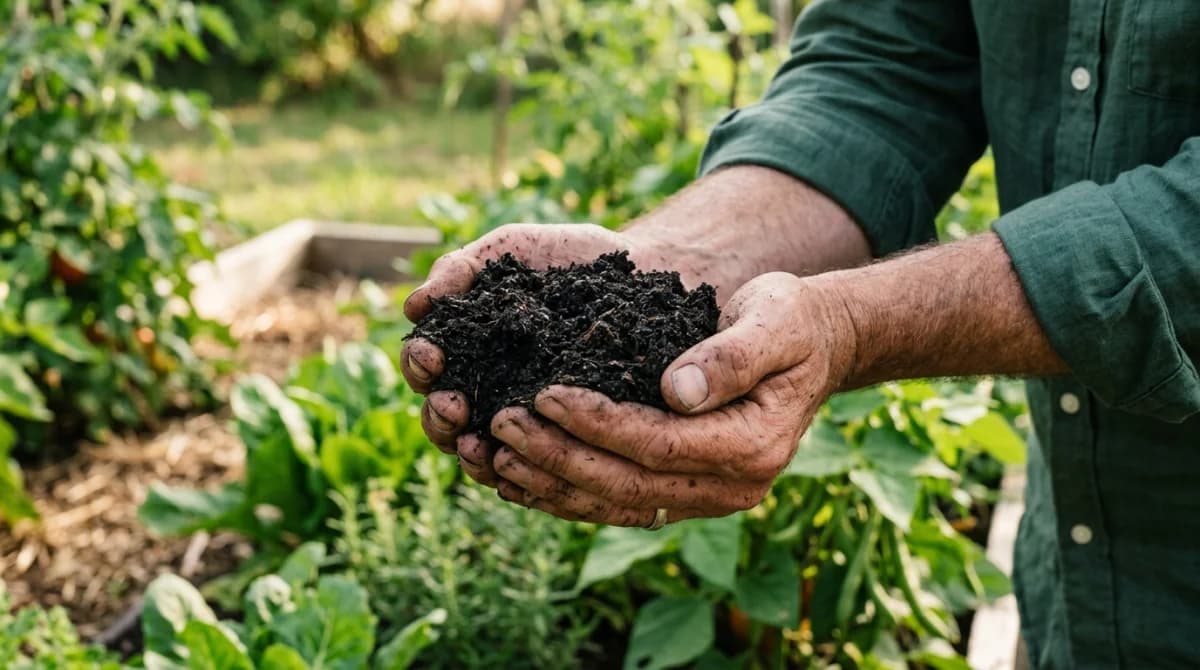
What kind: Homemade compost from a well-managed pile is best—it’s finished, diverse, and free. If you don’t have enough, look for municipal compost (often free or low-cost from your city), or buy bagged compost. Avoid compost labeled “topsoil mix” or heavily diluted products. Look for a product that smells earthy, crumbles easily, and lists compost as the primary ingredient.
When to apply: Apply compost now, in February, and work it in lightly. The freeze-thaw cycles of late winter help it integrate into the soil. By planting time in spring, it’s well-settled.
Getting a Soil Test
Before adding anything beyond compost, get a soil test. Most state universities with extension services offer soil testing for $15-25 and return a detailed report with specific recommendations. Private labs like Logan Labs offer more detailed analysis.
A soil test tells you:
- pH: Most vegetables prefer 6.0-7.0. Too acidic or alkaline locks out nutrients even when they’re present
- Nutrient levels: N-P-K plus micronutrients. Some soils are genuinely well-supplied; others are deficient
- Organic matter percentage: Tells you where you’re starting and helps set goals
- Texture: Percentage of sand, silt, and clay
Without a test, you’re guessing. And guessing at soil amendments isn’t harmless—excess phosphorus locks out micronutrients; too much lime raises pH beyond plant tolerance. Applying based on actual data is always better.
If you’ve never tested your soil, do it this winter and use the results to guide your February amendments.
Common Amendments by Situation
For Clay Soil
Clay soil holds water and nutrients well but compacts badly and drains poorly. The only real solution is more organic matter over time—compost, compost, and more compost. The idea of adding sand to clay soil to improve drainage is a myth: you’d need to add so much sand that you’d essentially build a new soil from scratch. Skip the sand; add compost every year.
In the short term, consider adding gypite (calcium sulfate) to help clay particles aggregate into larger clusters—this is different from calcitic lime and doesn’t affect pH.
For Sandy Soil
Sandy soil drains well but doesn’t hold water or nutrients. Organic matter again is the main tool—it helps sandy soil retain both water and nutrients. Compost helps here too, though you may need more of it and more frequently.
For Low pH (Acidic Soil)
Most vegetables prefer slightly acidic soil (6.0-6.5). If your pH is below 6.0, add ground calcitic or dolomitic limestone according to your soil test recommendations. Lime is slow-acting—it takes weeks to months to fully adjust pH, which is why applying in fall or winter works better than applying in spring.
Dolomitic lime also supplies magnesium, useful if your soil test shows a magnesium deficiency.
For High pH (Alkaline Soil)
pH above 7.5 is increasingly common in arid Western regions and areas with limestone-heavy parent material. Lower it with elemental sulfur, worked in according to your soil test. Like lime, sulfur is slow-acting and benefits from a fall or early winter application.
For Low Nitrogen
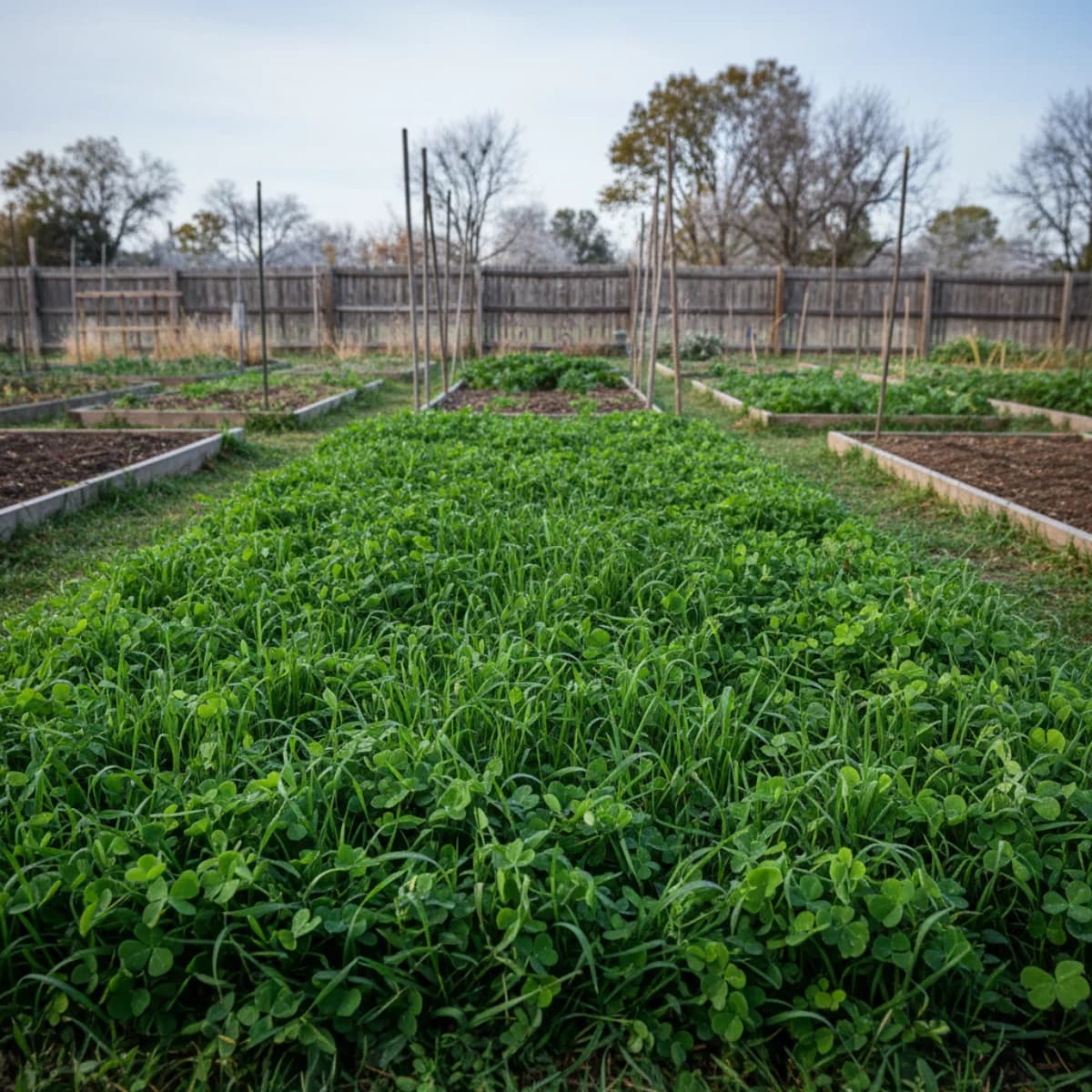
Nitrogen is tricky to add in winter because it leaches with rainfall. The most effective approach is planting cover crops in fall (too late for this season) or incorporating high-nitrogen organic materials in early spring—blood meal, feather meal, or well-aged manure applied a few weeks before planting.
For most vegetable gardens, compost provides adequate nitrogen for the growing season without the risk of nitrogen burn.
Working Amendments In
Spread compost and other amendments on the soil surface, then work them into the top 6-8 inches. Options:
- Hand digging: Use a spading fork or spade. Work in small sections, turning amendments thoroughly into the soil. Best for small beds or areas with shallow topsoil.
- Broadfork: A two-handled fork that aerates deeply without fully inverting the soil, preserving soil structure and microbial communities. Popular in no-till gardening.
- Rototiller: Works quickly for larger areas but can overwork soil if used repeatedly, breaking down structure over time. Use for initial bed preparation, then transition to hand-working.
What Not to Do
Don’t add fresh manure in spring: Fresh manure is high in nitrogen that burns plants and may contain pathogens. Hot compost that spent at least three months in a pile is different—well-composted manure is safe.
Don’t add peat moss as your main amendment: Peat does improve soil structure, but it’s an environmentally costly product harvested from irreplaceable bog ecosystems. Compost does most of what peat does without the ecological cost.
Don’t over-apply fertilizers: More is not better. Excess fertilizer salts damage soil microbial communities and can harm plant roots.
Don’t work soil when it’s wet: Working wet clay soil smears the particles together into compacted layers. Test before digging: grab a handful of soil and squeeze it. If it crumbles when you open your hand, it’s ready. If it holds a muddy ball, wait a few more days.
Building Soil Is a Long Game
No single season of soil work transforms a depleted bed into perfect ground. It takes 3-5 years of consistent compost additions, appropriate amendment, and good management to dramatically improve soil organic matter and structure.
But the gardeners who invest in their soil consistently—who compost, who cover crop, who work with their land—see results that gardeners focused on fertilizers and pesticides never achieve. Healthy soil produces plants that resist drought, shrug off pest pressure, and produce more abundantly.
Start this February. Your soil will still be there in ten years, and it will be better for the work you do now.
Sources & Further Reading
- Organic Matter and Soil Amendments — University of Maryland Extension
- Improving Garden Soils with Organic Matter — Oregon State University Extension
- Choosing a Soil Amendment — Colorado State University Extension
- Compost and Soil Organic Matter: The More, the Merrier? — University of Minnesota Extension