Your April Garden Checklist: Everything to Plant, Prune, and Prepare
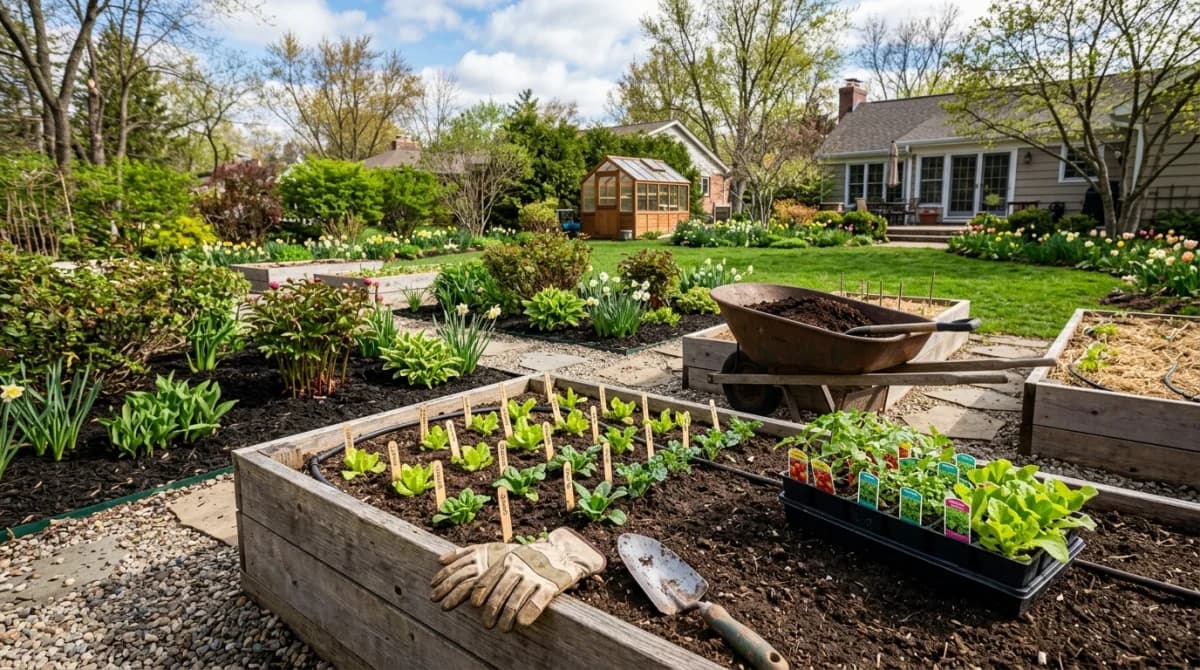
April is when the garden shifts from planning to doing. Everything that was theoretical in January and cautious in March suddenly becomes urgent. Seedlings need to move outside, perennials are waking up, the soil is finally workable, and you have a window of a few weeks to get most of your spring planting done before summer heat arrives.
This checklist breaks the month down by task type and zone so you can work through it at your own pace without missing anything important.
Transplanting Seedlings (Zones 5–8)
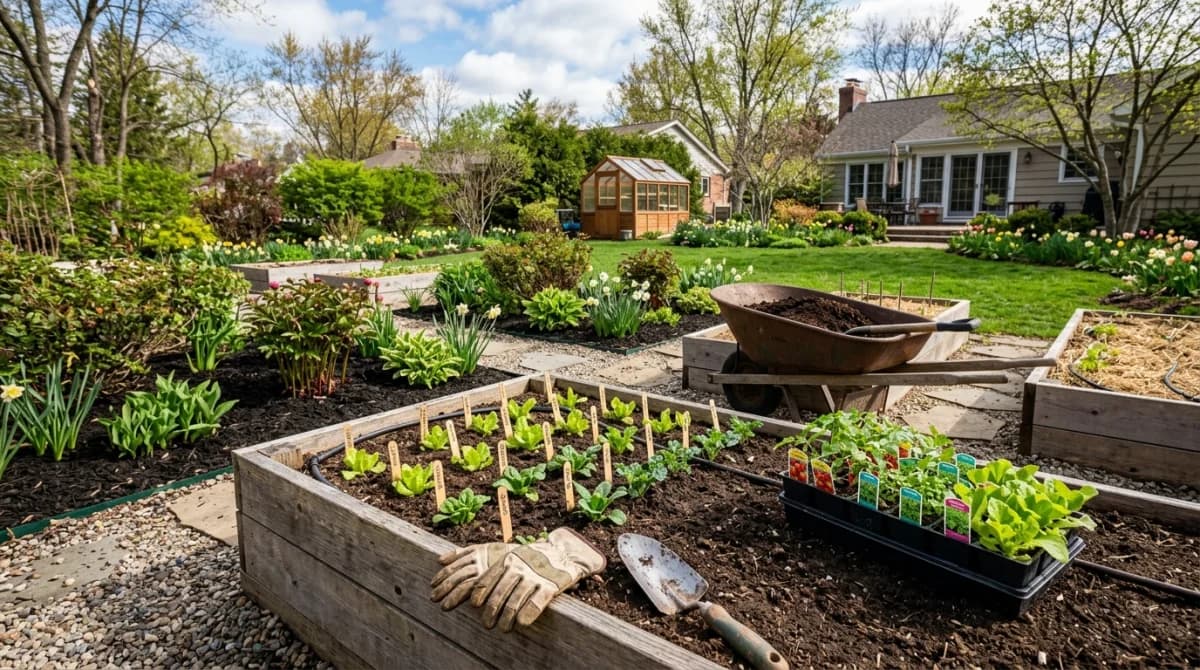
If you started seeds indoors in February or March, April is the month most of them move outside. The key is timing the transition correctly.
Harden Off First
Never move seedlings straight from a grow-light shelf to full sun. The UV shock will scorch the leaves and set the plants back by weeks. Instead, harden them off over 7 to 10 days:
- Days 1–3: Place trays outside in full shade for 2 to 3 hours, then bring them back in.
- Days 4–6: Move to partial sun for 4 to 6 hours. Leave out a bit longer each day.
- Days 7–10: Full sun, all day. Leave out overnight if nighttime temps stay above 50°F (10°C).
What to Transplant When
- Early April (zones 6–8): Brassicas (broccoli, cabbage, kale, Brussels sprouts), lettuce, spinach, Swiss chard, onion sets, and hardy annual flowers like snapdragons, pansies, and sweet peas.
- Mid to late April (zones 6–7): Tomatoes, peppers, and eggplant once nighttime lows consistently stay above 50°F. If a late frost threatens, have row cover or old bedsheets ready.
- Late April (zone 5): Cool-season crops go out now. Hold warm-season crops until mid-May unless you’re using season extension like wall o’ waters or cloches.
Transplanting Technique
Dig the hole twice the width of the root ball. Pop the seedling out gently, loosen any circling roots, and set it at the same depth it was growing (except tomatoes, which can be buried deeper to encourage root growth along the stem). Water deeply right after planting. Mulch around the base once the soil has warmed.
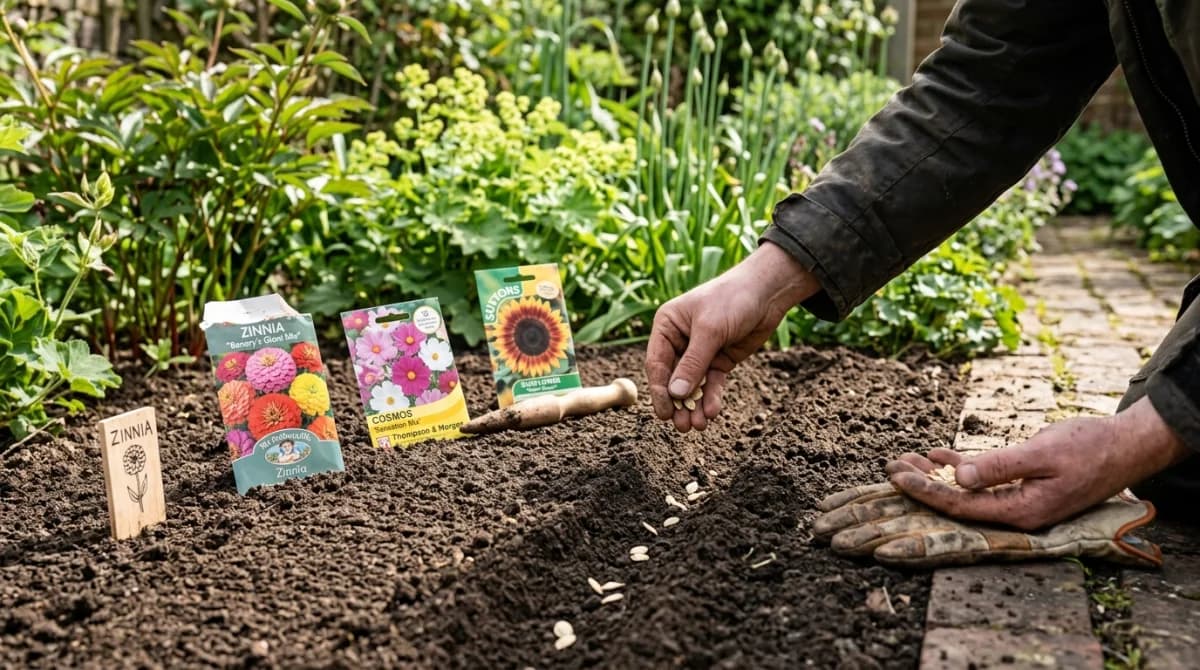
Direct Sowing (All Zones)
Some crops resent transplanting and do better sown straight into the garden.
Cool-Season Direct Sow (Zones 4–8)
- Peas: If you haven’t already, early April is your last good window. Inoculate seeds with rhizobium bacteria for better nitrogen fixation.
- Radishes: Sow every 10 days for a continuous harvest through spring.
- Carrots: Sow thinly in loose, stone-free soil. Keep the surface moist until germination, which can take 14 to 21 days.
- Beets: Soak seeds overnight before planting to speed up germination. Each seed cluster produces multiple seedlings, so thin early.
- Spinach and arugula: These bolt fast once days get long and hot. Sow in partial shade for the longest harvest.
Warm-Season Direct Sow (Zones 7–9)
In warmer zones, April soil temps are high enough to direct-sow beans, cucumbers, squash, and corn. Wait until the soil thermometer reads at least 60°F (15°C) at a 4-inch depth. Planting in cold soil leads to rot, not germination.
Perennials and Shrubs
April is the best month to plant container-grown perennials, and it is one of the best windows for new shrubs and trees.
Planting New Perennials
Garden centers are fully stocked in April, which makes it tempting to buy everything. Before you load the cart, know your conditions: sun exposure, soil type, and the mature size of each plant. A plant that gets 4 feet wide needs space for 4 feet, not the 6 inches it occupies in a one-gallon pot.
Good perennials to plant in April:
- Sun: Echinacea, rudbeckia, salvia, catmint (Nepeta), daylilies, lavender (in well-drained soil)
- Part shade: Heuchera, astilbe, brunnera, bleeding heart (Dicentra), hellebores
- Shade: Hostas, ferns, Solomon’s seal, tiarella
Water new perennials deeply at planting and keep the soil consistently moist for the first month. After that, most established perennials can handle drier conditions.
Dividing Overgrown Clumps
If your hostas, daylilies, or ornamental grasses have outgrown their spots, divide them now while they are just emerging. Lift the entire clump with a garden fork, split it into sections with a sharp spade, and replant immediately. Water well. Each division should have at least 3 to 5 growing points.
Planting Trees and Shrubs
Container-grown trees and shrubs planted in April have an entire growing season to establish roots before winter. Dig the hole twice as wide as the root ball but no deeper. The root flare (where the trunk widens at the base) should sit at or slightly above the soil line. Backfill with native soil (no amendments in the hole), water thoroughly, and mulch with 2 to 3 inches of wood chips, keeping mulch away from the trunk.
Lawn Care
Spring lawn care is about getting the turf growing evenly, not about perfection.
Zones 4–6
- Rake lightly to remove dead grass and debris. This improves air circulation and lets new growth reach sunlight.
- Overseed bare patches with a grass species that matches your existing lawn. Rake seed into the surface, press down with your foot or a roller, and keep moist until germination.
- Hold off on fertilizer until the lawn has been actively growing for 2 to 3 weeks. Fertilizing dormant grass feeds weeds, not turf.
- Mow high. Set the blade to 3 to 3.5 inches. Taller grass shades out weed seeds and grows deeper roots.
Zones 7–9
Warm-season grasses (bermuda, zoysia, St. Augustine) are greening up now. Apply a light fertilizer once the lawn is fully green. Avoid pre-emergent herbicides if you plan to overseed, since they prevent all germination, not just weeds.
Pruning
April pruning is mostly about shrubs that bloom on new wood and cleaning up winter damage.
What to Prune Now
- Summer-blooming shrubs: Butterfly bush (Buddleja), panicle hydrangeas (Hydrangea paniculata), Rose of Sharon, beautyberry, and spirea. These bloom on the current season’s growth, so pruning now encourages more flowers.
- Roses: Hybrid teas, floribundas, and grandifloras should be pruned when forsythia blooms in your area. Cut out dead wood, remove thin or crossing canes, and shape the bush to an open vase form. Cut to an outward-facing bud.
- Winter damage: Remove any dead or broken branches from trees and shrubs. Cut back to healthy wood just above a bud or branch junction.
What NOT to Prune
Do not prune spring-blooming shrubs (lilac, forsythia, azalea, rhododendron, bigleaf hydrangea) until after they finish flowering. Pruning them now removes the flower buds that are about to open.
Soil and Bed Prep
Test Your Soil
If you haven’t had a soil test in the last 2 to 3 years, send samples to your local cooperative extension office. The results will tell you exactly what amendments to add rather than guessing. Tests typically cost $15 to $30 and take 1 to 2 weeks.
Amend and Mulch
Work a 2-inch layer of compost into beds that were not amended in fall. For established perennial beds, top-dress with compost rather than digging it in. Once the soil has warmed, apply 2 to 3 inches of mulch (shredded bark, wood chips, or leaf mold) to suppress weeds and retain moisture. Keep mulch a few inches away from plant stems.
Edge Your Beds
A clean edge makes any garden look intentional. Use a half-moon edger or flat spade to cut a crisp line between beds and lawn. This takes 20 minutes per bed and has an outsized visual impact.
Container Gardens
April is the right time to refresh containers for spring and early summer.
Cool-Season Containers (All Zones)
Fill pots with pansies, violas, ranunculus, stock, and trailing ivy or vinca for an instant spring display. These handle light frost and look good for 6 to 8 weeks until summer heat retires them.
Warm-Season Containers (Zones 7–9)
In warmer zones, you can jump straight to summer annuals: petunias, geraniums, calibrachoa, and sweet potato vine. Use fresh potting mix each year. Old mix compacts and loses its ability to drain properly.
Herbs on the Patio
Plant a container with basil, parsley, chives, and thyme near the kitchen door. Use a pot at least 12 inches wide. Herbs in containers dry out faster than those in the ground, so check moisture daily.
Pest and Disease Watch
April is when pest pressure starts building. Catching problems early is far easier than dealing with infestations later.
- Aphids appear on new growth of roses, fruit trees, and vegetables. A strong spray of water knocks most of them off. Ladybugs and lacewings handle the rest.
- Slugs are active in cool, damp weather. Spread iron phosphate bait around hostas, lettuce, and other slug favorites.
- Fungal diseases like powdery mildew and black spot start when days are warm and nights are cool. Improve air circulation by spacing plants properly and avoid overhead watering in the evening.
Planning Ahead
Even as you’re busy planting, keep one eye on the coming months.
- Order summer bulbs (dahlias, gladiolus, lilies) if you haven’t already. Plant them after the last frost.
- Plan your irrigation. If you’re installing drip irrigation or soaker hoses, do it before plants fill in and the lines become difficult to place.
- Photograph your garden. Take wide shots from the same vantage points each month. By December you’ll have a visual record of the entire season that informs next year’s design decisions.
If you’re still working out where new plantings should go, Gardenly can help you visualize changes to your garden before you start digging. Upload a photo of your space, pick a style, and see how it could look.
April rewards the gardener who shows up consistently. Thirty minutes a day through the month accomplishes more than a single weekend marathon. Work through this list at your own pace, and by May your garden will be well ahead of the season.