How to Attract Winter Birds to Your Garden with the Right Plants
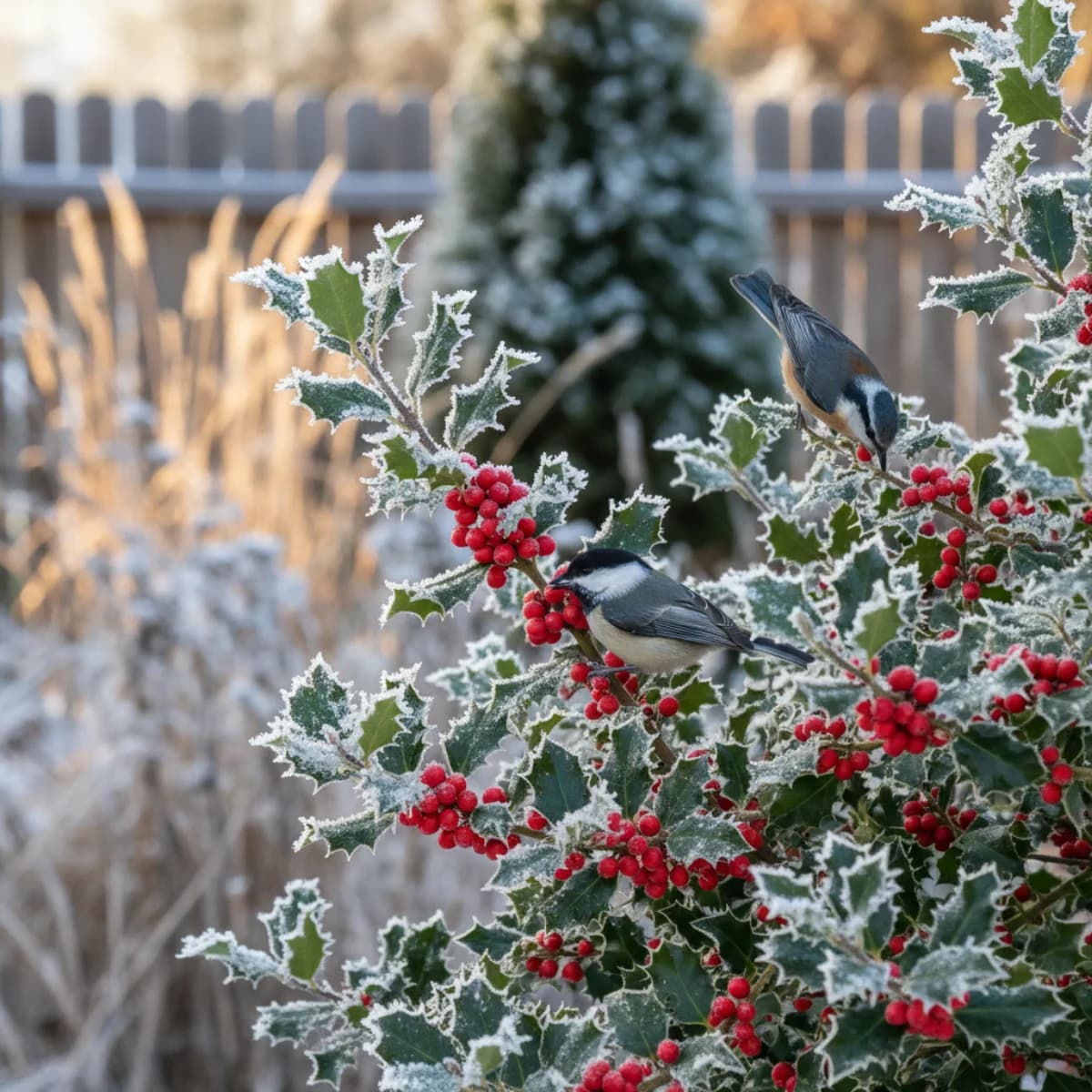
A garden in January looks quiet. But watch for ten minutes and you’ll often see it’s anything but: a nuthatch working its way down the trunk of an oak, goldfinches hanging upside down from the seedheads of brown coneflowers, a wren disappearing into a dense shrub. The garden that looks dead supports more life than you might think—if you’ve designed it with that in mind.
Attracting winter birds to your garden comes down to three things: food, water, and shelter. Plants provide all three simultaneously, which is why a plant-based approach to wildlife gardening is more sustainable and more beautiful than hanging a feeder and calling it done (though feeders help too).
Why Winter Is the Hardest Season for Birds
Food is scarce in winter. Many insects—a primary food source for most birds—are dormant or absent. Berries that weren’t eaten in autumn are either gone or freeze-thaw cycled into mush. Ground foraging is blocked by snow or frozen ground.
Birds compensate by seeking out reliable food sources: trees and shrubs that hold their fruits through winter, seedheads left standing through the cold, and the insects sheltering in bark crevices, hollow stems, and leaf litter.
A garden designed with birds in mind provides a meaningful fraction of what they need, particularly in areas where natural habitat is fragmented or absent.
Plants That Feed Birds in Winter
Berrying Shrubs and Trees
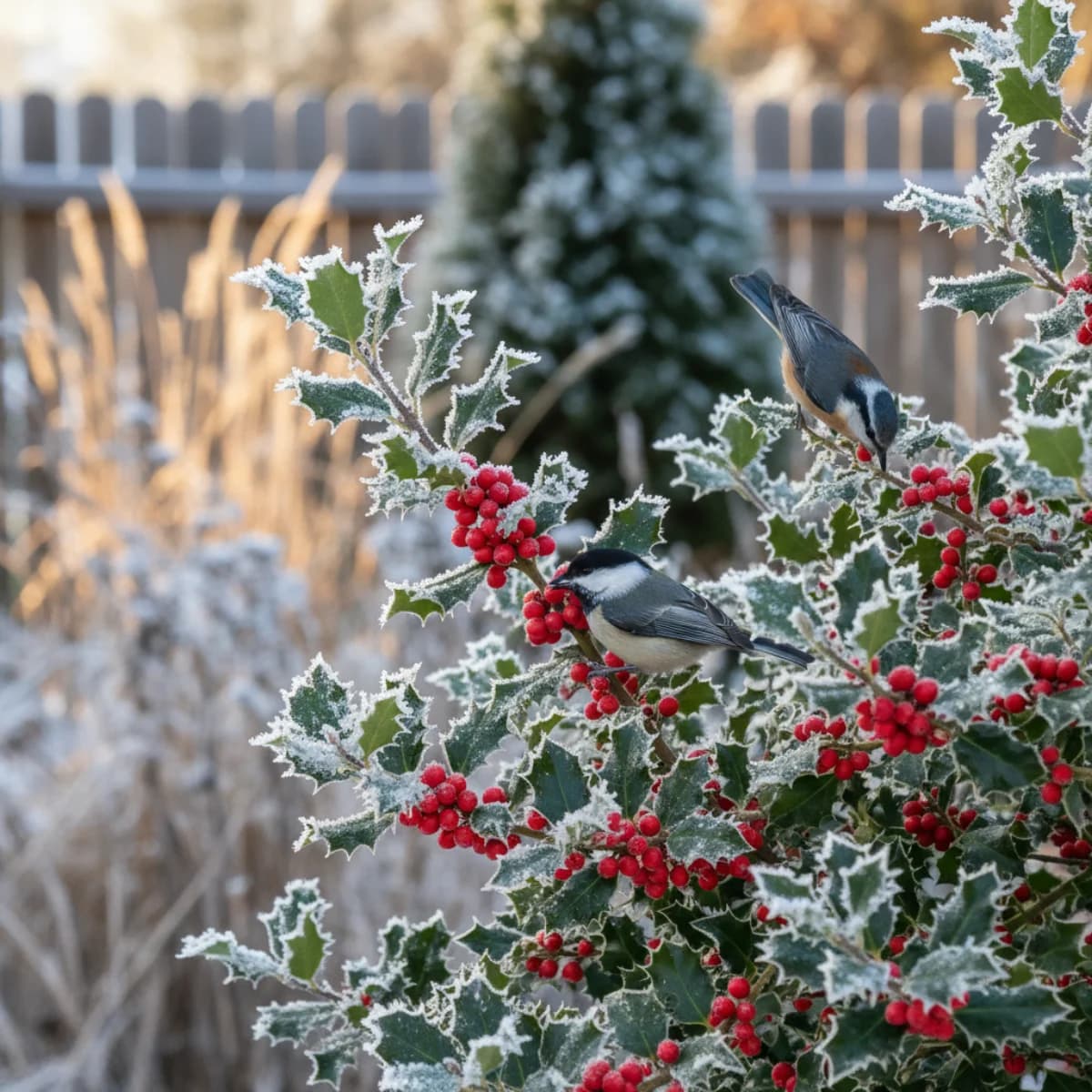
American Holly (Ilex opaca) and inkberry (Ilex glabra): Native hollies are among the most valuable berry-producing plants for birds. The persistent red (or yellow) berries are eaten by mockingbirds, bluebirds, cedar waxwings, hermit thrushes, and many others. Hollies are dioecious—you need a male and female plant for berries. One male can pollinate several females.
Crabapple (Malus spp.): Fruiting crabapples hold their small fruits through most of winter, providing long-lasting food. Choose varieties with small, persistent fruits—‘Prairifire’, ‘Donald Wyman’, or native species like Malus coronaria. Cedar waxwings, robins (in mild-weather populations), and many thrushes depend on these.
Winterberry (Ilex verticillata): A native deciduous holly with spectacular red berries that absolutely glow against snow and bare branches. Loved by cedar waxwings and bluebirds. Prefers wet or moist conditions—good for areas that stay wet in winter.
Beautyberry (Callicarpa americana): Produces remarkable clusters of metallic purple berries in fall that often persist into winter. Native to the American southeast; various Callicarpa species are available for other regions.
Native viburnums (Viburnum dentatum, V. trilobum): Native viburnums produce blue-black, red, or orange berries that persist through early winter. Important fruit source for cedar waxwings, bluebirds, and thrushes.
Hawthorns (Crataegus spp.): Dense, thorny structure provides excellent shelter; persistent berries feed waxwings, robins, thrushes, and others through winter.
Seedhead Plants (Leave Standing Through Winter)
This is where winter garden cleanup choices matter enormously. Most gardeners cut everything down in fall; every cut stem removes a potential food source.
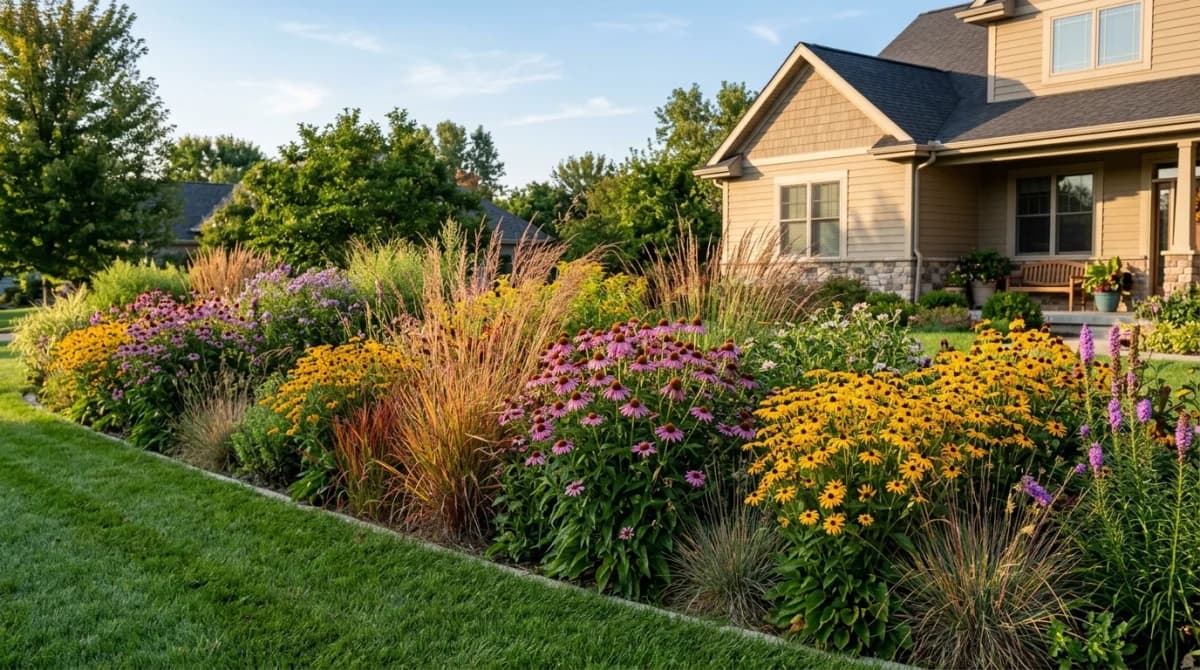
Coneflowers (Echinacea and Rudbeckia): These produce abundant seeds packed into prominent heads that persist through winter. Goldfinches are particularly dependent on them.
Black-eyed Susans (Rudbeckia hirta): Similar structure to coneflowers; seeds eaten by finches and sparrows.
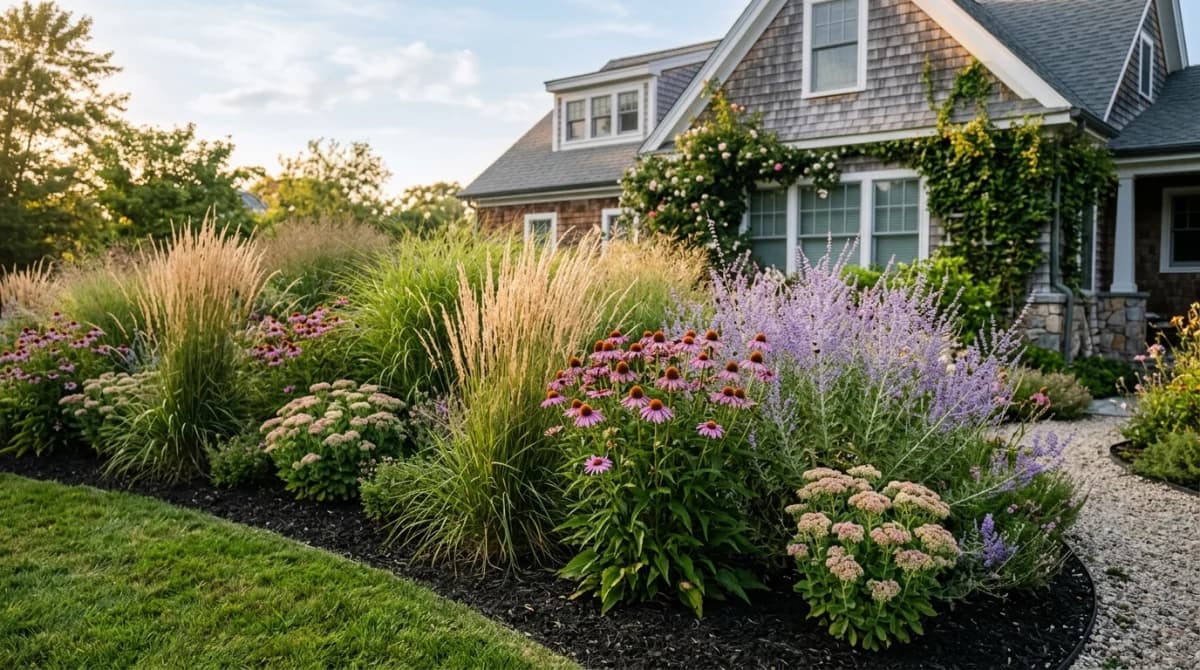
Ornamental grasses: Dense clumps provide seeds (especially Little Bluestem, Panicum, and Sporobolus) and the structure itself shelters insects that birds probe for.
Sunflowers: Any sunflowers left standing after summer will be stripped by finches and sparrows. If you can stand the look, don’t deadhead—or cut the heads off and place them on the ground or in a “seed wreath” for easier bird access.
Purple coneflower (Echinacea purpurea) cultivars: Most release seed as reliably as the straight species—keep at least some species type plants in your garden for maximum seed production.
Asters and goldenrod: Native asters and goldenrods produce small seeds eaten by sparrows and finches, and the dried stems shelter overwintering insects that woodpeckers and other bark-foragers find.
Shelter Plants
Birds need cover to escape predators, rest between feeding bouts, and roost through cold nights.
Dense evergreen shrubs and hedges: Yew, boxwood, holly, and privet provide windproof winter shelter. The denser the better—birds will roost in groups inside the warmest, most sheltered parts.
Conifers: Spruce, arborvitae, and white pine provide excellent overnight roosting sites. A mature spruce with layered branches is like a bird apartment building.
Native shrub thickets: Dense clusters of native shrubs—native roses, hawthorns, elderberries—provide layered cover that birds move through easily.
Nest Boxes in Winter
Install nest boxes in January and February so they’re ready when birds begin scouting for nest sites in late winter. Chickadees, bluebirds, wrens, nuthatches, and tree swallows (in late winter) all begin investigating potential nest sites before you’d expect.
Clean out old nesting material from previous years—this removes parasites and makes the box attractive to new occupants. A 1.5-inch hole diameter is right for most small cavity-nesting birds.
Water Matters Year-Round
In hard winter freezes, standing fresh water becomes scarce. A heated bird bath, or a standard bath with an electric or solar heater added, will draw birds in large numbers when everything else is frozen.
Place it where you can see it from inside and where birds have nearby cover to retreat to quickly. Change the water regularly—still, deep water isn’t ideal; shallow, moving water is best if you can manage it.
The Leaf Litter Layer
One of the most productive bird-feeding areas in a garden isn’t a plant—it’s the leaf litter layer. Towhees, sparrows, robins, and hermit thrushes spend winter foraging through fallen leaves for dormant insects, small invertebrates, weed seeds, and fallen berries.
A thick layer of autumn leaves left under shrubs and in less-tended corners of the garden is a genuine food source, not a mess to be tidied. Let at least part of your garden stay wild through winter.
Planning for Year-Round Wildlife Value
The most wildlife-friendly gardens layer food and shelter sources so something is always available: spring catkins and early insects, summer fruits and nesting, fall berries and seeds, winter shelter and persistent food.
This kind of garden is also, not coincidentally, beautiful through the seasons. The plants that help birds most—native trees, berry-producing shrubs, structural perennials with persistent seedheads—are also some of the most interesting plants in the winter landscape.
Plan for them now. January is the right time to research what’s available from nurseries, order bare-root specimens, and map where they’ll go in the garden. Spring planting of these additions will start providing value within a season or two.
Sources & Further Reading
- Feed Birds in Winter with Berry-Bearing Plants — Oregon State University Extension
- Plants That Feed Backyard Birds in Winter — Oregon State University Extension
- Caring for Birds in the Winter — Penn State Extension
- Attracting Wildlife to Your Garden — University of Maryland Extension