How to Design a Hummingbird Garden That Actually Brings Them In
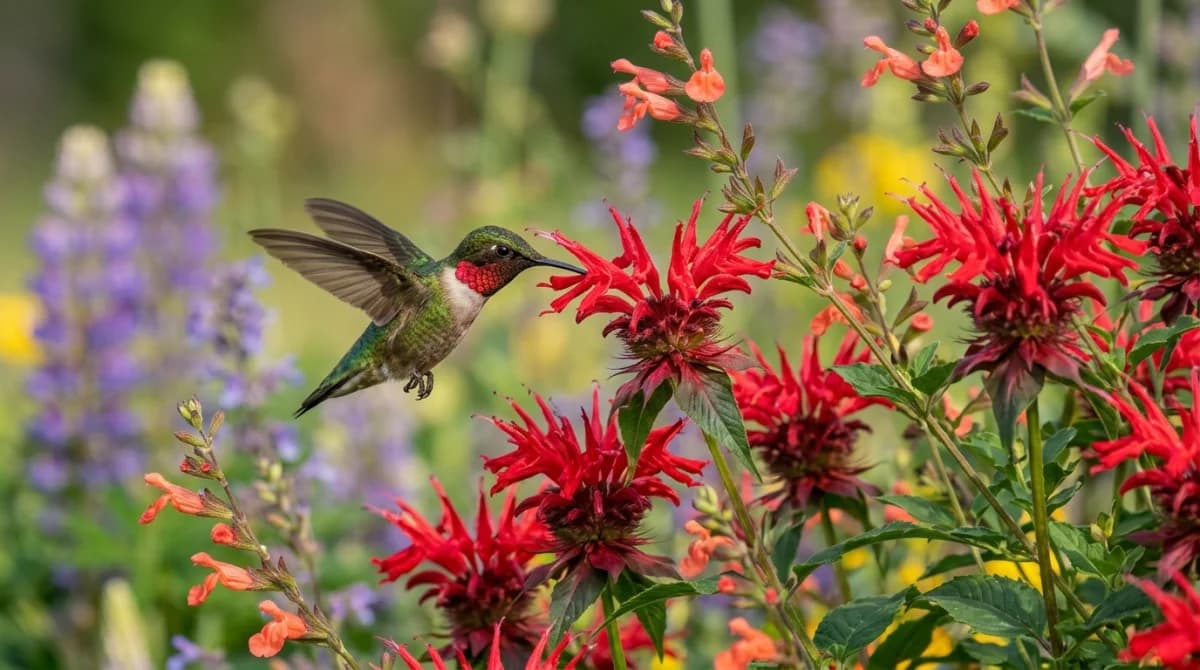
Late April is when hummingbirds are working their way back across most of North America. Ruby-throated hummingbirds are pushing into the Midwest and Northeast, Anna’s are already nesting along the West Coast, and rufous, Allen’s, and broad-tailed hummingbirds are showing up in their summer ranges. If you want them to stop in your yard — and stay — the next few weeks are when the planting and design decisions you make actually pay off.
A real hummingbird garden is not a feeder hung off the porch. It is a garden designed around what hummingbirds need across an entire season: a steady supply of nectar from real flowers, the right plant heights and shapes, perches and shelter, and water. Get those right and you will see them daily. Skip them and you will see the occasional flyby.
Why a Sugar-Water Feeder is Not Enough
Feeders are useful, especially during migration when natural nectar is scarce. But a hummingbird’s diet is not just sugar. They need protein from tiny insects and spiders to feed their young, micronutrients from real flowers, and a wide foraging range to support their absurd metabolism — they consume up to half their body weight in nectar each day and visit hundreds of flowers to do it.
A garden does what a feeder cannot: it provides insects (which are drawn to the plants), variety in nectar chemistry, and the kind of dependable food source that convinces a hummingbird to nest nearby instead of just passing through. The Audubon Society and Cornell Lab of Ornithology both note that yards with diverse native plantings consistently host more hummingbirds for longer periods than yards relying on feeders alone.
The Flower Shapes Hummingbirds Are Built For
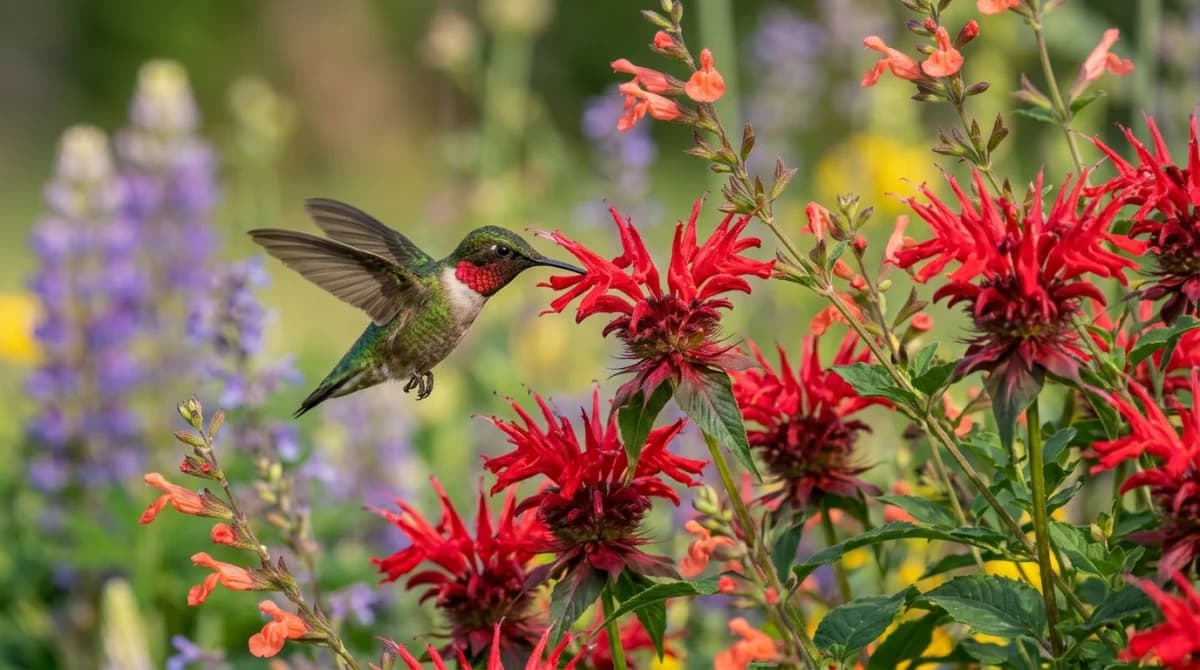
Hummingbird bills evolved to reach into long, tubular flowers — the same flowers most insects struggle to access. Length and shape matter more than color, though red and orange catch their eye first because most insect pollinators do not see red as a strong signal, leaving those flowers effectively reserved for hummingbirds.
What to plant in tubular form:
- Red, orange, pink, purple, and even yellow — color cues attract attention, but hummingbirds will visit any well-shaped tubular flower. Do not chase a “must be red” rule.
- Single, not double flowers — many double-flowered cultivars have replaced their nectaries with extra petals. Stick with single forms for nectar production.
- Avoid heavily hybridized bedding annuals that have been bred for show rather than nectar. A breeder’s notes will rarely tell you this; if a flower looks unusually fluffy or short-stemmed compared to the wild form, it likely produces less nectar.
The Core Plant List by Region
The single biggest mistake in hummingbird gardens is using a generic “hummingbird plant” list pulled from a national magazine. What matters is what blooms reliably in your climate and zone, ideally with native species that hummingbirds in your region have co-evolved with.
Reliable Natives by Region
- Eastern and Central US: Cardinal flower (Lobelia cardinalis), bee balm (Monarda didyma), wild columbine (Aquilegia canadensis), trumpet honeysuckle (Lonicera sempervirens), red buckeye (Aesculus pavia), spotted jewelweed (Impatiens capensis).
- Pacific and Mountain West: California fuchsia (Epilobium canum), western columbine (Aquilegia formosa), penstemon species (especially Penstemon eatonii and P. rostriflorus), scarlet gilia (Ipomopsis aggregata), desert willow (Chilopsis linearis).
- Southeast and Gulf: Coral honeysuckle, firebush (Hamelia patens), Turk’s cap (Malvaviscus arboreus), red salvia, and native phlox species.
- Southwest: Chuparosa (Justicia californica), red yucca (Hesperaloe parviflora), ocotillo (Fouquieria splendens), desert honeysuckle (Anisacanthus quadrifidus).
Reliable Non-Native Companions
These are not native, but they are well-behaved garden plants with proven hummingbird traffic in many regions:
- Salvia species — Salvia guaranitica “Black and Blue,” S. coccinea, S. greggii, and S. microphylla are hummingbird workhorses from late spring through frost.
- Agastache (hyssop) — long bloom season, drought tolerant, beloved by hummingbirds and bumble bees alike.
- Crocosmia — summer-blooming corms with red and orange tubular flowers.
- Pineapple sage — late-season bloomer that fuels fall migration in the South.
Designing for Continuous Bloom
A hummingbird garden that fails usually fails for one reason: a bloom gap. There is plenty in May and June, then a midsummer dead zone, then maybe a few asters in September. Hummingbirds notice within days and shift their territory elsewhere.
Plan in three waves:
- Spring (April–early June): Wild columbine, coral honeysuckle, red buckeye, native azaleas, early salvias.
- Summer (June–August): Bee balm, cardinal flower, agastache, salvias, crocosmia, penstemon.
- Late summer and fall (August–October): Pineapple sage, cardinal flower (long bloom), late salvias, native lobelias, jewelweed, California fuchsia.
A useful exercise: walk your garden once a week through the season and write down what is blooming for hummingbirds. Any week with nothing on the list is a week to fill at next year’s planting.
Layout Principles That Actually Matter
The plants are only half of it. The arrangement determines whether hummingbirds feel safe enough to feed and stay.
Plant in Drifts, Not Singles
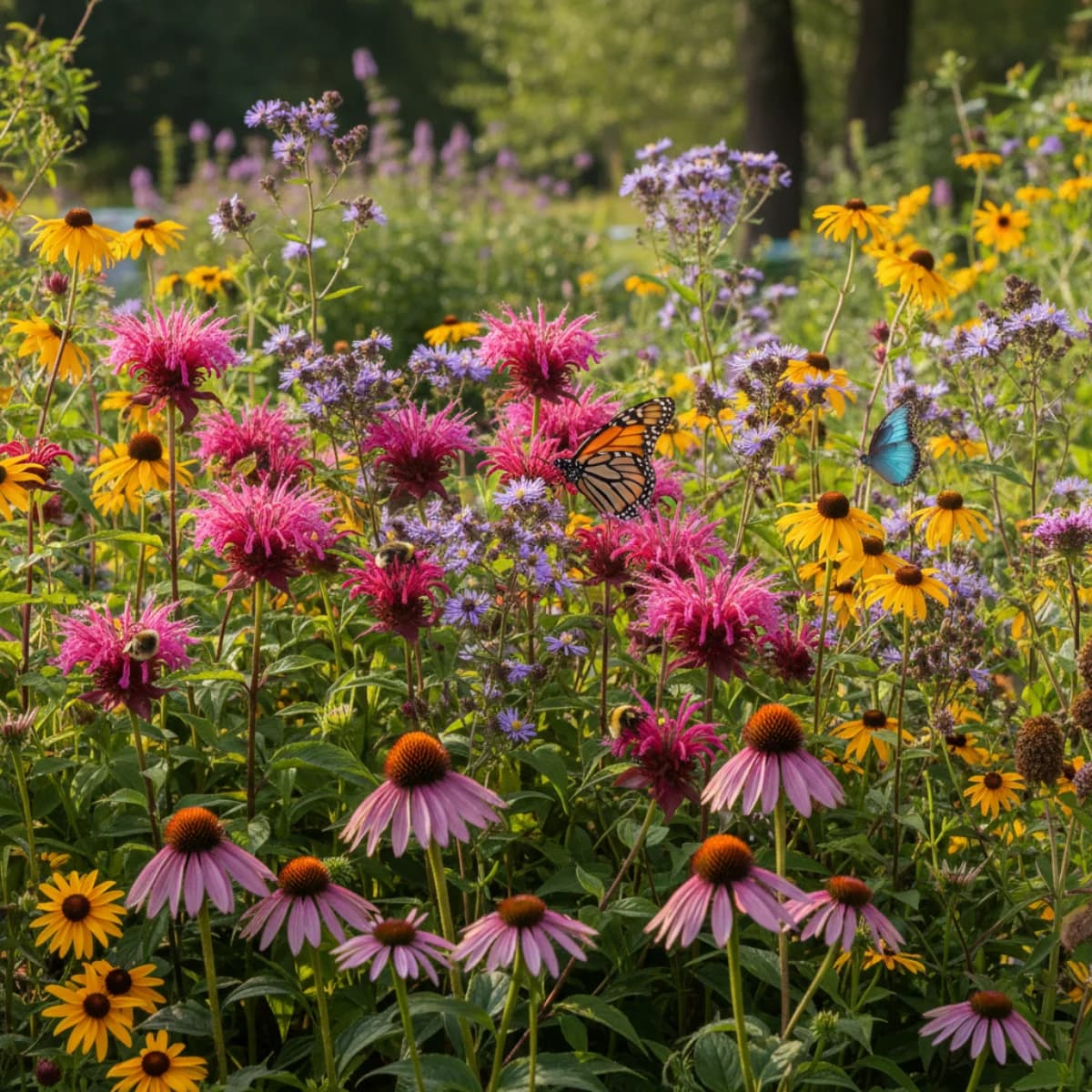
A single salvia in a sea of hostas will get visited occasionally. A drift of seven salvias will hold a territorial male for the season. Hummingbirds prioritize patches that are worth defending. Aim for groupings of at least three to seven plants of the same species, and repeat those groupings around the garden so birds can move between them without crossing open lawn.
Layer Heights
Hummingbirds use the full vertical range of a garden. Low groundcover salvias for foraging, mid-height perennials like bee balm and agastache, and taller flowering shrubs and small trees like red buckeye or desert willow give them feeding stations at every level. Vines on a trellis — coral honeysuckle especially — add a vertical layer that doubles your nectar real estate without taking ground space.
Provide Open Sight Lines and Safe Perches
Hummingbirds spend roughly 80 percent of their day perched, watching. They want a clear view of the feeding area and a thin twig or wire to rest on within a few feet of major nectar sources. Bare branches on a small tree, a slim shepherd’s hook, or even a clothesline works. Avoid placing dense shrubbery right against the garden — it gives cover to ambush predators like cats and accipiter hawks.
Keep Some Distance From Windows
Window strikes kill millions of birds a year, hummingbirds included. Either place the brightest hummingbird plantings within three feet of the window (so birds cannot build up speed before hitting glass) or more than thirty feet away. The middle distance is where collisions happen most.
Water and Shelter
Hummingbirds bathe by flying through misters, sprinklers, and the spray off broad leaves after rain. A standard birdbath is too deep and too still. What works:
- A shallow bubbler or fountain with moving water and a textured surface.
- A mister attached to a hose, set on a timer for 10 minutes a day during the hottest hours.
- A leaf-and-spray setup — large hosta or canna leaves under a slow garden sprinkler create a natural bathing zone.
For shelter, leave at least one small tree or large shrub within 20 feet of the main feeding area. Native trees that double as nesting sites — oak, maple, birch, and serviceberry — are ideal.
Feeders: How to Use Them Without Hurting Birds
Feeders are a worthwhile supplement, especially in early spring before flowers open and during fall migration. A few non-negotiables:
- Use only plain white sugar dissolved in water at a 1:4 ratio. Boil to dissolve, cool, then fill. Never use honey, brown sugar, agave, or red dye.
- Clean the feeder every two to three days in warm weather. Cloudy or fermented nectar causes fatal fungal infections (specifically Candida tongue infections) in hummingbirds. If you are not willing to clean it on this schedule, do not put one out — the garden will do the work better.
- Place feeders in shade. Direct sun spoils nectar in hours.
- Take feeders down within two weeks of the last hummingbird sighting in fall. Lingering feeders do not delay migration, but they also do not help once the birds are gone.
Designing the Garden as a Whole
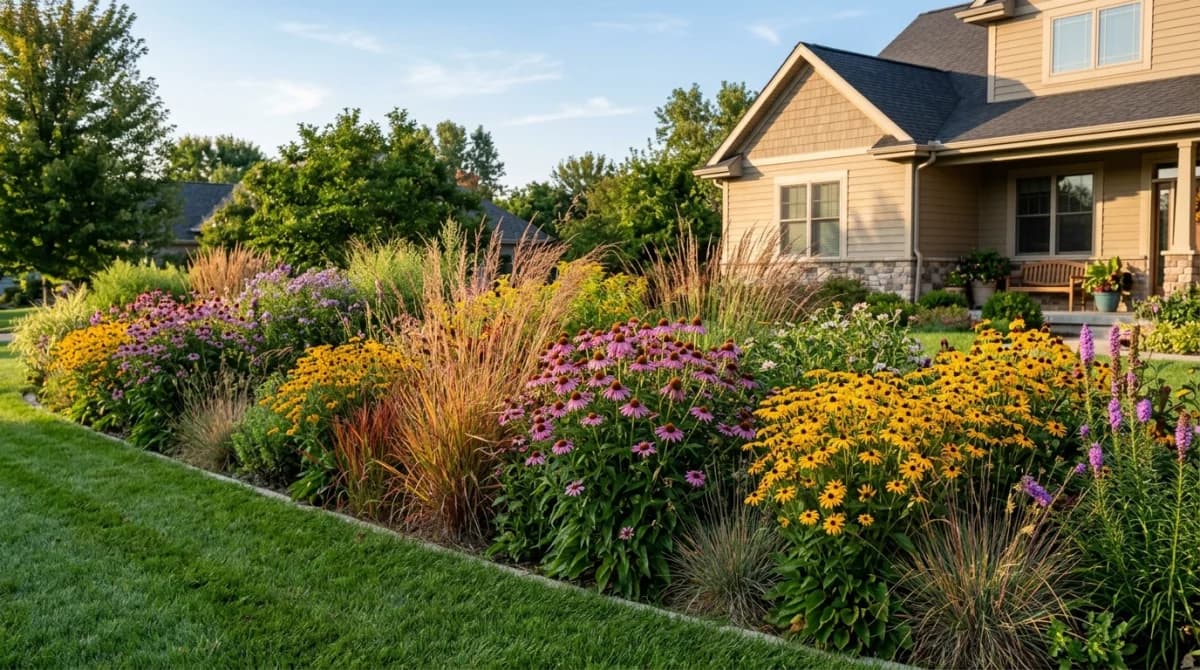
The hardest part of a hummingbird garden is fitting it into the rest of your yard. A bed that pleases hummingbirds — drifts of salvia, vertical layers, open sight lines — also has to look like a garden you want to live with the other 23 hours a day. The trick is treating “hummingbird plants” as one layer of a broader design, not as a separate dedicated bed.
When we designed Gardenly , one of the things we wanted to make easier was visualizing this kind of layered planting before committing to it. Upload a photo of an existing border or empty bed, pick a wildlife-friendly garden style, and you get a realistic AI-generated redesign you can use as a starting point — including the kind of drift planting and layered heights that actually attract hummingbirds, woven into a garden you would want to look at regardless.
Seasonal Care to Keep Them Coming Back
The hummingbird garden is mostly about doing less:
- Skip the pesticides entirely. Hummingbirds eat tiny insects all day. Spraying for aphids removes a protein source and risks direct toxicity.
- Deadhead salvias and agastache to push more bloom cycles. Bee balm and cardinal flower bloom longer with light deadheading too.
- Leave some seed heads in fall — late-season insects feed in them, which means more insect protein for late hummingbirds and migrating birds in general.
- Add one new species per year that fills a bloom gap you noticed last season. The garden gets stronger every year without much effort.
The first year you do this seriously, you might still see only a hummingbird or two. By year three, with a mature planting, drift groupings, and a clean water source, you will see them daily from May through October across most of the country — and they will be raising young within sight of your kitchen window.
Sources
- Cornell Lab of Ornithology — All About Birds: Ruby-throated Hummingbird
- National Audubon Society — Why Native Plants Matter
- Xerces Society — Pollinator Plant Lists by Region
- Lady Bird Johnson Wildflower Center — Native Plant Database
- US Forest Service — Gardening for Hummingbirds