How to Build and Plant Your First Raised Bed Garden This Spring
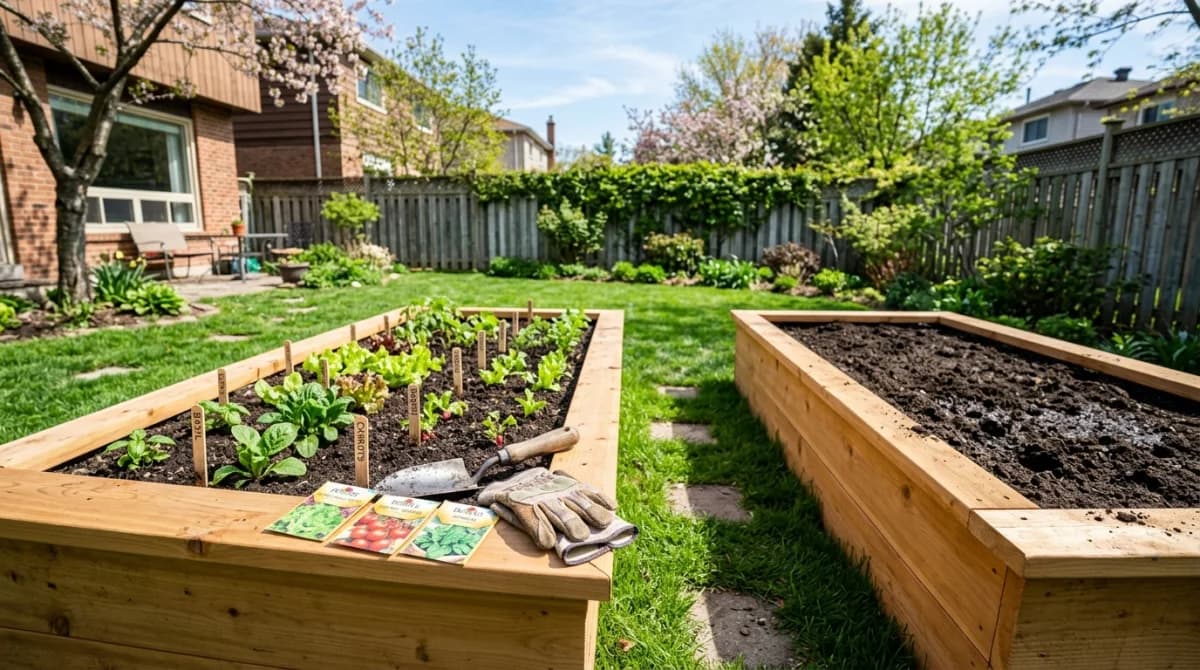
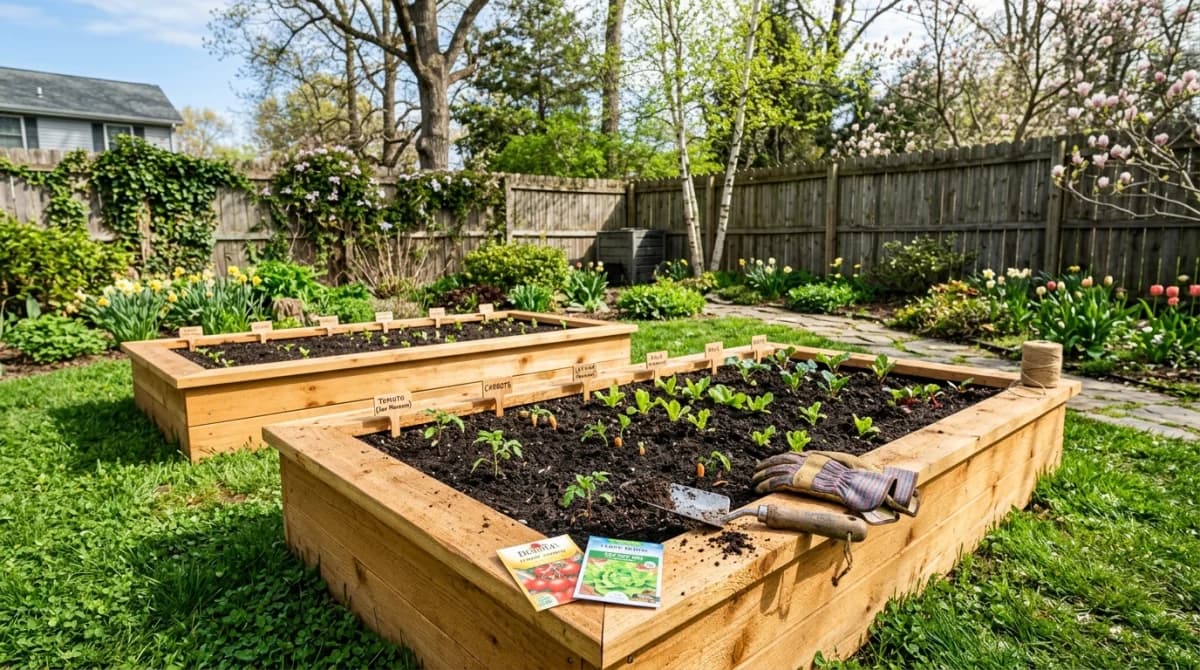
If you have been thinking about growing vegetables but your yard has compacted clay, rocky soil, or just a patch of lawn you would rather put to work, a raised bed solves nearly every problem at once. You control the soil from day one, drainage is built in, and the defined edges make a garden feel intentional rather than chaotic.
A single 4x8-foot raised bed can produce a surprising amount of food. Expect 50 to 80 pounds of vegetables over a growing season from that footprint alone — enough lettuce, herbs, tomatoes, and beans to make a real dent in your grocery bill.
Choosing the Right Size
The dimensions of your bed matter more than most people realize. Get them wrong and you will be stepping on your soil or straining your back every time you plant.
Width
Four feet is the standard for a reason. You can reach the center from either side without stepping into the bed. If one side will be against a fence or wall, keep the width to three feet so you can reach across from the open side. Wider than four feet and you will inevitably step on the soil to reach the middle, undoing the biggest advantage of raised beds.
Length
Eight feet is the most common, but there is no wrong answer here. Longer beds work fine as long as you can walk around them. Just avoid building anything longer than 12 feet without a cross-brace, or the sides will bow outward under soil pressure.
Height
This is where opinions vary. Here is what actually matters:
- 6 inches: The minimum for most vegetables. Works well if you are building on top of decent native soil and just want better drainage and a warmer root zone.
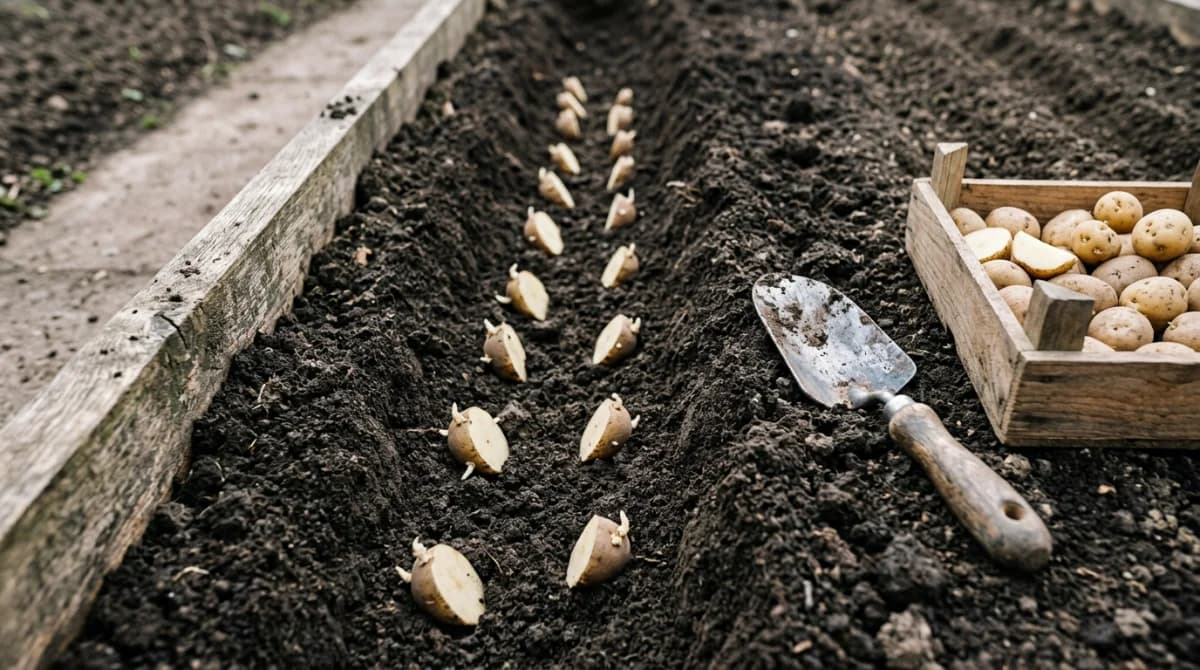
- 10-12 inches: The sweet spot. Deep enough for carrots, potatoes, and tomatoes. Provides enough soil volume that you will water less frequently.
- 18-24 inches: Good for accessibility — less bending. Also useful if you are building on concrete, gravel, or truly terrible soil. The trade-off is cost: you need a lot more soil to fill them.
For most first-time builders, 10 to 12 inches high, 4 feet wide, and 8 feet long is the right starting point.
Materials That Last
Cedar and Redwood
The go-to choice for backyard raised beds. Both are naturally rot-resistant without any chemical treatment, lasting 8 to 15 years depending on your climate. Cedar is more widely available. Use 2x10 or 2x12 lumber for a single-board height that looks clean and is easy to build.
Douglas Fir or Pine
About half the cost of cedar. Untreated pine will last three to five years before it starts rotting. Modern pressure-treated lumber (ACQ or CA-B) is considered safe for vegetable gardens by every major extension service, but if the idea of treated wood near food makes you uneasy, line the interior with landscape fabric or use untreated wood and plan on replacing it.
Other Options
Galvanized steel troughs and corrugated metal beds have become popular. They last decades, drain well, and look sharp in a modern yard. Concrete blocks work for a permanent, no-build option — just stack and fill. Avoid old railroad ties (creosote is genuinely toxic) and tires (zinc and other compounds leach into soil).
Building the Bed
A basic 4x8 cedar bed takes about 30 minutes to build with a drill and a few screws.
What You Need
- Four 2x12 cedar boards: two at 8 feet, two at 4 feet
- 3-inch exterior wood screws (stainless or coated)
- A drill or impact driver
- A level
- Optional: corner brackets for extra strength
Assembly
Stand one short board against the end of one long board to form an L. Drive three screws through the long board into the end grain of the short one. Repeat for the other three corners. That is genuinely it. Set the box on level ground, check with a level, and add or remove soil underneath until it sits flat.
For beds taller than 12 inches, stack two courses of lumber and tie them together with vertical 2x2 stakes on the inside corners.
Site Selection
Put your bed where it gets at least six hours of direct sun — eight is better for vegetables. South-facing is ideal. Keep it within hose reach unless you enjoy hauling watering cans. A flat site drains evenly; if you are on a slope, orient the long side along the contour so water does not pool at the low end.
Filling With the Right Soil
Do not just dump topsoil in and hope for the best. The soil blend matters enormously for that critical first season.
The Classic Mix
A ratio of roughly 60% topsoil, 30% compost, and 10% coarse material (perlite, coarse sand, or aged bark fines) gives you a blend that drains well, holds moisture without staying soggy, and has enough organic matter to feed plants through the season. For a 4x8 bed that is 12 inches deep, you need about one cubic yard of mix — roughly 27 cubic feet. Not sure about the exact amount? Our garden bed calculator gives you precise soil volumes and bag counts for any bed dimensions.
Buying in Bulk
Order a “raised bed mix” or “garden blend” from a local landscape supply yard. It is dramatically cheaper than bagged soil from the hardware store. A cubic yard delivered costs $30 to $60 in most areas. Bagging that same volume in 2-cubic-foot bags would run over $150.
Mel’s Mix Alternative
Square Foot Gardening popularized a mix of equal parts peat moss (or coconut coir), vermiculite, and blended compost. It is lightweight, drains beautifully, and works well — but it is expensive and has almost no mineral content. If you go this route, plan on adding a balanced organic granular fertilizer before planting.
What to Plant First
The beauty of starting in spring is that you can get cool-season crops in immediately and follow them with warm-season crops as the weather heats up.
Plant Now (Early Spring)
These crops handle frost and actually prefer cool soil:
- Lettuce and salad greens: Direct sow. Harvest in 30-45 days. Plant a new row every two weeks for continuous salad.
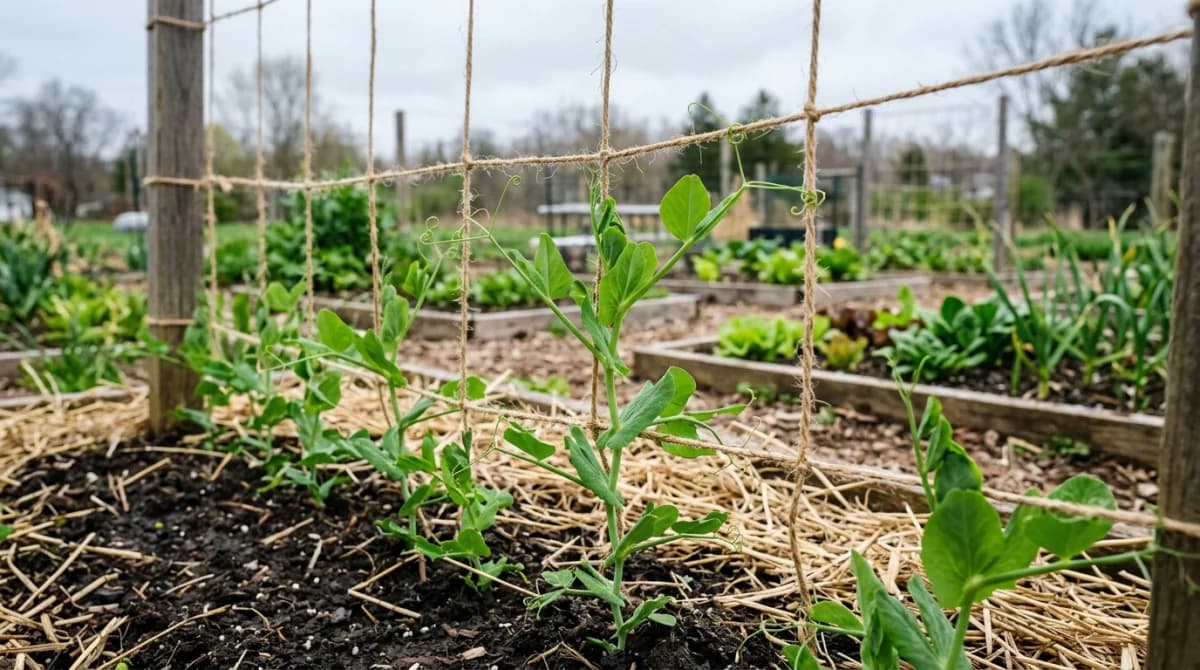
- Peas: Direct sow along one end of the bed with a small trellis. They fix nitrogen, improving the soil for whatever follows.
- Radishes: Ready in 25 days. Tuck them between slower crops.
- Spinach and kale: Direct sow or transplant. Both handle frost to 25°F.
- Onion sets and garlic: If you did not plant garlic in fall, sets will still give you a harvest by early summer.
Plant After Last Frost
Once nights stay above 50°F:
- Tomatoes: Give each plant a 2x2-foot space. Cage or stake at planting time, not after.
- Peppers: One plant per square foot. Slow to start but productive through fall.
- Basil: Tuck it next to tomatoes. Same heat and sun requirements, and you will use them together in the kitchen.
- Bush beans: Direct sow. Heavy producers in a small space. A 4-foot row yields enough for regular meals.
- Cucumbers: Train them up a trellis at one end to save floor space.
Succession Planting
This is the trick that separates a productive raised bed from one that peaks in July and fizzles out. When your lettuce bolts in early summer, pull it and plant bush beans in the same spot. When the peas finish, replace them with fall brassicas in August. A single bed can produce three crops in one season if you keep replanting as things come out.
Watering and Maintenance
Raised beds dry out faster than in-ground gardens because they have better drainage and more surface area exposed to air. That is usually a good thing — root rot kills more container and raised bed plants than drought does — but it means you need to water more consistently.
How Much and How Often
Stick your finger two inches into the soil. If it is dry, water. In spring, that might be twice a week. In the heat of July, it could be daily. Water deeply — soak the entire bed until water runs out the bottom or you see the surface glisten — rather than giving a light sprinkle every day. Deep watering encourages roots to grow down, making plants more drought-resistant.
Mulch
A two-inch layer of straw, shredded leaves, or wood chips on the soil surface cuts watering needs in half and suppresses weeds. Pull the mulch back from the stems of young transplants to prevent rot, but everywhere else, keep the soil covered. By fall, the mulch will have broken down into the soil, adding organic matter. Add a fresh layer each spring.
Feeding
Compost is your best long-term fertilizer. Top-dress the bed with an inch of compost each spring before planting. For heavy feeders like tomatoes and peppers, side-dress with a balanced organic granular fertilizer (something like 4-4-4 or 5-5-5) once a month during the growing season. Lettuce, peas, and beans need little to no extra feeding in well-composted soil.
Planning the Layout
Before you plant, sketch a quick plan. This prevents the classic mistake of putting tall tomatoes on the south side where they shade everything behind them.
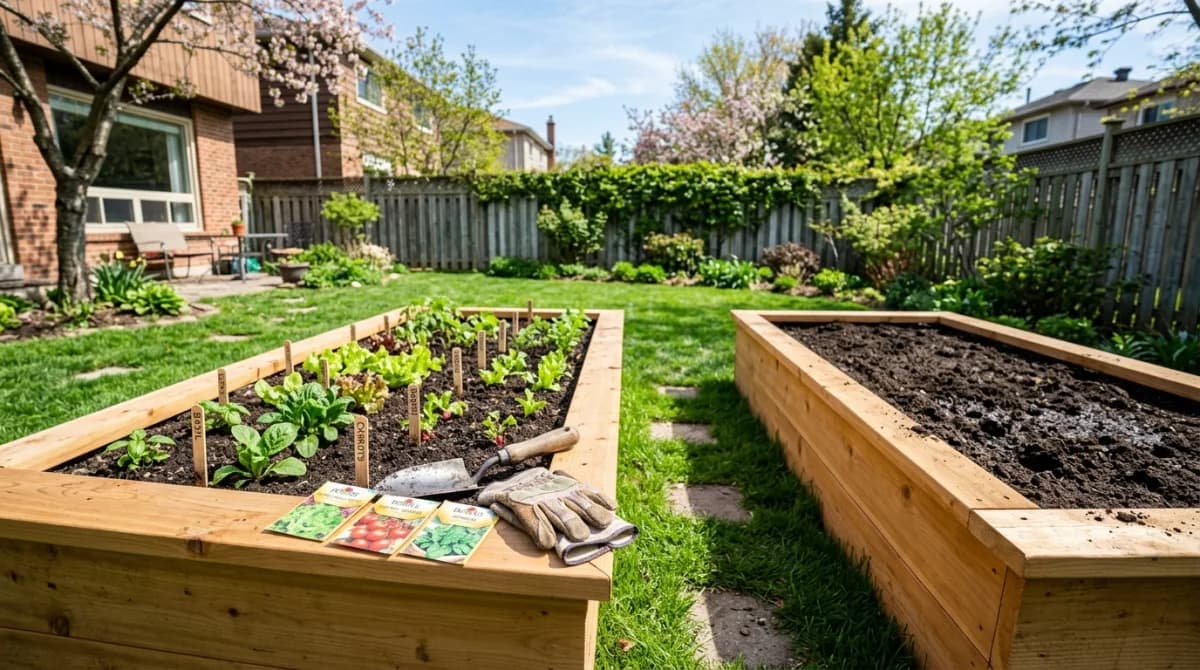
Put the tallest crops — tomatoes, trellised cucumbers, pole beans — on the north end. Medium-height plants like peppers and bush beans go in the middle. Low growers like lettuce, herbs, and radishes go on the south edge where they get full sun.
If you want to take the guesswork out of layout, tools like Gardenly can help you visualize your garden design before you commit a single seed to soil. Seeing the layout in advance saves the headache of discovering in July that your zucchini has swallowed half the bed.
Common First-Year Mistakes
Filling with pure compost: Too rich. Plants grow excessive foliage with few flowers or fruit, and the bed sinks six inches by fall as the organic matter decomposes. Mix compost with topsoil and a drainage amendment.
Spacing too tightly: Seed packets give “row spacing” for farm-scale production. Raised beds are intensive, but plants still need air circulation. Follow the closer “in-row” spacing on the packet, not the tighter numbers you sometimes see in square-foot gardening charts. Crowded plants get more disease.
Skipping mulch: A bare raised bed in July is a cracked, baked rectangle that needs water every single day. Two inches of straw changes everything.
Giving up after bolting: Lettuce bolts in heat. Peas die when it gets hot. That is normal, not failure. Pull them, compost them, and plant the next crop. A raised bed is a year-round system, not a one-shot garden.
One 4x8 bed, some decent soil, and a few packets of seeds. That is genuinely all it takes to start growing food this spring. Build it this weekend, plant it next, and by early summer you will already be planning bed number two.