How to Build a Pollinator Garden That Actually Works
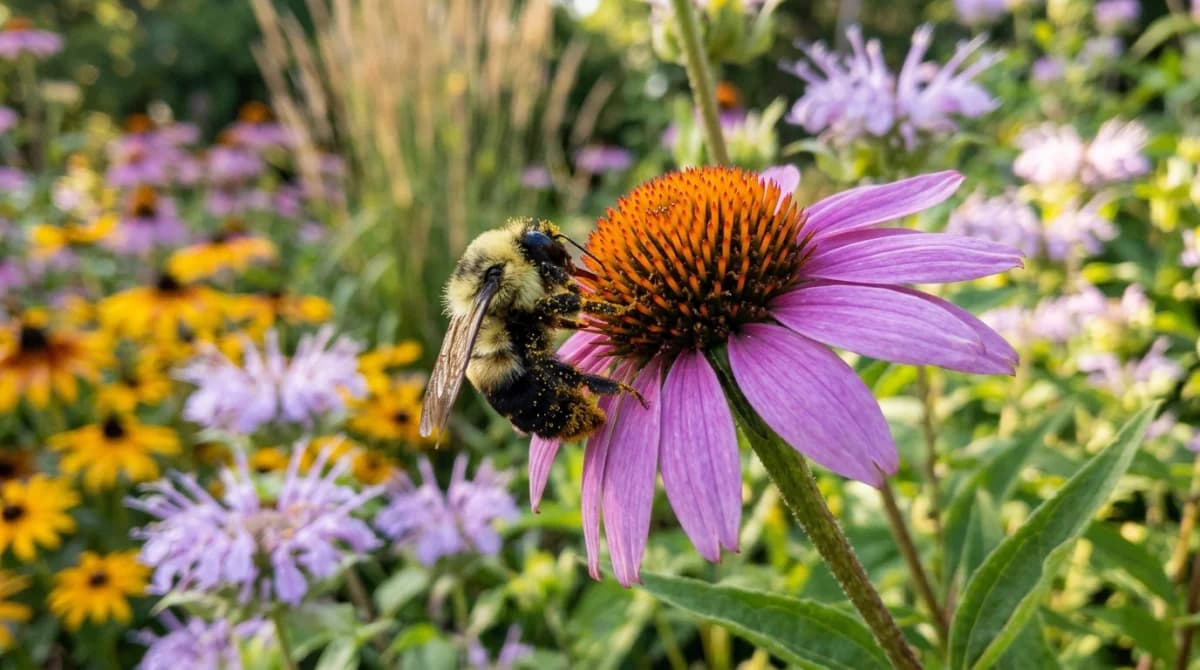
The idea of a pollinator garden sounds straightforward: plant flowers, bees come. In practice, most people buy a “wildflower mix” seed packet, scatter it in a corner, and end up with a patchy mess that blooms for three weeks in June and looks abandoned for the other eleven months.
A pollinator garden that actually works requires the same thoughtful design as any other garden. It needs plants that bloom across the full growing season, enough mass to be worth a pollinator’s trip, habitat for nesting and overwintering, and a commitment to not undoing everything with pesticides or over-tidying.
The reward is a garden that’s constantly alive with movement: bees, butterflies, hummingbirds, and beneficial insects that also protect your vegetable crops. Here’s how to build one that functions.
What Pollinators Actually Need
Flowers are only part of the equation. A functional pollinator habitat provides four things:
Food (Nectar and Pollen)
This is the obvious one. But timing matters enormously. A garden that only provides flowers in July leaves pollinators without food for most of the season. Early spring and late fall are the critical gaps, and most gardens have nothing blooming when queen bumblebees emerge in March or when migrating monarchs need fuel in October.
Water
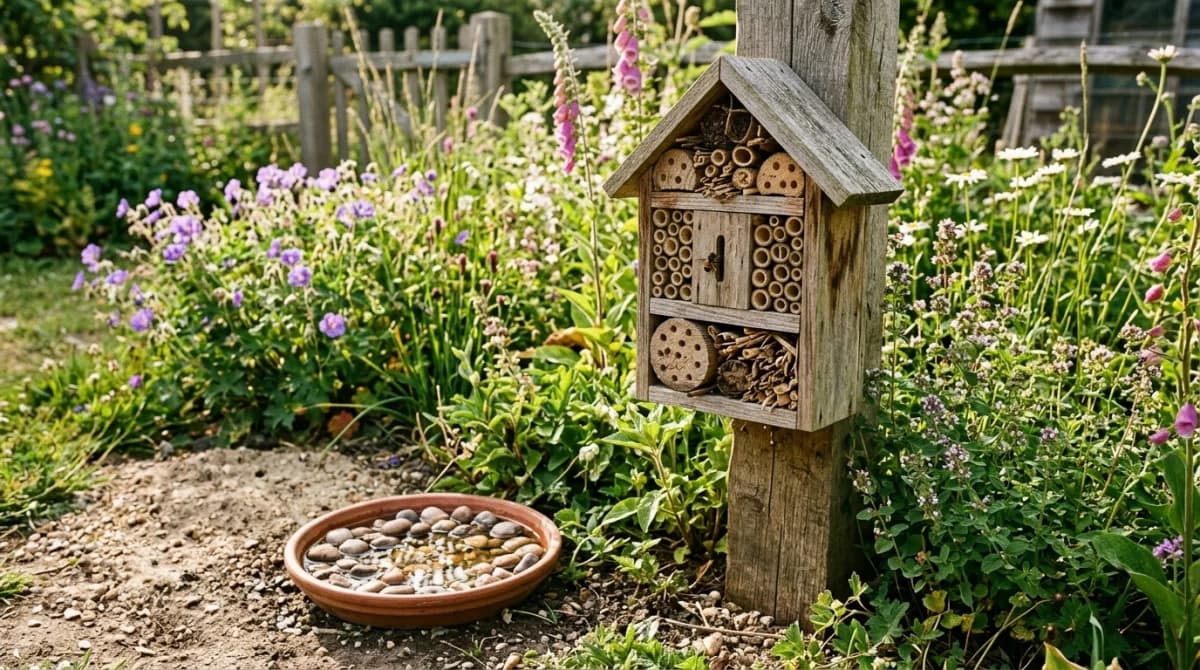
A shallow water source with landing spots. A birdbath works if you add flat stones or marbles that stick above the waterline. Butterflies and small bees can’t land on open water; they need a perch. A muddy spot (a “puddling station”) provides minerals that butterflies specifically seek out.
Nesting Habitat
Seventy percent of native bee species nest in the ground. They need patches of bare, undisturbed, well-drained soil (not mulched, not covered with landscape fabric, not constantly tilled). Leave some areas of your garden unmulched intentionally.
The remaining thirty percent nest in cavities: hollow stems, woodpecker holes, and the pithy centers of cut flower stalks. Leave standing dead stems through winter instead of cutting everything down in fall.
Shelter
Dense plantings, brush piles, and leaf litter provide shelter from wind, rain, and predators. An overly tidy garden with bare soil between widely spaced plants offers pollinators no protection.
Designing for Continuous Bloom
The single most important design principle for a pollinator garden is bloom succession. You need something flowering from the earliest spring through the last warm days of fall.
Spring (March–May)
- Crocus: One of the first pollen sources for emerging bees
- Virginia bluebells (Mertensia virginica): Native woodland ephemeral
- Wild columbine (Aquilegia canadensis): Early hummingbird food
- Creeping phlox (Phlox subulata): Low carpet of bloom
- Serviceberry (Amelanchier): Early-blooming native shrub/tree
Early Summer (June–July)
- Milkweed (Asclepias): Essential monarch host plant, excellent bee plant
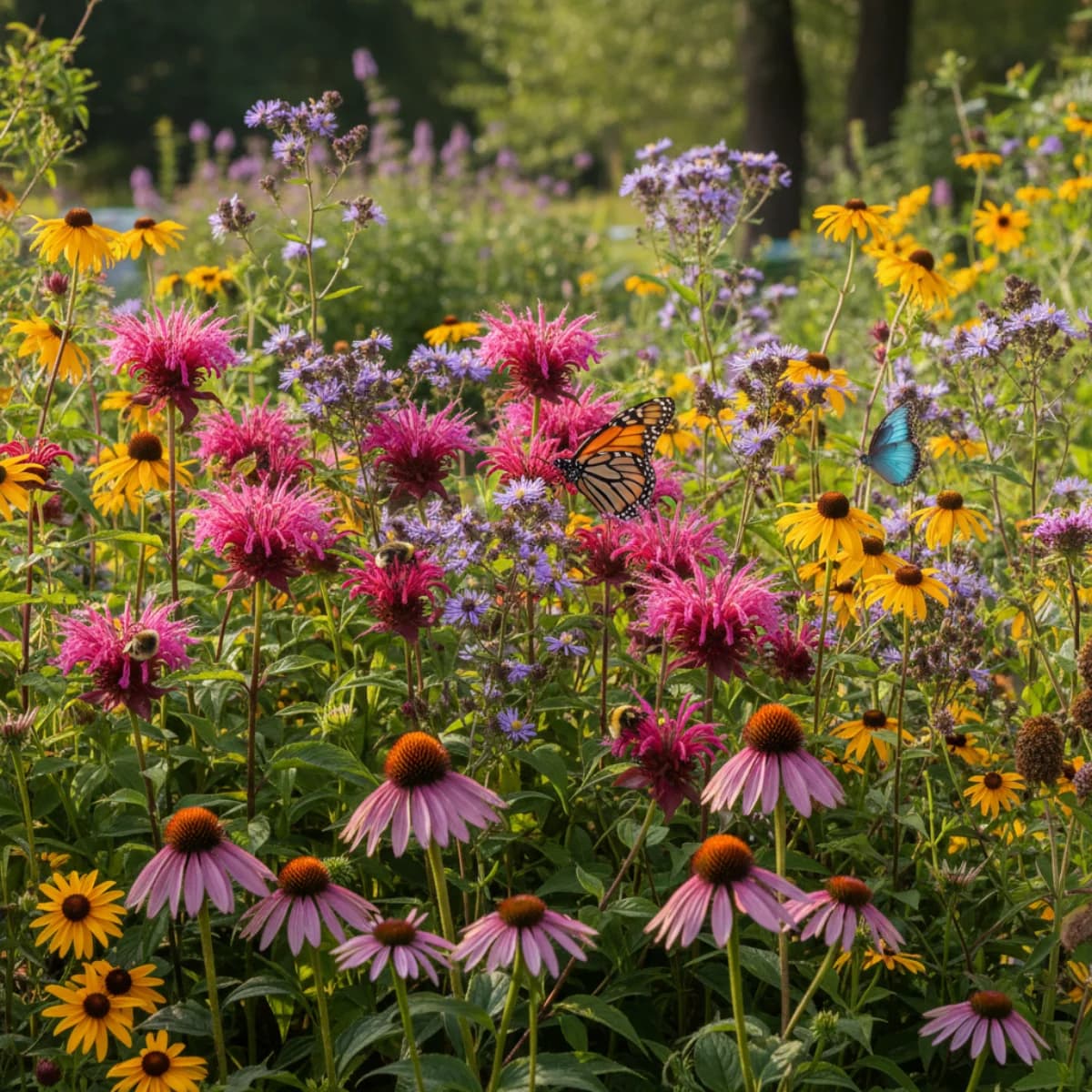
- Wild bergamot (Monarda fistulosa): Native, long-blooming, bee magnet
- Baptisia (False indigo): Striking spikes, fixes nitrogen, long-lived
- Yarrow (Achillea): Flat flower heads perfect for small pollinators
- Catmint (Nepeta): Blooms for months if cut back after first flush
Late Summer (August–September)
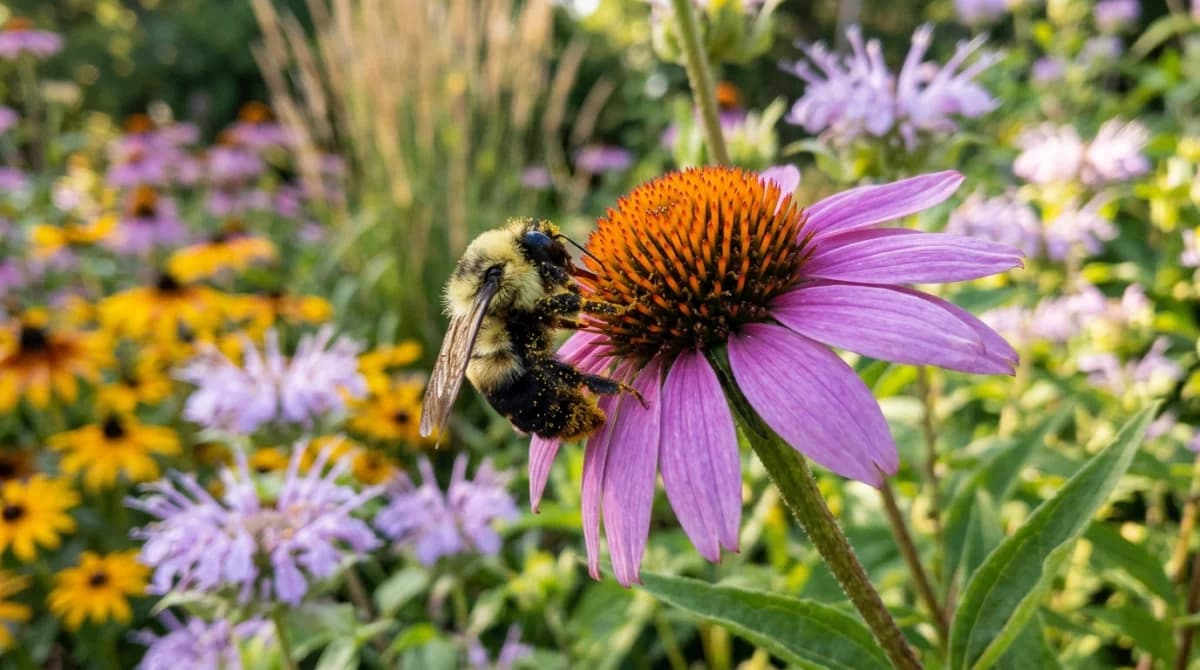
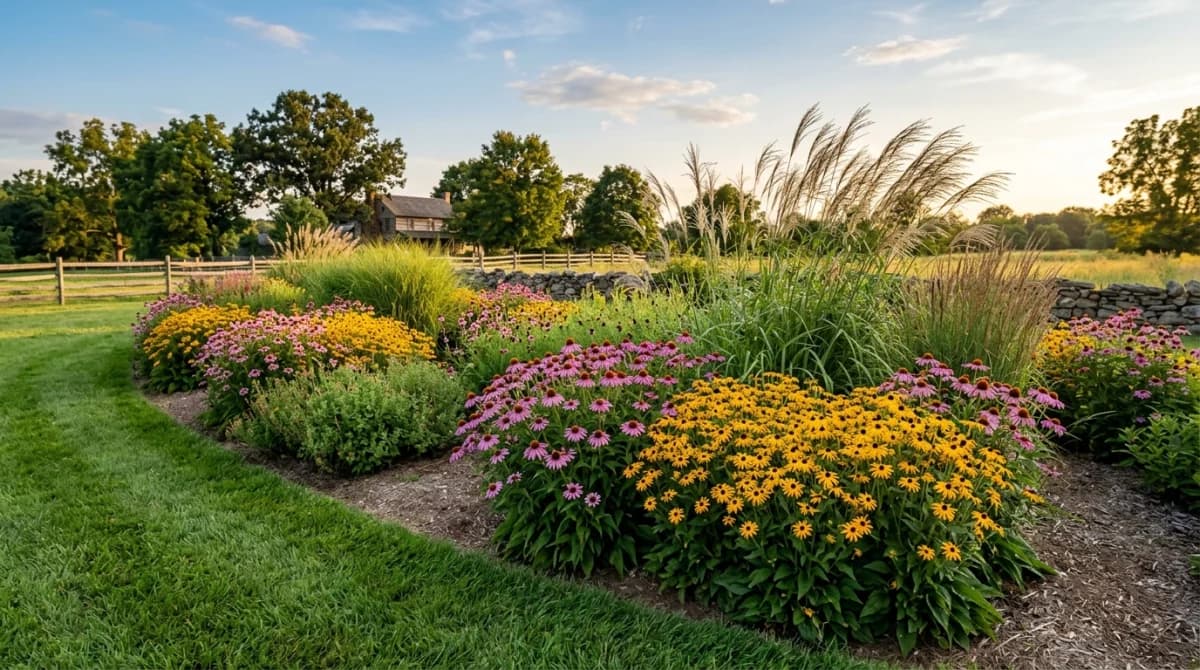
- Purple coneflower (Echinacea purpurea): The workhorse of pollinator gardens
- Black-eyed Susan (Rudbeckia): Masses of golden bloom
- Joe-Pye weed (Eutrochium): Tall, dramatic, butterfly magnet
- Ironweed (Vernonia): Deep purple, late-season nectar source
- Liatris (Blazing star): Spikey purple flowers, native prairie plant
Fall (October–November)
- Asters (Symphyotrichum): The most important fall pollinator food
- Goldenrod (Solidago): Unfairly blamed for allergies (ragweed is the culprit)
- Sedum (Stonecrop): Late nectar source, drought-proof
- Late-blooming anemones: Shade-tolerant fall color
Planting for Impact
Pollinators find food more efficiently when plants are grouped in masses rather than scattered as individual specimens. A single coneflower in a mixed border is less useful than a drift of seven planted together.
The Minimum Planting
For a meaningful pollinator garden, aim for at least 100 square feet (roughly a 10-by-10-foot bed). Plant in groups of three to seven of the same species. Include at least three species per season (spring, summer, fall) for a minimum of nine different plant species.
Color Matters
Different pollinators see different wavelengths:
- Bees are most attracted to blue, purple, violet, and yellow flowers
- Butterflies favor red, orange, pink, and purple flat-topped or clustered flowers
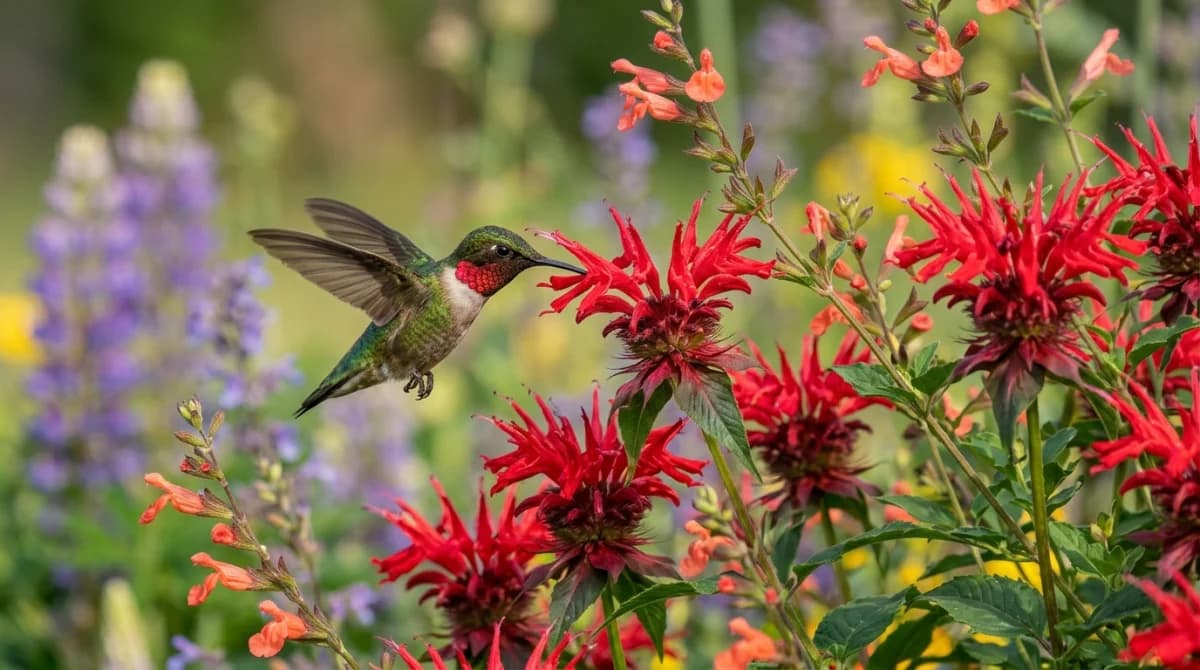
- Hummingbirds key in on red and orange tubular flowers
A garden with flowers across the color spectrum serves the widest range of pollinators.
Flower Shape Matters
Plant a variety of flower shapes to serve pollinators with different tongue lengths and body sizes:
- Flat and open (asters, yarrow, coneflowers): accessible to everyone
- Tubular (salvia, penstemon, columbine): hummingbirds and long-tongued bees
- Clustered (milkweed, Joe-Pye weed, goldenrod): butterflies and small bees
What to Stop Doing
Building a pollinator garden is as much about what you stop doing as what you start planting.
Stop Using Pesticides
Insecticides don’t distinguish between pests and pollinators. Even “organic” sprays like pyrethrin and spinosad kill bees on contact. Neonicotinoid-treated plants from garden centers are particularly dangerous because the pesticide is systemic, meaning it’s in the pollen and nectar.
If you must treat a pest problem, use the most targeted approach possible (hand-picking, row covers, targeted BT for caterpillars) and never spray anything when pollinators are actively visiting flowers.
Stop Over-Tidying
Leave standing dead stems through winter, as cavity-nesting bees overwinter inside them. Leave fallen leaves in garden beds because they shelter overwintering butterfly chrysalises and ground-nesting bees. Skip the fall cleanup or delay it until late spring when daytime temperatures consistently reach 50°F (10°C) and overwintering insects have emerged.
Stop Mulching Everything
Ground-nesting bees need access to bare soil. Leave patches of unmulched, sun-exposed ground in or near your pollinator garden. These can be inconspicuous; a 2-by-2-foot section of bare soil at the back of a bed is enough.
Adding Habitat Features
Beyond plants, a few simple additions make your garden significantly more functional:
Bee hotel: A bundle of hollow stems or drilled wood blocks mounted on a post. Place it 3 to 5 feet high, facing south or southeast. Clean or replace annually to prevent disease buildup.
Puddling station: A shallow dish or depression filled with sand, kept moist. Add a pinch of salt. Butterflies and bees congregate here for minerals.
Brush pile: Stack pruning debris in a back corner. It provides nesting sites for solitary bees and shelter for beneficial insects through winter.
Rock pile: A few large flat rocks in a sunny spot give butterflies a basking surface. They need to warm their flight muscles in the sun before they can fly.
Making It Look Like a Garden
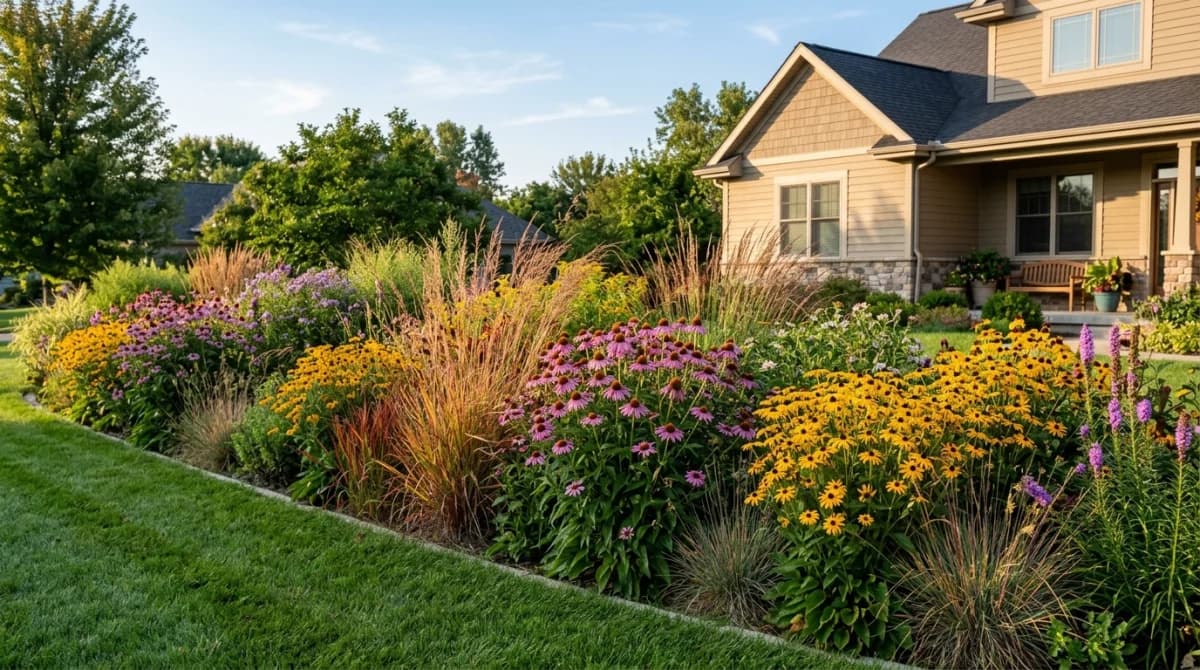
The biggest objection to pollinator gardens is that they look messy. They don’t have to. Use the same design principles as any perennial border:
- Define edges with a clean mown strip, stone edging, or low plants like catmint
- Plant in layers: short plants in front, medium in the middle, tall in the back
- Repeat plant groupings for rhythm and cohesion
- Include structural plants like ornamental grasses to provide form even when flowers fade
A pollinator garden designed with intention looks like a beautiful perennial border that happens to be alive with bees and butterflies. Tools like Gardenly can help you visualize the layout and ensure your season-long bloom plan actually works visually before you commit to planting.
The best pollinator garden is one that serves wildlife and looks like something you’re proud to have in your yard. Those two goals aren’t in conflict; they reinforce each other.