10 Fast-Growing Flowers to Fill Your Spring Garden With Color
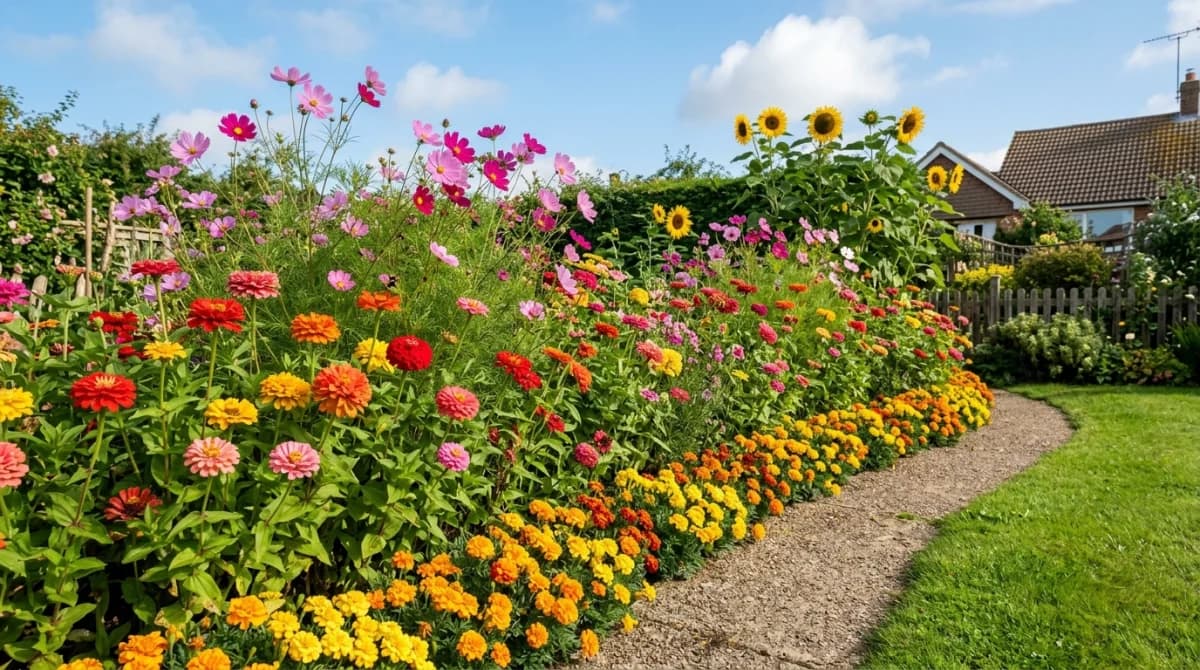
New gardens have an awkward phase. The perennials you planted are small. The shrubs need years to fill in. The beds look sparse. You want color now, and the idea of waiting two seasons for a garden that looks like the pictures feels unbearable.
Fast-growing flowers solve this problem. Some of these go from seed to bloom in as little as four weeks. Others, planted as inexpensive transplants, start flowering within days of going in the ground. They fill gaps, create bold swaths of color, and give your garden that “established” look while everything else catches up.
Here are ten that deliver reliably, look great together, and won’t punish you for being a beginner.
The Fast Annuals
1. Zinnias
Seed to bloom: 60 to 70 days
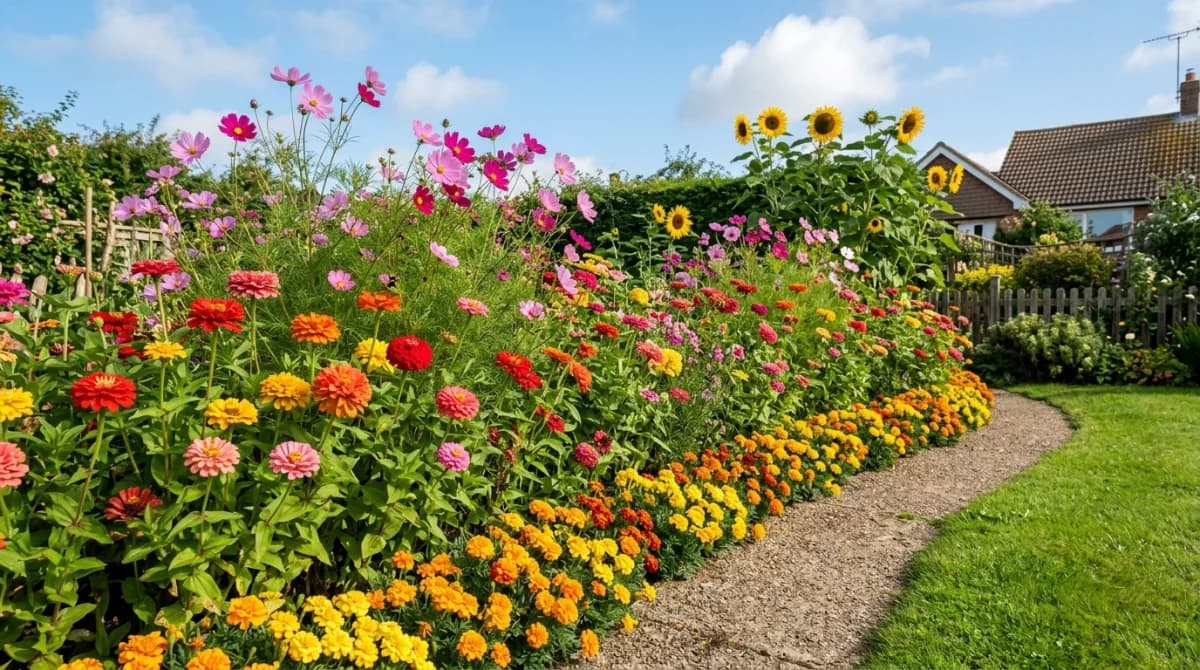
Zinnias are the hardest-working flower in the summer garden. They come in every color except blue, range from 8-inch dwarfs to 4-foot giants, and produce more flowers the more you cut them. Direct sow seeds after the last frost date, thin to 6 to 12 inches apart, and they’ll bloom from midsummer until frost kills them.
The key with zinnias is full sun and good air circulation. They’re prone to powdery mildew in humid, crowded conditions. Space them generously and water at the base, not overhead.
Best varieties for beginners: ‘Benary’s Giant’ for cutting, ‘Profusion’ for containers, ‘State Fair’ for big, bold mixed colors.
2. Cosmos
Seed to bloom: 50 to 60 days
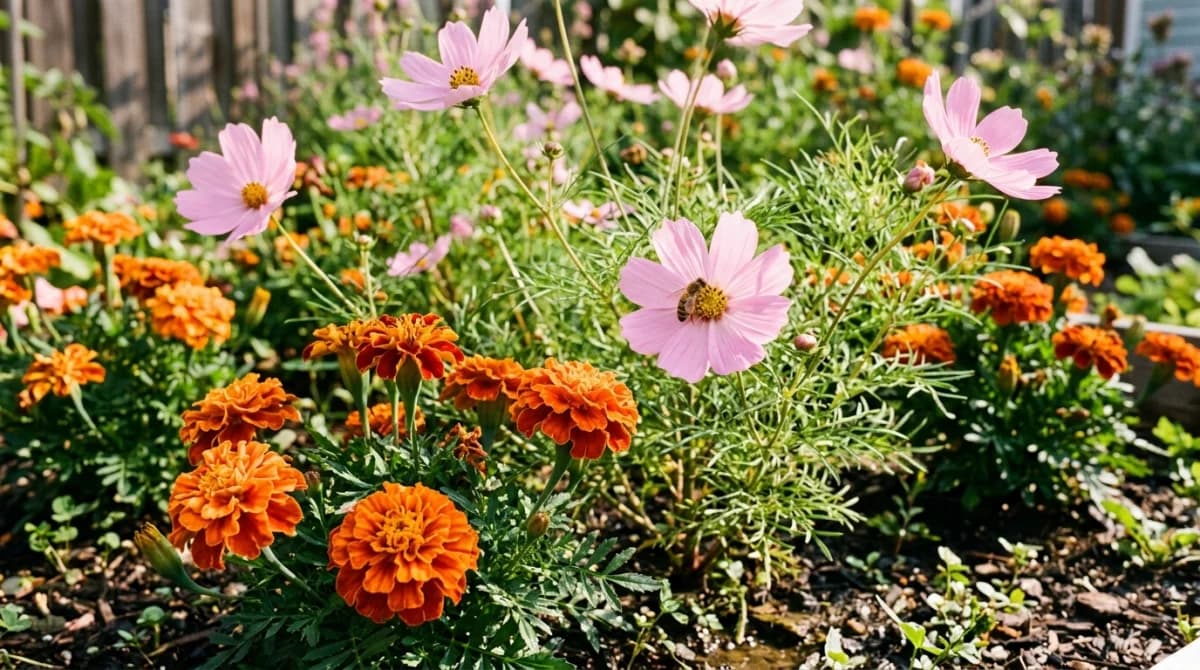
Cosmos are among the easiest flowers to grow from seed. They actually prefer poor soil, as too much fertility produces leggy stems with fewer flowers. Scatter seeds on bare soil after the last frost, rake lightly, water once, and mostly ignore them.
They grow 3 to 5 feet tall with ferny foliage and produce daisy-like flowers in whites, pinks, and deep magentas. They reseed freely, so one planting can give you cosmos for years.
Best varieties: ‘Sensation Mix’ for height and drama, ‘Sonata’ for shorter plants, ‘Rubenza’ for a deep red that’s unusual in cosmos.
3. Marigolds
Seed to bloom: 50 to 60 days (or buy transplants for instant color)
Marigolds are bulletproof. They tolerate heat, drought, poor soil, and neglect. French marigolds stay compact at 8 to 12 inches, perfect for edging beds. African marigolds reach 2 to 3 feet with enormous globe-shaped flowers.
Plant transplants for immediate color or direct sow seeds for a slight delay. Either way, they’ll bloom continuously until hard frost. Deadheading keeps them tidy but isn’t strictly necessary; they’ll keep producing regardless.
Best varieties: ‘Bonanza’ (French, compact), ‘Antigua’ (African, big heads), ‘Signet’ types for edible petals with a citrus flavor.
4. Sunflowers
Seed to bloom: 55 to 75 days depending on variety
Nothing announces “summer” like sunflowers, and they’re among the easiest flowers to grow. Push seeds an inch into the soil after the last frost, water them, and stand back. Dwarf varieties reach 2 to 3 feet. Giants can hit 12 feet or more.
Branching varieties produce multiple smaller flowers on each plant and are better for cutting gardens. Single-stem varieties produce one massive head, impressive but one-and-done per plant.
Best varieties: ‘Sunfinity’ for continuous branching blooms, ‘Teddy Bear’ for containers, ‘Mammoth’ for the classic giant.
5. Nasturtiums
Seed to bloom: 35 to 50 days
Nasturtiums are some of the fastest flowers from seed. They have large seeds that are easy to handle, germinate quickly, and start blooming in five to seven weeks. Like cosmos, they prefer lean soil; rich soil gives you lots of leaves and few flowers.
The entire plant is edible. Flowers add peppery color to salads. Leaves have a wasabi-like kick. They also function as trap crops, luring aphids away from vegetable plants.
Best varieties: ‘Jewel Mix’ for compact mounds, ‘Empress of India’ for deep red flowers with dark foliage, ‘Spitfire’ for trailing types in hanging baskets.
Perennials That Bloom the First Year
These technically come back year after year, but unlike most perennials, they don’t make you wait until the second season for flowers.
6. Black-Eyed Susans (Rudbeckia)
Transplant to bloom: 4 to 8 weeks (first-year flowering varieties)
Rudbeckia ‘Goldsturm’ and annual types like R. hirta ‘Indian Summer’ will bloom the first year from spring transplants. They’re native wildflowers that tolerate poor soil, drought, and heat. The golden-yellow daisy flowers bloom from midsummer through fall and attract butterflies.
Plant transplants in spring, space 18 inches apart, and don’t fuss over them. They’re drought-tolerant once established and spread reliably to fill gaps.
7. Coneflowers (Echinacea)
Transplant to bloom: 6 to 10 weeks
Echinacea purpurea and its cultivars bloom the first year from spring transplants if planted early enough. The classic purple coneflower is a pollinator magnet that blooms for months. Leave the seed heads standing in fall, as goldfinches eat the seeds through winter.
Newer cultivars come in orange, yellow, white, and red, but the straight species is more vigorous and longer-lived than most hybrids.
8. Blanket Flower (Gaillardia)
Transplant to bloom: 4 to 6 weeks
Gaillardia is a prairie native that laughs at heat, drought, and poor soil. The red-and-yellow daisy flowers bloom from late spring through frost, and plants flower heavily in their first year from transplants. They’re short-lived perennials (2 to 3 years) but reseed reliably.
Perfect for hot, dry spots where other flowers struggle. They demand nothing and give everything.
9. Shasta Daisies (Leucanthemum)
Transplant to bloom: 6 to 8 weeks
The classic white daisy that looks perfect in cottage gardens, borders, and cutting gardens. Plant spring transplants and most will bloom the first summer. They’re long-lived, easy to divide, and make excellent cut flowers.
‘Becky’ is the standard tall variety (3 feet). ‘Snow Lady’ is a compact option (10 inches) that blooms especially fast from seed, in as little as 10 weeks.
10. Salvia (Perennial Types)
Transplant to bloom: 3 to 6 weeks
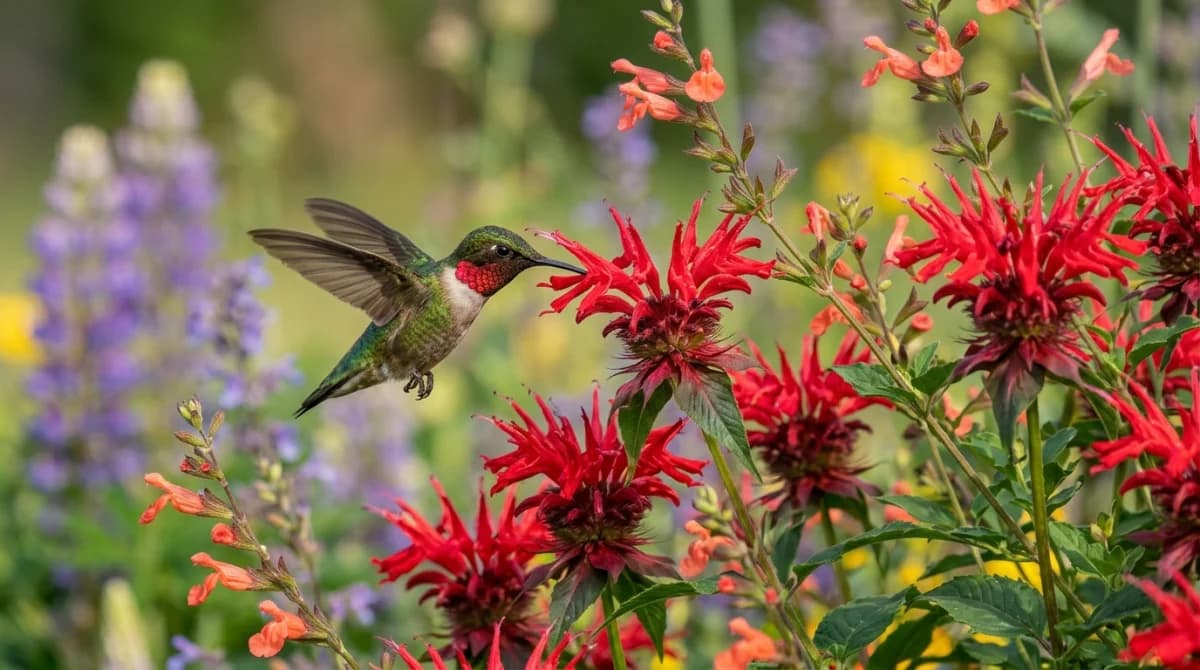
Perennial salvias like ‘May Night’ and ‘Caradonna’ bloom quickly from spring transplants and rebloom if you deadhead the first flush. The deep purple flower spikes are hummingbird magnets and provide strong vertical interest in mixed borders.
They’re drought-tolerant once established, deer-resistant, and low-maintenance. Cut back spent flower spikes to the basal foliage and a second flush follows in late summer.
Color Combination Ideas
Fast-growing flowers look best when planted in intentional groupings rather than scattered randomly. A few proven combinations:
Warm sunset: Zinnias (orange/red) + marigolds (gold) + sunflowers (yellow). All thrive in the same hot, sunny conditions.
Cool cottage: Cosmos (pink/white) + Shasta daisies + salvia (purple). A softer palette that works in both formal and informal gardens.
Pollinator power: Coneflowers + black-eyed Susans + blanket flower. All native or near-native, all excellent pollinator plants, all bulletproof.
Edible and beautiful: Nasturtiums + marigolds + herbs (basil, dill flowers). Everything in this combination is functional and pretty.
Planting Timeline by Zone
Zones 3–5: Start seeds indoors in late March for transplanting after last frost (mid-May). Or direct sow outdoors in mid-May.
Zones 6–7: Direct sow warm-season flowers in mid to late April. Cool-tolerant types (cosmos, calendula) can go out in early April.
Zones 8–10: You’re already past most last frost dates. Direct sow or transplant now. Plan for heat; some of these will slow down in the peak of summer and rebound in fall.
The Cut Flower Bonus
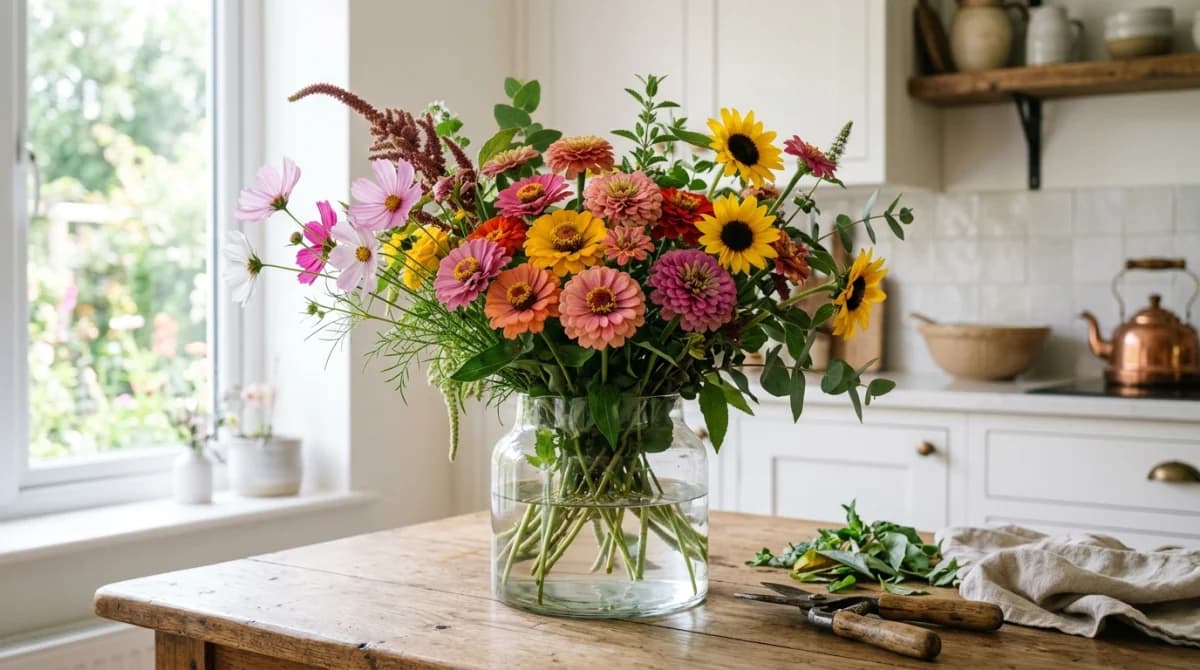
Every flower on this list makes a good cut flower. Plant a few extra rows specifically for cutting, and you’ll have homegrown bouquets from June through October. Cut stems in the early morning when they’re fully hydrated, strip leaves below the waterline, and change vase water every two days.
A garden full of fast-growing flowers doesn’t just look good; it changes how you feel about being outside. There’s nothing like walking out to a border that went from bare soil to full bloom in two months. If you’re planning your first garden or redesigning an existing one, tools like Gardenly can help you visualize where these flowers will have the most impact before you plant a single seed.