Cut Your First Comfrey Now for a Free Summer Feed Your Tomatoes Will Thank You For
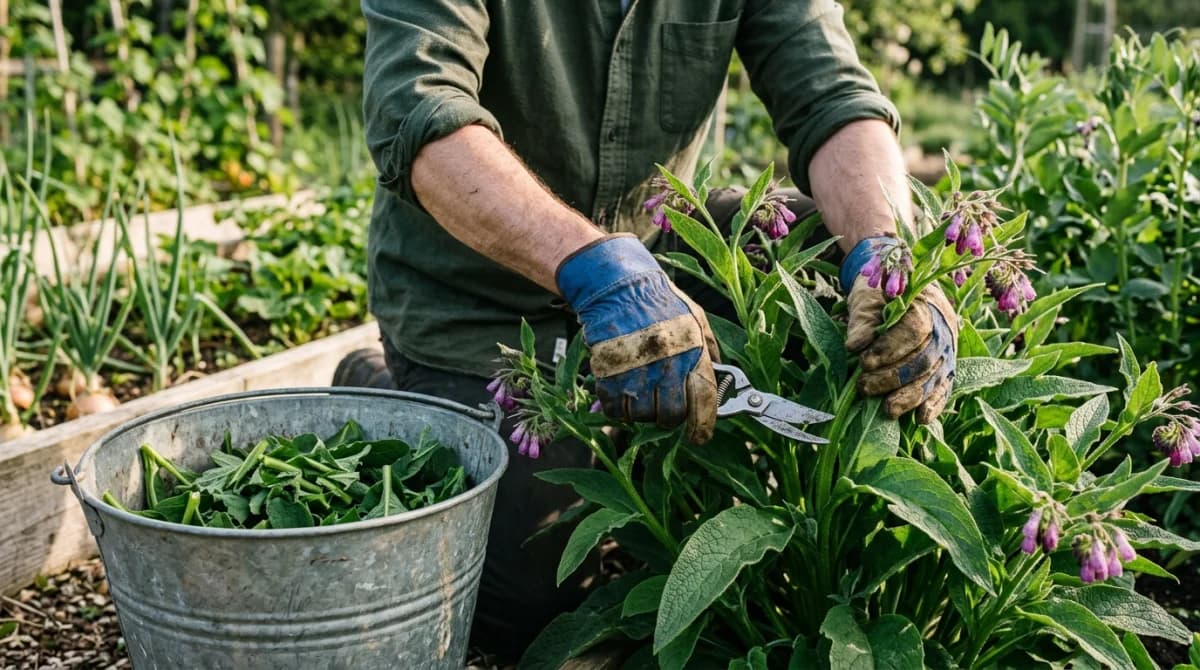
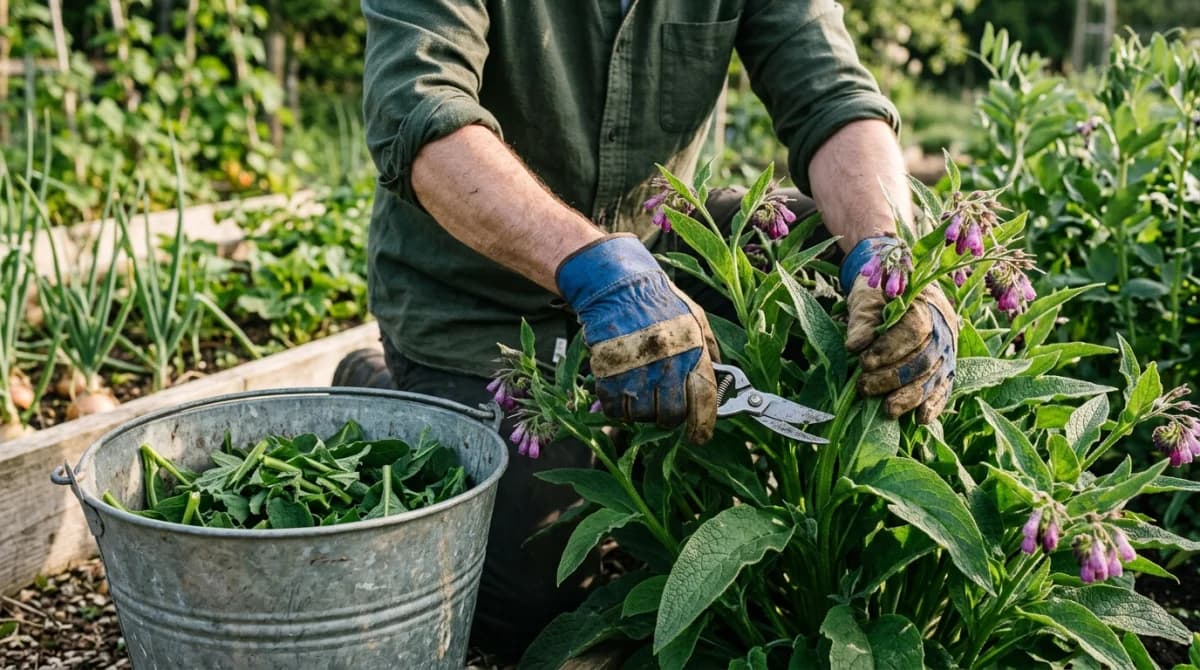
By the last week of May the comfrey has done something quietly remarkable. The plant that was a flat rosette of nothing in March is now a waist-high mound of broad, bristly leaves topped with nodding purple bells, and it has reached this size by pulling minerals out of soil far deeper than most garden plants ever touch. That is the moment to cut it — and to turn the first armful of the year into the single most useful free thing a kitchen garden produces: a homemade liquid feed that is, almost exactly, tomato food in a bucket.
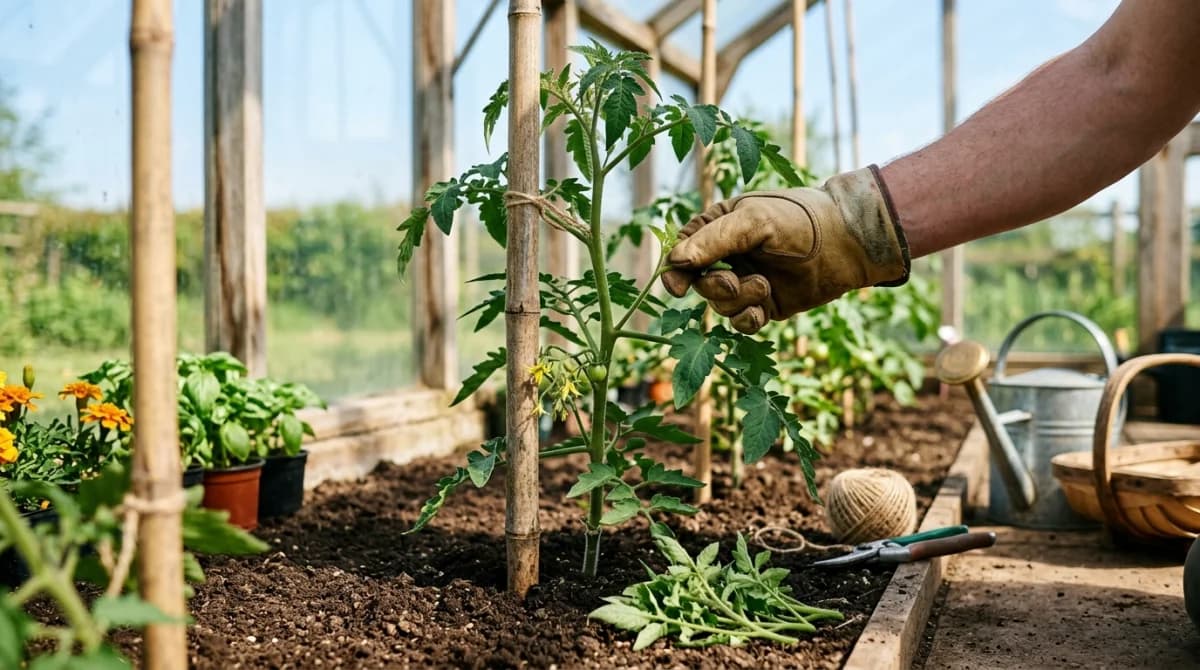
The timing is no accident. The first comfrey cut comes due just as the crops that benefit from it most are starting to flower. Tomatoes are setting their first trusses, courgettes are opening their first blooms, beans are climbing and beginning to flower, and every one of those fruiting crops is about to shift its appetite from leaf-building nitrogen to fruit-filling potassium. Comfrey, conveniently, is one of the richest sources of potassium a garden can grow. Cut it now and you have the feed ready in a few weeks, right when the plants begin to ask for it.
Why Comfrey Makes Such a Good Feed
The reason comfrey works so well comes down to its roots. They drive down several feet into the subsoil, far below the reach of shallower-rooted vegetables, and mine nutrients that have leached down out of the topsoil — potassium especially, along with a useful spread of trace minerals. The plant stores all of that in its fast-growing leaves, which is why those leaves grow back so quickly after cutting and why they rot down so readily into a nutrient-dense liquid.
The numbers tell the story. Comfrey leaves are roughly comparable to a balanced fertiliser, but skewed heavily toward potassium — the ratio is often given as around 1.8 parts nitrogen to 0.5 phosphorus to 5.3 potassium. That high-potassium, lower-nitrogen profile is almost identical to the commercial tomato feeds you would otherwise buy by the bottle, and it is exactly what fruiting and flowering plants want. Too much nitrogen at this stage gives you lush leaves and few fruit; comfrey’s balance pushes the plant the other way, toward flowers, fruit, and ripening.
One thing worth knowing before you plant any: grow the cultivar called Bocking 14 if you can. It is a sterile strain that does not set seed, so it stays where you put it instead of colonising the whole garden. Wild or seed-grown comfrey can self-sow aggressively and is very hard to dig out once established, because any scrap of root left behind regrows. Bocking 14 gives you all the leaf with none of the spread.
Making the Feed: Two Methods
There are two ways to turn the leaves into feed, and the difference is mostly about whether you add water.
The simplest is the steeped method. Cut and roughly chop an armful of leaves, pack them into a bucket or barrel, weigh them down with a brick, and cover them with water. Put a lid on it, because there is no polite way to say this: a bucket of rotting comfrey smells genuinely foul, and you will want it in a far corner of the garden. After four to six weeks the leaves will have broken down into a dark, evil-smelling liquid. Strain it off and dilute it heavily before use — roughly one part feed to ten parts water, until it is the colour of weak tea. The leftover sludge goes straight on the compost heap.
The second is the concentrate method, which skips the water entirely. Pack leaves tightly into a container with a small hole drilled in the base, weigh them down, and set it over a jar to catch the drips. Over several weeks the leaves collapse under their own weight and release a thick, almost black liquid — a true concentrate. This version is far stronger and far less bulky to store, so it needs much more dilution, more like one part feed to fifteen or twenty parts water. It also smells less than the steeped version, which is a point in its favour. Either method works; the concentrate is tidier, the steep is quicker to set up.
What to Feed, and When
Once the feed is ready, use it on the crops that flower and fruit. Tomatoes are the classic recipient — a weekly drench once the first truss has set will keep them cropping. Courgettes, squash, cucumbers, peppers, chillies, and aubergines all respond the same way, as do beans once they begin to flower. Container plants and hanging baskets, which exhaust the nutrients in their compost quickly, are grateful for a regular dose through summer too.
Apply it about once a week as a soil drench around the base of the plant, always to already-moist soil rather than bone-dry roots. What you do not want to do is pour high-potassium comfrey feed onto leafy crops early in their growth — lettuces, young brassicas, and anything you are growing for leaf rather than fruit want nitrogen first, and comfrey is the wrong tool for that job. Save it for the fruiters.
The leaves are useful beyond the bucket, too. Laid as a mulch around hungry plants such as potatoes or tomatoes, they rot down in place and feed directly into the soil. A few handfuls thrown into the compost heap act as a powerful activator, heating it up and speeding decomposition. Nothing the plant produces is wasted.
Keeping a Patch Going
A single established comfrey plant will give you three or four cuts across the season, regrowing within weeks each time, so even a small patch of three or four plants keeps a steady supply coming. Cut the leaves down to a few inches above the crown with shears or a sharp knife, and always wear gloves and long sleeves — the leaves are covered in fine bristly hairs that can irritate bare skin. Give the plant a feed of its own or a mulch after a hard cutting and it will bounce straight back.
Because comfrey is a permanent, somewhat sprawling plant, it pays to give it a deliberate home rather than tucking it in as an afterthought — a corner near the compost heap is traditional, close to where both the leaves and the finished feed get used. If you are working out where a permanent comfrey bed could sit without crowding the crops, Gardenly can render your plot from a photo and let you place a new bed where it earns its keep, out of the way but within easy reach of the vegetables it will be feeding all summer.
Cut your first comfrey this weekend, get a bucket steeping, and in a month you will have a summer’s worth of feed standing ready — free, home-grown, and pulled straight out of your own subsoil by the most generous plant in the garden.
Sources
- Royal Horticultural Society — Comfrey: Growing and Using
- Garden Organic — How to Make and Use Comfrey Feed
- University of Vermont Extension — Plant-Based Fertilisers and Liquid Feeds
- Royal Horticultural Society — Feeding Plants: Liquid Fertilisers