How to Mow After No Mow May Without Shocking the Lawn or Losing the Pollinators
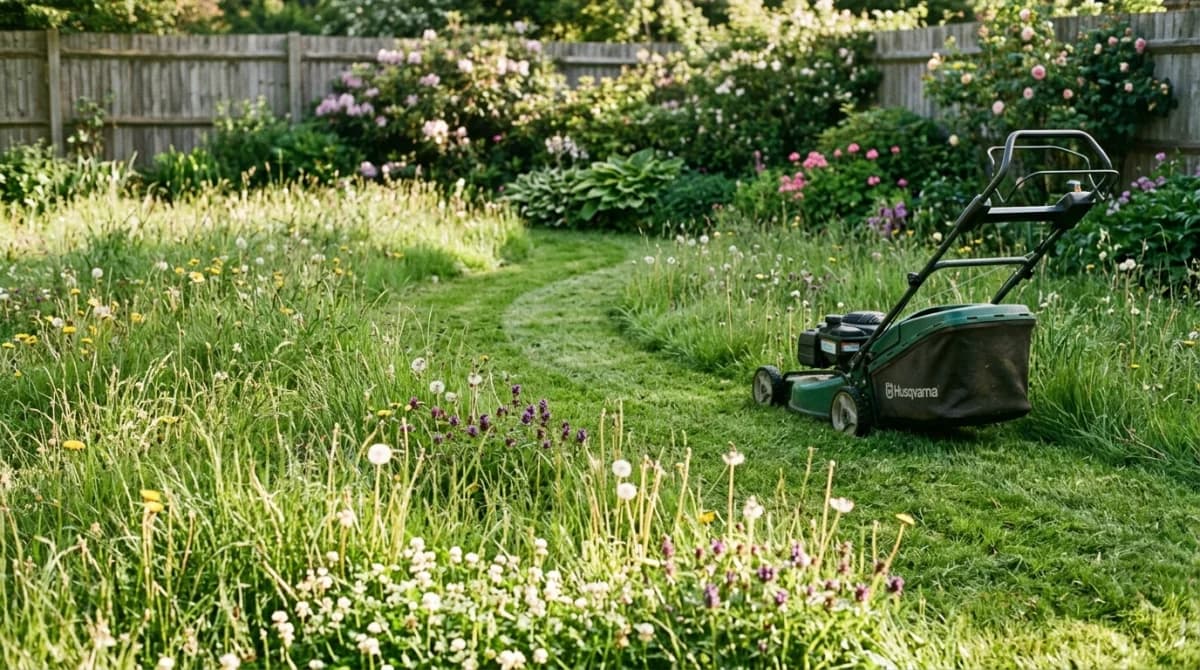
The end of May is the moment that catches most well-meaning gardeners out. The lawn that was left alone through the month has done exactly what it was supposed to do — grown tall, thrown up flowering clover and self-heal and dandelion, and quietly fed a few hundred bees that would otherwise have gone hungry — and now sits there, knee-high in places, looking like a problem that needs solving on Saturday morning. The temptation is to drag the mower out, drop it to its usual summer height, and put the whole thing back to neat in one pass. That single pass is what undoes most of what the month was for. The grass goes into shock, the clover and self-heal that were just hitting peak flower disappear in an afternoon, and the lawn comes out yellow and stressed at exactly the wrong moment, with summer heat about to settle in.
The first cut after No Mow May is its own job, with its own rules. Done well it eases the lawn back into a mowing rhythm without scalping it, keeps a useful share of the flowers the bees came for, and leaves the grass in much better shape to handle June and July than the average shaved-flat suburban lawn ever is. None of it is complicated. It just needs a slightly different approach than the rest of the season.
Why a Single Hard Cut Is the Worst Move
Grass kept short through the season has a quiet equilibrium: short blades, deep roots, plenty of energy stored down below. Grass that has grown tall for a month builds the opposite — long, soft blades pushed up fast in spring rain, with a lot of the plant’s resources held above ground in the leaves. If you cut more than about a third of the leaf length in one pass, you take away more than the plant can spare. The standard guidance — never remove more than a third in one mow — exists precisely for this situation, and it matters far more after a long break than during regular weekly mowing.
A scalped, suddenly-short lawn loses water fast through the cut blades, has nothing left above ground to photosynthesise with, and sends a stress signal down to the roots that pulls them up shallower. In a wet, cool spring you might get away with it. In late May, with the first real heat of summer often a few days away, you get a yellow lawn that stays yellow for weeks and is far more prone to drought than its longer neighbours. The instinct to “get it back to normal in one go” is exactly the wrong instinct.
The Right First Cut
The correct first cut after a month of growth happens in two or three stages, spread across a fortnight, and it starts higher than you think.
Set the mower to its highest setting — for most rotary mowers that is around three inches, sometimes a touch more. On the first pass, take only the tips off. The lawn will still look long afterwards, and that is the point: you have removed roughly a third of the growth, the grass plants still have plenty of leaf left to feed themselves, and the cuttings are short enough to fall through without smothering. If you have a high-volume of cut material, collect it rather than leaving it as a mat; thick wet clippings sat on top of a recovering lawn will yellow it almost as fast as scalping would.
Wait four or five days. Let the grass adjust, water if the weather is dry, and then mow again on the same high setting, taking a little more off. After another similar interval, take a third pass, and only then drop the cutting height to a more normal summer setting — somewhere around two inches for most ordinary lawns. By the end of the second week of June the lawn is back to its working height, but it got there in three calm steps rather than one violent one, and the grass plants have kept their roots and their colour the whole way through.
If your mower has a mulching plate, use it from the second pass onward — finely chopped clippings returned to the lawn give back nitrogen as they break down, and a recovering lawn in late spring is grateful for the feed. The one moment not to mulch is the very first cut after the long growth, when the clippings are simply too long and wet to disappear; collect those.
Keep Some of the Flowers
The other thing worth doing at this moment, while the mower is out, is deciding not to cut all of it. The month of growth that produced flowers is the whole reason the bees showed up, and the difference between a lawn that helps pollinators and one that does not is rarely an all-or-nothing question. Most of the value comes from leaving relatively small areas long and letting the rest go back to a normal mown surface.
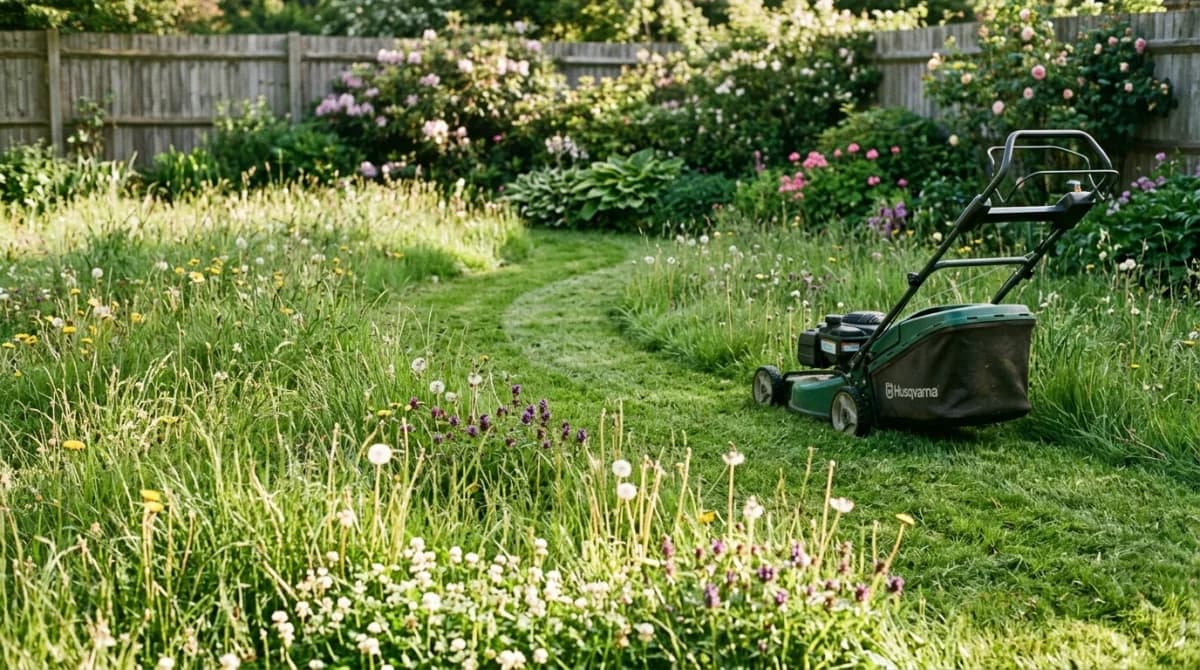
The easiest version is the mown-path approach: mow a clean, deliberate path through the longer grass and around the edges where the lawn meets borders, paths, and patios, and leave one or two interior pockets — the area under a tree, a strip along the back fence, a corner near the shed — completely unmown for another month. The mown edges and path make the whole thing read as intentional rather than neglected, which is what tends to keep neighbours and household members on side, and the long pockets carry the clover, self-heal, bird’s-foot trefoil, and dandelion flowers right through into June and July when very little else is in bloom at lawn-height. A small strip of long grass kept until the autumn cut is one of the most productive things a suburban lawn can do for pollinators, far more so than a single month of letting the whole thing grow and then cutting it all flat again on the first of June.
If you are going to leave permanent long areas, mark them in your head — or with a low edge, a line of stones, a deliberate curve — so they look designed rather than accidental, and so you remember to give them a single hard cut at the end of summer to stop coarse grasses taking over.
Aftercare Through June
A lawn coming out of a long rest benefits from a little help over the next few weeks. If the spring has been dry, give it a deep soak after the first cut — once, properly, rather than a light sprinkle every day — to help the roots settle back. A light feed of something balanced, or a thin top-dressing of compost brushed in, helps recovery without pushing soft growth. Avoid weed-and-feed products in this window: the clover and self-heal that are doing most of the pollinator work are exactly the “weeds” those products kill, and the whole point of the exercise is to keep them.
If you are looking at the lawn after this first cut and starting to wonder whether all of it really needs to be lawn at all — whether one of those long pockets could become a permanent low-maintenance meadow strip, or a wider border could eat into the grass with shrubs and perennials that need no mowing at all — that is a useful thing to think about while the long grass is still standing and the shapes are easy to see. Gardenly can render your garden from a photo with the lawn redrawn, a meadow corner kept long, or a new border carved out of the grass, which makes it easier to commit to a change you can already picture rather than guessing at it from a bare mown rectangle later in the summer.
Take the lawn down in stages this weekend, leave a corner long, and the month of growth keeps paying out into the summer rather than ending with the first pull of the mower’s starter cord.
Sources
- Royal Horticultural Society — Lawn Care: Mowing
- Plantlife — No Mow May and Every Flower Counts
- University of Minnesota Extension — Mowing Practices for Healthy Lawns
- Xerces Society — Lawn Alternatives and Pollinator-Friendly Mowing