Pinch Out Tomato Side Shoots This Week — and Keep the Plant Working on Fruit, Not Foliage
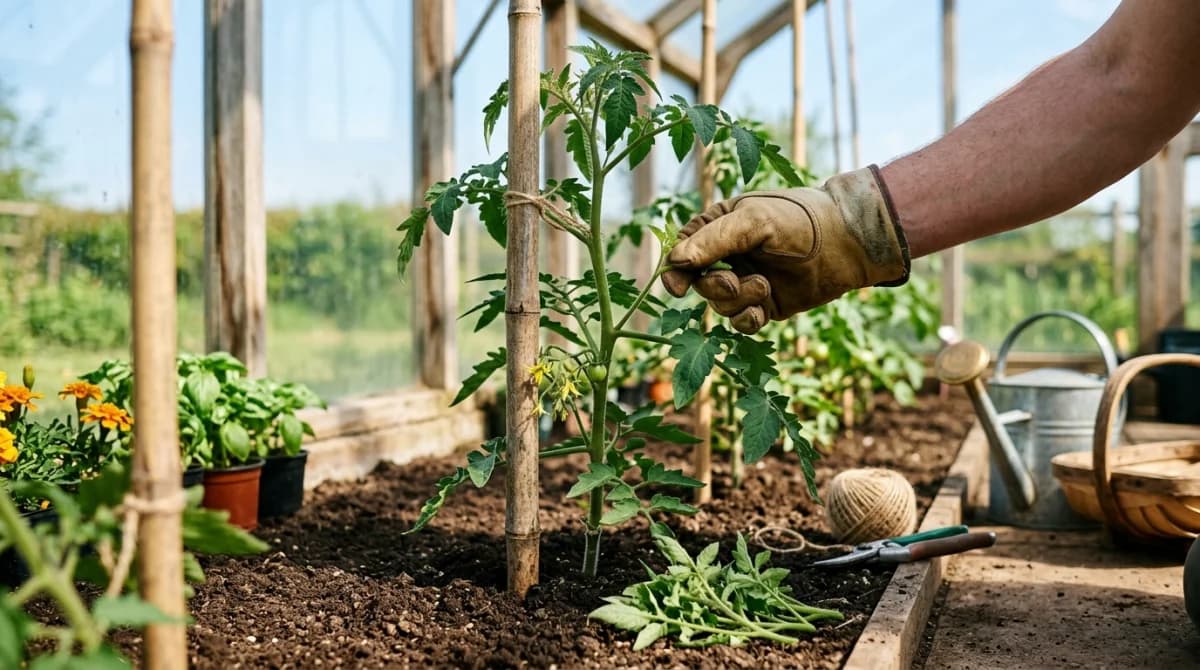
A tomato plant has no opinion about what you want from it. Left entirely alone, a cordon tomato will do what every vigorous plant does — grow in every direction it can, putting out shoot after shoot, leaf after leaf, until it has built itself a sprawling green thicket. It is a magnificent performance, and it produces remarkably little fruit. The plant has spent its summer making more plant. The single most useful half-hour you will give your tomatoes all season is the one you spend, week after week from now until late summer, taking those surplus shoots off while they are still small enough to remove with a fingertip. Late May, with this year’s plants freshly settled into the greenhouse border or their outdoor bed, is when the job begins — and the first few weeks set the habit that carries the crop.
Tomatoes (Solanum lycopersicum) are not difficult plants. They want warmth, water, food and light, and they will reward all four generously. But a tomato planted out in May is a plant in a hurry, and within a week or two of going into its final position it starts to branch. If you do not intervene, you do not get a bigger harvest — you get a later, smaller, more disease-prone one, because every shoot the plant is feeding is a shoot it is not ripening fruit on.
What a Side Shoot Actually Is
Before you pinch anything, you have to be certain what you are pinching, because removing the wrong growth sets the plant back badly.
A cordon tomato has one main stem. Off that stem, two things grow. The first is leaves — the large, divided, ferny tomato foliage — which emerge straight from the stem. The second is trusses — the flowering and fruiting stems, which also emerge from the stem and carry the small yellow star-shaped flowers that become tomatoes. Both of those you keep.
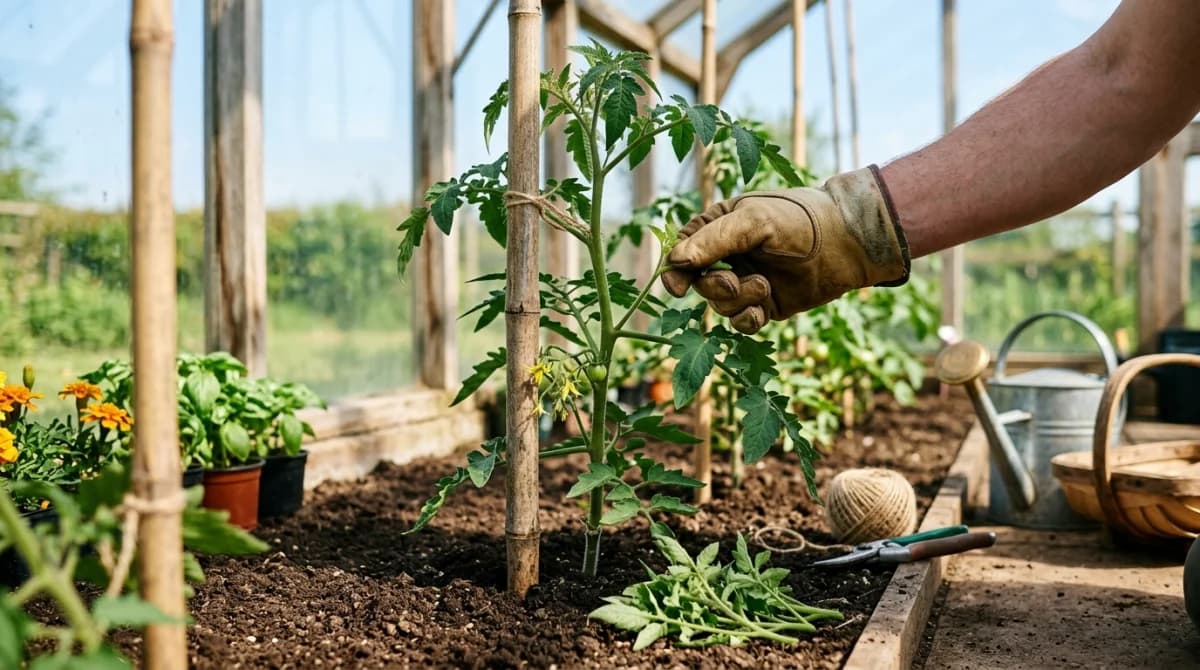
The side shoot is the third thing, and it appears in one specific place: the narrow angle between the main stem and a leaf stalk, the joint gardeners call the leaf axil. A side shoot starts as a tiny soft green sprout tucked into that 45-degree crook, and if you leave it, it grows into a complete second stem — its own leaves, its own trusses, its own side shoots. That is the growth to remove. The test is simple: if a new shoot is emerging from the armpit between a leaf and the main stem, it is a side shoot. If it comes straight off the main stem on its own, it is a leaf or a truss, and it stays.
The mistake that costs people a crop is pinching out a truss by accident, mistaking the cluster of flower buds for a shoot. Look before you pinch. A truss has buds or flowers on it almost from the start; a side shoot is plain leafy growth.
Cordon or Bush — Don’t Pinch the Wrong Type
This matters enough to stop and check, because side-shooting a bush tomato ruins it.
Cordon tomatoes — also called indeterminate or vine tomatoes, and the great majority of varieties grown up a cane or string — grow as a single tall stem and need their side shoots removed. Most of the well-known names are cordons: ‘Gardener’s Delight’, ‘Sungold’, ‘Shirley’, ‘Moneymaker’, ‘San Marzano’.
Bush tomatoes — determinate or tumbling types such as ‘Tumbling Tom’, ‘Maskotka’ or ‘Roma VF’ — are bred to branch. They grow into a low, spreading mound, set all their fruit over a short period, and should not be side-shooted at all. Pinching out the shoots of a bush tomato simply removes most of the plant’s fruiting potential. If you are not sure which you have, check the seed packet or plant label — it will say cordon or bush. When in doubt, leave the plant alone for a week and watch: a cordon stays upright and single-stemmed, a bush starts to mound out low and wide.
How to Pinch — Small, by Hand, on a Dry Morning
The technique is almost nothing, and the timing is most of the skill.
While a side shoot is small — under an inch or two long, soft and pale — you can simply take it between finger and thumb and snap it sideways. It comes away cleanly, leaving a tiny wound that seals over within hours. Doing it this way, with no blade, is the safest approach, because secateurs carry sap from plant to plant and tomato diseases travel readily on a contaminated blade. If a shoot has been missed and grown long and woody, then use clean snips and cut it close, but the goal is never to let it reach that stage. Walk the plants once a week and nothing gets the chance to.
Do it in the morning of a dry day. The wound needs to dry and callus before nightfall, and a pinch made on a damp, still evening leaves an open cut through the cool, humid hours when fungal spores — grey mould, and later tomato blight — are most able to enter. A dry morning gives the plant the whole warm day to seal itself. The plant is also at its most turgid in the morning, so shoots snap rather than tear.
While you are at each plant, do the two jobs that belong with side-shooting. Tie the main stem loosely to its cane or twist it around its support string — a fast-growing tomato can put on several inches a week and will flop without regular tying. And once the lowest truss has set its first small green fruit, you can begin removing the leaves below it: this opens up airflow around the base of the plant, where humidity and disease collect, and stops the lowest foliage from sitting in soil-splashed wet. Do not strip leaves higher up — the plant needs its canopy to feed the fruit — but the bottom few, once they have done their early work, are better gone.
Why It Pays Off
A side-shooted cordon tomato puts everything it has into a single, manageable, well-lit stem of trusses. The fruit ripens earlier because the plant is not diverting sugars into surplus foliage. It ripens more evenly because light reaches every truss. And the plant stays far healthier, because an open, airy structure dries quickly after rain or watering and gives blight and grey mould far less of a foothold than a dense, damp thicket ever would. Half an hour a week, from now until you stop the plant in late summer, is the whole price of a good tomato harvest.
Get into the rhythm in these first weeks of the plants’ lives — a slow walk down the row every weekend, pinching, tying, glancing over each plant — and side-shooting stops being a chore and becomes the pleasant part of growing tomatoes, the moment you actually notice how the crop is coming on.
If you are still planning where the tomatoes should sit — which wall throws back the most heat, where a cordon row will not shade a bed of something lower behind it, how a greenhouse border or a run of grow bags fits the space you have — Gardenly can render your plot in full summer growth from a single photo, so you can see the layout standing up before you commit the plants to the ground. Useful for a crop where a few extra hours of sun, and a little more air moving through the row, can be the difference between a clean harvest and a blighted one.
Sources
- Royal Horticultural Society — Tomatoes: Growing Guide
- Royal Horticultural Society — Tomato Blight
- University of Minnesota Extension — Growing Tomatoes in Home Gardens
- Garden Organic — Tomato Growing Guide