How to Divide Perennials in Early Spring for a Fuller, Healthier Garden
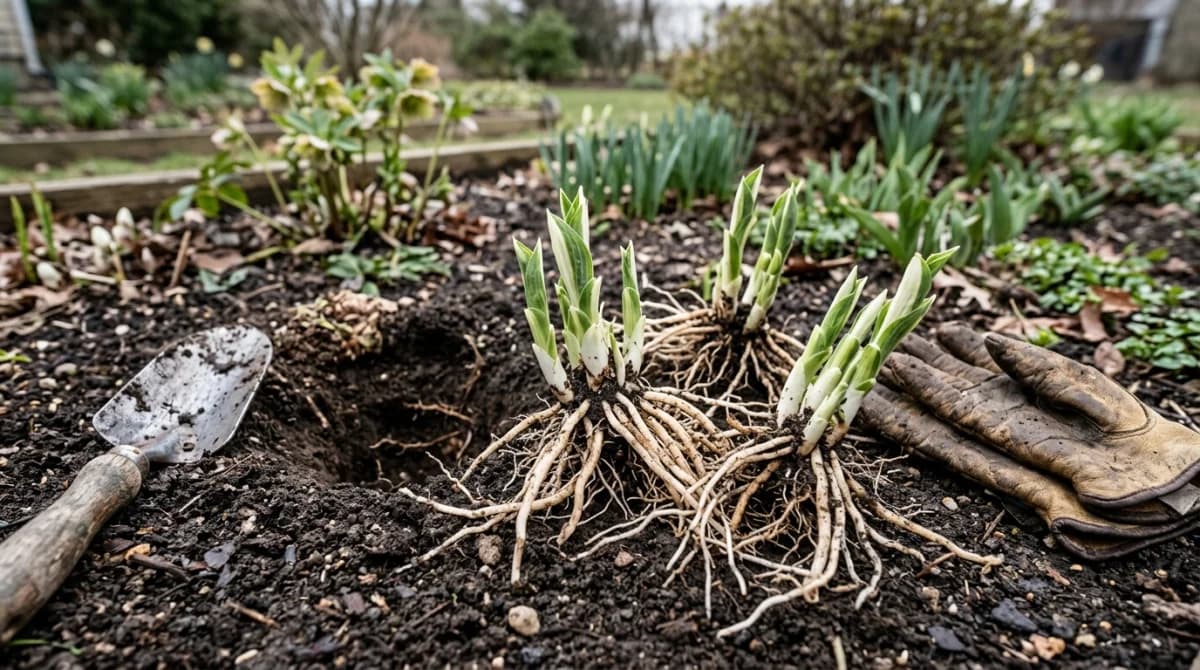
There is a moment in late March when the garden starts showing signs of life — green nubs pushing through mulch, fat crowns swelling at the soil line — and that brief window before full growth kicks in is the single best time to divide most perennials. The plants are awake enough to recover quickly but not so far along that you are hacking through active foliage.
Dividing is one of the few gardening tasks that is genuinely free. You end up with more plants, the originals bloom better, and bare spots in the garden fill in without a trip to the nursery.
Why Bother Dividing
Perennials do not grow forever in a tidy clump. After three to five years, most spread outward while the center dies out, leaving a ring of healthy growth around a bald middle. The symptoms are easy to spot:
- Fewer or smaller flowers than previous years
- A dead or woody center with growth only at the edges
- The clump has outgrown its space and is crowding neighbors
- Stems flop over because the root mass can no longer support upright growth
Division fixes all of these problems at once. You are essentially resetting the plant’s clock, giving each piece fresh soil and room to establish a vigorous new root system.
When to Divide What
The general rule is straightforward: divide spring and summer bloomers in early spring before they leaf out, and divide fall bloomers in spring as well. Almost everything can be divided in early spring, which makes late March through mid-April the most productive window.
Best Divided in Early Spring
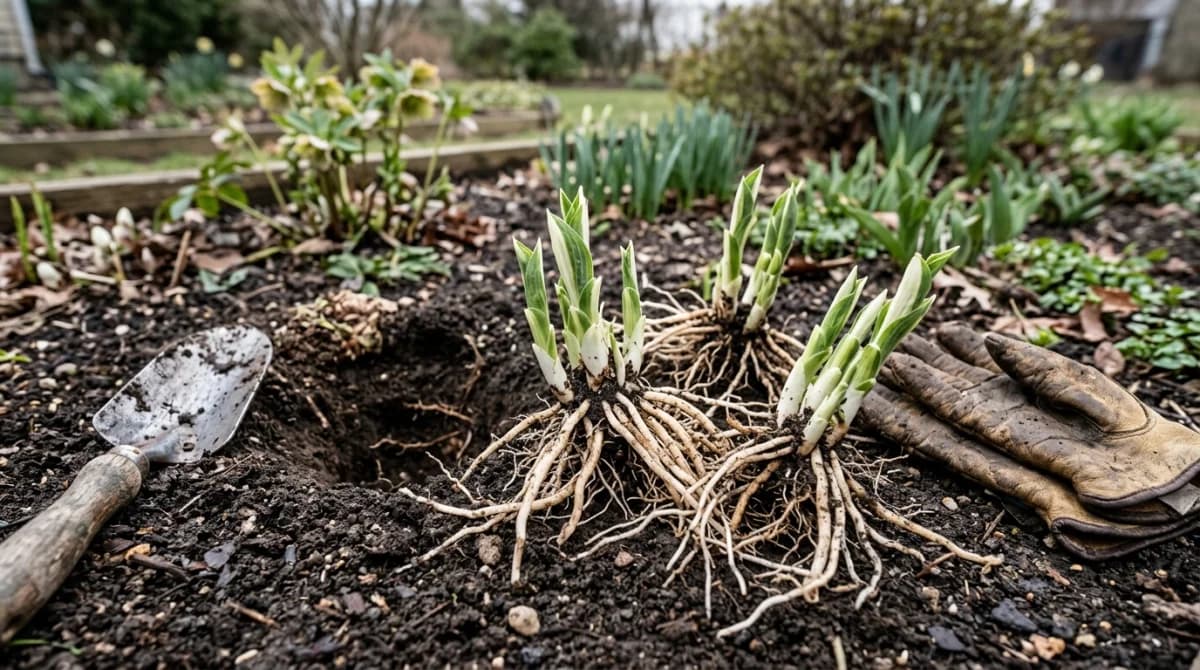
- Hostas: The easiest perennial to divide. Wait until the pointed shoots (called pips) are two to four inches tall. You can see exactly where each division will go.
- Daylilies (Hemerocallis): Nearly indestructible. Pull apart fan-shaped divisions by hand or use a knife for tight clumps.
- Ornamental grasses: Cut last year’s foliage to six inches, then split the crown. Large grasses like miscanthus may require an axe or reciprocating saw.
- Sedum: Snaps apart easily. Even small pieces with a few roots will establish.
- Bee balm (Monarda): Spreads aggressively. Dig the outer ring of healthy growth and compost the dead center.
- Astilbe: Divide every three to four years when bloom quality declines. Each piece needs at least three to five buds.
- Siberian iris: The fans separate cleanly. Replant so the rhizome top sits at the soil surface.
- Coneflower (Echinacea): Divide young plants. Older coneflowers develop deep taproots that resent disturbance.
Wait Until Fall
A few perennials prefer fall division because they bloom on the current season’s growth and need every bit of spring energy directed toward flowering:
- Peonies: Divide in September or October only. Spring division almost always costs you a year of bloom.
- Oriental poppies: Go dormant in summer — divide when fresh foliage appears in early fall.
- Bearded iris: Best divided right after flowering in midsummer to early fall.
The Technique
Dividing perennials does not require specialized tools or a gentle touch. Plants are tougher than most gardeners give them credit for.
What You Need
- A sharp spade or garden fork
- A serrated knife or old bread knife for tight crowns
- A bucket of water or hose nearby
- Compost for amending replanting holes
Step by Step
Dig the whole clump. Push your spade in a full circle about four inches out from the drip line, then lever the entire root mass out of the ground. Shake or rinse off enough soil to see the root structure.
Find the natural divisions. Most perennials have visible separation points — individual fans, shoots, or crowns connected by roots. Look for these before cutting.
Separate. For loose clumps like daylilies and hostas, pull sections apart by hand or use two garden forks back-to-back to pry them apart. For dense, woody crowns like ornamental grasses or astilbe, use a sharp knife or spade to cut straight through. Do not worry about cutting some roots — the plant will recover.
Size the divisions. Each piece should have at least three to five shoots and a healthy mass of roots. Divisions that are too small take years to fill in. Divisions that are too large defeat the purpose.
Replant immediately. Roots dry out fast. Dig a hole slightly wider than the root mass, mix in a handful of compost, set the division at the same depth it was growing before, and water deeply. If you cannot plant right away, heel the divisions into a shady spot and keep the roots moist.
Where to Put Your New Plants
This is where division becomes a design tool, not just maintenance. Each divided clump gives you three to five new plants, and where you place them shapes how the garden looks for years.
Repeat for Rhythm
Take your divisions and plant them at regular intervals along a border. Three clumps of the same hosta spaced evenly down a shady path creates visual rhythm that makes the whole bed look intentional. Repetition is one of the simplest and most effective design moves, and division makes it free.
Fill Gaps
Every garden has thin spots — usually where something died over winter or where the soil is a little different. Divisions from vigorous growers like bee balm, daylilies, and sedum are perfect gap fillers because they establish quickly.
Start a New Bed
If you have been thinking about expanding the garden, division gives you a head start. A single overgrown hosta clump can yield enough divisions to plant an entire new shade border. Pair that with a few divided daylilies for the sunny edge and you have a new bed without buying a single plant.
If you are planning where new divisions might go, tools like Gardenly can help you visualize the layout before you start digging holes. Seeing the design in advance helps you place plants at proper spacing the first time.
Common Mistakes
Dividing too late in spring. Once plants are in full leaf, division stresses them much harder. The ideal window is when shoots are just emerging — you can see what you are doing and the plant puts all its energy into root recovery rather than supporting existing foliage.
Making divisions too small. A single shoot with a few roots might survive, but it will take two or three years to look like anything. Aim for fist-sized divisions at minimum.
Planting too deep. Set divisions at the same depth they were growing before. Burying the crown leads to rot, especially with iris, hosta, and astilbe.
Forgetting to water. Newly divided plants have disrupted root systems and cannot pull water efficiently. Water deeply at planting and keep the soil consistently moist for the first two to three weeks. After that, normal watering is fine.
Skipping the compost. The original planting hole has been depleted after several years of growth. Adding compost when you replant gives divisions a nutrient boost and improves soil structure around the new roots.
A Weekend That Pays for Years
An hour of dividing on a cool March morning can produce a dozen new plants from clumps that were already in the garden. Those divisions fill gaps, start new beds, and give away to neighbors — all while making the original plants bloom better than they have in years. It is one of the highest-return tasks in gardening, and the window is open right now.
Sources
- Dividing Perennials — University of Minnesota Extension
- Dividing Perennials — Penn State Extension
- Dividing Perennials — Clemson Cooperative Extension
- Dividing Perennials — University of Illinois Extension
- Perennials: Dividing and Transplanting — Royal Horticultural Society