Mulching Your Garden Beds This Spring: Types, Timing, and Technique
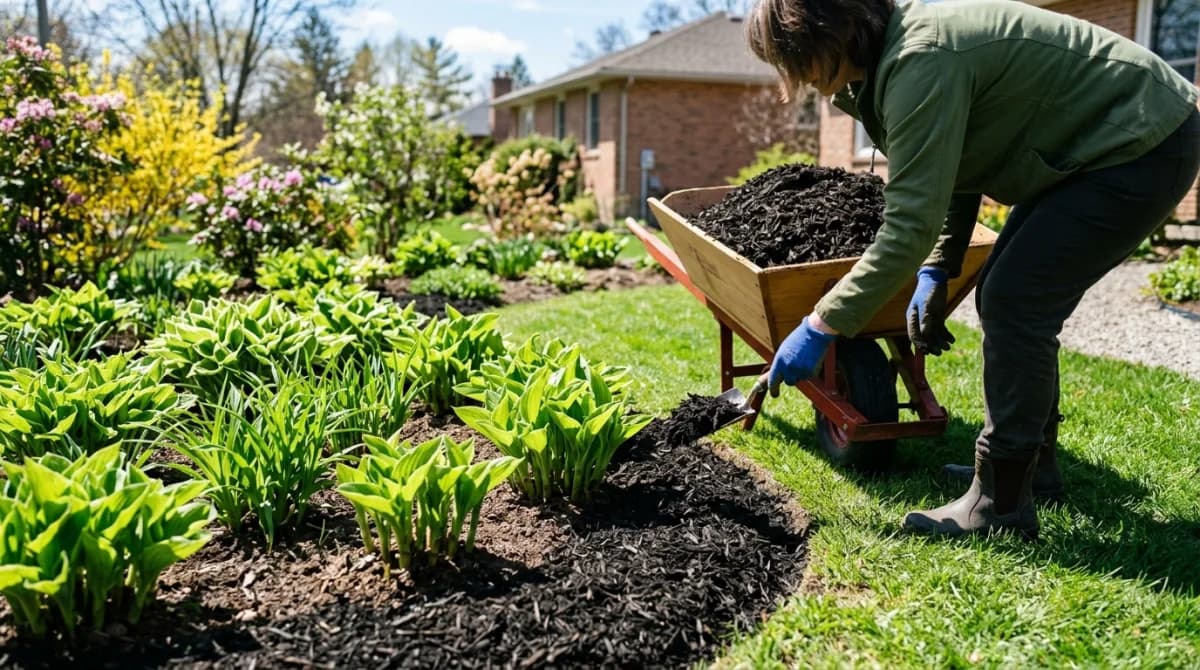
Mulching is the closest thing gardening has to a free lunch. A few inches of the right material on top of your soil suppresses weeds, holds moisture, moderates temperature swings, and slowly feeds the soil as it breaks down. It also makes your beds look finished and intentional, which is reason enough for most people.
Yet mulch is also one of the most commonly misapplied materials in the garden. Too much, too early, wrong type, piled against stems — each of these turns a benefit into a problem. Here is how to mulch correctly this spring so your garden gets the full advantage without any of the downsides.
Why Spring Mulching Matters
Bare soil is vulnerable soil. Without a cover layer, the top few inches dry out fast in spring winds, crust over after rain, and provide open ground for weed seeds to germinate. A single square foot of exposed garden soil can contain thousands of dormant weed seeds just waiting for light.
Mulch interrupts that cycle. It blocks light from reaching weed seeds, slows evaporation from the soil surface, and keeps the root zone at a more consistent temperature. In practical terms, a well-mulched bed needs roughly half the watering and a fraction of the weeding compared to bare soil.
The timing piece is important. Apply mulch too early in spring — before the soil has warmed — and you trap cold temperatures in the root zone, delaying the growth of perennials and warm-season crops. Wait too long and weeds get established first, which means you are mulching over a problem instead of preventing one.
When to Apply
The right moment depends on what you are mulching.
Perennial Beds and Shrub Borders
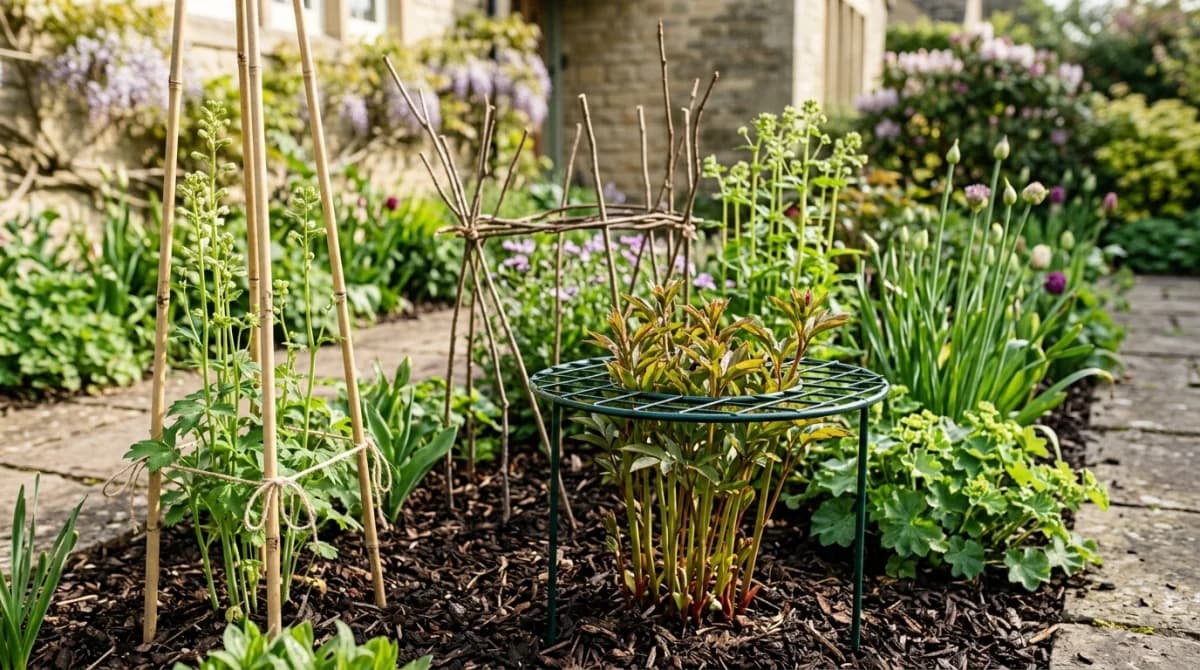
Wait until the soil has warmed and your perennials are actively growing, usually when you see 4 to 6 inches of new growth emerging. In zones 5 to 7, that is typically mid-April through early May. Mulching too early can smother emerging shoots or keep the crown too wet during cool, rainy weeks.
Pull back any old mulch from the crown of each plant before adding fresh material. Crowns that stay buried and damp are prone to rot.
Vegetable Gardens
For cool-season crops already in the ground (lettuce, peas, brassicas), mulch as soon as they are established and growing. Straw or shredded leaves work well and keep soil cool, which is exactly what these crops want.
For warm-season crops like tomatoes, peppers, and squash, wait to mulch until the soil has warmed to at least 60 to 65 degrees Fahrenheit. Mulching warm-season beds too early keeps the soil cool and slows root development. In most areas, that means waiting until late April or May.
Trees and Shrubs
Established trees and shrubs can be mulched any time in spring. Refresh the ring to maintain 2 to 4 inches of depth, keeping mulch at least 3 to 6 inches away from the trunk. The “mulch volcano” — that cone of mulch piled against the base of a tree — is one of the most damaging landscaping habits and leads to bark rot, root girdling, and pest problems.
Choosing the Right Mulch
Not all mulches do the same job. The best choice depends on the bed type and what you want the mulch to accomplish.
Shredded Bark or Hardwood Mulch
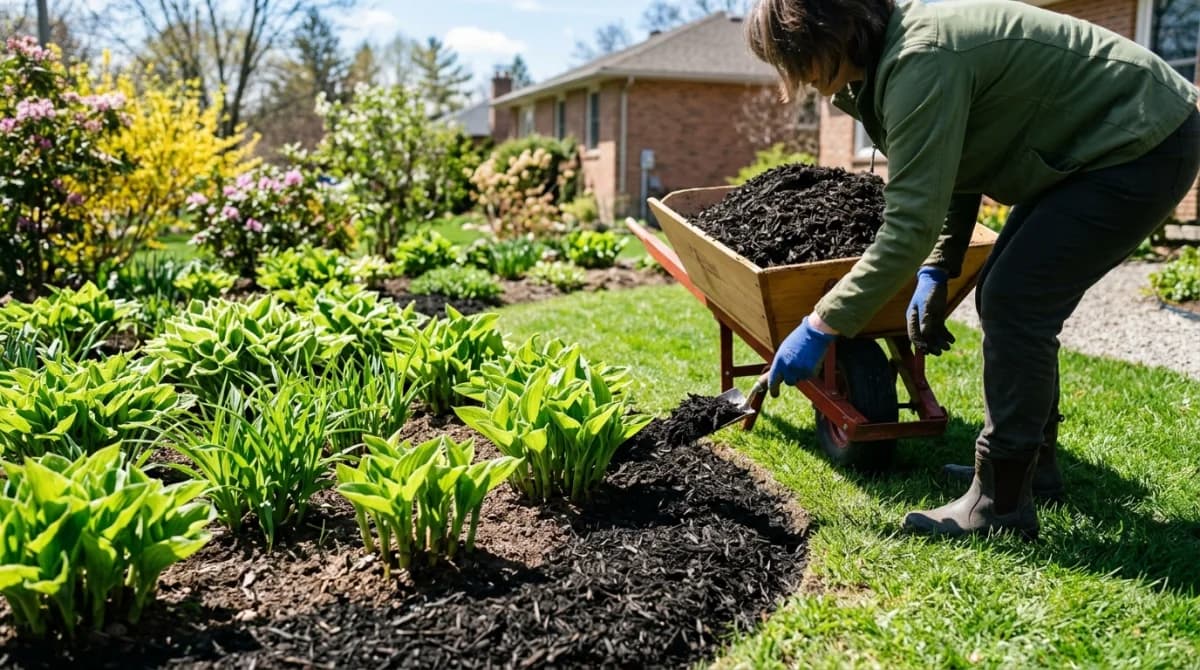
The standard choice for ornamental beds, foundation plantings, and shrub borders. It breaks down slowly (1 to 2 years), stays in place well, and gives beds a clean, uniform look. Apply 2 to 3 inches. Avoid dyed mulches — the coloring is cosmetic and can contain contaminants, and the wood itself is often low-quality recycled material.
Shredded Leaves
The best free mulch available. Run a mower over fallen leaves or use a leaf shredder, then apply 2 to 3 inches. Shredded leaves break down in a single season, feeding the soil as they decompose. They are ideal for perennial beds and vegetable gardens. Whole leaves mat down and repel water, so always shred first.
Straw (Not Hay)
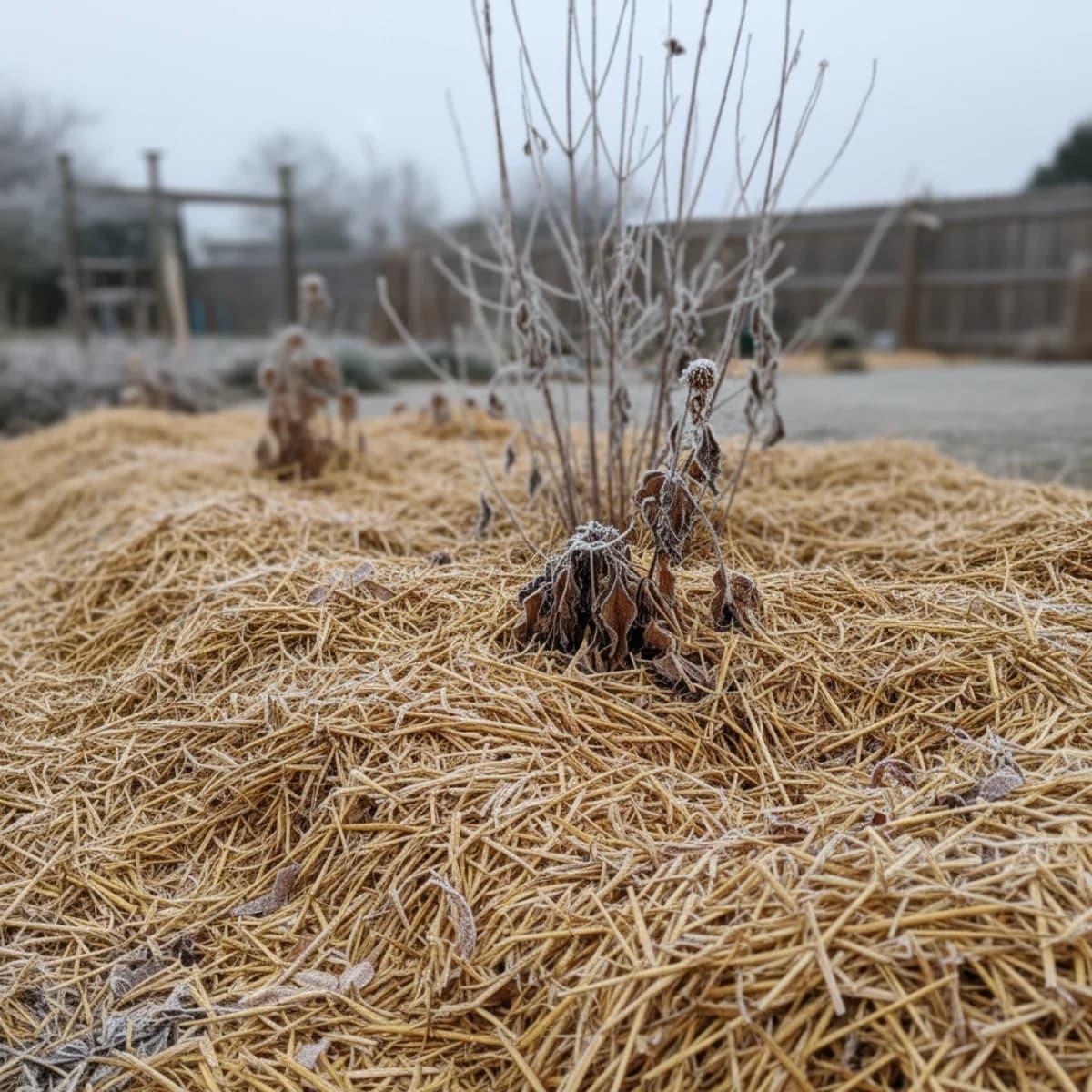
The go-to mulch for vegetable gardens. Clean straw is weed-free, easy to work with, and breaks down by the end of the season. Apply 3 to 4 inches around established plants. Avoid hay, which is full of grass and weed seeds and will create more problems than it solves.
Pine Needles (Pine Straw)
Excellent for acid-loving plants like blueberries, azaleas, and rhododendrons. Pine needles interlock and stay in place on slopes, allow water through easily, and break down slowly. Despite popular belief, pine needles do not significantly acidify soil — the pH effect is minimal. They simply work well as a lightweight, attractive mulch.
Compost
A thin layer (1 to 2 inches) of finished compost works as both mulch and soil amendment. It suppresses weeds, retains moisture, and feeds the soil biology directly. Use it on vegetable beds and annual flower plantings. Compost breaks down fast, so you may need to reapply or top with another mulch type for longer-lasting coverage.
Wood Chips (Arborist Chips)
Chunky, unprocessed wood chips from tree services are excellent for pathways, around established trees, and in naturalistic plantings. They break down slowly and support beneficial fungal networks in the soil. They are not ideal for annual vegetable beds because they tie up nitrogen at the soil surface as they decompose — though this effect is limited to the top inch and does not harm established plants.
How Much to Apply
The target depth for most organic mulches is 2 to 4 inches after settling. Less than 2 inches and weeds push through easily. More than 4 inches and you risk suffocating roots and trapping excess moisture.
A rough rule for calculating volume: one cubic yard of mulch covers about 100 square feet at 3 inches deep. Measure your bed area, divide by 100, and you have the number of cubic yards needed.
For reference:
- Small bed (50 sq ft): about half a cubic yard
- Medium bed (150 sq ft): 1.5 cubic yards
- Large bed (300 sq ft): 3 cubic yards
Most garden centers sell mulch by the cubic yard for bulk delivery, or in 2-cubic-foot bags for smaller jobs. Bulk is significantly cheaper per volume if you have the space for a delivery pile.
Common Mistakes to Avoid
Mulch Volcanoes Around Trees
Piling mulch against tree trunks creates a permanently moist environment against the bark, which leads to rot, disease, and roots growing up into the mulch instead of down into the soil. Always leave a 3 to 6 inch gap between the mulch ring and the trunk.
Mulching Over Weeds
Mulch prevents weeds. It does not kill established ones. If you spread mulch over existing weeds, the perennials will push right through and the annuals will use the mulch as a comfortable growing medium. Weed first, then mulch.
Using Landscape Fabric Under Mulch
Landscape fabric sounds logical but causes problems over time. Mulch breaks down on top of the fabric, creating a layer of soil where weeds root anyway — except now their roots are tangled in the fabric and harder to remove. The fabric also prevents organic matter from reaching the soil below, starving soil biology. Skip the fabric in planting beds. It has a place under gravel paths but nowhere near plants.
Applying Too Early
In spring, let the soil warm up before mulching. This is especially important for warm-season vegetables and newly emerging perennials. A week or two of patience prevents weeks of delayed growth.
Refreshing Existing Mulch
If your beds still have mulch from last year, you may not need to add much. Fluff up compacted mulch with a garden fork to restore air flow and check the depth. If you still have 2 inches of material, topping off with an inch of fresh mulch is enough.
Remove any mulch that has gone sour — you will know by the smell. Anaerobic decomposition produces a vinegar-like odor and the mulch may look slimy or matted. Spread it out in a thin layer to dry and re-aerate before reusing, or compost it.
Mulch as a Design Element
Beyond the practical benefits, mulch defines the visual structure of your garden. A consistent mulch type across all your beds ties the landscape together and makes the plants pop. It creates the visual equivalent of a clean frame around a painting.
If you are planning a garden redesign this spring, thinking about mulch type early helps the whole design feel cohesive. Tools like Gardenly can help you visualize how different bed layouts and planting schemes will look — and a clean, well-mulched bed is what makes the difference between a garden that looks designed and one that looks like a collection of plants.
The Quick Spring Mulching Checklist
- Wait until soil is warm and perennials show 4 to 6 inches of growth
- Weed all beds thoroughly before mulching
- Pull old mulch away from plant crowns and tree trunks
- Apply 2 to 4 inches of organic mulch, leaving gaps around stems
- Use straw or shredded leaves for vegetable beds, bark mulch for ornamental beds
- Water beds after mulching to settle the material
- Check depth monthly through the growing season and top off as needed
Mulching is one of those tasks that takes a single afternoon but pays off for the entire growing season. Get it right once in April and your garden will be easier to maintain, better looking, and healthier all the way through fall.