Watering Schedule for Your Garden: How to Get It Right This Growing Season
Spring is when most gardeners plant — and when most watering mistakes start. You put in transplants, direct-sow seeds, and set out containers, all with the best intentions. Then you either drown everything with daily hosing or forget for a week and wonder why your lettuce bolted.
The fix is not more effort. It is a watering schedule that matches what your plants actually need, adjusted as the season progresses from cool spring rain to summer heat and back to fall dormancy.
Here is how to set yours up now, before the growing season gets away from you.
Start With Your Soil — It Determines Everything
Your soil type dictates how often you water more than any other factor. Before you buy a single timer or soaker hose, figure out what you are working with.
Sandy soil drains fast. Water runs straight through, so roots only get a brief drink. You will need to water more often in shorter sessions.
Clay soil absorbs slowly and holds water for days. Water it too fast and it pools on the surface and runs off. Slower, less frequent watering works best.
Loamy soil absorbs and holds water while still draining well. If you have this, your schedule is the most forgiving.
Quick test: grab a fistful of moist soil and squeeze. Crumbles apart instantly? Sand. Sticky ball that holds tight? Clay. Holds together loosely, breaks when poked? Loam.
Your Month-by-Month Watering Schedule
This is a practical framework for the full growing season. Adjust based on your rainfall — a $5 rain gauge is one of the most useful tools you can put in your garden.
March - April: Establishment Phase
Right now, the ground is still carrying moisture from winter and early spring rain. Most established plants do not need supplemental watering yet. Your focus should be on new plantings.
- New transplants and seeds: Water immediately after planting, then every 2 to 3 days until you see active growth
- Established perennials and shrubs: Let spring rain do the work. Only water if you go 10+ days without rain
- Newly planted trees: Water deeply (1 gallon per inch of trunk diameter) twice a week
- Timing: Morning, between 6 and 10 AM
- Watch for: Overwatering. Cool, wet soil plus too much irrigation is the fastest path to root rot in spring
This is also the best time to set up your irrigation system for the season. Lay drip lines, check soaker hoses for leaks, and test timers before you actually need them. If you want a quick starting point, our free water schedule generator calculates personalized watering frequency based on your plant type, soil, and climate.
May - June: Ramp Up
As temperatures rise and plants hit their growth stride, water demand increases sharply. This is when your schedule shifts from occasional to consistent.
- Vegetables: 1 to 1.5 inches per week, split into 2 to 3 sessions
- Annuals and new perennials: Twice per week, deeply
- Established perennials: Once per week if no rain
- Containers: Check daily — they may already need daily watering by late May
- Timing: Early morning is ideal. If you miss it, evening is fine but avoid wetting foliage
Mulch now if you have not already. Three inches of wood chips, straw, or shredded leaves can cut your watering needs by 50 to 70 percent according to Oregon State University Extension.
July - August: Peak Demand
This is when gardens are thirstiest and when most watering mistakes happen. The goal is deep, consistent moisture — not daily sprinkles.
- Vegetables: 1.5 to 2 inches per week. Tomatoes and squash need the most during fruit development
- All garden beds: 2 to 3 times per week, watering deeply each time
- Containers: Daily, sometimes twice on hot days. No exceptions
- Lawns: 1 to 1.5 inches per week if you choose to water them (many gardeners let lawns go dormant)
- Timing: Before 8 AM to minimize evaporation loss
If plants wilt in afternoon heat but recover by morning, that is normal transpiration stress — not a sign they need more water. Check the soil first. If it is still moist two inches down, the plant is fine.
September - October: Taper Down
Growth slows, temperatures cool, and water needs drop. But do not stop completely — fall has one critical watering task.
- Vegetables: Continue watering fall crops (kale, carrots, beets) once or twice per week
- Perennials: Reduce to once a week, then stop as they go dormant
- Newly planted trees and shrubs: Keep watering deeply once a week right up until the ground freezes. This fall hydration is critical for winter survival
- Containers: Reduce frequency as growth slows. Move tender plants indoors before frost
November - February: Dormant Season
In cold climates, no irrigation is needed when the ground is frozen. In mild climates (zones 8+), check evergreens and winter vegetables during dry stretches and water lightly when needed.
How Much Water Each Plant Type Actually Needs
University extension research consistently points to 1 to 1.5 inches of water per week as the baseline for most garden plants. But the details matter.
Vegetables
| Crop | Weekly Water Need | When It Matters Most |
|---|---|---|
| Tomatoes | 1-2 inches | During fruit set and development |
| Peppers | 1-1.5 inches | Flowering and fruit set |
| Lettuce and greens | 1 inch, consistent | Throughout (bolts if stressed) |
| Squash and cucumbers | 1-1.5 inches | Flowering and fruit expansion |
| Beans | 1 inch | Flowering and pod fill |
| Root vegetables | 1 inch, even | Throughout (uneven watering causes cracking) |
Water vegetables at the base, not overhead. Wet foliage overnight invites fungal disease, especially on tomatoes and squash.
Perennials and Shrubs
After their first growing season, most perennials are surprisingly drought-tolerant. The schedule changes by year:
- Year one: Water deeply twice a week to establish roots
- Year two: Once a week during dry spells
- Year three onward: Rainfall is usually enough, except during extended drought
Exceptions that always need regular water: hydrangeas, astilbe, ligularia, and Japanese maples in full sun.
Trees
The University of Minnesota Extension recommends watering newly planted trees slowly and deeply — about 1 gallon per inch of trunk diameter, two to three times per week through the first growing season.
Established trees rarely need supplemental water. When you do water, apply it at the drip line (outer edge of the canopy), not at the trunk.
Containers
Containers are their own world. They dry out dramatically faster than in-ground beds and need checking every single day in summer. Push your finger one inch into the soil — if dry, water until it flows from the drainage holes.
If containers dry out within hours, they are either too small, in too much sun, or both. Size up to a larger pot or move to afternoon shade.
Choose the Right Watering Method
Your method matters as much as your schedule. Ranked from most to least efficient:
Drip irrigation delivers water directly to root zones, cuts waste by 30 to 50 percent compared to sprinklers, and keeps foliage dry. A starter kit runs $30 to $60 and connects to any outdoor faucet. If you do one thing this spring, set up drip lines in your vegetable garden.
Soaker hoses weep water along their length. They are cheaper and simpler than drip, and work well in straight rows or along borders. A good option for perennial beds.
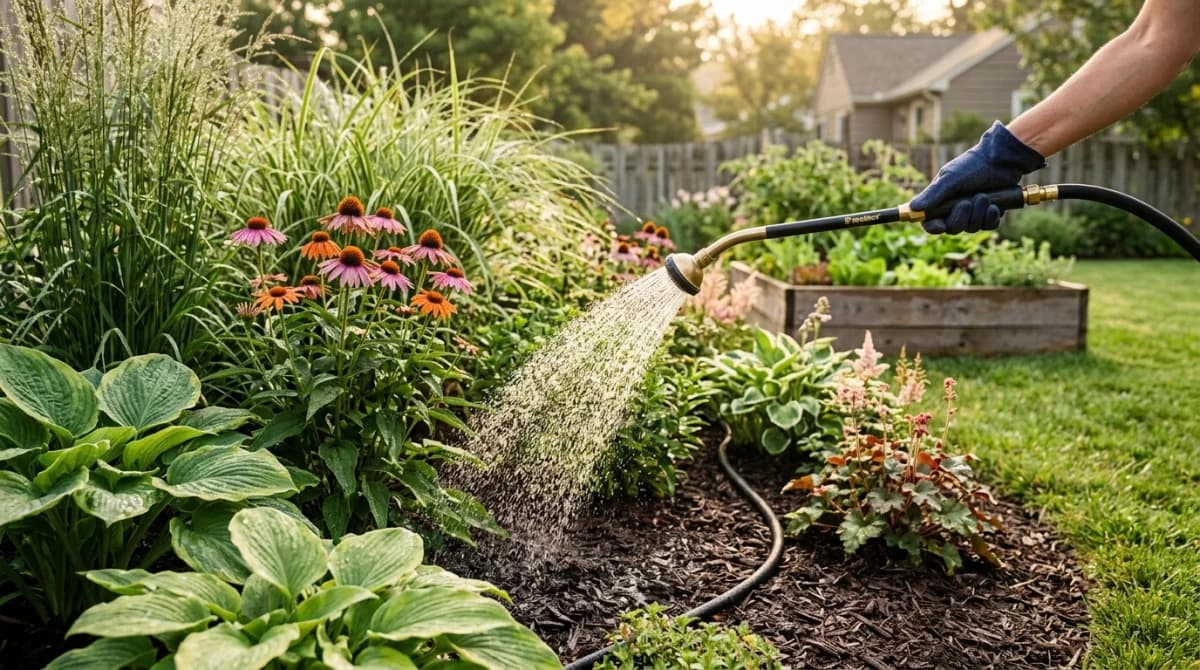
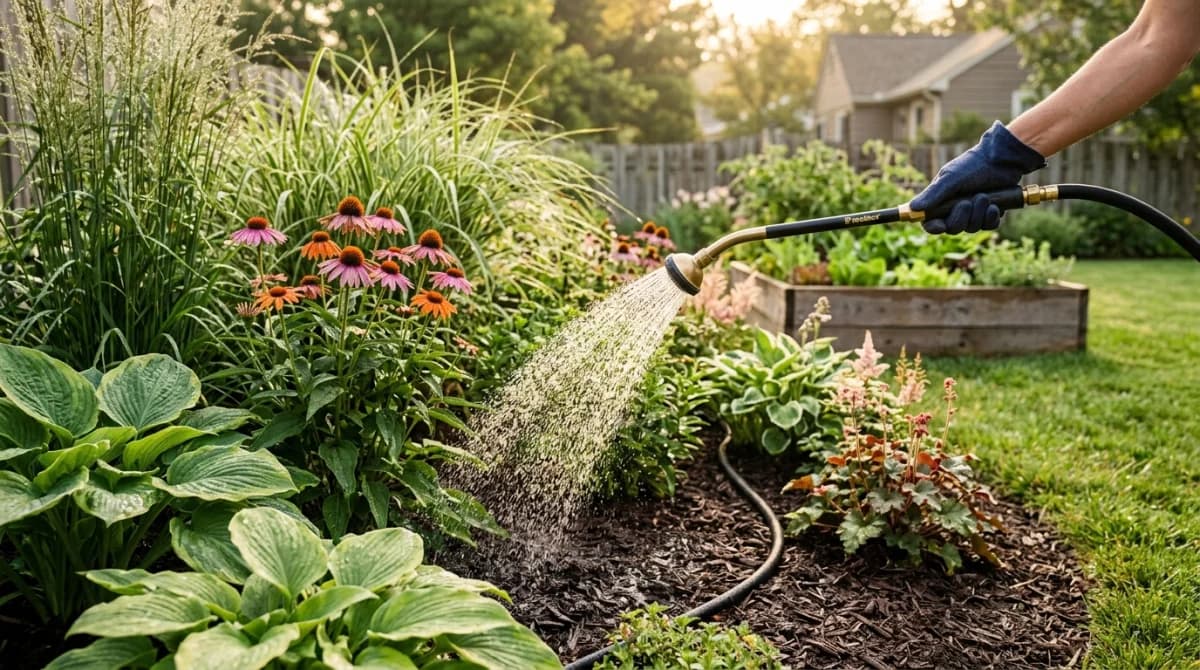
Hand watering with a wand gives you the most control. Best for containers, new transplants, and spot-watering individual plants that need extra attention.
Overhead sprinklers lose the most water to evaporation and wind, and they wet foliage unnecessarily. Use them for lawns if you must, but keep them out of garden beds.
Signs Your Watering Schedule Needs Adjusting
You are overwatering if you see:
- Yellowing lower leaves on otherwise healthy plants
- Soft, mushy stems near the soil line
- Fungal growth or white mold on soil surface
- Plants wilting despite wet soil (a sign of root rot)
- Sour smell from the soil
You are underwatering if you see:
- Wilting that does not recover by morning
- Dry, crispy leaf edges and tips
- Premature flower or fruit drop
- Soil shrinking away from container edges
- Stunted, slow growth despite good nutrition
The finger test beats any gadget. Push your finger two inches into the soil before each watering. Moist? Skip it. Dry? Water deeply. Do this consistently and you will develop an instinct for what your garden needs.
Five Setup Tasks to Do This Week
Spring is the right time to put the infrastructure in place so watering is easy all season.
- Test your soil type so you know whether to water frequently and lightly (sand) or slowly and deeply (clay). Our soil pH calculator can also help you understand your soil conditions and find plants that match
- Install drip irrigation or soaker hoses in vegetable beds and any new plantings. This is far easier before plants fill in
- Mulch all beds with 3 inches of organic material. This single step cuts your watering workload dramatically
- Place a rain gauge in an open spot in your garden. Subtract rainfall from your weekly irrigation target
- Group plants by water needs when planning new beds. Putting drought-tolerant plants next to water-lovers means one group always gets the wrong amount
Plan Your Garden Around Water From the Start
The easiest way to simplify your watering schedule is to design your garden with water zones in mind. Group thirsty vegetables and annuals together near a water source. Put drought-tolerant perennials and native plants in beds further away. Place containers where you will actually remember to check them daily.
Gardenly helps you plan your garden layout with your specific climate zone in mind, so you can organize beds around water needs before anything goes in the ground. Getting the layout right now saves you from fighting your watering schedule all summer.
Set up your system this spring, adjust as the season heats up, and by midsummer you will spend less time with a hose and more time actually enjoying what you grew.