Dormant Pruning: What to Cut in January and What to Leave Alone
Pruning is one of those garden tasks that intimidates people more than it should. The fear of doing it wrong—of cutting something that then dies, or of ruining a plant’s shape—leads many gardeners to avoid it entirely. But the plants that go unpruned often suffer more than those pruned incorrectly: crowded, diseased, structurally weak, and producing fewer flowers and fruits than they should.
January, when most deciduous plants are fully dormant, is an excellent pruning window. Cuts heal cleanly, disease pathogens are less active, and you can see the structure of the plant clearly without leaves in the way.
Here’s what to prune now and what to save for later.
Why Prune in Winter?
Better visibility: Without leaves, you can see branch structure, crossing branches, and diseased wood clearly. What would be guesswork in summer is obvious in January.
Reduced disease risk: Many fungal and bacterial pathogens that infect pruning cuts are less active in cold weather. Cuts made in winter are less likely to introduce disease than cuts made in warm, wet spring weather.
Less stress on the plant: Dormant plants have withdrawn energy into roots and main stems. Pruning doesn’t interrupt active growth, so recovery happens efficiently when spring arrives.
Timing for flowers and fruit: Understanding when a plant flowers determines when it should be pruned. Winter pruning of summer-blooming plants maximizes next season’s flowers.
What to Prune in January
Fruit Trees (Apples, Pears, Quinces)
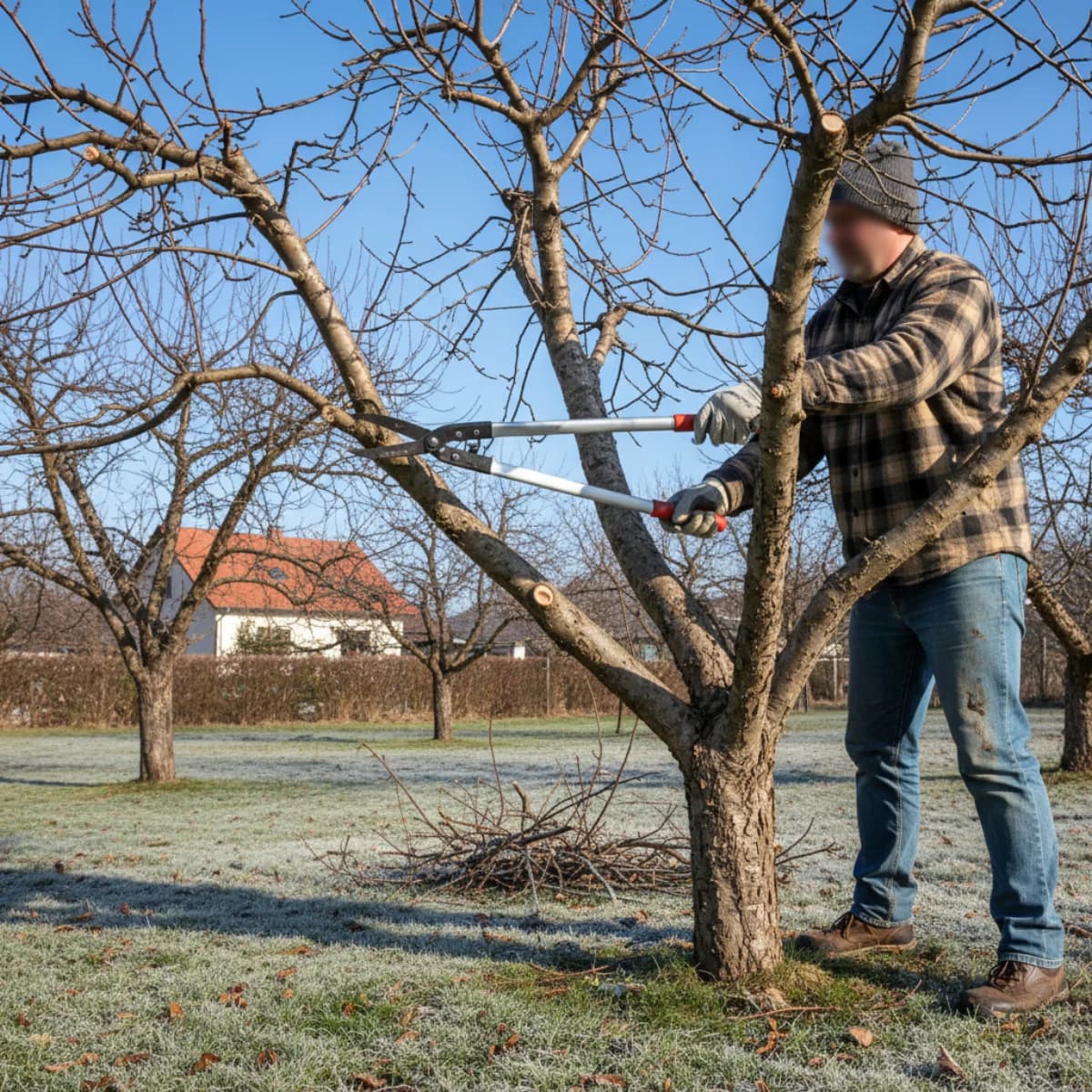
The main goal of fruit tree pruning is an open structure with good airflow—reducing disease pressure and ensuring sunlight reaches all fruiting wood.
For apples and pears, remove:
- Water sprouts: Vertical shoots growing from main branches or the trunk. These rarely fruit and crowd the canopy.
- Crossing branches: Any branch rubbing against another. Left untreated, the wound provides a disease entry point.
- Dead, diseased, or damaged wood: Cut back to healthy wood (white or cream-colored interior). Don’t leave stubs.
- Crowded interior growth: Aim for a structure where a bird could fly through the center of the tree.
Don’t remove more than 20-25% of the canopy in any single year. If a tree is seriously neglected, renovation pruning over 3-4 years is better than a drastic single session.
Summer-Flowering Shrubs
Shrubs that flower on new growth produced in the current season can be pruned hard in January. The pruning stimulates vigorous new growth, which produces the flowers.
Plants in this category:
- Buddleia (butterfly bush): Cut to 12-18 inches from the ground. The structure that remains will support the new growth.
- Hardy hibiscus: Cut stems to the ground or to 12 inches. These come back from the roots.
- Caryopteris (bluebeard): Cut back hard to a low framework.
- Lavatera: Reduce by about half.
- Perovskia (Russian sage): Cut to within a few inches of the ground.
Roses (With Caution)
The timing for roses depends on your climate. In Zone 7 and warmer, roses can be pruned in late January or February. In colder zones, wait until February or early March—you want to prune when the worst cold has passed and you can see which canes survived winter.
The basic cuts for bush roses:
- Remove all dead, damaged, or spindly canes (anything thinner than a pencil)
- Cut crossing canes at their base
- Reduce the overall height by 1/3 to 1/2 for most varieties
- Make cuts at a 45° angle, just above an outward-facing bud
Climbing roses are different—most bloom on old wood and should be pruned minimally, if at all, in winter. Prune them right after flowering in late spring or summer.
Grapevines
Grapevines require significant annual pruning—without it, they produce less fruit and become tangled. Fruit is produced only on new growth from one-year-old canes.
The standard spur pruning system: each main arm of the vine has spurs (short stubs) along its length. Each spur is cut back to 2-3 buds. The new shoots that grow from these buds will bear this year’s fruit, then become the next year’s spurs.
This sounds complex, but becomes intuitive with practice. A good reference book with diagrams helps enormously.
Overgrown Hedges
Formal hedges of yew, hornbeam, beech, and privet can be trimmed in January to remove any misshapen or excessively long growth. This isn’t the main annual cut (do that in summer for formal hedges)—it’s a clean-up for anything that’s bothering you through the winter.
Wisteria
Wisteria produces on short spurs from a framework of permanent branches. In January, cut all side shoots (the whippy growth from last season) back to 2-3 buds. This encourages the plant to flower rather than grow more vine. This is the winter step; repeat more lightly in summer (after flowering) to control growth.
What NOT to Prune in January
Spring-Flowering Shrubs
This is the most important rule. Forsythia, lilac, weigela, deutzia, mock orange (Philadelphus), magnolia, camellia, and pieris all set their flower buds on growth produced in the previous season. Pruning them in January removes the buds—and this year’s flowers.
Prune spring-flowering shrubs immediately after flowering. The window is short (2-3 weeks after bloom fades) but the results are important—the plant has the whole season to produce new growth and set next year’s buds.
Stone Fruits (Cherries, Plums, Peaches)
Unlike apples and pears, stone fruits are highly susceptible to silver leaf disease, which enters through pruning cuts. The risk is greatest in wet winter conditions. In the UK especially, pruning stone fruits in winter is strongly discouraged.
Instead, prune stone fruits in dry summer conditions (June-July in the northern hemisphere), when disease pressure is lower and cuts heal faster.
Ornamental Grasses
Grasses should be left standing through winter—they provide structure, winter interest, and shelter for overwintering insects. Cut them back in late February or March, just before new growth emerges from the base.
Most Evergreens
Broad-leaved evergreens (rhododendrons, photinia, hollies) and conifers are generally best pruned in late spring or early summer. Light shaping is fine in January, but significant pruning is better timed when regrowth can quickly cover cuts.
Technique Matters
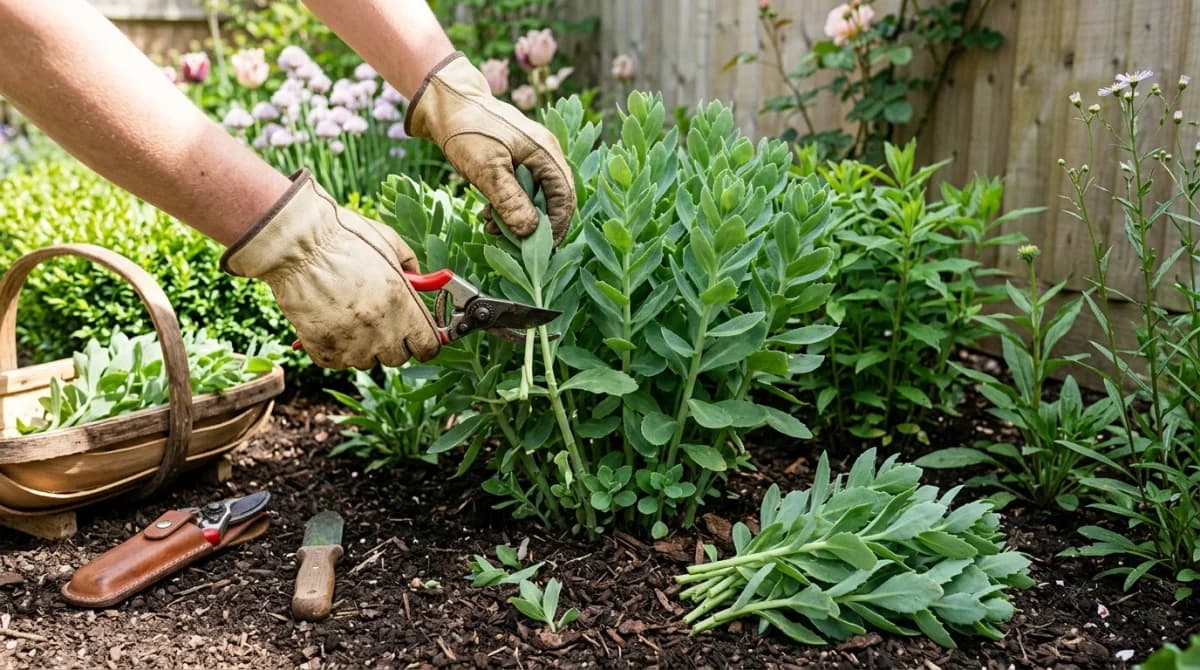
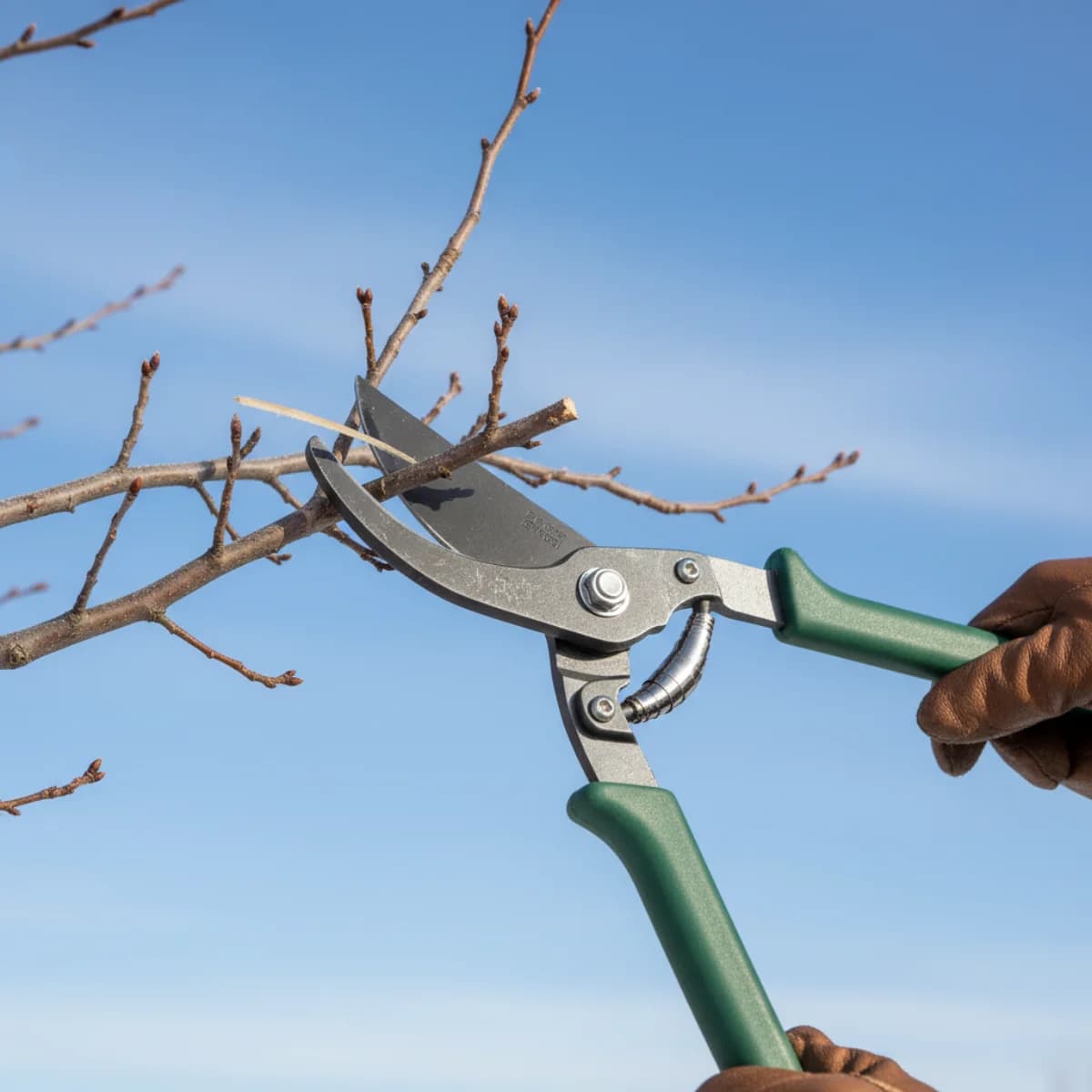
Always use sharp, clean tools. Dull blades crush rather than cut, and torn bark wounds heal more slowly and are more vulnerable to disease. Clean blades with rubbing alcohol or diluted bleach between plants if disease is present.
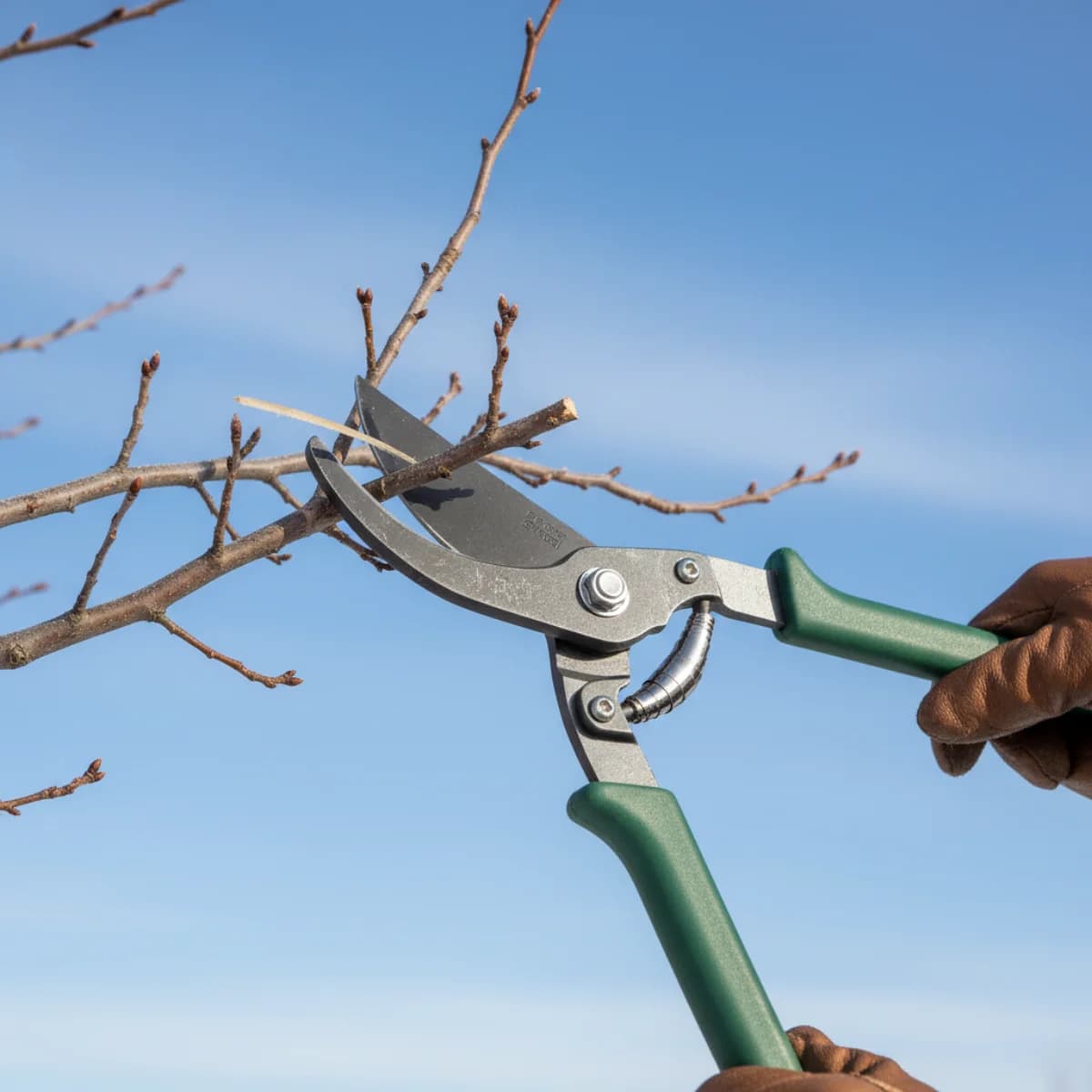
Make cuts at a slight angle (to shed water) just above a bud or lateral branch—don’t leave stubs. The node just below the cut is where the healing response begins; cutting too far away leaves dead wood that rots inward.
For large branches on trees, use the three-cut method: undercut from below first (to prevent tearing bark), then cut from above, then clean up the stub at the branch collar.
You don’t need pruning sealant on most cuts—research consistently shows that wound sealants do not improve healing and may actually slow it. The exception is some stone fruits where tar-based sealants can reduce silver leaf infection.
One Tool You Need
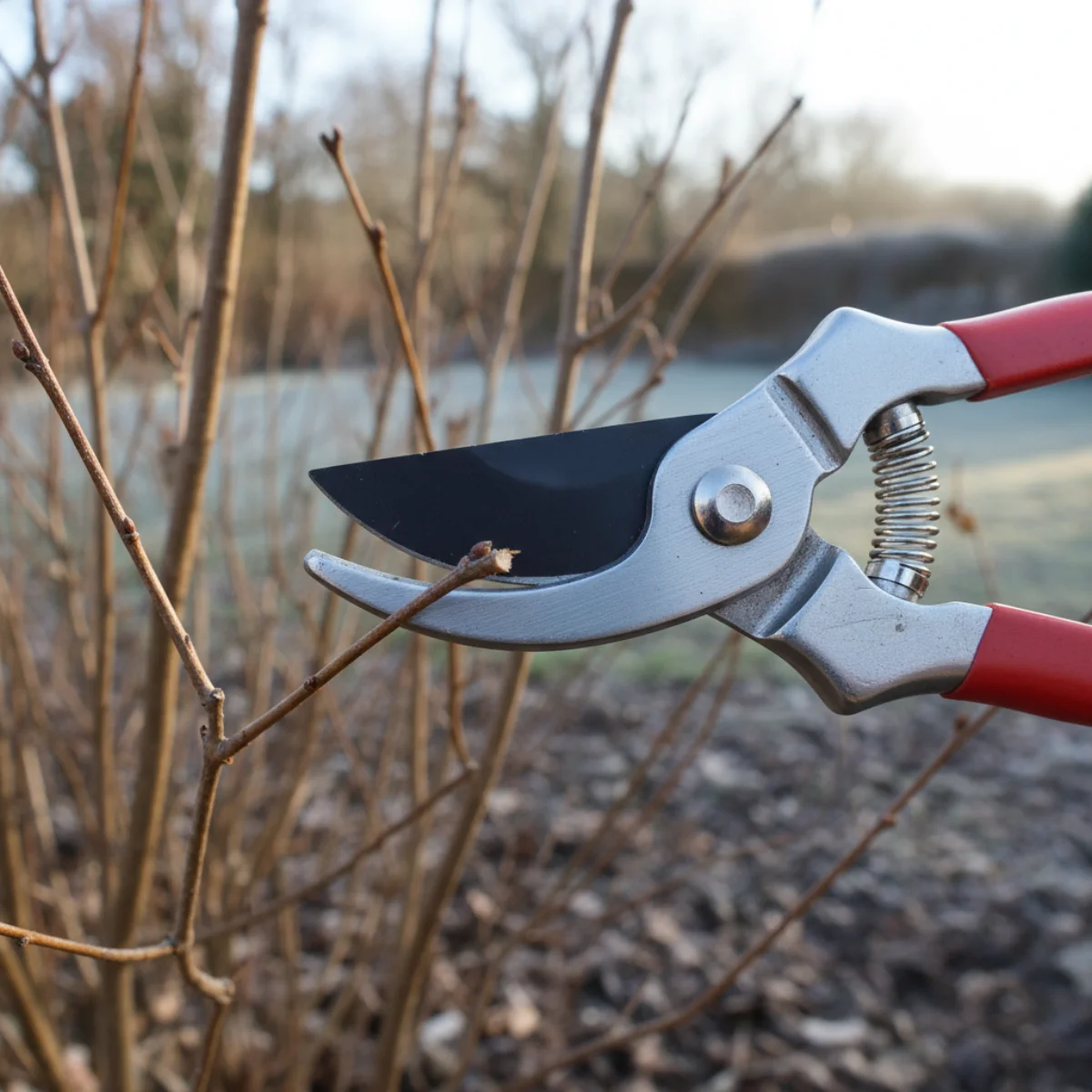
A quality pair of bypass pruning shears (not anvil pruners, which crush stems) is the most important pruning tool you own. Spend what it takes to get a good pair—Felco, ARS, and Bahco all make excellent options—and keep them sharp.
Beyond that: loppers for branches up to 2 inches diameter, a pruning saw for larger branches, and long-handled pole pruners for reaching high in trees. That’s the full kit for most home gardens.
Get out on a dry January day and do some of this work. The garden rewards it.
Sources & Further Reading
- Pruning Trees and Shrubs — University of Minnesota Extension
- Winter Is Tree Pruning Season — Penn State Extension
- Apples and Pears: Winter Pruning — Royal Horticultural Society
- Rose Pruning: General Tips — Royal Horticultural Society