The February Pruning Guide: What to Cut, What to Wait On
February is one of the best pruning months of the year—but only if you prune the right things. Cut the wrong plants now and you’ll lose a season of blooms. Cut the right ones and you’ll set up a year of better growth, more fruit, and healthier plants.
The rule that governs pruning timing is elegantly simple: prune summer-blooming plants in late winter; prune spring-blooming plants after they bloom. Understanding why that rule exists makes it much easier to remember and apply.
The Bloom-Timing Rule Explained
Plants set flower buds at different times. Spring-blooming shrubs—forsythia, lilac, rhododendron, azalea, viburnum—set their flower buds the previous summer and fall. Those buds are already present on the branches right now, waiting for warmth to open them. Prune these shrubs in February and you’re cutting off the blooms.
Summer-blooming plants—roses, butterfly bush, most hydrangeas, caryopteris, Russian sage—bloom on growth they produce this spring. Prune these in late winter and the result is more robust new growth and more flowers. The cuts stimulate the plant to produce exactly what you want.
This is the core of pruning timing. Let’s get specific.
Cut These in February
Hybrid Tea, Grandiflora, and Floribunda Roses
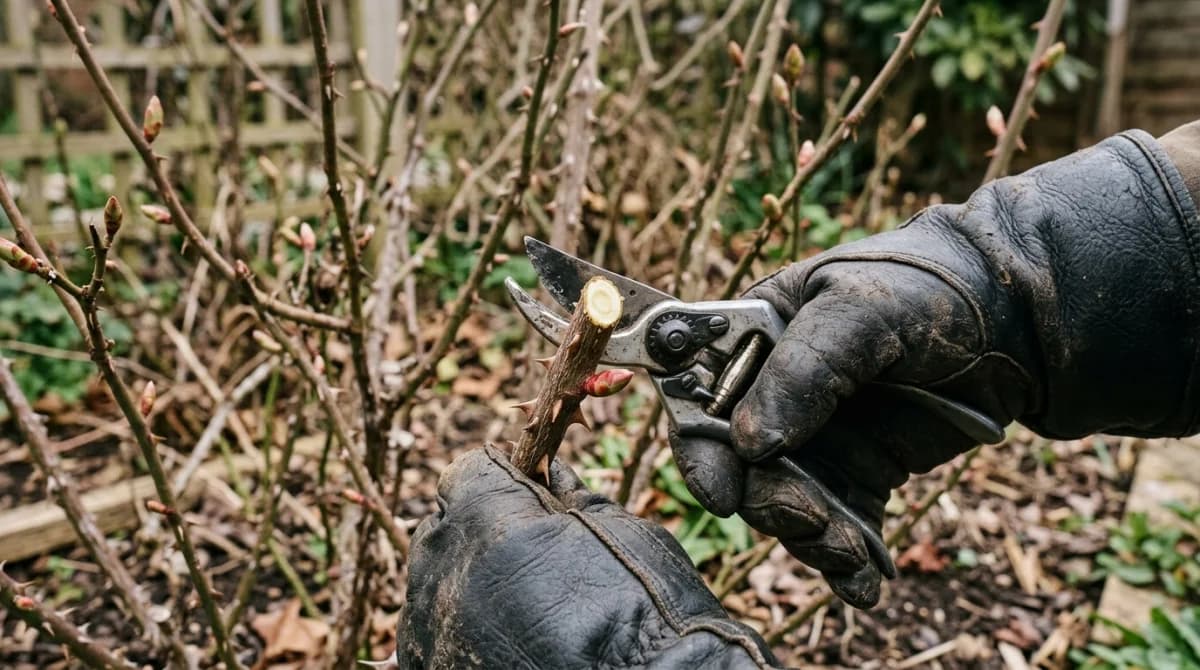
These roses bloom on new growth and respond dramatically well to hard late-winter pruning. In most climates, cut them back to 12-18 inches above ground, removing all dead, weak, and crossing canes. This sounds severe but produces vigorous new growth and abundant summer blooms.
Wait until forsythia begins blooming in your area (a reliable local signal that hard frost danger is past) or when the buds on rose canes begin to swell, then prune promptly.
Fruit Trees
Apples, pears, and quinces should be pruned while fully dormant—January through early March in most zones. The structure is visible, disease pressure is low, and trees respond well to dormant pruning.
Stone fruits (peaches, plums, apricots, cherries) can also be pruned in late winter in dry climates. In humid regions, wait until trees are actively growing to reduce fungal disease risk.
Ornamental Grasses
Cut deciduous ornamental grasses—miscanthus, pennisetum, panicum, sorghastrum—to 4-6 inches above ground before new growth begins. February is ideal. Wait too long and the new growth emerges within the old, making cuts difficult and damaging the emerging shoots.
Use hand pruners for smaller grasses; loppers or hedge shears for large clumps. Bundle the top growth before cutting to make cleanup easier.
Butterfly Bush (Buddleia)
Butterfly bush is a die-hard late-winter pruner. Cut it back hard—to 12-18 inches above ground—and it responds with vigorous new growth and abundant flower spikes in summer. Left unpruned, it becomes a messy, declining structure with poor flowering. February pruning is the reset.
Caryopteris (Bluebeard)
Another summer-blooming shrub that blooms on new wood. Cut back to 6-8 inches of the main stem framework in late winter for best performance. It looks extreme but works perfectly.
Summer-Blooming Spirea
Spirea that blooms in summer (like ‘Goldflame’ or Anthony Waterer) can be cut back hard in late winter. Spring-blooming spirea (like bridal wreath or ‘Snowmound’) should be pruned immediately after flowering instead.
Dead, Damaged, or Diseased Wood—Any Plant, Any Time
There’s no wrong time to remove dead, diseased, or damaged wood. February is as good as any other month, and late winter dormancy actually makes this easier because the structure is visible.
Wait on These—Prune After Flowering
Forsythia
The reliable beacon of spring. Forsythia blooms on last year’s wood and is at risk of losing flowers to late freezes, so many gardeners hold off pruning until after it blooms in March or April. Prune immediately after flowering—don’t wait until fall, or you’ll cut off next year’s buds.
Lilac
Lilacs bloom on old wood and resent heavy pruning at any time, but they particularly resent losing flower buds in February. Light cleanup of weak stems is fine, but major pruning should wait until immediately after flowers fade in May.
Rhododendron and Azalea
Flower buds are visible now—those swollen clusters at branch tips. Don’t touch them. Prune after flowering.
Viburnum
Most viburnums bloom on old wood. February pruning removes flower buds. Wait until just after flowering.
Wisteria
Wisteria is an exception to most rules. It gets pruned twice: once in late summer (cutting back the current season’s growth to 5-6 leaves from the base of each branch) and once in late winter (cutting those shortened stems back further, to 2-3 buds). February is the time for the second pruning. Do it now, before growth begins.
What to Prune Anytime
Dead, diseased, or crossing branches can come off any time without regard to bloom timing. These cuts improve plant health regardless of season.
Water sprouts and suckers (vigorous upright shoots on trees and shrubs) are best removed when noticed rather than saved for a specific season.
Hedges of formally maintained shrubs (boxwood, yew, privet) can be lightly pruned year-round, with major cuts in late spring after the first flush of growth.
Tools to Have Ready
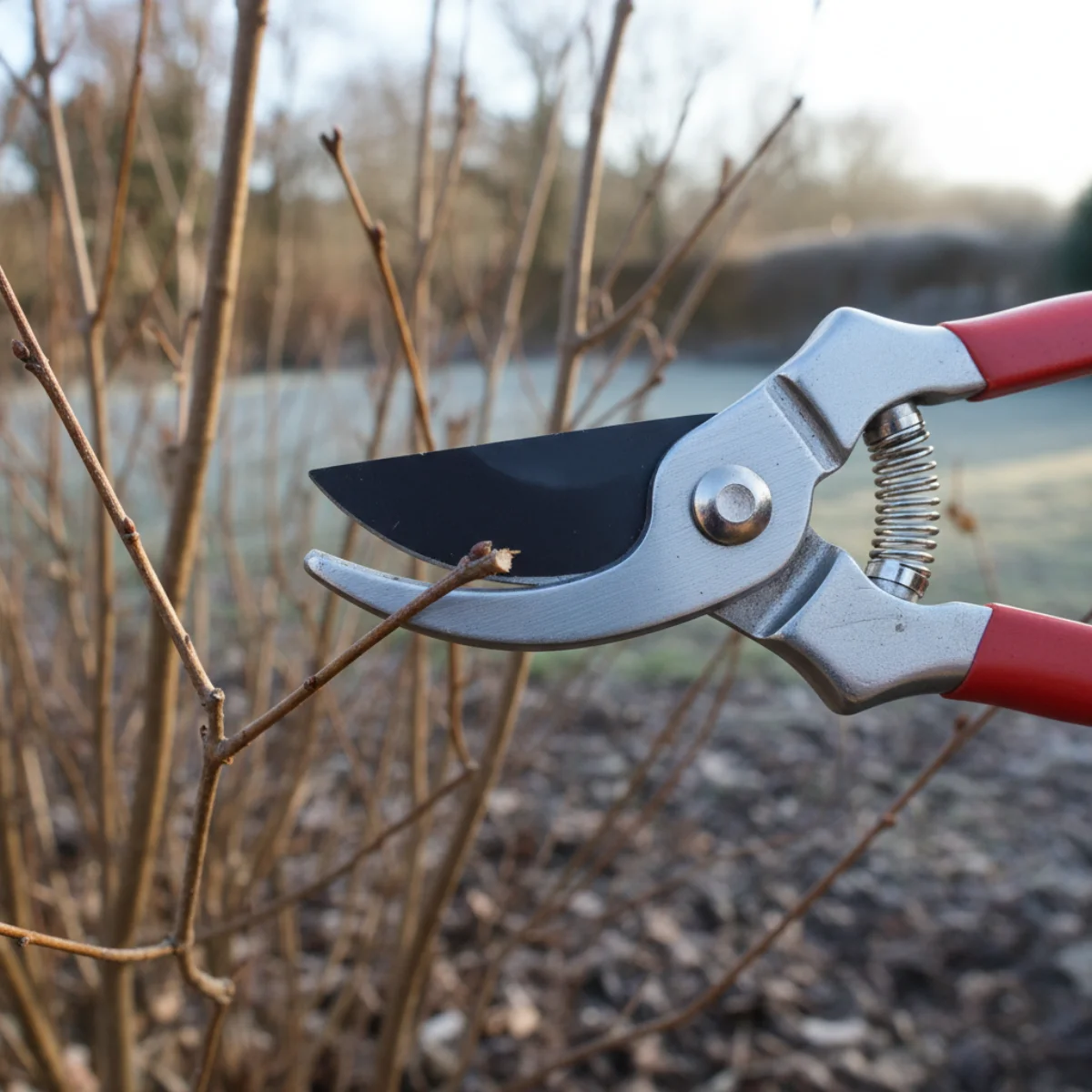
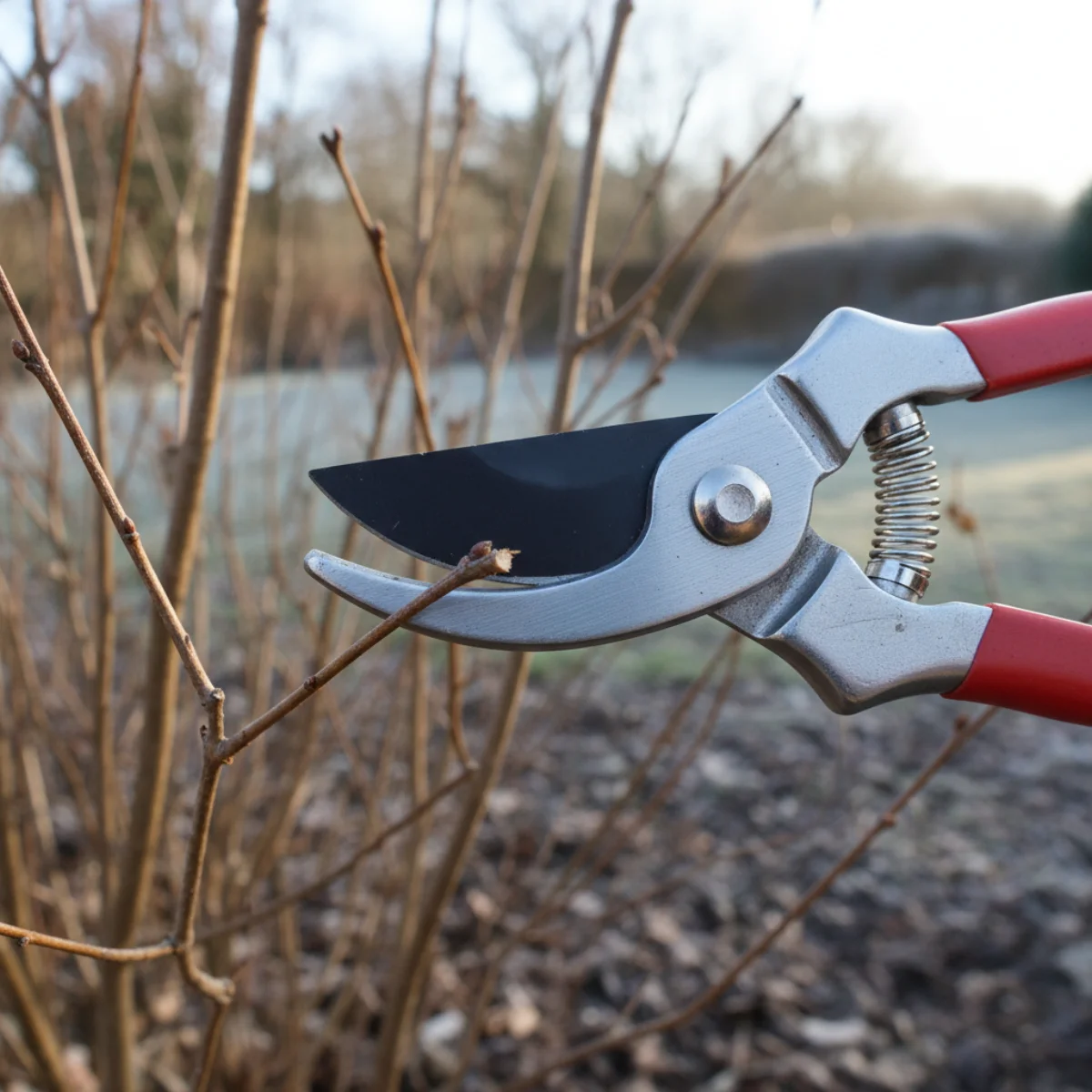
Bypass pruners: The essential tool for anything up to ¾ inch in diameter. The bypass action (like scissors) makes cleaner cuts that heal better than anvil pruners. Felco, Bahco, and Corona are reliable brands.
Loppers: For branches ¾-1.5 inches in diameter. Long handles provide the leverage you need.
Pruning saw: For anything larger. A folding Japanese-style pull saw is the best investment for the home gardener—they cut incredibly well and fold compactly.
All tools need to be sharp. Dull pruners crush and tear rather than cut cleanly, which slows wound healing and invites disease. Sharpen before the season begins.
A February Pruning Checklist
Walk your garden with this list:
- Ornamental grasses: cut back to 4-6 inches
- Hybrid tea and floribunda roses: prune when forsythia begins to bloom
- Fruit trees: complete dormant pruning
- Butterfly bush and caryopteris: cut back hard
- Summer-blooming spirea: cut back
- Any dead, diseased, or crossing wood on any plant
- Note spring bloomers that need pruning after flowering (forsythia, lilac, rhododendron)
February pruning done right sets up months of better growth and better gardens. The key is knowing which category each plant falls into—and the rule is simple enough to remember.
Sources & Further Reading
- When Should I Prune My Roses? — OSU Extension Service
- Rose Pruning: General Tips — Royal Horticultural Society
- Pruning Roses and Fruit Trees — UC Cooperative Extension, Ventura County
- Pruning Fundamentals — UC Marin Master Gardeners