Early Spring Garden Cleanup: What to Cut, What to Leave
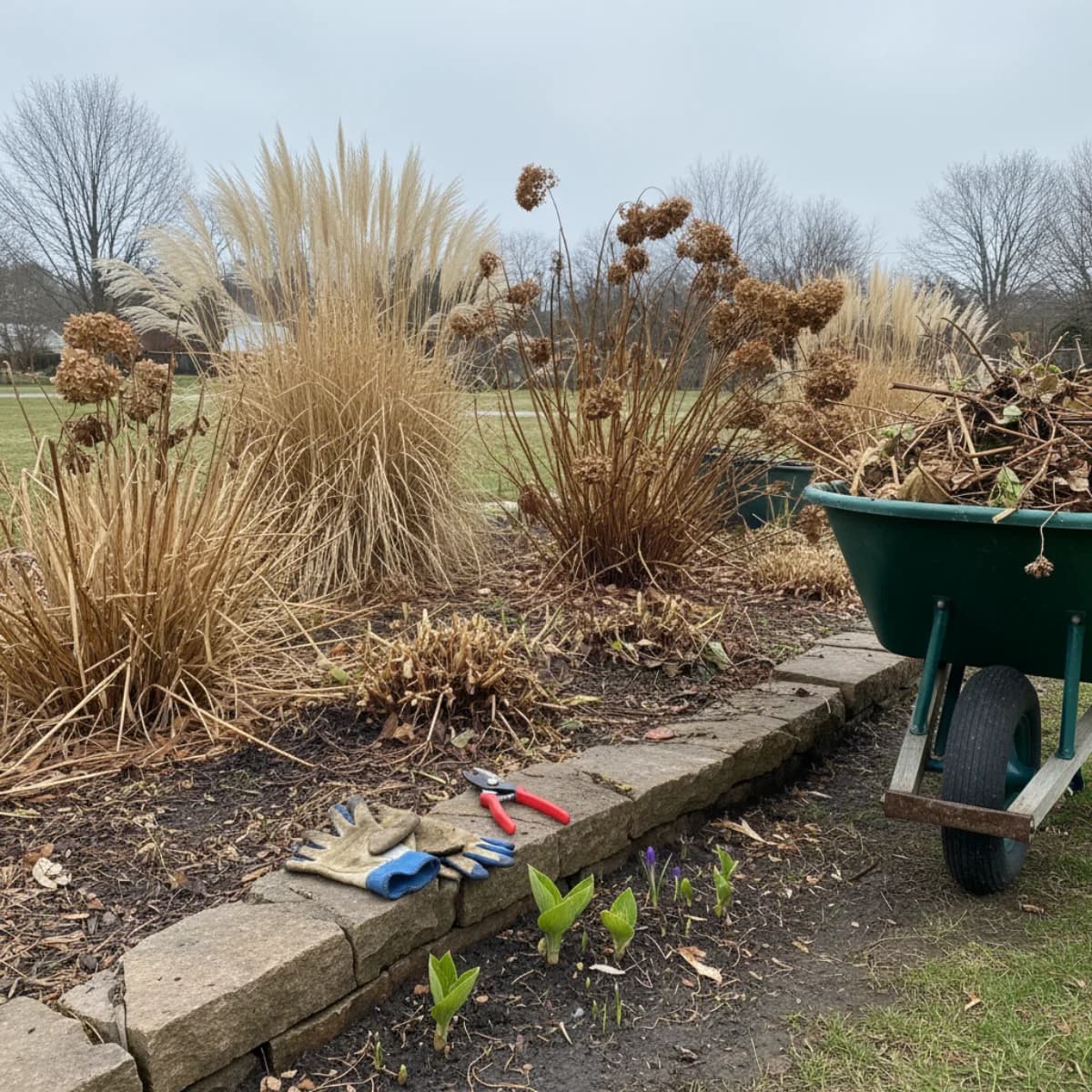
There’s a narrow window in early March when the garden is ready for cleanup but not yet growing hard. The snow is gone, the ground is softening, and last year’s dried stems are still standing. This is your moment.
Done well, spring cleanup clears the way for new growth without disturbing the beneficial insects and organisms that overwintered in your beds. Done too early or too aggressively, it removes the shelter those creatures still need and exposes emerging shoots to late frosts.
Here’s how to approach it with good timing and a steady hand.
Wait for Consistent Warmth
The single most important rule of spring cleanup: don’t rush it. Many native bees, beneficial beetles, and butterfly larvae overwinter in hollow stems, leaf litter, and the top layer of mulch. They don’t emerge until daytime temperatures consistently reach 50°F (10°C) for several days running.
In most temperate climates, that window falls in early to mid-March. In colder zones (4-5), it may be late March or even early April. Watch your local forecast rather than the calendar.
If you’re itching to start, begin with hardscape—clean paths, repair edging, sharpen tools, organize the shed. Save the beds for when conditions are right.
Cutting Back Perennials
Not every perennial gets cut back on the same schedule. The key is knowing which plants grow from the base and which grow from existing stems.
Cut to the Ground
These perennials produce entirely new growth from the crown each spring. Cut last year’s stems down to 2-4 inches above soil level:
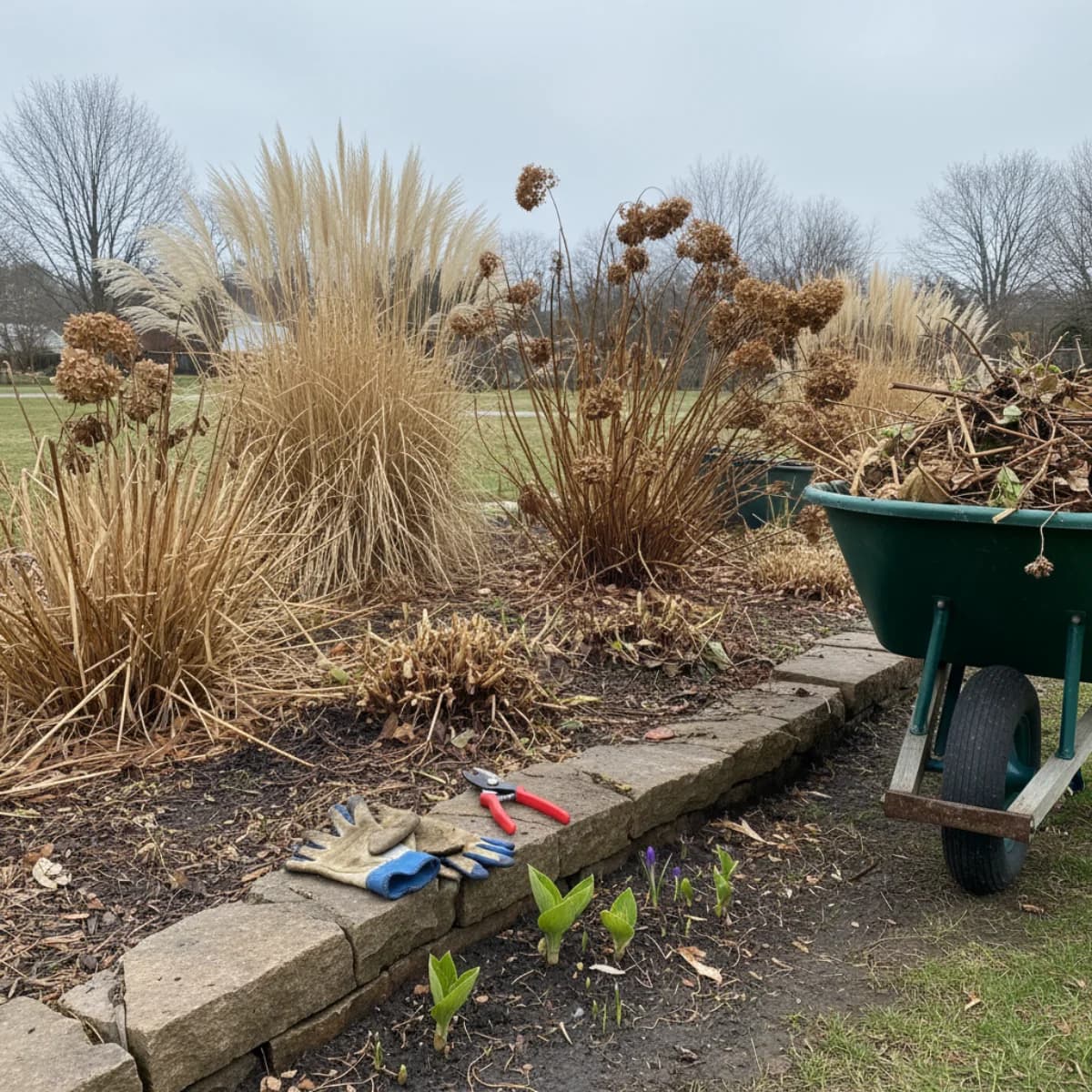
- Ornamental grasses (Miscanthus, Panicum, Calamagrostis): Cut the entire clump to 4-6 inches before new green blades appear. Once new growth starts, cutting becomes much harder without damaging it.
- Hostas: Remove the collapsed, papery leaves from last year. New shoots will push up from the crown.
- Daylilies (Hemerocallis): Pull away or cut the dried fan of leaves. Fresh growth emerges from the center.
- Bee balm (Monarda): Cut dead stems to the ground. The plant spreads from runners and will fill in quickly.
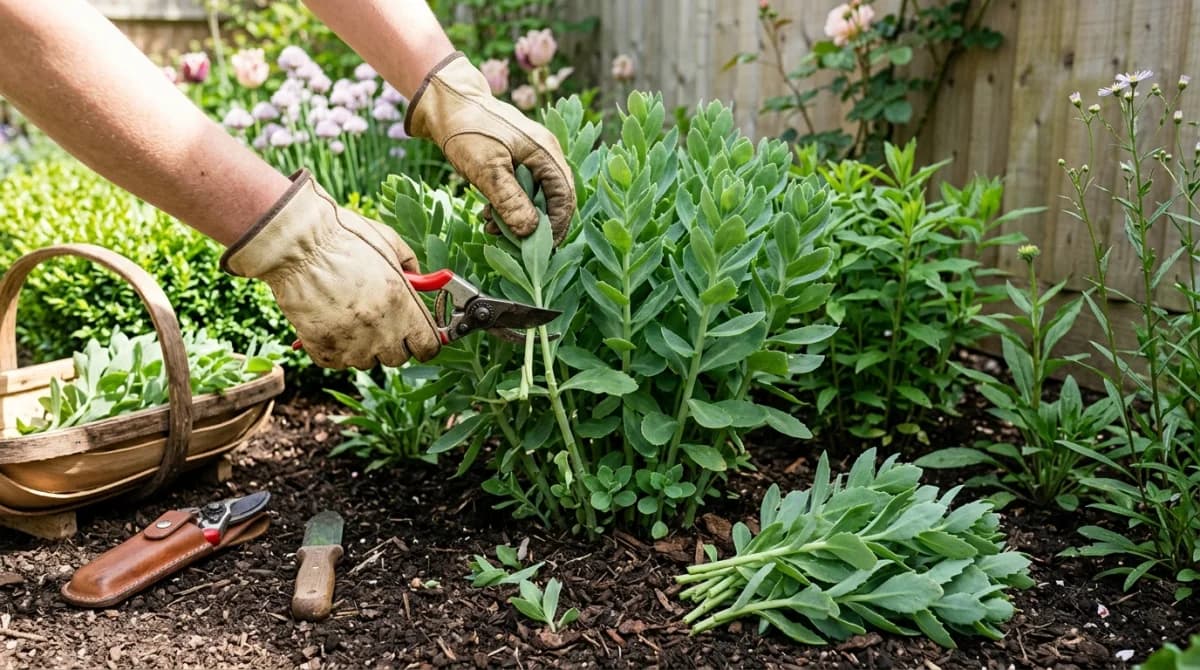
- Sedum (tall varieties like ‘Autumn Joy’): Snap or cut the dried flower heads off at the base. New rosettes are already forming at ground level.
- Echinacea and Rudbeckia: Cut spent stems down. You may spot tiny green rosettes at the base already.
- Asters: Cut all dead stems to 2-3 inches. New basal growth will appear shortly.
Leave Alone (for Now)
These plants either bloom on old wood or are still dormant and shouldn’t be cut yet:
- Lavender: Don’t cut into old, woody growth—it rarely regenerates. Wait until you see new green buds along the stems, then trim just above those buds.
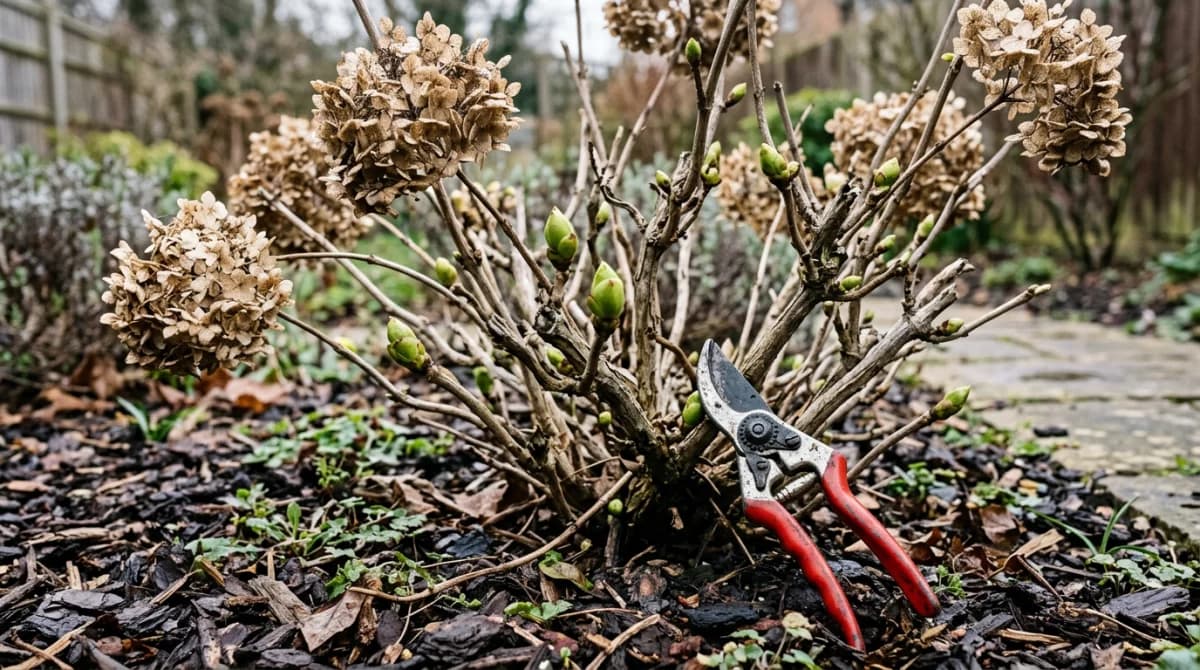
- Russian sage (Perovskia): Wait for green buds to appear on the woody stems before cutting back. Usually late March or April.
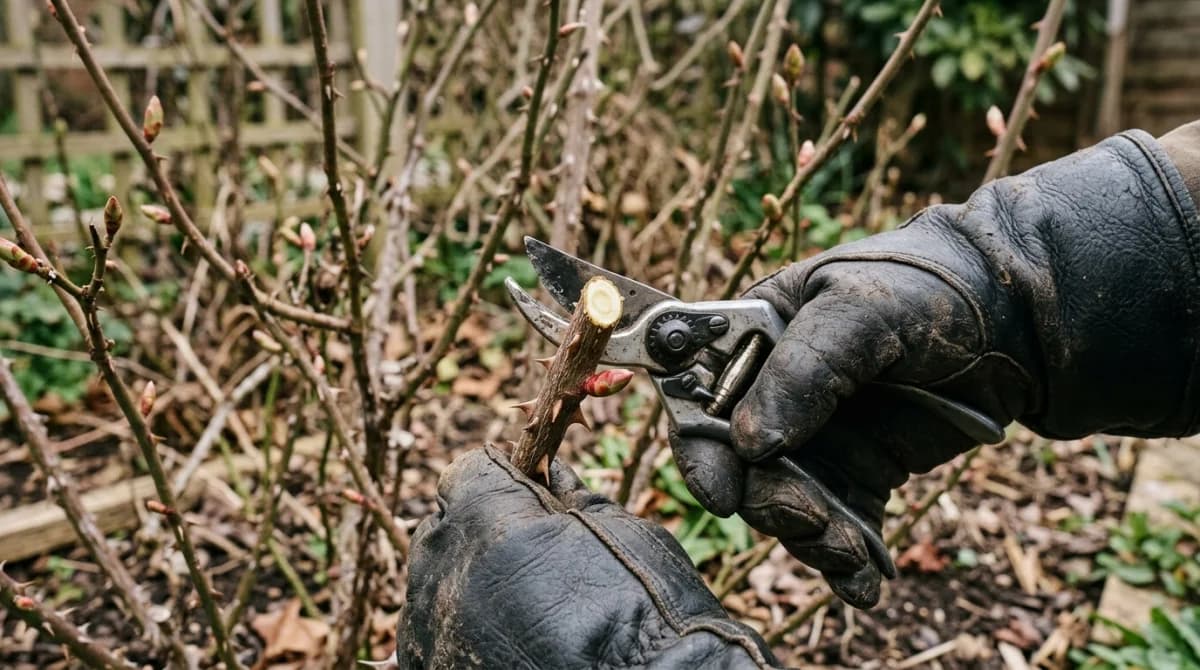
- Butterfly bush (Buddleia): Blooms on new wood, so you can cut hard, but wait until you see green buds breaking to know where live wood begins.
- Mums (Chrysanthemum): Leave the dead stems through early spring—they help protect the crown from late freezes. Cut back once new growth is clearly established.
Dealing with Winter Mulch
If you applied a heavy winter mulch of straw, leaves, or evergreen boughs to protect tender plants, now is the time to start removing it—gradually.
Pull mulch back from the crowns of perennials in stages over a week or two. This lets emerging growth acclimate to light and air gradually rather than being suddenly exposed to wind and late frosts.
Leave a 2-3 inch layer of finer mulch (shredded leaves, aged wood chips) in place as permanent mulch. You’re removing the heavy protective layer, not stripping beds bare.
For roses that were mounded with soil or mulch for winter protection, pull the mound back to expose the graft union once forsythia begins to bloom in your area—a reliable phenological indicator that hard freezes are past.
Leaf Litter: Keep More Than You Think
The instinct to rake every bed spotless is strong, but leaf litter in garden beds is not debris. It’s habitat.
A thin layer of partially decomposed leaves between plants feeds soil biology, retains moisture, and shelters ground-dwelling beneficial insects. Unless leaves are matted so thickly that they’re smothering emerging growth, leave them in place. They’ll break down and disappear by midsummer.
If you do rake, move the material to a compost pile or a designated “wild corner” of the yard rather than bagging it for the landfill.
First Weeding Pass
Early March is the best time to weed. Annual weeds are small and shallow-rooted. Perennial weeds like dandelion and dock are visible but haven’t yet built up their root reserves for the season.
Walk through beds with a hori-hori or a narrow hand weeder and pull what you find now. Ten minutes of weeding in early March saves hours of battle in June.
Pay particular attention to the edges of beds where grass encroaches. A clean cut edge now—using a half-moon edger or a flat spade—keeps beds tidy all season with only occasional touch-ups.
Inspect and Repair
Spring cleanup is also an inspection tour. Walk the entire garden and note:
- Frost heaving: Perennials pushed out of the ground by freeze-thaw cycles. Gently press them back and firm soil around the roots.
- Broken branches: Winter ice and snow damage on shrubs and small trees. Make clean pruning cuts back to a healthy bud or branch junction.
- Bed edges: Erosion, settling, or damage from snow plowing. Rebuild edges now before plants fill in and make access difficult.
- Supports and structures: Trellises, arbors, and fences that shifted or rotted over winter. Repair before climbing plants grab hold.
A Simple Cleanup Sequence
If you want a methodical approach, work through beds in this order:
- Remove heavy winter mulch (straw, boughs) and set aside
- Cut back dead perennial stems (the “cut to ground” list)
- Pull visible weeds while beds are open and accessible
- Re-edge beds with a sharp spade
- Spread 1-2 inches of fresh compost over the bed surface
- Replace a thin layer (2-3 inches) of permanent mulch, keeping it pulled back from plant crowns
This sequence lets you handle everything in one pass per bed without backtracking.
Don’t Prune Spring Bloomers
One common mistake: pruning spring-flowering shrubs during cleanup. Lilacs, forsythia, azaleas, rhododendrons, and flowering quince all bloom on wood formed the previous year. Pruning them now removes this year’s flower buds.
Prune spring-flowering shrubs immediately after they finish blooming, not before. Summer-blooming shrubs (hydrangea paniculata, rose of Sharon, butterfly bush) are the ones that can be pruned in early spring.
Setting Up the Season
The real payoff of thoughtful spring cleanup isn’t a tidy-looking garden in March—it’s a garden that performs better all year. Removing dead material lets sunlight reach emerging crowns. Weeding early breaks the cycle before seed heads form. Fresh compost feeds the soil biology that feeds your plants.
If you’re planning changes to your beds this year—new plantings, different layouts, expanded borders—early spring cleanup is the perfect time to assess what you have and envision what you want. Tools like Gardenly can help you visualize design ideas before you start digging.
Take a Saturday morning, bring sharp tools and a wheelbarrow, and work through your beds systematically. By the time the first tulips open, your garden will be ready for the season ahead.
Sources & Further Reading
- Delay Garden Cleanup to Benefit Overwintering Insects — Penn State Extension
- For Pollinators’ Sakes, Don’t Spring into Garden Cleanup Too Soon — Xerces Society for Invertebrate Conservation
- Tweaking Your Garden Calendar for Pollinators and Other Beneficial Insects — Penn State Extension